Africa’s mother tongues are finding new life as youth connect with roots and relatives
ABC News
A
ABC News
Original Source
A new generation of Africans in the diaspora is reconnecting with mother tongues sidelined by decades of colonialism, leveraging social media and online platforms to learn their heritage languages. This cultural revival is creating business opportunities while restoring African languages to prominence after years of marginalization in favor of Western languages.
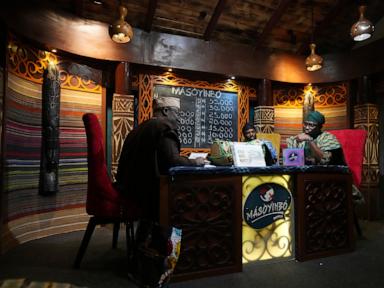
HARARE, Zimbabwe -- A television game show in Nigeria’s commercial hub of Lagos has an unforgiving rule: Speak English and you lose. For a U.S.-born millennial in the audience and a student of her parents' mother tongue, the high-stakes setting is a perfect classroom.
Meanwhile, a 15-year-old Canadian speaks to a teacher about 13,000 kilometers (8,000 miles) away in Zimbabwe, learning a language her parents feared she would never speak.
“Mhoroi,” Nyashadzashe Machingura says cheerfully with a pronounced Canadian accent while greeting in Zimbabwe's vernacular Shona.
The scenes capture a new generation of interest and entrepreneurship around African languages once pushed to the margins by decades of colonialism. Often seen as secondary to English, French and Portuguese, they are enjoying a renaissance that is also creating business opportunities.
Africa is home to over 1 billion people speaking roughly a third of the world’s languages, with between 1,500 and 3,000 across 54 countries, according to UNESCO.
Experts say the revival in some of them is driven partly by second- and third-generation Africans in the diaspora finding it easier to reconnect with their roots and communicate with older relatives, thanks to social media, online learning and entertainment.
“There were times I definitely felt left out because my family around me were all speaking Shona. And I just couldn’t understand them,” Nyashadzashe said after a lesson covering traditional greetings, proverbs and ancestral clan symbols. She said she had eaten the food and worn the traditional clothing but still felt left out.
But now her conversations with her grandparents in Zimbabwe are growing longer.
“Being able to connect with them on that level makes me really proud of my heritage,” she said.
Her Zimbabwe-based tutor, Shungu Chidovi, left her banking career in January to focus full-time on ZimbOriginal, an online platform that teaches Shona through storytelling, book clubs and “buddy pairing” exchanges.
Now she teaches about two dozen learners in Zimbabwe, Canada, Australia, South Africa, Ireland and Scotland, charging $50 a month.
The business, part of a small but growing number of online initiatives teaching African languages, emerged almost by accident. Chidovi began writing a blog about Zimbabwean traditions in 2016. Readers began asking whether she taught Shona.
“I didn’t see it at the time that I was really writing about the Shona language,” Chidovi said.
Like many in Africa, she grew up with the understanding that to get ahead she had to embrace Western languages instead of her mother tongue. English remains the dominant language for education, business and government affairs in the southern African nation that officially recognizes 16 mostly Indigenous languages.
“When you talk of Africa, you talk of English, French, Portuguese,” said Believe Mubonderi, a linguistics lecturer at Zimbabwe Open University. His research notes the importance of ensuring that African languages have a place in technologies shaping how people communicate, learn and trade.
“In most cases, African languages were sidelined. They were never exposed or modernized to be used in commerce, science and technology," he said. "When a language has a very low status, there’s a danger that that language eventually becomes endangered.”
Governments and international organizations are trying to reverse that trend.
The African Union’s 2022 decision to adopt Kiswahili, spoken in much of east Africa, as an official working language has raised its international profile. The United Nations declared 2022-2032 the International Decade of Indigenous Languages.
And the AU continental body and UNESCO are supporting efforts to document and revitalize African languages, including using artificial intelligence to generate and translate children's books and teacher guides.
But there's a steep digital disadvantage. UNESCO says only 10 languages around the world dominate the "internet ecosystem,” while less than 2% of African languages have a meaningful online presence. That leaves many with too little data to train artificial intelligence systems.
Still, momentum for change is growing, with much of it from Africans abroad.
“People of African descent have come to realize that we also have our own identity which we need to embrace and be proud of. You go on Facebook, you go on TikTok, you are seeing many different efforts,” Mubonderi said. Younger diaspora Africans "are trying by all means to revive, to revitalize, to make use of these languages.”
Chindovi said she hears that desire from children and their parents.
“When people are away from home, they long for home more than when they are home," she said.
That hunger for connection is also reshaping culture.
In Nigeria, a game show called “Masoyinbo,” meaning “Do not speak English,” has turned Yoruba, one of the country's most widely spoken languages, into prime-time entertainment. Contestants, including diaspora Nigerians, are tested on Yoruba language and culture, with prizes reaching thousands of dollars.
Host Olalekan Fabilola, who started the show in 2024, sees its popularity as part of a wider shift.
“If ‘Masoyinbo’ had started like 10 years ago, it wouldn’t have been what it is now," he said. “But we are in the age of cultural resurgence. People want to go back to their roots. Everyone wants to know why, where they are from, and so it’s timely.”
Tomi Adeshokan, a New Jersey resident who is learning to perfect her Yoruba with Fabilola as a tutor, was part of the audience during a recent recording of the show. She said she lost daily exposure to Yoruba after moving out of her father’s home before the COVID-19 pandemic. During the pandemic, she joined Clubhouse just to hear the language and later began taking classes. Now she was back visiting family.
“It’s very important for us to immerse ourselves in our culture and not to fully identify with other cultures, like the American, the Western culture," Adeshokan said.
___
Ikpoyi reported from Lagos, Nigeria.
___
For more on Africa and development: https://apnews.com/hub/africa-pulse
Meanwhile, a 15-year-old Canadian speaks to a teacher about 13,000 kilometers (8,000 miles) away in Zimbabwe, learning a language her parents feared she would never speak.
“Mhoroi,” Nyashadzashe Machingura says cheerfully with a pronounced Canadian accent while greeting in Zimbabwe's vernacular Shona.
The scenes capture a new generation of interest and entrepreneurship around African languages once pushed to the margins by decades of colonialism. Often seen as secondary to English, French and Portuguese, they are enjoying a renaissance that is also creating business opportunities.
Africa is home to over 1 billion people speaking roughly a third of the world’s languages, with between 1,500 and 3,000 across 54 countries, according to UNESCO.
Experts say the revival in some of them is driven partly by second- and third-generation Africans in the diaspora finding it easier to reconnect with their roots and communicate with older relatives, thanks to social media, online learning and entertainment.
“There were times I definitely felt left out because my family around me were all speaking Shona. And I just couldn’t understand them,” Nyashadzashe said after a lesson covering traditional greetings, proverbs and ancestral clan symbols. She said she had eaten the food and worn the traditional clothing but still felt left out.
But now her conversations with her grandparents in Zimbabwe are growing longer.
“Being able to connect with them on that level makes me really proud of my heritage,” she said.
Her Zimbabwe-based tutor, Shungu Chidovi, left her banking career in January to focus full-time on ZimbOriginal, an online platform that teaches Shona through storytelling, book clubs and “buddy pairing” exchanges.
Now she teaches about two dozen learners in Zimbabwe, Canada, Australia, South Africa, Ireland and Scotland, charging $50 a month.
The business, part of a small but growing number of online initiatives teaching African languages, emerged almost by accident. Chidovi began writing a blog about Zimbabwean traditions in 2016. Readers began asking whether she taught Shona.
“I didn’t see it at the time that I was really writing about the Shona language,” Chidovi said.
Like many in Africa, she grew up with the understanding that to get ahead she had to embrace Western languages instead of her mother tongue. English remains the dominant language for education, business and government affairs in the southern African nation that officially recognizes 16 mostly Indigenous languages.
“When you talk of Africa, you talk of English, French, Portuguese,” said Believe Mubonderi, a linguistics lecturer at Zimbabwe Open University. His research notes the importance of ensuring that African languages have a place in technologies shaping how people communicate, learn and trade.
“In most cases, African languages were sidelined. They were never exposed or modernized to be used in commerce, science and technology," he said. "When a language has a very low status, there’s a danger that that language eventually becomes endangered.”
Governments and international organizations are trying to reverse that trend.
The African Union’s 2022 decision to adopt Kiswahili, spoken in much of east Africa, as an official working language has raised its international profile. The United Nations declared 2022-2032 the International Decade of Indigenous Languages.
And the AU continental body and UNESCO are supporting efforts to document and revitalize African languages, including using artificial intelligence to generate and translate children's books and teacher guides.
But there's a steep digital disadvantage. UNESCO says only 10 languages around the world dominate the "internet ecosystem,” while less than 2% of African languages have a meaningful online presence. That leaves many with too little data to train artificial intelligence systems.
Still, momentum for change is growing, with much of it from Africans abroad.
“People of African descent have come to realize that we also have our own identity which we need to embrace and be proud of. You go on Facebook, you go on TikTok, you are seeing many different efforts,” Mubonderi said. Younger diaspora Africans "are trying by all means to revive, to revitalize, to make use of these languages.”
Chindovi said she hears that desire from children and their parents.
“When people are away from home, they long for home more than when they are home," she said.
That hunger for connection is also reshaping culture.
In Nigeria, a game show called “Masoyinbo,” meaning “Do not speak English,” has turned Yoruba, one of the country's most widely spoken languages, into prime-time entertainment. Contestants, including diaspora Nigerians, are tested on Yoruba language and culture, with prizes reaching thousands of dollars.
Host Olalekan Fabilola, who started the show in 2024, sees its popularity as part of a wider shift.
“If ‘Masoyinbo’ had started like 10 years ago, it wouldn’t have been what it is now," he said. “But we are in the age of cultural resurgence. People want to go back to their roots. Everyone wants to know why, where they are from, and so it’s timely.”
Tomi Adeshokan, a New Jersey resident who is learning to perfect her Yoruba with Fabilola as a tutor, was part of the audience during a recent recording of the show. She said she lost daily exposure to Yoruba after moving out of her father’s home before the COVID-19 pandemic. During the pandemic, she joined Clubhouse just to hear the language and later began taking classes. Now she was back visiting family.
“It’s very important for us to immerse ourselves in our culture and not to fully identify with other cultures, like the American, the Western culture," Adeshokan said.
___
Ikpoyi reported from Lagos, Nigeria.
___
For more on Africa and development: https://apnews.com/hub/africa-pulse
🔗 Share Article
Tags:#لغات أفريقية#الهوية الثقافية#الشتات الأفريقي#التعليم الإلكتروني#الحفاظ على الموروث الثقافي#تكنولوجيا التعليم
Source: ABC News
For Context
Related reads from the same topic or latest developments