Myanmar's military-backed leader seeks closer ties on visit to Malaysia as he pivots to diplomacy
ABC News
A
ABC News
Original Source
Myanmar's military-backed leader Min Aung Hlaing visits Malaysia to rebuild regional ties and boost economic cooperation after his government's international isolation following the 2021 military coup. The visit draws criticism from rights groups and regional allies over ongoing civil conflict and lack of democratic reforms.
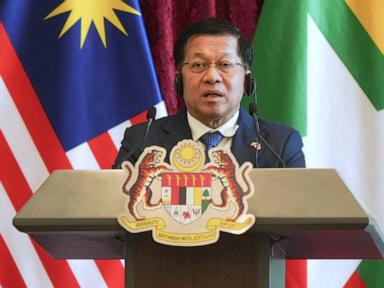
KUALA LUMPUR, Malaysia -- Myanmar’s military-backed leader pressed on with his pivot to diplomacy on a visit to Malaysia, his first since becoming president earlier this year, holding talks Thursday with the country's prime minister and other officials in an effort to boost ties.
But the visit by Min Aung Hlaing, a former military chief inaugurated as president in April after a general election judged by rights groups as designed to cement the military’s hold on power, has not been free of criticism.
The Myanmar leader has also faced pressure from other members of the Association of Southeast Asian Nations, the regional bloc known as ASEAN, to end the civil war in his country.
The visit comes just days after nearly 1,500 Myanmar nationals were returned to Myanmar from Malaysia. The United Nations refugee agency and rights groups have slammed the repatriations, saying that the security and humanitarian situation in parts of Myanmar remains volatile, and returnees could face persecution and forced military conscription in an active war zone.
Myanmar’s government is also seeking to restore international ties. Last month, the Trump administration sent a high-level delegation to Myanmar to help secure the release of American businessman Adam Castillo, who was subsequently freed and returned to the United States.
Myanmar’s state-run Global New Light of Myanmar suggested the decision was made to curry favor and maintain friendly relations with Washington.
After landing in Kuala Lumpur on Wednesday, Min Aung Hlaing sought to reassure Malaysian investors that Myanmar was on a path toward democracy and that his government was working to restore stability, state-run MRTV television reported in its evening news program.
The visit was also Min Aung Hlaing’s fifth to a fellow ASEAN member. Critics and analysts say expanding bilateral engagement could gradually normalize his government’s regional standing — even as ASEAN blocks Myanmar from top-level meetings since the country's 2021 military takeover that triggered an armed resistance.
On Thursday, after an official welcome and honor guard, he met with Malaysian Prime Minister Anwar Ibrahim, who assured him that Kuala Lumpur wanted to strengthen cooperation with Myanmar while continuing to raise concerns over the lack of democratic reforms and ongoing violence.
“We will do whatever is possible to make sure that we enhance this collaboration and ultimately take Myanmar as part of our community of nations without prejudice, and particularly in the context of ASEAN,” Anwar said.
Anwar said bilateral trade had increased by more than 140% year-on-year, while Min Aung Hlaing said Malaysia was Myanmar’s fourth-largest trading partner and ninth-largest investor.
“I firmly believe that enhancing our bilateral economic cooperation will bring highly practical economic benefits and joint opportunities for the people of both countries,” the Myanmar leader said.
Min Aung Hlaing earlier visited Laos, Thailand, Vietnam and Cambodia in attempts to rebuild regional ties that deteriorated after he ousted Aung San Suu Kyi’s government in February 2021 while serving as army chief.
Malaysia has stressed that inviting Min Aung Hlaing, who became president in April following a much-criticized election, does not amount to diplomatic recognition of Myanmar’s government.
The high-profile reception awarded Min Aung Hlaing could help reposition him internationally, said Khoo Ying Hooi, an associate professor in international relations at University Malaya. But she warned that such engagements could weaken ASEAN's leverage to push Myanmar to end its conflict.
“There's a serious contradiction here,” she said. "ASEAN continues to demand progress to end the violence but their collective pressure is already weakened” with bilateral engagement focusing on economic cooperation.
Inside a Kuala Lumpur building on Thursday, a few dozen people gathered as rights groups held a protest against the visit.
“We do not want to see ASEAN nations help him gain his legitimacy,” said Swam Saung, of the Myanmar Affairs Alliance.
Malaysia's prime minister has defended the repatriation policy, saying his country cannot host the undocumented foreign nationals indefinitely and that Myanmar must take responsibility for its citizens.
Anwar said 10,493 Myanmar citizens have so far been returned from Malaysia to Myanmar on flights and naval ships this year, including nearly 1,500 who were returned last week — the first of some 5,000 people who have agreed to be repatriated in stages.
Min Aung Hlaing promised to expedite the process and send a naval vessel to Malaysia to assist with further repatriations. Malaysia says 11,804 Myanmar nationals are still held at detention facilities across Malaysia.
It's unclear if any of the returnees included minority Muslim Rohingya, who are facing persecution in Myanmar and have been denied citizenship.
Malaysia is home to about 215,600 refugees and asylum-seekers registered with UNHCR, including about 126,000 Rohingya who make up one of Southeast Asia’s largest refugee communities. Despite hosting them, Malaysia isn’t a party to the U.N. Refugee Convention and treats refugees as undocumented migrants.
Rohingya have faced growing public hostility in Malaysia because of their increasing numbers, fueled by concerns over jobs, public services and security.
But the visit by Min Aung Hlaing, a former military chief inaugurated as president in April after a general election judged by rights groups as designed to cement the military’s hold on power, has not been free of criticism.
The Myanmar leader has also faced pressure from other members of the Association of Southeast Asian Nations, the regional bloc known as ASEAN, to end the civil war in his country.
The visit comes just days after nearly 1,500 Myanmar nationals were returned to Myanmar from Malaysia. The United Nations refugee agency and rights groups have slammed the repatriations, saying that the security and humanitarian situation in parts of Myanmar remains volatile, and returnees could face persecution and forced military conscription in an active war zone.
Myanmar’s government is also seeking to restore international ties. Last month, the Trump administration sent a high-level delegation to Myanmar to help secure the release of American businessman Adam Castillo, who was subsequently freed and returned to the United States.
Myanmar’s state-run Global New Light of Myanmar suggested the decision was made to curry favor and maintain friendly relations with Washington.
After landing in Kuala Lumpur on Wednesday, Min Aung Hlaing sought to reassure Malaysian investors that Myanmar was on a path toward democracy and that his government was working to restore stability, state-run MRTV television reported in its evening news program.
The visit was also Min Aung Hlaing’s fifth to a fellow ASEAN member. Critics and analysts say expanding bilateral engagement could gradually normalize his government’s regional standing — even as ASEAN blocks Myanmar from top-level meetings since the country's 2021 military takeover that triggered an armed resistance.
On Thursday, after an official welcome and honor guard, he met with Malaysian Prime Minister Anwar Ibrahim, who assured him that Kuala Lumpur wanted to strengthen cooperation with Myanmar while continuing to raise concerns over the lack of democratic reforms and ongoing violence.
“We will do whatever is possible to make sure that we enhance this collaboration and ultimately take Myanmar as part of our community of nations without prejudice, and particularly in the context of ASEAN,” Anwar said.
Anwar said bilateral trade had increased by more than 140% year-on-year, while Min Aung Hlaing said Malaysia was Myanmar’s fourth-largest trading partner and ninth-largest investor.
“I firmly believe that enhancing our bilateral economic cooperation will bring highly practical economic benefits and joint opportunities for the people of both countries,” the Myanmar leader said.
Min Aung Hlaing earlier visited Laos, Thailand, Vietnam and Cambodia in attempts to rebuild regional ties that deteriorated after he ousted Aung San Suu Kyi’s government in February 2021 while serving as army chief.
Malaysia has stressed that inviting Min Aung Hlaing, who became president in April following a much-criticized election, does not amount to diplomatic recognition of Myanmar’s government.
The high-profile reception awarded Min Aung Hlaing could help reposition him internationally, said Khoo Ying Hooi, an associate professor in international relations at University Malaya. But she warned that such engagements could weaken ASEAN's leverage to push Myanmar to end its conflict.
“There's a serious contradiction here,” she said. "ASEAN continues to demand progress to end the violence but their collective pressure is already weakened” with bilateral engagement focusing on economic cooperation.
Inside a Kuala Lumpur building on Thursday, a few dozen people gathered as rights groups held a protest against the visit.
“We do not want to see ASEAN nations help him gain his legitimacy,” said Swam Saung, of the Myanmar Affairs Alliance.
Malaysia's prime minister has defended the repatriation policy, saying his country cannot host the undocumented foreign nationals indefinitely and that Myanmar must take responsibility for its citizens.
Anwar said 10,493 Myanmar citizens have so far been returned from Malaysia to Myanmar on flights and naval ships this year, including nearly 1,500 who were returned last week — the first of some 5,000 people who have agreed to be repatriated in stages.
Min Aung Hlaing promised to expedite the process and send a naval vessel to Malaysia to assist with further repatriations. Malaysia says 11,804 Myanmar nationals are still held at detention facilities across Malaysia.
It's unclear if any of the returnees included minority Muslim Rohingya, who are facing persecution in Myanmar and have been denied citizenship.
Malaysia is home to about 215,600 refugees and asylum-seekers registered with UNHCR, including about 126,000 Rohingya who make up one of Southeast Asia’s largest refugee communities. Despite hosting them, Malaysia isn’t a party to the U.N. Refugee Convention and treats refugees as undocumented migrants.
Rohingya have faced growing public hostility in Malaysia because of their increasing numbers, fueled by concerns over jobs, public services and security.
🔗 Share Article
Tags:#ميانمار#ماليزيا#دبلوماسية#آسيان#الروهينجا#العلاقات الدولية
Source: ABC News
For Context
Related reads from the same topic or latest developments