After Two Decades, U.S. Forces Leave Iraq to an Uncertain Future
New York Times
N
New York Times
Original Source
U.S. forces formally withdrew from Iraq on Wednesday, ending a two-decade military presence that triggered decades of devastating bloodshed, leaving behind a fractured nation caught between its two most powerful—and now warring—allies. While some Iraqis celebrate the end of an American military presence that unleashed waves of carnage, others fear for their nation's uncertain future.
After Two Decades, U.S. Forces Leave Iraq to an Uncertain Future - The New York Times
Skip to contentSkip to site index
Log in
* Home
* + U.S.
+ International
+ Canada
+ Español
+ 中文
War in the Middle East
* Diplomatic Efforts
* Houthi-Saudi Conflict
* U.S. Cost of War
!An aerial view of a city with many low-rise buildings. A tall minaret is draped with a large red, white and black flag.
After Two Decades, U.S. Forces Leave Iraq to an Uncertain Future
Some Iraqis are celebrating the end of an American military presence that unleashed waves of bloodshed. Others fear what happens next for their country, trapped between Washington and Tehran.
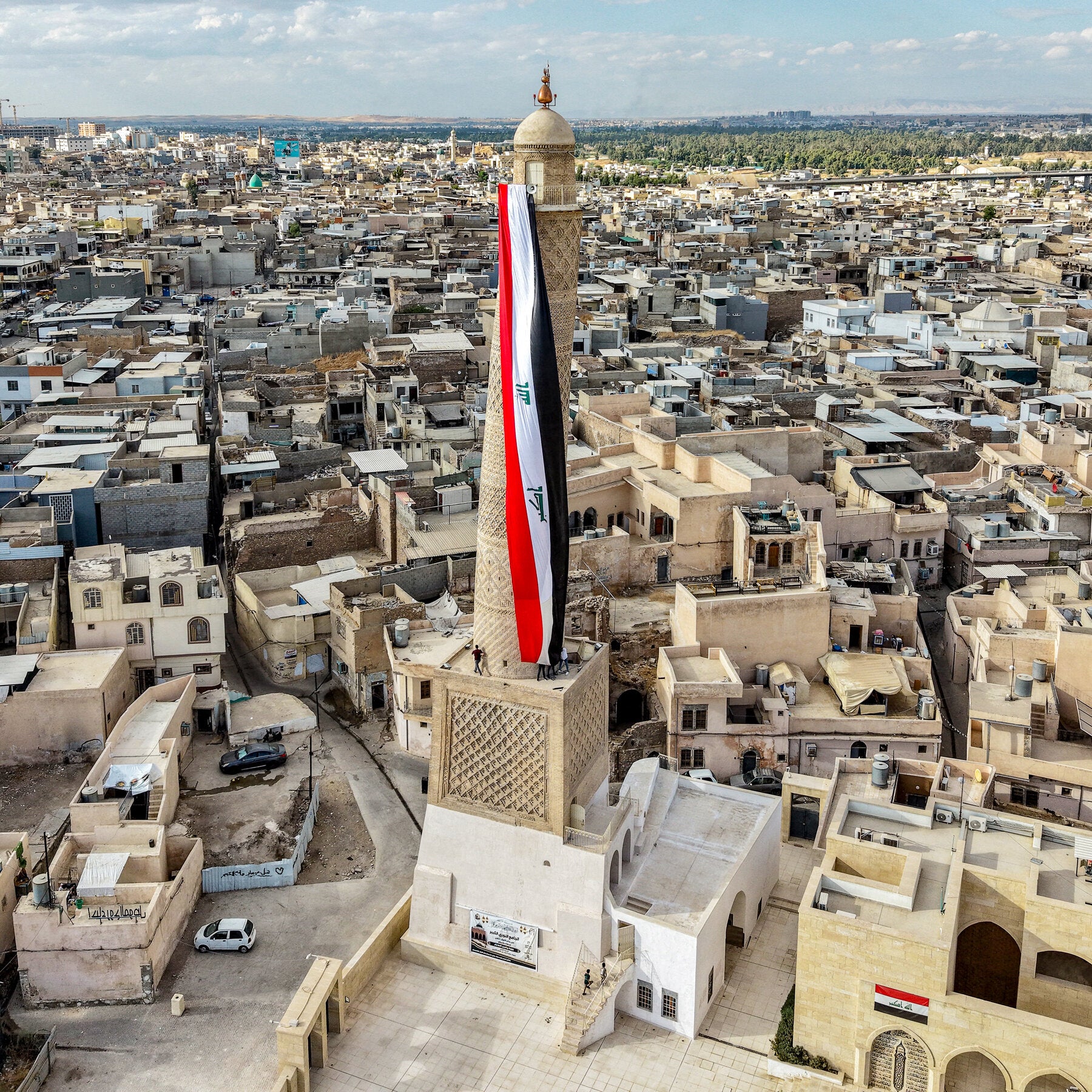
*A giant Iraqi flag hung from the Great Mosque of al-Nuri in Mosul’s old city on Tuesday. With the end of Operation Inherent Resolve, the last of the 2,500 U.S. forces stationed in Iraq this year are now gone.Credit...Zaid Al-Obeidi/Agence France-Presse — Getty Images*
After Two Decades, U.S. Forces Leave Iraq to an Uncertain Future
Some Iraqis are celebrating the end of an American military presence that unleashed waves of bloodshed. Others fear what happens next for their country, trapped between Washington and Tehran.
A giant Iraqi flag hung from the Great Mosque of al-Nuri in Mosul’s old city on Tuesday. With the end of Operation Inherent Resolve, the last of the 2,500 U.S. forces stationed in Iraq this year are now gone.Credit...Zaid Al-Obeidi/Agence France-Presse — Getty Images
Supported by
SKIP ADVERTISEMENT
Listen · 13:19 min
*
*
*
*
By Erika SolomonFalih Hassan and Eric Schmitt
Erika Solomon and Falih Hassan reported from Baghdad, and Eric Schmitt from Washington.
Sept. 30, 2026Updated 7:25 a.m. ET
U.S. forces formally withdrew from Iraq on Wednesday, ending a two-decade military presence that stoked years of devastating bloodshed, and leaves behind a battered nation struggling to unshackle itself from its two most powerful, and now warring, allies.
After toppling Saddam Hussein in 2003, the brutal dictator who ruled Iraq for nearly 24 years, American forces are making their second withdrawal from the country.
The U.S. invasion and subsequent occupation, which ended in 2011, left a country reeling from sectarian bloodletting and militant insurgencies that cost nearly 4,500 U.S. lives and killed more than 115,000 Iraqis, according to the most modest counts.
American forces ultimately returned three years later — this time to lead the international coalition fighting the Islamic State, the jihadist force that once seized swaths of Iraq and Syria and became notorious for its slaughter of Shiite Muslim Iraqis, public killings of hostages, and torture and enslavement of women from Iraq’s Yazidi minority.
With the end of Operation Inherent Resolve — the U.S. military’s official name for the multinational campaign against the Islamic State — the last of the 2,500 U.S. forces stationed in Iraq this year are now gone.
“The coalition successfully completed its organized withdrawal operation from Erbil,” Rear Adm. Liam M. Hulin, head of the joint task force for Operation Inherent Resolve, announced during a ceremony held by U.S. and Iraqi officials in Baghdad. Erbil, capital of Iraq’s semiautonomous Kurdistan region, hosted the last coalition base in Iraq.
Erika Solomon is The Times’s bureau chief for Iran and Iraq.
Eric Schmitt is a national security correspondent for The Times. He has reported on U.S. military affairs and counterterrorism for more than three decades. Contact him securely on Signal: @ericschmitt.36.
*
*
*
*
Related Content
*
*
*
*
*
*
*
*
*
*
*
*
*
*
*
*
*
*
*
Advertisement
SKIP ADVERTISEMENT
Site Index
Site Information Navigation
* © 2026 The New York Times Company
+ NYTCo
+ Contact Us
+ Accessibility
+ Work with us
+ Advertise
+ T Brand Studio
+ Privacy Policy
+ Cookie Policy
+ Terms of Service
+ Terms of Sale
+ Site Map
+ Canada
+ International
+ Help
+ Subscriptions
+
Skip to contentSkip to site index
Log in
* Home
* + U.S.
+ International
+ Canada
+ Español
+ 中文
War in the Middle East
* Diplomatic Efforts
* Houthi-Saudi Conflict
* U.S. Cost of War
!An aerial view of a city with many low-rise buildings. A tall minaret is draped with a large red, white and black flag.
After Two Decades, U.S. Forces Leave Iraq to an Uncertain Future
Some Iraqis are celebrating the end of an American military presence that unleashed waves of bloodshed. Others fear what happens next for their country, trapped between Washington and Tehran.
*A giant Iraqi flag hung from the Great Mosque of al-Nuri in Mosul’s old city on Tuesday. With the end of Operation Inherent Resolve, the last of the 2,500 U.S. forces stationed in Iraq this year are now gone.Credit...Zaid Al-Obeidi/Agence France-Presse — Getty Images*
After Two Decades, U.S. Forces Leave Iraq to an Uncertain Future
Some Iraqis are celebrating the end of an American military presence that unleashed waves of bloodshed. Others fear what happens next for their country, trapped between Washington and Tehran.
A giant Iraqi flag hung from the Great Mosque of al-Nuri in Mosul’s old city on Tuesday. With the end of Operation Inherent Resolve, the last of the 2,500 U.S. forces stationed in Iraq this year are now gone.Credit...Zaid Al-Obeidi/Agence France-Presse — Getty Images
Supported by
SKIP ADVERTISEMENT
Listen · 13:19 min
*
*
*
*
By Erika SolomonFalih Hassan and Eric Schmitt
Erika Solomon and Falih Hassan reported from Baghdad, and Eric Schmitt from Washington.
Sept. 30, 2026Updated 7:25 a.m. ET
U.S. forces formally withdrew from Iraq on Wednesday, ending a two-decade military presence that stoked years of devastating bloodshed, and leaves behind a battered nation struggling to unshackle itself from its two most powerful, and now warring, allies.
After toppling Saddam Hussein in 2003, the brutal dictator who ruled Iraq for nearly 24 years, American forces are making their second withdrawal from the country.
The U.S. invasion and subsequent occupation, which ended in 2011, left a country reeling from sectarian bloodletting and militant insurgencies that cost nearly 4,500 U.S. lives and killed more than 115,000 Iraqis, according to the most modest counts.
American forces ultimately returned three years later — this time to lead the international coalition fighting the Islamic State, the jihadist force that once seized swaths of Iraq and Syria and became notorious for its slaughter of Shiite Muslim Iraqis, public killings of hostages, and torture and enslavement of women from Iraq’s Yazidi minority.
With the end of Operation Inherent Resolve — the U.S. military’s official name for the multinational campaign against the Islamic State — the last of the 2,500 U.S. forces stationed in Iraq this year are now gone.
“The coalition successfully completed its organized withdrawal operation from Erbil,” Rear Adm. Liam M. Hulin, head of the joint task force for Operation Inherent Resolve, announced during a ceremony held by U.S. and Iraqi officials in Baghdad. Erbil, capital of Iraq’s semiautonomous Kurdistan region, hosted the last coalition base in Iraq.
Erika Solomon is The Times’s bureau chief for Iran and Iraq.
Eric Schmitt is a national security correspondent for The Times. He has reported on U.S. military affairs and counterterrorism for more than three decades. Contact him securely on Signal: @ericschmitt.36.
*
*
*
*
Related Content
*
*
*
*
*
*
*
*
*
*
*
*
*
*
*
*
*
*
*
Advertisement
SKIP ADVERTISEMENT
Site Index
Site Information Navigation
* © 2026 The New York Times Company
+ NYTCo
+ Contact Us
+ Accessibility
+ Work with us
+ Advertise
+ T Brand Studio
+ Privacy Policy
+ Cookie Policy
+ Terms of Service
+ Terms of Sale
+ Site Map
+ Canada
+ International
+ Help
+ Subscriptions
+
🔗 Share Article
Tags:#العراق#الانسحاب الأمريكي#الشرق الأوسط#تنظيم الدولة الإسلامية#الصراع الإقليمي#الأمن القومي
Source: New York Times
For Context
Related reads from the same topic or latest developments