Why Autocrats Care What People Think
New York Times
N
New York Times
Original Source
Despite its authoritarian control, the Kremlin invests heavily in understanding Russian public opinion through polling and political analysis. This preoccupation reveals itself in the carefully orchestrated parliamentary elections, where the regime monitors public sentiment while maintaining strict control over outcomes.
Why Autocrats Care What People Think - The New York Times
Russia-Ukraine War
* No Energy Truce
* Russia Strikes Ukraine
* Ukrainian Military Audits
* War Escalation
* Photos
You have a preview view of this article while we are checking your access. When we have confirmed access, the full article content will load.
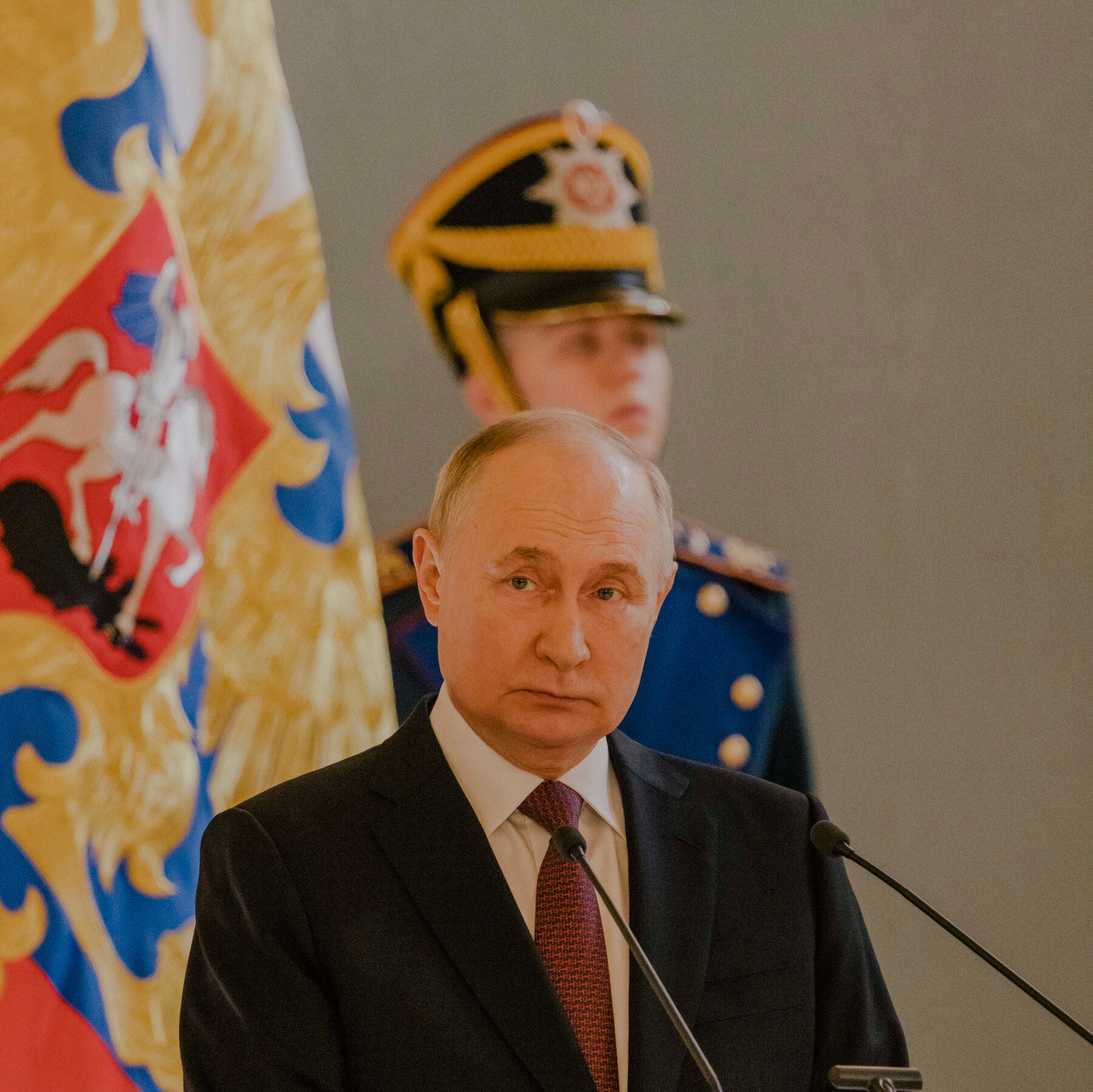
!President Vladimir V. Putin of Russia stands behind a lectern, in front of a Russian flag. A man in uniform is behind him.
Ideas
Why Autocrats Care What People Think
Russia is staging an election that matters to almost no one — except President Vladimir V. Putin and his inner circle.
*President Vladimir V. Putin of Russia at the Grand Kremlin Palace in Moscow.
Credit...
Nanna Heitmann for The New York Times*
Skip to contentSkip to site index
* Home
* + U.S.
+ International
+ Canada
+ Español
+ 中文
Ideas
Why Autocrats Care What People Think
Russia is staging an election that matters to almost no one — except President Vladimir V. Putin and his inner circle.
President Vladimir V. Putin of Russia at the Grand Kremlin Palace in Moscow.
Credit...
Nanna Heitmann for The New York Times
Supported by
SKIP ADVERTISEMENT
Listen · 12:34 min
*
*
*
*
By
Paul Sonne
Sept. 18, 2026
Updated 5:47 a.m. ET
Surprising as it may be, the Kremlin cares a great deal about what Russians think.
The Federal Protective Service, or F.S.O., the Secret Service-like guard that protects President Vladimir V. Putin’s life, operates its own sociology division that polls Russians and delivers clandestine results to the Kremlin.
The sociologist at the helm of VTsIOM, the main state-run pollster, is so important in Mr. Putin’s system that on social media his wife shows off a collection of 24 Hermès bags, worth a total of $630,000, according to a recent report by an anti-corruption foundation.
And Sergei V. Kiriyenko, the Kremlin’s chief “political technologist,” meticulously gathers and analyzes what people are saying online in towns and cities across the country.
They all have been working overtime ahead of this weekend’s parliamentary election, the first since Mr. Putin launched his full-scale invasion of Ukraine in 2022.
That controlled exercise in political theater is occupying the waking hours of thousands of Russian bureaucrats. Campaign teams are agitating for “opposition” parties that all conveniently support the war. Regional officials are organizing the nuts and bolts of ballots and turnout. Milquetoast candidates populate the airwaves of state television.
But hanging over the entire endeavor, from the government polling to the Potemkin politicking, is a gaping question: What is the point?
---
Thank you for your patience while we verify access. If you are in Reader mode please exit andlog intoyour Times account, orsubscribefor all of The Times.
---
Thank you for your patience while we verify access.
Already a subscriber?Log in.
Want all of The Times?Subscribe.
Related Content
*
*
*
*
*
*
*
*
*
*
*
*
*
*
*
*
*
*
*
Advertisement
SKIP ADVERTISEMENT
Site Index
Site Information Navigation
* ©2026 The New York Times Company
* NYTCo
* Contact Us
* Accessibility
* Work with us
* Advertise
* T Brand Studio
* Privacy Policy
* Cookie Policy
* Terms of Service
* Terms of Sale
* Site Map
* Canada
* International
* Help
* Subscriptions
*
* California Notices
Russia-Ukraine War
* No Energy Truce
* Russia Strikes Ukraine
* Ukrainian Military Audits
* War Escalation
* Photos
You have a preview view of this article while we are checking your access. When we have confirmed access, the full article content will load.
!President Vladimir V. Putin of Russia stands behind a lectern, in front of a Russian flag. A man in uniform is behind him.
Ideas
Why Autocrats Care What People Think
Russia is staging an election that matters to almost no one — except President Vladimir V. Putin and his inner circle.
*President Vladimir V. Putin of Russia at the Grand Kremlin Palace in Moscow.
Credit...
Nanna Heitmann for The New York Times*
Skip to contentSkip to site index
* Home
* + U.S.
+ International
+ Canada
+ Español
+ 中文
Ideas
Why Autocrats Care What People Think
Russia is staging an election that matters to almost no one — except President Vladimir V. Putin and his inner circle.
President Vladimir V. Putin of Russia at the Grand Kremlin Palace in Moscow.
Credit...
Nanna Heitmann for The New York Times
Supported by
SKIP ADVERTISEMENT
Listen · 12:34 min
*
*
*
*
By
Paul Sonne
Sept. 18, 2026
Updated 5:47 a.m. ET
Surprising as it may be, the Kremlin cares a great deal about what Russians think.
The Federal Protective Service, or F.S.O., the Secret Service-like guard that protects President Vladimir V. Putin’s life, operates its own sociology division that polls Russians and delivers clandestine results to the Kremlin.
The sociologist at the helm of VTsIOM, the main state-run pollster, is so important in Mr. Putin’s system that on social media his wife shows off a collection of 24 Hermès bags, worth a total of $630,000, according to a recent report by an anti-corruption foundation.
And Sergei V. Kiriyenko, the Kremlin’s chief “political technologist,” meticulously gathers and analyzes what people are saying online in towns and cities across the country.
They all have been working overtime ahead of this weekend’s parliamentary election, the first since Mr. Putin launched his full-scale invasion of Ukraine in 2022.
That controlled exercise in political theater is occupying the waking hours of thousands of Russian bureaucrats. Campaign teams are agitating for “opposition” parties that all conveniently support the war. Regional officials are organizing the nuts and bolts of ballots and turnout. Milquetoast candidates populate the airwaves of state television.
But hanging over the entire endeavor, from the government polling to the Potemkin politicking, is a gaping question: What is the point?
---
Thank you for your patience while we verify access. If you are in Reader mode please exit andlog intoyour Times account, orsubscribefor all of The Times.
---
Thank you for your patience while we verify access.
Already a subscriber?Log in.
Want all of The Times?Subscribe.
Related Content
*
*
*
*
*
*
*
*
*
*
*
*
*
*
*
*
*
*
*
Advertisement
SKIP ADVERTISEMENT
Site Index
Site Information Navigation
* ©2026 The New York Times Company
* NYTCo
* Contact Us
* Accessibility
* Work with us
* Advertise
* T Brand Studio
* Privacy Policy
* Cookie Policy
* Terms of Service
* Terms of Sale
* Site Map
* Canada
* International
* Help
* Subscriptions
*
* California Notices
🔗 Share Article
Tags:#روسيا#الانتخابات#بوتين#الاستبداد#الرأي العام#السياسة
Source: New York Times
For Context
Related reads from the same topic or latest developments