Book Review: Bob Woodward Memoir 'Secrets' Explores Why Presidents Launch Dumb Wars
By using this website, you agree to our use of cookies. This use includes personalization of content and ads, and traffic analytics. Review our Privacy Policy for more information.
Foreign Policy Get analysis and alerts more quickly in the mobile app.
Install
Back to Foreign Policy Magazine home page
Evening roundup with our editors’ favorite stories of the day
World Brief
Your guide to the most important world stories of the day
China Brief
The latest news, analysis, and data from the country each week
Situation Report
Weekly update on what’s driving U.S. national security policy
FP Weekend
A curation of our best book reviews, deep dives, and other reads
Africa Brief
Essential analysis of the stories shaping geopolitics on the continent
South Asia Brief
Weekly update on developments in India and its neighbors
The Reading List
Curated guides on geopolitics and current affairs
FP Bookshelf
A monthly guide to FP’s book reviews, excerpts, and reading recommendations
Latin America Brief
One-stop digest of politics, economics, and culture
Southeast Asia Brief
A weekly dispatch with news from the region’s 11 countries
The New Geopolitics
A five-part masterclass in IR theory with Harvard Professor Stephen M. Walt
View All Newsletters
Give a gift Give a gift
Subscribe Subscribe Give a gift Give a gift
Review: Bob Woodward Is Scared as Hell
1. Create an FP account to save articles to read later.
Sign Up
ALREADY AN FP SUBSCRIBER? LOGIN
PDF
1. **Downloadable PDFs** are a benefit of an FP subscription.
ALREADY AN FP SUBSCRIBER? LOGIN
Gift
1. Gifting articles is a subscriber benefit.
ALREADY AN FP SUBSCRIBER? LOGIN
2. This article is an Insider exclusive.
Contact us at [email protected] to learn about upgrade options, unlocking the ability to gift this article.
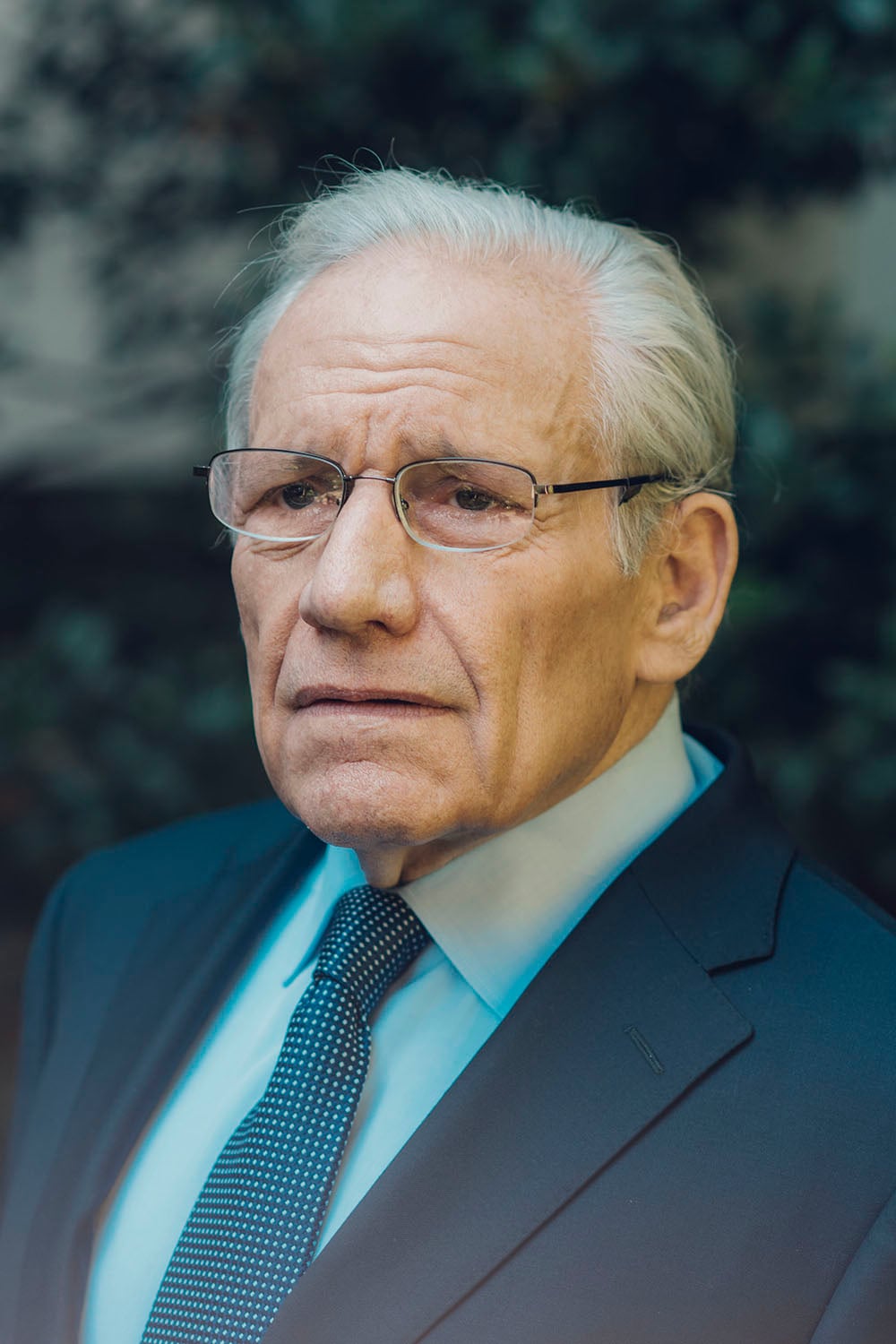
*Close-up portrait of an older man with white hair and glasses, wearing a dark suit, light blue collared shirt, and patterned tie, looking off-camera against an out-of-focus background of dark foliage.*
Investigative journalist Bob Woodward at his home in Washington on Sept. 23, 2020. Jared Soares/The New York Times
Review
Bob Woodward Is Scared as Hell
In his new memoir, the legendary reporter asks why presidents keep starting dumb wars—and worries about the future.
November 20, 2026, 2:40 PM
Investigative journalist Bob Woodward at his home in Washington on Sept. 23, 2020. Jared Soares/The New York Times
1. Get audio access with any FP subscription.
ALREADY AN FP SUBSCRIBER? LOGIN
*A pencil drawing of the headshot of Michael Hirsh*
*Michael Hirsh*
By **Michael Hirsh**, a columnist for *Foreign Policy*.
Why have recent U.S. presidents done such a poor job of thinking about the consequences of wars before they start them? And is it possible that rather than learning lessons from the past, our leaders are actually getting worse at this critical task—more impulsive, less thoughtful—while Congress and the public let them get away with it?
These are questions that run like a baleful subplot through *Secrets*, the new memoir from Bob Woodward, the *Washington Post* investigative reporter who, by delivering stunning scoops through 11 presidencies over a half century, has become a Washington institution in his own right. In his new book, he reveals for the first time the many deep-background sources on which he based his reporting over the decades.
Why have recent U.S. presidents done such a poor job of thinking about the consequences of wars before they start them? And is it possible that rather than learning lessons from the past, our leaders are actually getting worse at this critical task—more impulsive, less thoughtful—while Congress and the public let them get away with it?
***Secrets: A Reporter’s Memoir***, Bob Woodward, Simon & Schuster, 592 pp., $35, November 2026
These are questions that run like a baleful subplot through *Secrets*, the new memoir from Bob Woodward, the *Washington Post* investigative reporter who, by delivering stunning scoops through 11 presidencies over a half century, has become a Washington institution in his own right. In his new book, he reveals for the first time the many deep-background sources on which he based his reporting over the decades.
Woodward, of course, became famous as one half of the reporting duo that broke open the Watergate story (the other being Carl Bernstein), prompting the 1974 resignation of President Richard Nixon. Since then, he’s produced books on everything from the Supreme Court (*The Brethren*) to the doomed comedian John Belushi. But starting with his 1991 book, *The Commanders*, Woodward has spent a good part of his later career exploring what he calls “the most serious action a president can take”: declaring war.
Much has been written about President Donald Trump’s ill-justified war against Iran that began earlier this year, and whether his controversial defense secretary, Pete Hegseth, should bear the blame for giving Trump far-too-optimistic assurances of success. But this bumbling process, such as it was, has ample precedent going back to the Vietnam War. Time after time, presidents have botched it badly, Woodward writes, for almost always for the same reasons: a failure to thoroughly hash out the pitfalls before they pull the trigger, and a commensurate failure by their senior staff to deliver tough, honest assessments of the risks.
With a couple of exceptions, such as Brent Scowcroft, President George H.W. Bush’s national security advisor, or Colin Powell, George W. Bush’s first secretary of state, presidents rarely get the straight story from their advisors, Woodward writes.
“I have seen clearly over a half century of reporting on 11 presidents how crucial it is that a president understand that part of their job is to find ways to puncture the treacherous curtain of deference around them,” he writes. “Others might call it Oval Office Freeze, not wanting to bring bad news to a president or framing something in a way that panders to their ego or worldview.”
This deep dysfunction, Woodward suggests, is the throughline from Lyndon Johnson in Vietnam, who was ill-served by his defense secretary, Robert McNamara, and other senior military officials; to George W. Bush, who was fraudulently persuaded to invade Iraq by Vice President Dick Cheney, Defense Secretary Donald Rumsfeld, and CIA Director George Tenet.
*Two men in dark suits sit at a table; the man on the left leans his head back looking upward, and the man on the right covers his face with one hand.*
U.S. President Lyndon B. Johnson and Defense Secretary Robert McNamara react during a meeting at the White Hous
Bob Woodward Is Scared as Hell
In his new memoir, Bob Woodward asks why American presidents keep launching ill-conceived wars and voices concern about the future of wartime decision-making in Washington. He argues that the absence of candid risk assessment among senior advisers is the common thread linking presidential failures from Vietnam to the invasion of Iraq.
Cross Lines newsroom
Share this article
#بوب وودوارد#حرب فيتنام#غزو العراق#قرار الحرب#البيت الأبيض#فورين بوليسي
Original source: Foreign Policy