Ukraine’s Mood Swing
Foreign Policy

Foreign Policy
Original Source
After years of widespread public support, Ukrainian President Volodymyr Zelensky faces a dramatic reversal in public sentiment as Ukrainians increasingly view corruption as a more pressing threat than war itself. Recent polling indicates 57 percent of Ukrainians blame Zelensky for the prevalence of corruption, with predictions he would lose a re-election by a landslide margin.
Is Ukraine Turning on Zelensky?
By using this website, you agree to our use of cookies. This use includes personalization of content and ads, and traffic analytics. Review our Privacy Policy for more information.
!Foreign Policy
Foreign Policy
Get analysis and alerts more quickly in the mobile app.
Install
Back to Foreign Policy Magazine home page
* Latest
* Regions
+ Asia & the Pacific
+ China
+ Middle East & Africa
+ Americas
+ Europe
* Newsletters
Editors’ Picks
Evening roundup with our editors’ favorite stories of the day
!World Brief Icon
World Brief
Your guide to the most important world stories of the day
!China Brief Icon
China Brief
The latest news, analysis, and data from the country each week
Situation Report
Weekly update on what’s driving U.S. national security policy
FP Weekend
A curation of our best book reviews, deep dives, and other reads
!Africa Brief Icon
Africa Brief
Essential analysis of the stories shaping geopolitics on the continent
!South Asia Brief Icon
South Asia Brief
Weekly update on developments in India and its neighbors
The Reading List
Curated guides on geopolitics and current affairs
FP Bookshelf
A monthly guide to FP’s book reviews, excerpts, and reading recommendations
!Latin America Brief Icon
Latin America Brief
One-stop digest of politics, economics, and culture
!Southeast Asia Brief Icon
Southeast Asia Brief
A weekly dispatch with news from the region’s 11 countries
The New Geopolitics
A five-part masterclass in IR theory with Harvard Professor Stephen M. Walt
View All Newsletters
* FP Live
* Latest
* Trending:
* Iran war
* China's bet on AI
Search this website
* Preferences
* My FP Feed
* Saved Articles
* Newsletters
* Magazine Archive
* Subscription Settings
* FAQs
* Log Out
Sign In
Sign In
Partner with FP at UNGA81 Partner with FP at UNGA81
Subscribe SubscribePartner with FP at UNGA81 Partner with FP at UNGA81
Analysis:
Ukraine’s Mood Swing
*
*
* Facebook
* Bluesky
* X
* LinkedIn
* WhatsApp
* Reddit
Save
Save
1. Create an FP account to save articles to read later.
Sign Up
ALREADY AN FP SUBSCRIBER? LOGIN
PDF
PDF
1. **Downloadable PDFs** are a benefit of an FP subscription.
Subscribe Now
ALREADY AN FP SUBSCRIBER? LOGIN
Gift
Gift
*
*
* WhatsApp
1. Gifting articles is a subscriber benefit.
Subscribe Now
ALREADY AN FP SUBSCRIBER? LOGIN
2. This article is an Insider exclusive.
Contact us at [email protected] to learn about upgrade options, unlocking the ability to gift this article.
Analysis
Ukraine’s Mood Swing
Public sentiment is turning against Zelensky amid corruption concerns and years of war.
By **Adrian Karatnycky**, a senior fellow at the Atlantic Council and the founder of Myrmidon Group.
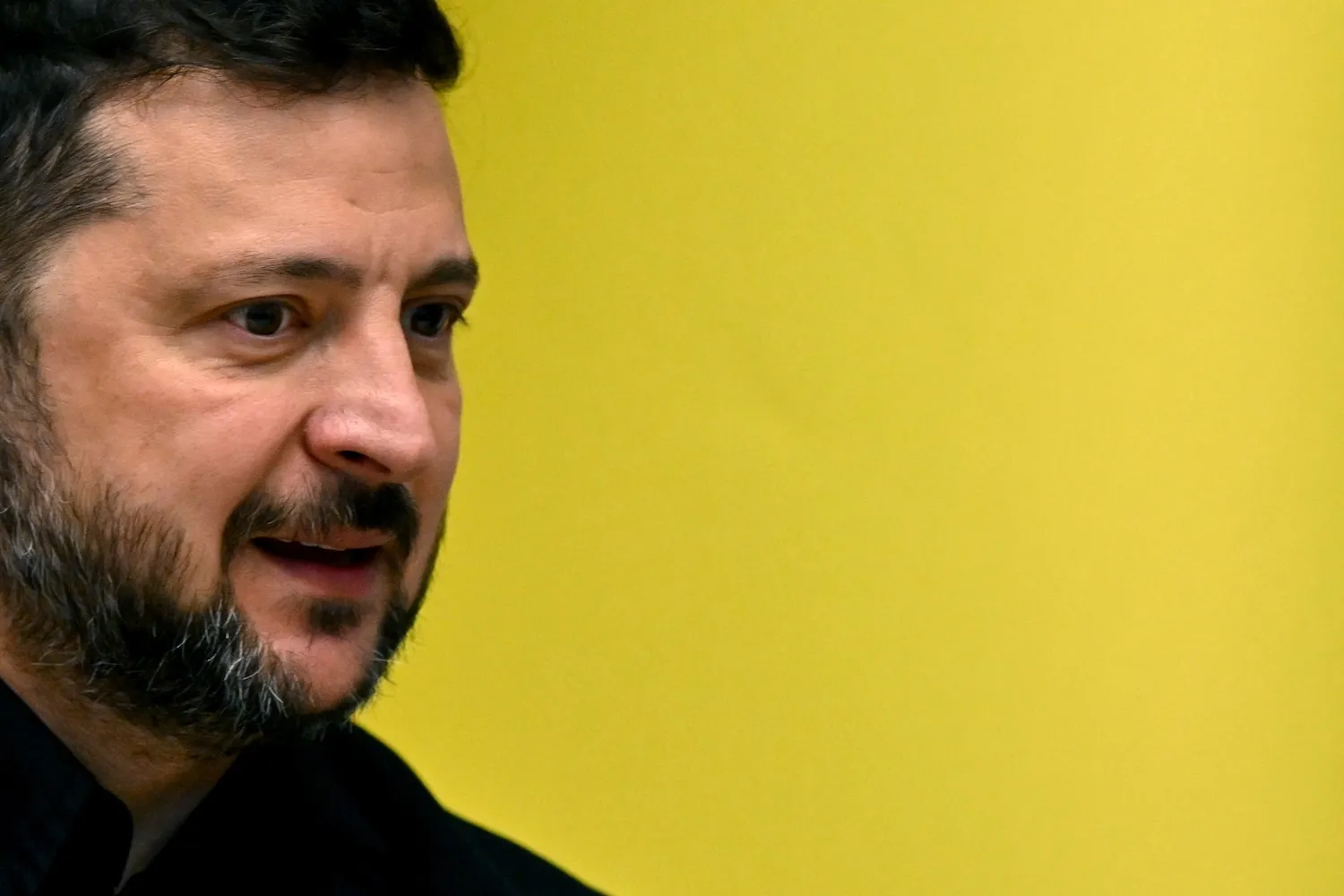
!A close shot shows Zelensky from the shoulders up, mouth open as he speaks, against a bright yellow wall in the background.
*A close shot shows Zelensky from the shoulders up, mouth open as he speaks, against a bright yellow wall in the background.*
Ukrainian President Volodymyr Zelensky attends a meeting in Belgrade, Serbia, on Aug. 8. Andrej Isakovic / AFP
My FP:
Follow topics and authors to get straight to what you like. Exclusively for FP subscribers. Subscribe Now | Log In
*
*
*
September 3, 2026, 6:00 AM
For most of his presidency and especially since Russia launched its full-scale war, Ukrainian voters have rallied around Volodymyr Zelensky as a pillar of national resilience and unity. That’s for good reason: He has been an effective wartime leader and helped mobilize the democratic world on Ukraine’s behalf.
But now, after more than seven years in office, four and a half years of war with Russia, and a series of scandals involving his leadership team and close friends, Zelensky appears to have lost the nation’s political support. Indeed, polling published in early August points to a major mood swing among Ukrainians, suggesting that many of them have lost faith in Zelensky and would vote him out of office at the earliest opportunity.
For most of his presidency and especially since Russia launched its full-scale war, Ukrainian voters have rallied around Volodymyr Zelensky as a pillar of national resilience and unity. That’s for good reason: He has been an effective wartime leader and helped mobilize the democratic world on Ukraine’s behalf.
But now, after more than seven years in office, four and a half years of war with Russia, and a series of scandals involving his leadership team and close friends, Zelensky appears to have lost the nation’s political support. Indeed, polling published in early August points to a major mood swing among Ukrainians, suggesting that many of them have lost faith in Zelensky and would vote him out of office at the earliest opportunity.
This swing in sentiment is likely to gain further momentum amid a new scandal involving the president’s key staff. Regrettably, Zelensky has spoken little of the alleged misdeeds of those in his inner circle. He highlights that he is not the subject of any investigations by anti-corruption agencies—a deceptive claim, since the Ukrainian Constitution bars such institutions from investigating or bringing criminal charges against a sitting president.
This lack of moral compass is all the more shocking given the extravagant promises that Zelensky made during his electoral campaign in 2019, when he guaranteed prosecutions and convictions of corrupt officials within months of taking office. Yet more than a dozen members of his party’s legislature, numerous government ministers, and members of his presidential office have been implicated or charged with corruption and illegal enrichment.
Recent polling from Ukrainian political research company SOCIS shows that Ukrainians now regard corruption as a greater problem than the war itself, in part because they link Ukraine’s fate on the battlefield to corruption at the highest levels of the state. Fully 90 percent of Ukrainians believe that corruption stands at a high or extremely high level. Most significantly and most emblematic of the shift, nearly 57 percent of Ukrainians blame Zelensky for the prevalence of corruption, nearly double the number in a similar poll by SOCIS in April 2025. The SOCIS polling also projects that three different rivals would beat him in a second-round election, each by a landslide margin of around 2-to-1.
Zelensky’s loss of support is largely a self-inflicted wound, the product of a philosophy of governance based on rule through a small group of functionaries prized for their personal loyalty. For years, Zelensky has touted and defended this highly centralized system of governance, in which nearly all decision-making emanates from the presidential office. In December 2023, he famously declared that he relies on a team of five to six key managers to run the country’s affairs. Such centralization, while in violation of the constitution, was long accepted by the public as necessary amid the wartime emergency.
In the past year, however, numerous scandals inside the heart of Zelensky’s office have shaken public confidence, and his system of rule through close confidants and managers is a shambles. Four of Zelensky’s top managers are implicated in allegations of illicit activities.
Andriy Smyrnov, a former deputy head of the presidential office, was indicted and brought before the High Anti-Corruption Court on charges of illicit enrichment and money laundering. In January, Rostyslav Shurma, a former deputy head for economic issues in the presidential office, was served with a notice of suspicion of involvement in a multimillion-dollar scheme involving state “green tariffs” earned by his brother’s solar power facilities; he now lives in Germany and has not returned to Ukraine.
Oleh Tatarov—a deputy head of the presidential office and perhaps Zelensky’s most influential current aide—likely benefited from the transfer of a bribery case against him from the independent National Anti-Corruption Bureau of U
By using this website, you agree to our use of cookies. This use includes personalization of content and ads, and traffic analytics. Review our Privacy Policy for more information.
!Foreign Policy
Foreign Policy
Get analysis and alerts more quickly in the mobile app.
Install
Back to Foreign Policy Magazine home page
* Latest
* Regions
+ Asia & the Pacific
+ China
+ Middle East & Africa
+ Americas
+ Europe
* Newsletters
Editors’ Picks
Evening roundup with our editors’ favorite stories of the day
!World Brief Icon
World Brief
Your guide to the most important world stories of the day
!China Brief Icon
China Brief
The latest news, analysis, and data from the country each week
Situation Report
Weekly update on what’s driving U.S. national security policy
FP Weekend
A curation of our best book reviews, deep dives, and other reads
!Africa Brief Icon
Africa Brief
Essential analysis of the stories shaping geopolitics on the continent
!South Asia Brief Icon
South Asia Brief
Weekly update on developments in India and its neighbors
The Reading List
Curated guides on geopolitics and current affairs
FP Bookshelf
A monthly guide to FP’s book reviews, excerpts, and reading recommendations
!Latin America Brief Icon
Latin America Brief
One-stop digest of politics, economics, and culture
!Southeast Asia Brief Icon
Southeast Asia Brief
A weekly dispatch with news from the region’s 11 countries
The New Geopolitics
A five-part masterclass in IR theory with Harvard Professor Stephen M. Walt
View All Newsletters
* FP Live
* Latest
* Trending:
* Iran war
* China's bet on AI
Search this website
* Preferences
* My FP Feed
* Saved Articles
* Newsletters
* Magazine Archive
* Subscription Settings
* FAQs
* Log Out
Sign In
Sign In
Partner with FP at UNGA81 Partner with FP at UNGA81
Subscribe SubscribePartner with FP at UNGA81 Partner with FP at UNGA81
Analysis:
Ukraine’s Mood Swing
*
*
* Bluesky
* X
Save
Save
1. Create an FP account to save articles to read later.
Sign Up
ALREADY AN FP SUBSCRIBER? LOGIN
1. **Downloadable PDFs** are a benefit of an FP subscription.
Subscribe Now
ALREADY AN FP SUBSCRIBER? LOGIN
Gift
Gift
*
*
1. Gifting articles is a subscriber benefit.
Subscribe Now
ALREADY AN FP SUBSCRIBER? LOGIN
2. This article is an Insider exclusive.
Contact us at [email protected] to learn about upgrade options, unlocking the ability to gift this article.
Analysis
Ukraine’s Mood Swing
Public sentiment is turning against Zelensky amid corruption concerns and years of war.
By **Adrian Karatnycky**, a senior fellow at the Atlantic Council and the founder of Myrmidon Group.
!A close shot shows Zelensky from the shoulders up, mouth open as he speaks, against a bright yellow wall in the background.
*A close shot shows Zelensky from the shoulders up, mouth open as he speaks, against a bright yellow wall in the background.*
Ukrainian President Volodymyr Zelensky attends a meeting in Belgrade, Serbia, on Aug. 8. Andrej Isakovic / AFP
My FP:
Follow topics and authors to get straight to what you like. Exclusively for FP subscribers. Subscribe Now | Log In
*
*
*
September 3, 2026, 6:00 AM
For most of his presidency and especially since Russia launched its full-scale war, Ukrainian voters have rallied around Volodymyr Zelensky as a pillar of national resilience and unity. That’s for good reason: He has been an effective wartime leader and helped mobilize the democratic world on Ukraine’s behalf.
But now, after more than seven years in office, four and a half years of war with Russia, and a series of scandals involving his leadership team and close friends, Zelensky appears to have lost the nation’s political support. Indeed, polling published in early August points to a major mood swing among Ukrainians, suggesting that many of them have lost faith in Zelensky and would vote him out of office at the earliest opportunity.
For most of his presidency and especially since Russia launched its full-scale war, Ukrainian voters have rallied around Volodymyr Zelensky as a pillar of national resilience and unity. That’s for good reason: He has been an effective wartime leader and helped mobilize the democratic world on Ukraine’s behalf.
But now, after more than seven years in office, four and a half years of war with Russia, and a series of scandals involving his leadership team and close friends, Zelensky appears to have lost the nation’s political support. Indeed, polling published in early August points to a major mood swing among Ukrainians, suggesting that many of them have lost faith in Zelensky and would vote him out of office at the earliest opportunity.
This swing in sentiment is likely to gain further momentum amid a new scandal involving the president’s key staff. Regrettably, Zelensky has spoken little of the alleged misdeeds of those in his inner circle. He highlights that he is not the subject of any investigations by anti-corruption agencies—a deceptive claim, since the Ukrainian Constitution bars such institutions from investigating or bringing criminal charges against a sitting president.
This lack of moral compass is all the more shocking given the extravagant promises that Zelensky made during his electoral campaign in 2019, when he guaranteed prosecutions and convictions of corrupt officials within months of taking office. Yet more than a dozen members of his party’s legislature, numerous government ministers, and members of his presidential office have been implicated or charged with corruption and illegal enrichment.
Recent polling from Ukrainian political research company SOCIS shows that Ukrainians now regard corruption as a greater problem than the war itself, in part because they link Ukraine’s fate on the battlefield to corruption at the highest levels of the state. Fully 90 percent of Ukrainians believe that corruption stands at a high or extremely high level. Most significantly and most emblematic of the shift, nearly 57 percent of Ukrainians blame Zelensky for the prevalence of corruption, nearly double the number in a similar poll by SOCIS in April 2025. The SOCIS polling also projects that three different rivals would beat him in a second-round election, each by a landslide margin of around 2-to-1.
Zelensky’s loss of support is largely a self-inflicted wound, the product of a philosophy of governance based on rule through a small group of functionaries prized for their personal loyalty. For years, Zelensky has touted and defended this highly centralized system of governance, in which nearly all decision-making emanates from the presidential office. In December 2023, he famously declared that he relies on a team of five to six key managers to run the country’s affairs. Such centralization, while in violation of the constitution, was long accepted by the public as necessary amid the wartime emergency.
In the past year, however, numerous scandals inside the heart of Zelensky’s office have shaken public confidence, and his system of rule through close confidants and managers is a shambles. Four of Zelensky’s top managers are implicated in allegations of illicit activities.
Andriy Smyrnov, a former deputy head of the presidential office, was indicted and brought before the High Anti-Corruption Court on charges of illicit enrichment and money laundering. In January, Rostyslav Shurma, a former deputy head for economic issues in the presidential office, was served with a notice of suspicion of involvement in a multimillion-dollar scheme involving state “green tariffs” earned by his brother’s solar power facilities; he now lives in Germany and has not returned to Ukraine.
Oleh Tatarov—a deputy head of the presidential office and perhaps Zelensky’s most influential current aide—likely benefited from the transfer of a bribery case against him from the independent National Anti-Corruption Bureau of U
🔗 Share Article
Tags:#أوكرانيا#زيلينسكي#الفساد#الانتخابات#الحرب الروسية#الاستطلاعات
Source: Foreign Policy
For Context
Related reads from the same topic or latest developments


