Indian opposition leaders march to top court to demand election chief resign
BBC World

BBC World
Original Source
India's opposition parties launched a massive march to the Supreme Court in Delhi demanding the resignation of the election chief, accusing him of manipulating voter rolls to benefit Prime Minister Narendra Modi's party. The demonstration reflects escalating tensions over electoral fraud allegations, as authorities imposed heavy security restrictions across the capital.
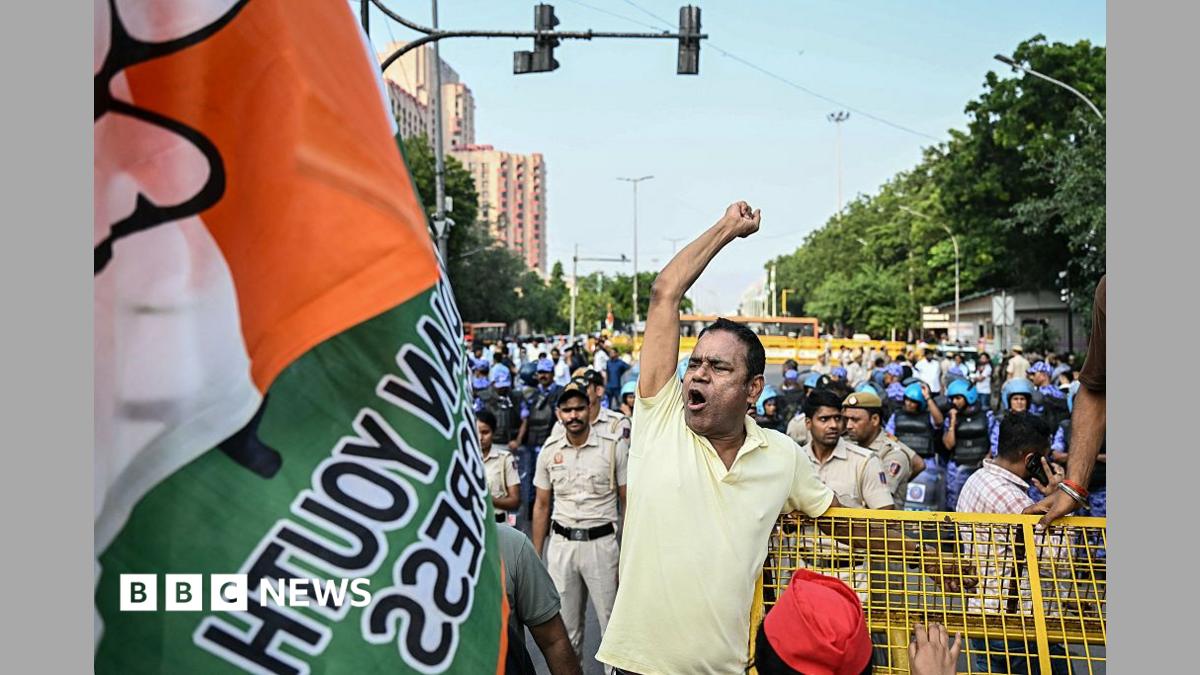
India's opposition parties are marching to the Supreme Court in Delhi to demand the resignation of the election chief over alleged voter fraud.
This will be the latest in a series of demonstrations in Delhi, with thousands of security forces deployed and roads barricaded in the capital.
Attempts to hold a protest by the Cockroach Janata Party pressure group over the weekend led to thousands of demonstrators being detained.
Opposition parties allege that under Chief Election Commissioner Gyanesh Kumar, India's voter rolls are being manipulated to benefit Prime Minister Narendra Modi's Bharatiya Janata Party (BJP). Both the Election Commission and the BJP have rejected the charge.
The opposition lawmakers want to submit a memorandum to Chief Justice Surya Kant, but he has told reporters he declined the meeting citing "certain reasons".
He did not provide the reasons, but media reports citing the letter have said that he pointed out that some of the issues the opposition wanted to raise with him were also pending before the court. The BBC has not seen the letter.
"Every Indian citizen has the right to approach the court, and we will hear their concerns and grant whatever is due under the law," he told reporters.
Congress MP Rahul Gandhi, meanwhile, has called "all opposition parties, civil society groups [and] all those who believe in democracy" to join Monday's march.
In a press conference on Monday, he shared a letter that he and Congress President Mallikarjun Kharge had written to the Chief Justice, laying out their concerns with Kumar's alleged conduct and with the contentious electoral roll revision.
He said that Kant had asked them to file a petition, which they would do at the end of their march.
Authorities in Delhi have announced heavy restrictions on traffic and on entry and exit at some key metro stations. There is also heavy security deployment in central Delhi and along the route of the march.
Thousands of people were on Barakhamba road, where the march began, as a bus carrying Rahul Gandhi and other opposition leaders arrived just before 15:30 local time. Supporters waved flags and chanted his name as the Congress MP and others waved through the windows. Seated a few rows behind Rahul was Neha Bora, a leftist student leader who has gained prominence for participating in the protests.
A few kilometres on, in a place called Mandi House, the bus stopped and Rahul Gandhi and a few others climbed on top of the vehicle to wave at supporters lining up the street in the thousands. Many protesters climbed on to other buses parked here, while some waved flags and chanted anti-government slogans to the sound of drums and lots of cheering.
Over the past week, top opposition leaders, including Gandhi, have been briefly detained several times while leading protests in central Delhi.
On Sunday, the CJP - which is not a registered political party - said it would continue protesting until Kumar stepped down.
The CJP, which successfully led a protest over the summer that culminated in India's federal education minister's resignation, had called for a march on Saturday to Jantar Mantar - the best-known protest site in Delhi where the last set of sit-in demonstrations had also happened.
But authorities in Delhi imposed overarching restrictions that made it almost impossible for protesters to travel and reach Jantar Mantar - trains were cancelled, dozens of metro stations were shut down and tens of thousands of police and paramilitary personnel were on the roads to detain protesters.
This will be the latest in a series of demonstrations in Delhi, with thousands of security forces deployed and roads barricaded in the capital.
Attempts to hold a protest by the Cockroach Janata Party pressure group over the weekend led to thousands of demonstrators being detained.
Opposition parties allege that under Chief Election Commissioner Gyanesh Kumar, India's voter rolls are being manipulated to benefit Prime Minister Narendra Modi's Bharatiya Janata Party (BJP). Both the Election Commission and the BJP have rejected the charge.
The opposition lawmakers want to submit a memorandum to Chief Justice Surya Kant, but he has told reporters he declined the meeting citing "certain reasons".
He did not provide the reasons, but media reports citing the letter have said that he pointed out that some of the issues the opposition wanted to raise with him were also pending before the court. The BBC has not seen the letter.
"Every Indian citizen has the right to approach the court, and we will hear their concerns and grant whatever is due under the law," he told reporters.
Congress MP Rahul Gandhi, meanwhile, has called "all opposition parties, civil society groups [and] all those who believe in democracy" to join Monday's march.
In a press conference on Monday, he shared a letter that he and Congress President Mallikarjun Kharge had written to the Chief Justice, laying out their concerns with Kumar's alleged conduct and with the contentious electoral roll revision.
He said that Kant had asked them to file a petition, which they would do at the end of their march.
Authorities in Delhi have announced heavy restrictions on traffic and on entry and exit at some key metro stations. There is also heavy security deployment in central Delhi and along the route of the march.
Thousands of people were on Barakhamba road, where the march began, as a bus carrying Rahul Gandhi and other opposition leaders arrived just before 15:30 local time. Supporters waved flags and chanted his name as the Congress MP and others waved through the windows. Seated a few rows behind Rahul was Neha Bora, a leftist student leader who has gained prominence for participating in the protests.
A few kilometres on, in a place called Mandi House, the bus stopped and Rahul Gandhi and a few others climbed on top of the vehicle to wave at supporters lining up the street in the thousands. Many protesters climbed on to other buses parked here, while some waved flags and chanted anti-government slogans to the sound of drums and lots of cheering.
Over the past week, top opposition leaders, including Gandhi, have been briefly detained several times while leading protests in central Delhi.
On Sunday, the CJP - which is not a registered political party - said it would continue protesting until Kumar stepped down.
The CJP, which successfully led a protest over the summer that culminated in India's federal education minister's resignation, had called for a march on Saturday to Jantar Mantar - the best-known protest site in Delhi where the last set of sit-in demonstrations had also happened.
But authorities in Delhi imposed overarching restrictions that made it almost impossible for protesters to travel and reach Jantar Mantar - trains were cancelled, dozens of metro stations were shut down and tens of thousands of police and paramilitary personnel were on the roads to detain protesters.
🔗 Share Article
Tags:#الهند#المعارضة السياسية#الانتخابات#المحكمة العليا#الاحتجاجات#دلهي
Source: BBC World
For Context
Related reads from the same topic or latest developments