How to Bring Peace to Sudan
Foreign Policy

Foreign Policy
Original Source
Sudan's Transitional Sovereignty Council president insists that ending the war requires a homegrown solution, not repeated international mediation efforts that have failed. The conflict is not a civil war but an assault by a paramilitary group on a sovereign state, and foreign interference only perpetuates suffering and looting.
How to Bring Peace to Sudan
!Foreign Policy
Foreign Policy Get analysis and alerts more quickly in the mobile app.
Install
Back to Foreign Policy Magazine home page
* Latest
* Regions
+ Asia & the Pacific
+ China
+ Middle East & Africa
+ Americas
+ Europe
* Newsletters
Editors’ Picks
Evening roundup with our editors’ favorite stories of the day
!World Brief Icon
World Brief
Your guide to the most important world stories of the day
!China Brief Icon
China Brief
The latest news, analysis, and data from the country each week
Situation Report
Weekly update on what’s driving U.S. national security policy
FP Weekend
A curation of our best book reviews, deep dives, and other reads
!Africa Brief Icon
Africa Brief
Essential analysis of the stories shaping geopolitics on the continent
!South Asia Brief Icon
South Asia Brief
Weekly update on developments in India and its neighbors
The Reading List
Curated guides on geopolitics and current affairs
FP Bookshelf
A monthly guide to FP’s book reviews, excerpts, and reading recommendations
!Latin America Brief Icon
Latin America Brief
One-stop digest of politics, economics, and culture
!Southeast Asia Brief Icon
Southeast Asia Brief
A weekly dispatch with news from the region’s 11 countries
The New Geopolitics
A five-part masterclass in IR theory with Harvard Professor Stephen M. Walt
View All Newsletters
* FP Live
* Latest
* Trending:
* Trump-Xi meeting
* United Nations General Assembly
Search this website
* Preferences
* My FP Feed
* Saved Articles
* Newsletters
* Magazine Archive
* Subscription Settings
* FAQs
* Log Out
Sign In
Sign In
Partner with FP at UNGA81 Partner with FP at UNGA81
Subscribe Subscribe Partner with FP at UNGA81 Partner with FP at UNGA81
Argument: How to Bring Peace to Sudan
*
*
* Facebook
* Bluesky
* X
* LinkedIn
* WhatsApp
* Reddit
Save
1. Create an FP account to save articles to read later.
Sign Up
ALREADY AN FP SUBSCRIBER? LOGIN
PDF
1. **Downloadable PDFs** are a benefit of an FP subscription.
Subscribe Now
ALREADY AN FP SUBSCRIBER? LOGIN
Gift
*
*
* WhatsApp
1. Gifting articles is a subscriber benefit.
Subscribe Now
ALREADY AN FP SUBSCRIBER? LOGIN
2. This article is an Insider exclusive.
Contact us at [email protected] to learn about upgrade options, unlocking the ability to gift this article.
Argument
An expert’s point of view on a current event.
How to Bring Peace to Sudan
The president of the country’s Transitional Sovereignty Council argues that any solution must be homemade.
By **Abdalfatah Alburhan**, the president of Sudan’s Transitional Sovereignty Council.
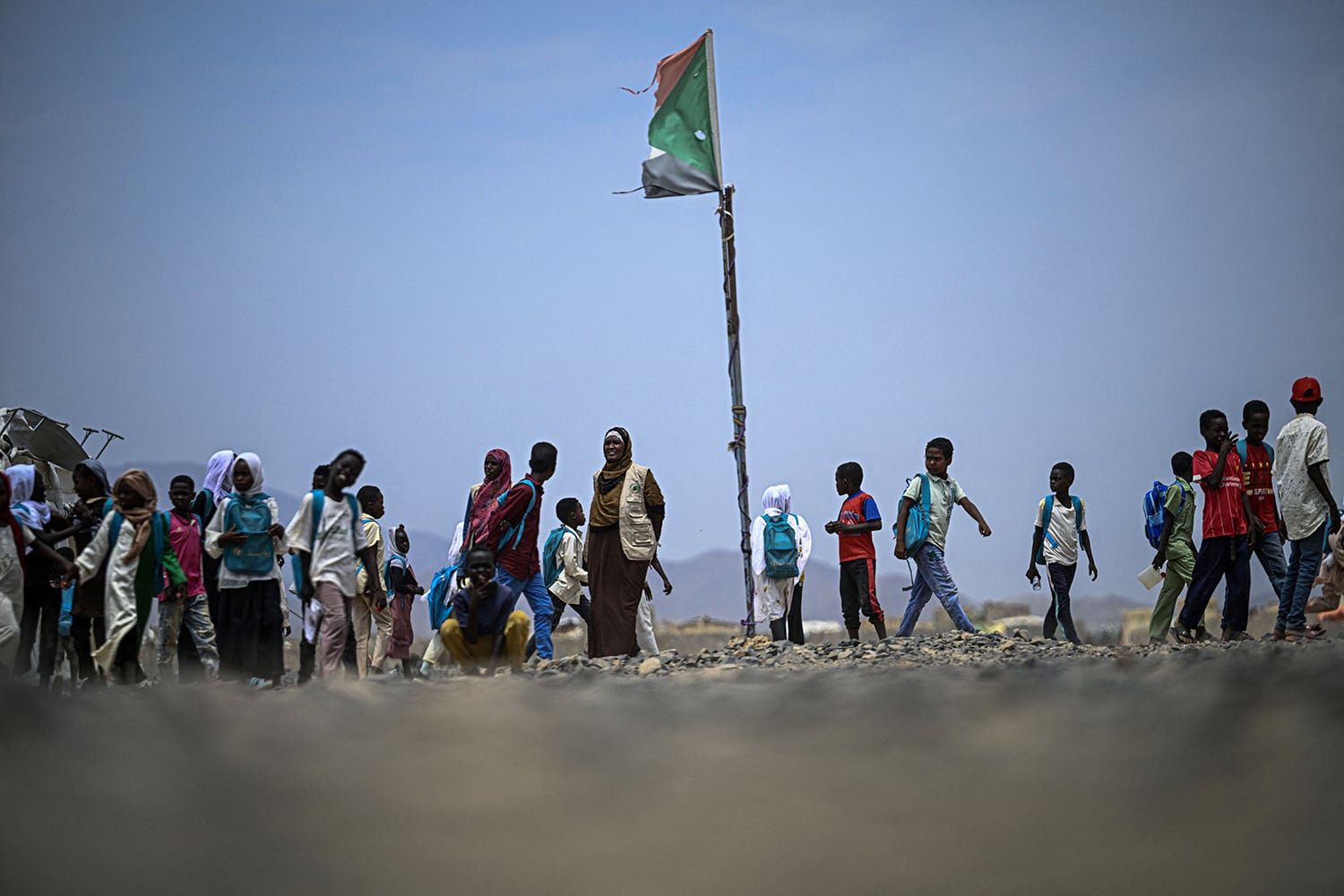
!A wide shot of a group of children and adults walking across a dry, rocky outdoor landscape under a clear blue sky. Many of the children are wearing backpacks. In the center, a tall flagpole displays a tattered flag with red, white, black, and green colors.
*A wide shot of a group of children and adults walking across a dry, rocky outdoor landscape under a clear blue sky. Many of the children are wearing backpacks. In the center, a tall flagpole displays a tattered flag with red, white, black, and green colors.*
Students pass a tattered Sudan flag as they leave a school south of Port Sudan on April 26. Khaled Desouki/AFP via Getty Images
1. Get audio access with any FP subscription.
Subscribe Now
ALREADY AN FP SUBSCRIBER? LOGIN
September 21, 2026, 5:03 PM
Well into its fourth year, the war in Sudan is the world’s largest humanitarian crisis. At least 59,000 people have been killed and more than 14 million displaced, while famine and widespread sexual violence have left millions in urgent need of food, medicine, and mental health support.
Sudanese people know the war must end—and, God willing, it will. But after more than a dozen failed cease-fires brokered by international parties, it is time to put a lasting end to this war so the guns do not return when the world looks away. That is what Sudanese civilians ask of me, as president of Sudan’s Transitional Sovereignty Council, and of others entrusted with governing: that the war is ended for good and that the foreign meddling that has fractured our nation and profited from our suffering ceases completely.
Well into its fourth year, the war in Sudan is the world’s largest humanitarian crisis. At least 59,000 people have been killed and more than 14 million displaced, while famine and widespread sexual violence have left millions in urgent need of food, medicine, and mental health support.
Sudanese people know the war must end—and, God willing, it will. But after more than a dozen failed cease-fires brokered by international parties, it is time to put a lasting end to this war so the guns do not return when the world looks away. That is what Sudanese civilians ask of me, as president of Sudan’s Transitional Sovereignty Council, and of others entrusted with governing: that the war is ended for good and that the foreign meddling that has fractured our nation and profited from our suffering ceases completely.
The war in Sudan is not a fight between two “factions” or a “civil war”; our sovereign state and the Rapid Support Forces (RSF) militia do not sit on equal moral and legal ground. Rather, this is an assault on a United Nations member state by a paramilitary group that survives on looting, killing, and ethnic cleansing. The RSF must not be legitimized or treated as an equal partner. After all, the RSF’s leaders—Mohamed Hamdan Dagalo and his top deputies—are the same commanders who ordered the Janjaweed militia to rape and massacre non-Arab communities in Darfur in the early 2000s.
Last year, the 30-month siege of El Fasher ended in mass slaughter. Neighborhoods were decimated, families were murdered in their homes, and bodies rotted in the streets with no one to bury them. Before the assault, the U.N. counted more than 260,000 civilians trapped in the city, half of them children. Since El Fasher fell in October 2025, the U.N. has recorded some 127,000 people displaced from the city and the villages around it. Although independent investigators have not been able to enter the city, Yale University’s satellite analysts found evidence of mass graves—which suggests the deliberate targeting of civilians—while a U.N. fact-finding mission found the atrocities to bear the “hallmarks of genocide.”
A militia cannot sustain a war of this scale alone. Hundreds of foreign fighters have reinforced the RSF since 2024, recruited through networks funded by transnational entities operating across several countries. This has been widely recognized: In June, the U.S. Treasury Department sanctioned eight individuals and entities linked to those networks. Last month, drones struck Khartoum and other cities in the largest coordinated barrage in months, demonstrating the increasingly sophisticated military capabilities enabled by foreign interference.
Read More
*
*A Sudanese flag is held by a machine gun covered with an ammunition belt in Abraq, Sudan, on June 22, 2019.*
Peace in Sudan Can Only Flower After a Weapons Embargo
The case for the White House’s Security Council resolution on Sudan, made by two senior administration officials. !This article has an audio recording
Argument
|
Michael Waltz, Massad Boulos
*
*Around a dozen trucks painted with green camouflage are seen across a dusty stretch of land beneath a hazy sky. Fighters in matching khaki uniforms and hats perch on the trucks, most of them carrying rifles.*
Sudan’s Rapid Support Forces Are Terrorists
Designating the group as such could help bring an end to Sudan’s civil war. !This article has an audio recording
Argument
|
Cameron Hudson
*
*Students leave a school south of Port Sudan on April
!Foreign Policy
Foreign Policy Get analysis and alerts more quickly in the mobile app.
Install
Back to Foreign Policy Magazine home page
* Latest
* Regions
+ Asia & the Pacific
+ China
+ Middle East & Africa
+ Americas
+ Europe
* Newsletters
Editors’ Picks
Evening roundup with our editors’ favorite stories of the day
!World Brief Icon
World Brief
Your guide to the most important world stories of the day
!China Brief Icon
China Brief
The latest news, analysis, and data from the country each week
Situation Report
Weekly update on what’s driving U.S. national security policy
FP Weekend
A curation of our best book reviews, deep dives, and other reads
!Africa Brief Icon
Africa Brief
Essential analysis of the stories shaping geopolitics on the continent
!South Asia Brief Icon
South Asia Brief
Weekly update on developments in India and its neighbors
The Reading List
Curated guides on geopolitics and current affairs
FP Bookshelf
A monthly guide to FP’s book reviews, excerpts, and reading recommendations
!Latin America Brief Icon
Latin America Brief
One-stop digest of politics, economics, and culture
!Southeast Asia Brief Icon
Southeast Asia Brief
A weekly dispatch with news from the region’s 11 countries
The New Geopolitics
A five-part masterclass in IR theory with Harvard Professor Stephen M. Walt
View All Newsletters
* FP Live
* Latest
* Trending:
* Trump-Xi meeting
* United Nations General Assembly
Search this website
* Preferences
* My FP Feed
* Saved Articles
* Newsletters
* Magazine Archive
* Subscription Settings
* FAQs
* Log Out
Sign In
Sign In
Partner with FP at UNGA81 Partner with FP at UNGA81
Subscribe Subscribe Partner with FP at UNGA81 Partner with FP at UNGA81
Argument: How to Bring Peace to Sudan
*
*
* Bluesky
* X
Save
1. Create an FP account to save articles to read later.
Sign Up
ALREADY AN FP SUBSCRIBER? LOGIN
1. **Downloadable PDFs** are a benefit of an FP subscription.
Subscribe Now
ALREADY AN FP SUBSCRIBER? LOGIN
Gift
*
*
1. Gifting articles is a subscriber benefit.
Subscribe Now
ALREADY AN FP SUBSCRIBER? LOGIN
2. This article is an Insider exclusive.
Contact us at [email protected] to learn about upgrade options, unlocking the ability to gift this article.
Argument
An expert’s point of view on a current event.
How to Bring Peace to Sudan
The president of the country’s Transitional Sovereignty Council argues that any solution must be homemade.
By **Abdalfatah Alburhan**, the president of Sudan’s Transitional Sovereignty Council.
!A wide shot of a group of children and adults walking across a dry, rocky outdoor landscape under a clear blue sky. Many of the children are wearing backpacks. In the center, a tall flagpole displays a tattered flag with red, white, black, and green colors.
*A wide shot of a group of children and adults walking across a dry, rocky outdoor landscape under a clear blue sky. Many of the children are wearing backpacks. In the center, a tall flagpole displays a tattered flag with red, white, black, and green colors.*
Students pass a tattered Sudan flag as they leave a school south of Port Sudan on April 26. Khaled Desouki/AFP via Getty Images
1. Get audio access with any FP subscription.
Subscribe Now
ALREADY AN FP SUBSCRIBER? LOGIN
September 21, 2026, 5:03 PM
Well into its fourth year, the war in Sudan is the world’s largest humanitarian crisis. At least 59,000 people have been killed and more than 14 million displaced, while famine and widespread sexual violence have left millions in urgent need of food, medicine, and mental health support.
Sudanese people know the war must end—and, God willing, it will. But after more than a dozen failed cease-fires brokered by international parties, it is time to put a lasting end to this war so the guns do not return when the world looks away. That is what Sudanese civilians ask of me, as president of Sudan’s Transitional Sovereignty Council, and of others entrusted with governing: that the war is ended for good and that the foreign meddling that has fractured our nation and profited from our suffering ceases completely.
Well into its fourth year, the war in Sudan is the world’s largest humanitarian crisis. At least 59,000 people have been killed and more than 14 million displaced, while famine and widespread sexual violence have left millions in urgent need of food, medicine, and mental health support.
Sudanese people know the war must end—and, God willing, it will. But after more than a dozen failed cease-fires brokered by international parties, it is time to put a lasting end to this war so the guns do not return when the world looks away. That is what Sudanese civilians ask of me, as president of Sudan’s Transitional Sovereignty Council, and of others entrusted with governing: that the war is ended for good and that the foreign meddling that has fractured our nation and profited from our suffering ceases completely.
The war in Sudan is not a fight between two “factions” or a “civil war”; our sovereign state and the Rapid Support Forces (RSF) militia do not sit on equal moral and legal ground. Rather, this is an assault on a United Nations member state by a paramilitary group that survives on looting, killing, and ethnic cleansing. The RSF must not be legitimized or treated as an equal partner. After all, the RSF’s leaders—Mohamed Hamdan Dagalo and his top deputies—are the same commanders who ordered the Janjaweed militia to rape and massacre non-Arab communities in Darfur in the early 2000s.
Last year, the 30-month siege of El Fasher ended in mass slaughter. Neighborhoods were decimated, families were murdered in their homes, and bodies rotted in the streets with no one to bury them. Before the assault, the U.N. counted more than 260,000 civilians trapped in the city, half of them children. Since El Fasher fell in October 2025, the U.N. has recorded some 127,000 people displaced from the city and the villages around it. Although independent investigators have not been able to enter the city, Yale University’s satellite analysts found evidence of mass graves—which suggests the deliberate targeting of civilians—while a U.N. fact-finding mission found the atrocities to bear the “hallmarks of genocide.”
A militia cannot sustain a war of this scale alone. Hundreds of foreign fighters have reinforced the RSF since 2024, recruited through networks funded by transnational entities operating across several countries. This has been widely recognized: In June, the U.S. Treasury Department sanctioned eight individuals and entities linked to those networks. Last month, drones struck Khartoum and other cities in the largest coordinated barrage in months, demonstrating the increasingly sophisticated military capabilities enabled by foreign interference.
Read More
*
*A Sudanese flag is held by a machine gun covered with an ammunition belt in Abraq, Sudan, on June 22, 2019.*
Peace in Sudan Can Only Flower After a Weapons Embargo
The case for the White House’s Security Council resolution on Sudan, made by two senior administration officials. !This article has an audio recording
Argument
|
Michael Waltz, Massad Boulos
*
*Around a dozen trucks painted with green camouflage are seen across a dusty stretch of land beneath a hazy sky. Fighters in matching khaki uniforms and hats perch on the trucks, most of them carrying rifles.*
Sudan’s Rapid Support Forces Are Terrorists
Designating the group as such could help bring an end to Sudan’s civil war. !This article has an audio recording
Argument
|
Cameron Hudson
*
*Students leave a school south of Port Sudan on April
🔗 Share Article
Tags:#السودان#الحرب#السلام#قوات الدعم السريع#التدخل الأجنبي#الأزمة الإنسانية
Source: Foreign Policy
For Context
Related reads from the same topic or latest developments