InternationalAvailable in English
French education reform proposals 'vague': Govt created 'most of the problems' it now seeks to solve
Editorial
Cross Lines editing
Source
France 24
France 24
F
France 24
Original Source
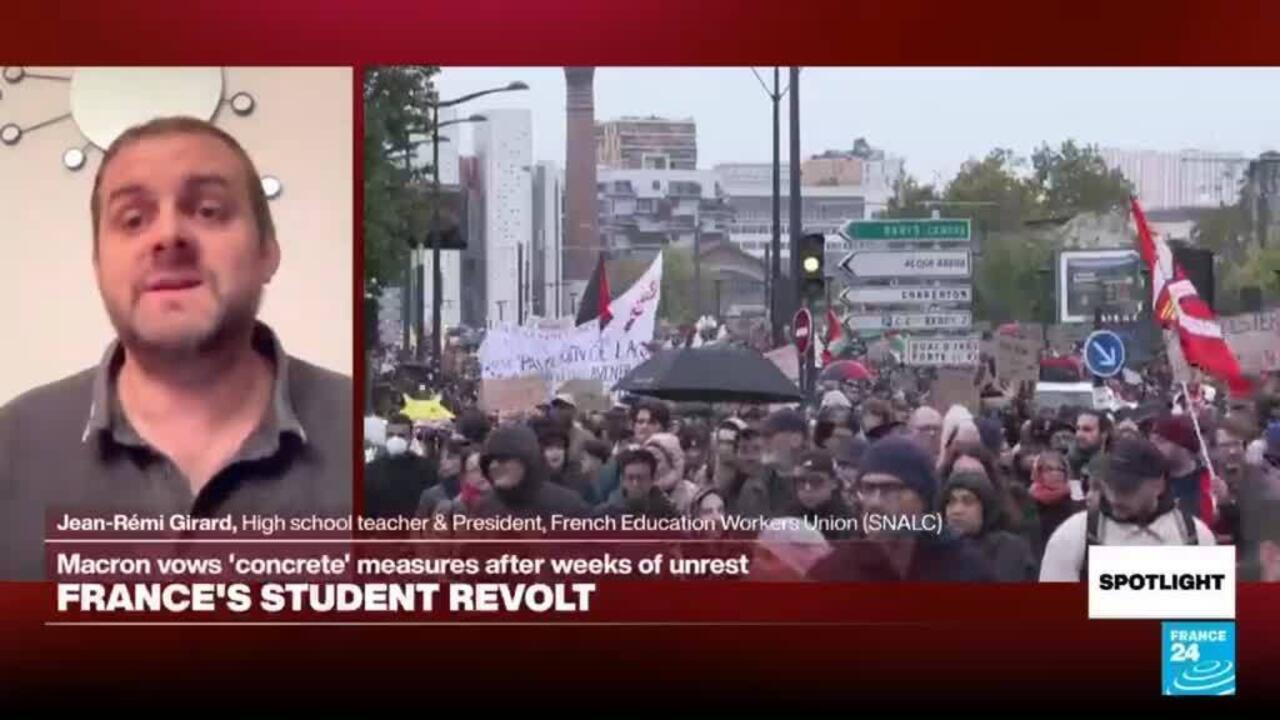
Education expert Girard argues that France's school system is caught between competing demands, including cutting public spending, addressing teacher shortages and meeting growing demand for higher education. He contends that the government itself created many of the problems it now seeks to solve.
The education system, he argues, is caught between competing imperatives: reducing public expenditure, tackling teacher shortages, accommodating growing demand for higher education and safeguarding equal access to academic opportunity.
His critique is particularly striking in its historical dimension. During Emmanuel Macron’s first presidential term, Girard points out, the government eliminated 8,000 secondary teaching positions even as student enrolment was rising. “They created most of the problems that everybody is trying to solve now,” he argues. Despite declining enrolment in some schools, staffing shortages persist, leaving institutions struggling to replace absent teachers and maintain adequate classroom conditions.
Girard’s critique of the current state of French education is all-encompassing: Turning to Parcoursup, France’s university admissions platform introduced under Emmanuel Macron in 2018, he challenges the tendency to identify the admissions system itself as the principal source of student frustration. “The problem is not Parcoursup per se,” he explains. Rather, the deeper contradiction lies in the widening gap between growing demand for university studies and the limited capacity of higher education institutions to accommodate students’ aspirations. This raises broader questions about fairness, educational opportunity and social mobility. As Girard succinctly puts it, “We cannot push the walls.”
Girard also examines the relationship between educational discontent and wider social unrest. While acknowledging that the student movement has evolved amid broader cost-of-living protests and episodes of rioting, he cautions against allowing the unrest to overshadow the underlying educational grievances. The protests, he insists, have exposed “very big problems” within the national education system, concerns shared by students, teachers and unions alike.
Ultimately, Girard raises a fundamental question about French politics and the socioeconomics of public education: can governments credibly promise educational improvement while confronting severe fiscal constraints, political instability and budgetary policies that risk undermining investment in public education and social mobility for France’s youth?
Share Article
Tags:#فرنسا#التعليم#إيمانويل ماكرون#بارسوب#الحراك الاجتماعي#الجامعات
Source: France 24
For Context
Related reads from the same topic or latest developments