ICJ Rules Myanmar Committed Genocide Against Rohingya
By using this website, you agree to our use of cookies. This use includes personalization of content and ads, and traffic analytics. Review our Privacy Policy for more information.
Foreign Policy Get analysis and alerts more quickly in the mobile app.
Install
Back to Foreign Policy Magazine home page
Evening roundup with our editors’ favorite stories of the day
World Brief
Your guide to the most important world stories of the day
China Brief
The latest news, analysis, and data from the country each week
Situation Report
Weekly update on what’s driving U.S. national security policy
FP Weekend
A curation of our best book reviews, deep dives, and other reads
Africa Brief
Essential analysis of the stories shaping geopolitics on the continent
South Asia Brief
Weekly update on developments in India and its neighbors
The Reading List
Curated guides on geopolitics and current affairs
FP Bookshelf
A monthly guide to FP’s book reviews, excerpts, and reading recommendations
Latin America Brief
One-stop digest of politics, economics, and culture
Southeast Asia Brief
A weekly dispatch with news from the region’s 11 countries
The New Geopolitics
A five-part masterclass in IR theory with Harvard Professor Stephen M. Walt
View All Newsletters
Give a gift Give a gift
Subscribe Subscribe Give a gift Give a gift
Southeast Asia Brief: What Does the ICJ Ruling Mean for Myanmar?
1. Create an FP account to save articles to read later.
Sign Up
ALREADY AN FP SUBSCRIBER? LOGIN
PDF
1. **Downloadable PDFs** are a benefit of an FP subscription.
ALREADY AN FP SUBSCRIBER? LOGIN
Gift
1. Gifting articles is a subscriber benefit.
ALREADY AN FP SUBSCRIBER? LOGIN
2. This article is an Insider exclusive.
Contact us at [email protected] to learn about upgrade options, unlocking the ability to gift this article.
Southeast Asia Brief
A weekly dispatch on the politics, economics, and culture of a pivotal region, caught between China and the United States but still going its own way. Written by Bangkok-based journalist **Joseph Rachman**.
What Does the ICJ Ruling Mean for Myanmar?
The junta thinks it might find a sympathetic ear from Trump.
*Joseph Rachman: A pencil drawing of a man wearing glasses in a t-shirt*
*Joseph Rachman*
By **Joseph Rachman**, the writer of *Foreign Policy*’s weekly Southeast Asia Brief.
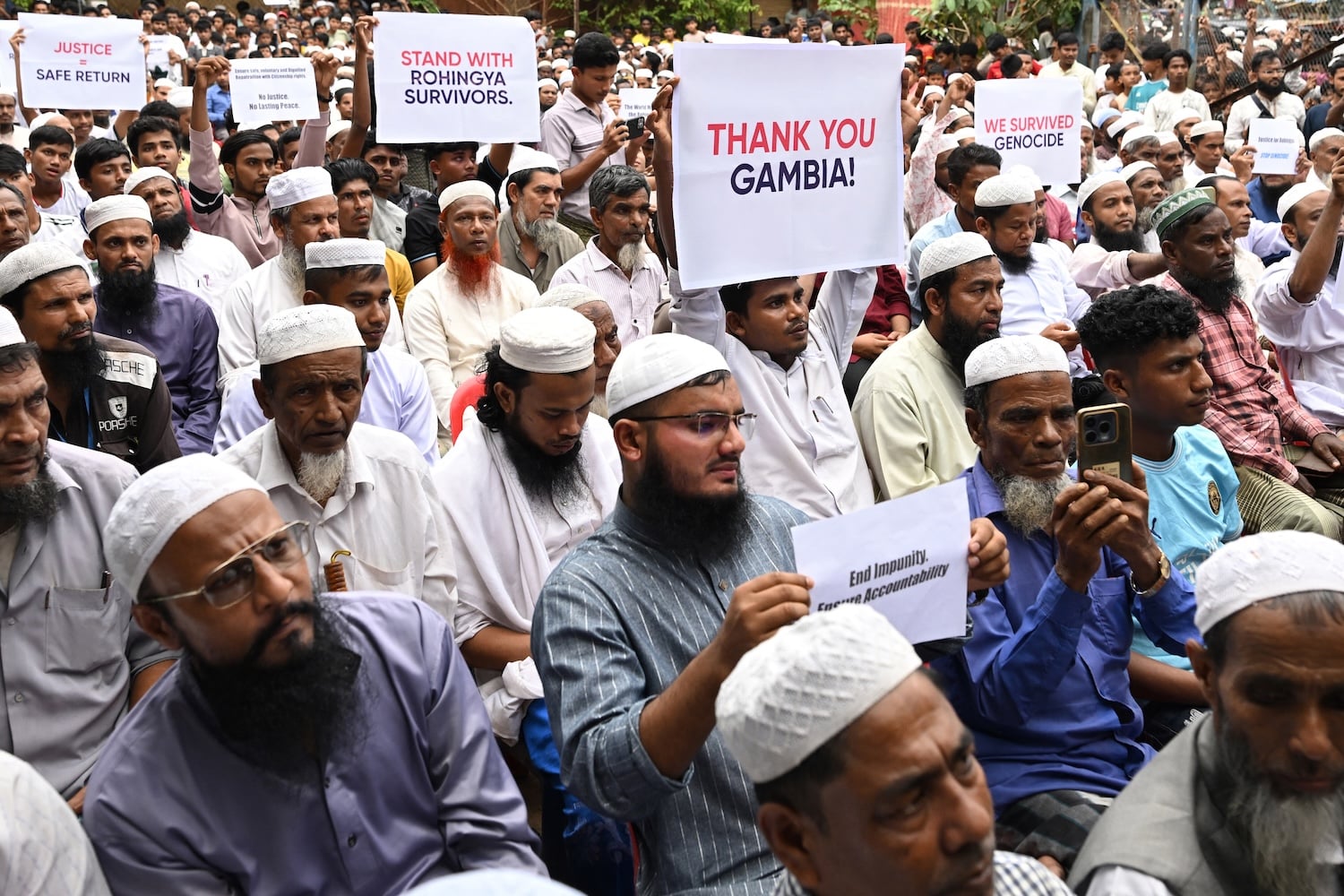
*Rohingya refugees watch the International Court of Justice ruling over whether Myanmar committed genocide against Rohingya Muslims, seen on a screen at a camp in Cox’s Bazar, Bangladesh, on Nov. 19.*
Rohingya refugees watch the International Court of Justice ruling over whether Myanmar committed genocide against Rohingya Muslims, seen on a screen at a camp in Cox’s Bazar, Bangladesh, on Nov. 19. Salahuddin Ahmed/AFP via Getty Images
My FP: Follow topics and authors to get straight to what you like. Exclusively for FP subscribers. Subscribe Now | Log In
November 25, 2026, 1:00 AM
Welcome to *Foreign Policy*’s Southeast Asia Brief.
The highlights this week: What the **ICJ’s genocide ruling** means for **Myanmar**, a **flurry of trade deals** in the region, and **new U.S. chip controls** threatening **Malaysian** and **Thai business**.
Welcome to *Foreign Policy*’s Southeast Asia Brief.
The highlights this week: What the **ICJ’s genocide ruling** means for **Myanmar**, a **flurry of trade deals** in the region, and **new U.S. chip controls** threatening **Malaysian** and **Thai business**.
ICJ: Myanmar Committed Genocide
The state of Myanmar committed genocide against the Rohingya in 2017, the International Court of Justice (ICJ), the main judicial arm of the United Nations, ruled last Thursday.
The ruling documents how, following attacks by the Arakan Rohingya Salvation Army (ARSA), Myanmar carried out a campaign of genocidal violence against the Rohingya. It estimates that 10,000 Rohingya, about 1.2 percent of the total population, were killed.
The court ruled 9-6 that the “only reasonable inference” was that this violence showed genocidal intent to destroy the Rohingya as a group—not just drive them out of Myanmar or exact collective punishment.
The ruling orders Myanmar to cease violence against the group and prosecute those responsible, allow the safe return of Rohingya to their homes, and pay compensation.
Sadly, none of this is likely. The junta has rejected the judgment as “unfair.”
Meanwhile, another armed group called the Arakan Army, which controls most of Rakhine province and mainly represents ethnic Rakhine Buddhists, has also committed large-scale violence against the Rohingya. Fighting between the Arakan Army and Rohingya militant groups—which has seen the Rohingya militants, including the ARSA, occasionally cooperate with the junta—has added to the hostility.
The Arakan Army has made some overtures to Muslim communities in the province.
For now, though, the Arakan Army is taking a wait-and-see attitude to the ICJ judgment. A spokesperson told local media, “We are constantly monitoring the current developments. We will stand firmly on truth and justice and take appropriate action for the benefit of the Arakan region.”
The country’s National Unity Government (NUG)—representing the civilian government overthrown by the junta in 2021 and associated with some of the main rebel forces—endorsed the judgment.
This was not a given. When Aung San Suu Kyi, an icon of the NUG, was acting as the country’s de facto leader, Myanmar consistently denied that the military’s actions against the Rohingya constituted a genocide.
In opposition, the NUG may now find its position easier. Its statement focused heavily on the junta’s culpability.
But it may find the whole judgment hard to accept. The ruling finds the state of Myanmar—not just the military—guilty of genocide. And at that time when the most severe offense took place, in 2016 and 2017, the paramount power in the state apparatus was Aung San Suu Kyi.
In Southeast Asia, could this be a stumbling block for junta leader Min Aung Hlang’s push for diplomatic normalization with the Association of Southeast Asian Nations (ASEAN)?
Thailand—the most vocal advocate for Myanmar’s full readmission to ASEAN—looks unmoved. “Thailand must take the position that best serves the country,” Prime Minister Anutin Charnvirakul told reporters.
Thai Foreign Minister Sihasak Phuangketkeow argued that Thailand’s engagement did not contradict the ruling, as Thailand’s aim was to curb the current violence.
Meanwhile, two other countries—Malaysia and the Philippines—have issued official statements on the matter.
Malaysia’s brief statement said that it “respects the judgment.” The Philippines’ statement seemed a shade weaker, saying it “acknowledges the judgment” and, unlike Malaysia, does not mention the Rohingya by name.
Other ASEAN countries have ye
What Does the ICJ Ruling Mean for Myanmar?
The International Court of Justice ruled that Myanmar committed genocide against the Rohingya in 2017, estimating that around 10,000 people were killed. The military junta has rejected the judgment, while regional governments and armed groups have responded in varied ways.
Cross Lines newsroom
Share this article
#ميانمار#الروهينغيا#محكمة العدل الدولية#الإبادة الجماعية#آسيان#جنوب شرق آسيا
Original source: Foreign Policy