SpaceX to attempt putting Starship rocket into Earth orbit for first time
France 24
F
France 24
Original Source
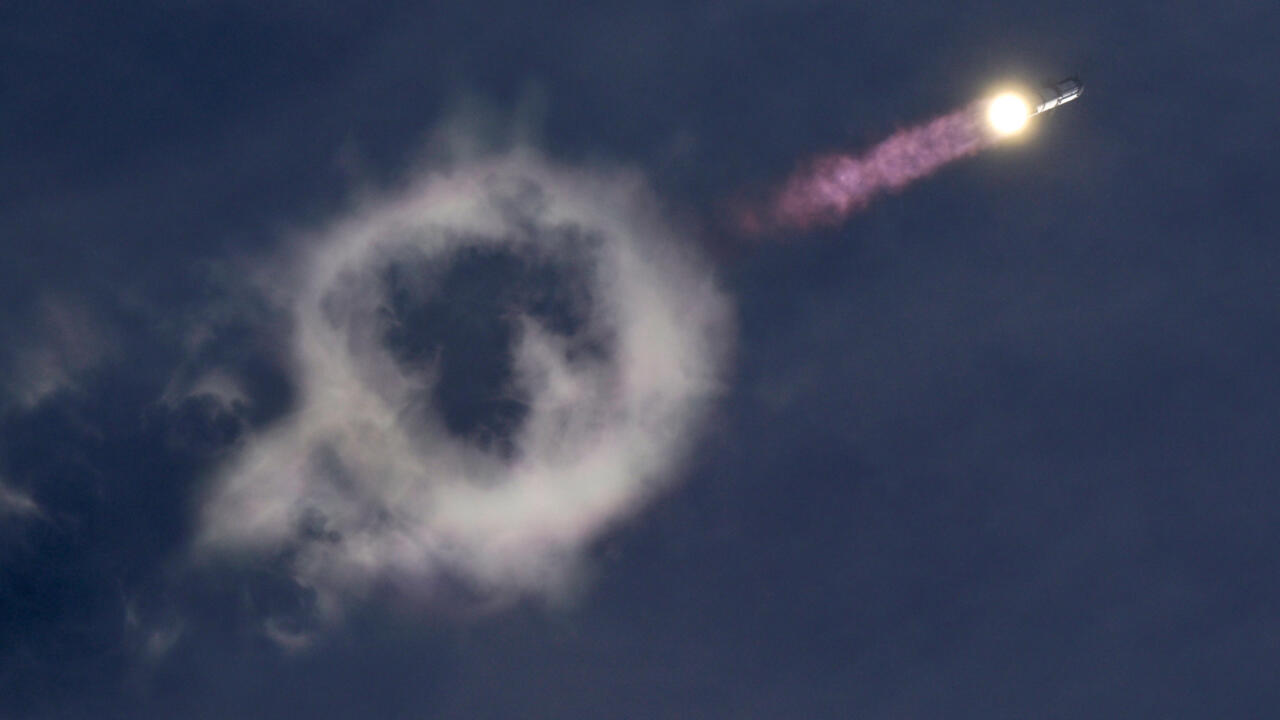
SpaceX successfully launched its colossal Starship rocket into Earth's orbit for the first time on Monday, marking a critical milestone after three years of development despite an engine malfunction during launch. The achievement paves the way for future crewed missions to the Moon and Mars.
Three years after its first test flight, SpaceX's supersized Starship rocket entered Earth's orbit for the first time on Monday, a key step in the development of the massive launch vehicle designed for future missions to the Moon and Mars.
The spacecraft almost failed to achieve the long-desired goal after one of its engines shut down too soon. But with everything else working well and the bad engine no longer needed, flight controllers decided after several tense minutes to proceed as planned.
“Starship is orbital,” Mission Control announced to cheers. Multiple previous tests had ended in spectacular explosions.
Read moreSpaceX: Why Chinese investors are banned from the biggest IPO in history
The test, expected to last about 10 hours, will involve the upper stage of the experimental rocket deploying 26 next-generation Starlink satellites in Earth's orbit.
After several years of development and testing in Texas, SpaceX began flying the rocket in its full configuration in 2023, deliberately following suborbital trajectories, which are safer and less challenging.
Watch moreWhose space is it? Europe scrambles as US rules satellite race
Numerous modifications have been made to the black-and-silver behemoth, the largest and most powerful object ever to have flown.
But immense technical challenges remain before Starship – which Musk hopes to make fully reusable – can be considered ready for commercial flights or to reach the Moon or Mars.
28,000km/h
With this new test, SpaceX hopes to usher in an "exciting new phase" of development that will include, among other things, tests of refuelling the rocket in orbit.
The spacecraft was launched Monday on a suborbital trajectory and then performed a second burn to reach orbit.
"That's the hardest part," requiring "more forces and more complex calculations", explained Kathleen Curlee, a senior analyst at Georgetown University's Center for Security and Emerging Technology.
Read moreSpaceX to build $100 billion rocket launch facility in southern Louisiana
To reach the necessary altitude and speed, "the rocket has to do different things when it's experiencing different levels of gravity", she told AFP.
On this flight, SpaceX is aiming for a circular orbit about 275km (171 miles) above the Earth, requiring a speed of about 28,000km/hour.
The spacecraft will then attempt to deploy satellites designed to expand the company's already massive satellite internet constellation.
Public expectations
The plan calls for the rocket to finish its journey in the Pacific Ocean after orbiting the Earth six times.
The huge first-stage booster, called "Super Heavy", was due to fall shortly after launch into waters of the Gulf of Mexico. SpaceX does not plan to catch it this time using huge mechanical arms.
Watch moreSpectacular landing: SpaceX catches giant Starship booster with mechanical arms
From an engineering point of view, "just achieving flight and getting data" would be considered a success, Curlee said.
But spectators and investors have different expectations.
"They need to have flashy tests" because anything less would be seen as a failure, she added.
The development of Starship has faced repeated delays, and a Chinese company has recently made progress in the field of reusable rockets.
Still, SpaceX continues to dominate the global space launch market, thanks to its partially reusable Falcon rockets, and has made risk-taking its mantra.
This 14th test flight will be followed the same week by three other SpaceX rocket launches, one of which will carry a crew of astronauts to the International Space Station.
(FRANCE 24 with AFP)
The spacecraft almost failed to achieve the long-desired goal after one of its engines shut down too soon. But with everything else working well and the bad engine no longer needed, flight controllers decided after several tense minutes to proceed as planned.
“Starship is orbital,” Mission Control announced to cheers. Multiple previous tests had ended in spectacular explosions.
Read moreSpaceX: Why Chinese investors are banned from the biggest IPO in history
The test, expected to last about 10 hours, will involve the upper stage of the experimental rocket deploying 26 next-generation Starlink satellites in Earth's orbit.
After several years of development and testing in Texas, SpaceX began flying the rocket in its full configuration in 2023, deliberately following suborbital trajectories, which are safer and less challenging.
Watch moreWhose space is it? Europe scrambles as US rules satellite race
Numerous modifications have been made to the black-and-silver behemoth, the largest and most powerful object ever to have flown.
But immense technical challenges remain before Starship – which Musk hopes to make fully reusable – can be considered ready for commercial flights or to reach the Moon or Mars.
28,000km/h
With this new test, SpaceX hopes to usher in an "exciting new phase" of development that will include, among other things, tests of refuelling the rocket in orbit.
The spacecraft was launched Monday on a suborbital trajectory and then performed a second burn to reach orbit.
"That's the hardest part," requiring "more forces and more complex calculations", explained Kathleen Curlee, a senior analyst at Georgetown University's Center for Security and Emerging Technology.
Read moreSpaceX to build $100 billion rocket launch facility in southern Louisiana
To reach the necessary altitude and speed, "the rocket has to do different things when it's experiencing different levels of gravity", she told AFP.
On this flight, SpaceX is aiming for a circular orbit about 275km (171 miles) above the Earth, requiring a speed of about 28,000km/hour.
The spacecraft will then attempt to deploy satellites designed to expand the company's already massive satellite internet constellation.
Public expectations
The plan calls for the rocket to finish its journey in the Pacific Ocean after orbiting the Earth six times.
The huge first-stage booster, called "Super Heavy", was due to fall shortly after launch into waters of the Gulf of Mexico. SpaceX does not plan to catch it this time using huge mechanical arms.
Watch moreSpectacular landing: SpaceX catches giant Starship booster with mechanical arms
From an engineering point of view, "just achieving flight and getting data" would be considered a success, Curlee said.
But spectators and investors have different expectations.
"They need to have flashy tests" because anything less would be seen as a failure, she added.
The development of Starship has faced repeated delays, and a Chinese company has recently made progress in the field of reusable rockets.
Still, SpaceX continues to dominate the global space launch market, thanks to its partially reusable Falcon rockets, and has made risk-taking its mantra.
This 14th test flight will be followed the same week by three other SpaceX rocket launches, one of which will carry a crew of astronauts to the International Space Station.
(FRANCE 24 with AFP)
🔗 Share Article
Tags:#سبيس إكس#ستارشيب#استكشاف الفضاء#صناعة الفضاء#التكنولوجيا#الصواريخ
Source: France 24
For Context
Related reads from the same topic or latest developments