Israel’s embrace of Serb nationalist Milorad Dodik threatens Bosnia and the wider Balkans
Middle East Eye
M
Middle East Eye
Original Source
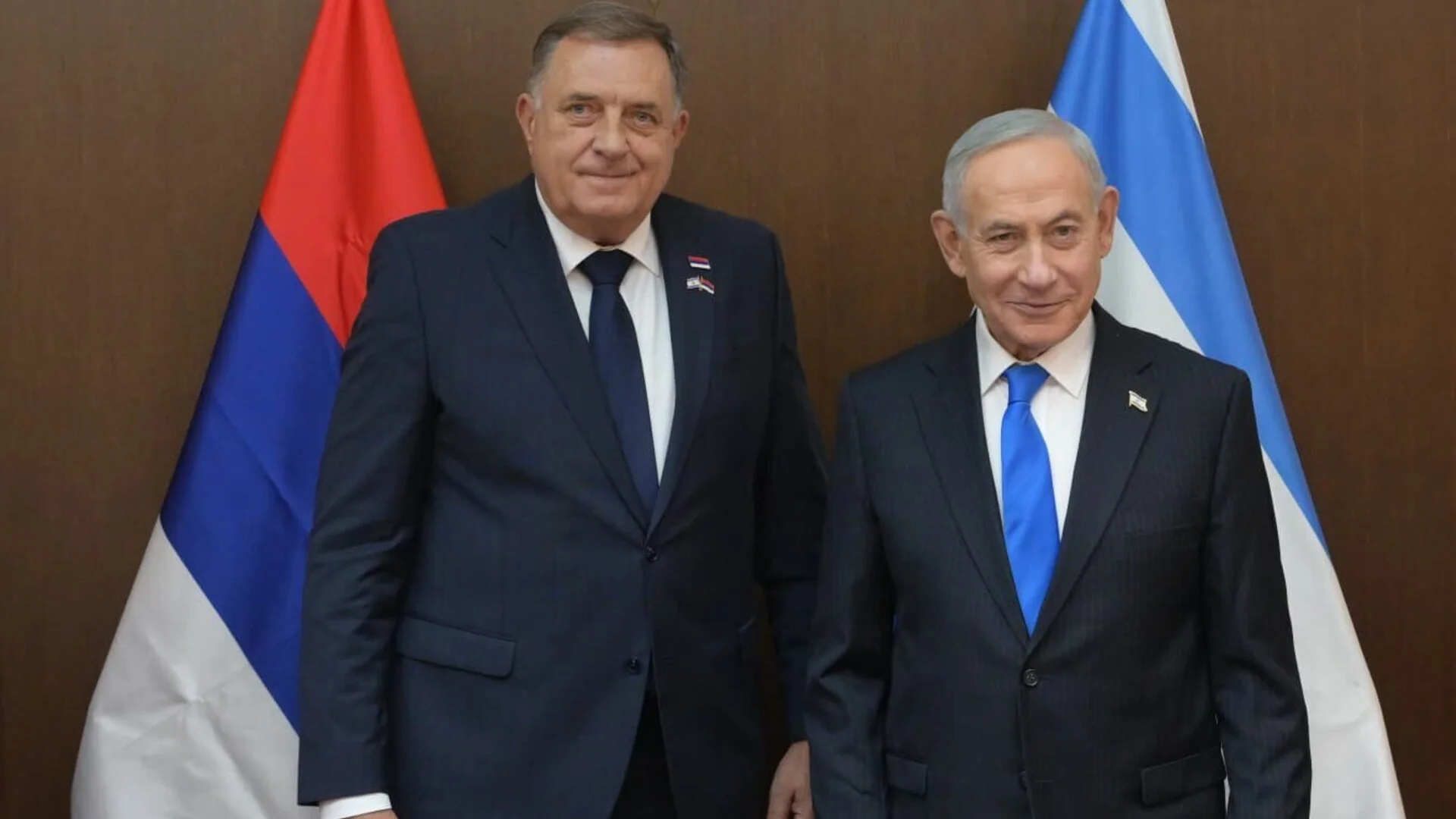
Serbian separatist Milorad Dodik secured a victory in Bosnia's elections with explicit backing from Israel's Foreign Minister, escalating tensions within the country. His push for Republika Srpska's secession has found a powerful ally in Israel, which sees strategic value in destabilizing the Balkans.
Pro-Israeli Serbian nationalist Milorad Dodik's bloc has emerged as a winner of Bosnia’s weekend elections.
His ally Zeljka Cvijanovic, of the right-wing Alliance of Independent Social Democrats (SNSD), secured more than 55 percent of the Serbian vote to retain a seat on Bosnia’s three-member presidency, which is divided between Bosniak Muslims, Croats and Serbs.
Israel’s Foreign Minister Gideon Saar inflamed tensions within the state with his endorsement of the separatist figure.
Dodik, the former president of the country’s Serb-majority entity, Republika Srpska, received a political ban in 2025 after challenging the authority of Bosnia's former international peace envoy Christian Schmidt.
Saar congratulated “President Dodik” and Cvijanovic in a statement on X.
“This is a strong vote of confidence for Republika Srpska and President Dodik's leadership and policies,” added Saar, without mentioning Bosnia and Herzegovina in that message.
He separately congratulated the Croat member of the presidency but issued no corresponding message to the Bosniak Muslim member.
In January, Dodik said he had asked Israeli Prime Minister Benjamin Netanyahu to help Republika Srpska re-establish its "army, finances, courts, intelligence services".
The request is one of the clearest articulated threats to Bosnia's internationally recoginsed borders.
'You will have to recognise Srebrenica genocide'
Bosnians voted on Sunday for three presidency members representing Bosniaks, Croats and Serbs under the country’s complex multi-ethnic system.
Voters also elected state and entity legislatures and the president of Republika Srpska.
Bosnia comprises two entities: the Muslim majority Federation of Bosnia and Herzegovina and Republika Srpska, which ethnic Serbs dominate after the genocide and ethnic cleansing of the 1990s war.
'Such a fragmented electoral system ... can only deepen divisions and lead straight to an autocratic... form of the government of which Dodik is an excellent example'
- Professor Asim Mujkic
Bosnian philosopher and sociologist Professor Asim Mujkic told Middle East Eye that Bosnia’s constitutional framework “encourages ethnic political organisation to the detriment of other forms”.
“Such a fragmented electoral system,” said Mujkic, “can only deepen divisions and lead straight to an autocratic, not democratic, form of the government of which Dodik is an excellent example.”
Dodik, who has visited Israel at least three times this year alone, wants Republika Srpska to secede from Bosnia and join Serbia. He has found a receptive audience in Israel, which was established after the ethnic cleansing of Palestinians in 1948 and has been conducting its own genocide in Gaza since 2023.
Dodik denies the Srebrenica genocide.
The political philosophy of leaders such as Dodik, said Mujkic, “is rooted in general unwillingness of Serb political and intellectual classes to confront the past and crimes committed in their name”.
“This blackmail's narrative goes like this: if you don't vote for me, if you don't support my politics, Serbs will be declared genocidal people, Republika Srpska or Serbia will be abolished as genocidal entities, you will have to recognise genocide in Srebrenica and independence of Kosovo,” said Mujkic.
Dodik’s outreach offers Israeli leaders, the journalists who interview him, and the wider public a kindred spirit who seems to understand their sense of grievance.
Israel has already demonstrated its willingness to back breakaway territories, recognising Somaliland in December 2025.
In a fawning September piece, the Jerusalem Post asked Dodik whether he thought about breaking up Bosnia and joining Serbia.
“Do I think about it?” Dodik said. “I dream about it. Absolutely,” he added.
In a sign that Israel is deepening its presence in Bosnia, in September it opened an Israeli Chamber of Commerce office in Banja Luka, the seat of Republika Srpska.
Israel 'exploiting ethnic conflicts'
Denijal Jegic, an assistant professor of communication, told MEE that the “increase in cooperation between both entities appears primarily important for propaganda purposes”.
“Both entities are internationally rather isolated; backing from the Israeli regime can be beneficial not only for Dodik’s separatist goals but also for his aspiration of closer ties with the United States,” added Jegic.
For Dodik, the prospects of breaking away have arguably never looked more favourable.
Israeli influence within the Trump administration, alongside Donald Trump’s appetite for unconventional deals, creates an opening for Dodik to push his separatist ambitions more aggressively.
'The [Israeli] regime has long tried to exploit ethnic conflicts for its own benefit, seeking alliances with smaller entities, in which Israel maintains a position of hegemony'
- Assistant professor Denijal Jegic
“The Israeli attempts to empower the separatist tendencies of the Republika Srpska entity are surely a further threat to the already fragile sovereignty of Bosnia and Herzegovina because they can be presented as a form of outside legitimacy to the secession of the Republika Srpska entity,” warned Jegic.
For Israel, empowering Dodik also offers a bargaining chip against Europe.
As European governments take tentative steps towards holding Israel accountable for the genocide in Gaza, its support for Dodik sends a threatening message: Israel can help destabilise the Balkans, exposing Europe to another crisis.
The danger is a return to the bloodshed of the 1990s, with Bosniaks, Albanians and Serbs again paying the price. Europe would confront that threat while supporting Ukraine against Russia’s invasion.
Jegic said Israel’s growing influence in the Balkans had largely piggybacked on the United States, the European Union and Nato, which are also “the main backers of the Israeli regime”, he said.
“But precisely these circumstances may have helped Israel advance its influence in the region which now appears more important due the international isolation the regime has faced,” said Jegic.
“The [Israeli] regime has long tried to exploit ethnic conflicts for its own benefit, seeking alliances with smaller entities, in which Israel maintains a position of hegemony,” added Jegic.
His ally Zeljka Cvijanovic, of the right-wing Alliance of Independent Social Democrats (SNSD), secured more than 55 percent of the Serbian vote to retain a seat on Bosnia’s three-member presidency, which is divided between Bosniak Muslims, Croats and Serbs.
Israel’s Foreign Minister Gideon Saar inflamed tensions within the state with his endorsement of the separatist figure.
Dodik, the former president of the country’s Serb-majority entity, Republika Srpska, received a political ban in 2025 after challenging the authority of Bosnia's former international peace envoy Christian Schmidt.
Saar congratulated “President Dodik” and Cvijanovic in a statement on X.
“This is a strong vote of confidence for Republika Srpska and President Dodik's leadership and policies,” added Saar, without mentioning Bosnia and Herzegovina in that message.
He separately congratulated the Croat member of the presidency but issued no corresponding message to the Bosniak Muslim member.
In January, Dodik said he had asked Israeli Prime Minister Benjamin Netanyahu to help Republika Srpska re-establish its "army, finances, courts, intelligence services".
The request is one of the clearest articulated threats to Bosnia's internationally recoginsed borders.
'You will have to recognise Srebrenica genocide'
Bosnians voted on Sunday for three presidency members representing Bosniaks, Croats and Serbs under the country’s complex multi-ethnic system.
Voters also elected state and entity legislatures and the president of Republika Srpska.
Bosnia comprises two entities: the Muslim majority Federation of Bosnia and Herzegovina and Republika Srpska, which ethnic Serbs dominate after the genocide and ethnic cleansing of the 1990s war.
'Such a fragmented electoral system ... can only deepen divisions and lead straight to an autocratic... form of the government of which Dodik is an excellent example'
- Professor Asim Mujkic
Bosnian philosopher and sociologist Professor Asim Mujkic told Middle East Eye that Bosnia’s constitutional framework “encourages ethnic political organisation to the detriment of other forms”.
“Such a fragmented electoral system,” said Mujkic, “can only deepen divisions and lead straight to an autocratic, not democratic, form of the government of which Dodik is an excellent example.”
Dodik, who has visited Israel at least three times this year alone, wants Republika Srpska to secede from Bosnia and join Serbia. He has found a receptive audience in Israel, which was established after the ethnic cleansing of Palestinians in 1948 and has been conducting its own genocide in Gaza since 2023.
Dodik denies the Srebrenica genocide.
The political philosophy of leaders such as Dodik, said Mujkic, “is rooted in general unwillingness of Serb political and intellectual classes to confront the past and crimes committed in their name”.
“This blackmail's narrative goes like this: if you don't vote for me, if you don't support my politics, Serbs will be declared genocidal people, Republika Srpska or Serbia will be abolished as genocidal entities, you will have to recognise genocide in Srebrenica and independence of Kosovo,” said Mujkic.
Dodik’s outreach offers Israeli leaders, the journalists who interview him, and the wider public a kindred spirit who seems to understand their sense of grievance.
Israel has already demonstrated its willingness to back breakaway territories, recognising Somaliland in December 2025.
In a fawning September piece, the Jerusalem Post asked Dodik whether he thought about breaking up Bosnia and joining Serbia.
“Do I think about it?” Dodik said. “I dream about it. Absolutely,” he added.
In a sign that Israel is deepening its presence in Bosnia, in September it opened an Israeli Chamber of Commerce office in Banja Luka, the seat of Republika Srpska.
Israel 'exploiting ethnic conflicts'
Denijal Jegic, an assistant professor of communication, told MEE that the “increase in cooperation between both entities appears primarily important for propaganda purposes”.
“Both entities are internationally rather isolated; backing from the Israeli regime can be beneficial not only for Dodik’s separatist goals but also for his aspiration of closer ties with the United States,” added Jegic.
For Dodik, the prospects of breaking away have arguably never looked more favourable.
Israeli influence within the Trump administration, alongside Donald Trump’s appetite for unconventional deals, creates an opening for Dodik to push his separatist ambitions more aggressively.
'The [Israeli] regime has long tried to exploit ethnic conflicts for its own benefit, seeking alliances with smaller entities, in which Israel maintains a position of hegemony'
- Assistant professor Denijal Jegic
“The Israeli attempts to empower the separatist tendencies of the Republika Srpska entity are surely a further threat to the already fragile sovereignty of Bosnia and Herzegovina because they can be presented as a form of outside legitimacy to the secession of the Republika Srpska entity,” warned Jegic.
For Israel, empowering Dodik also offers a bargaining chip against Europe.
As European governments take tentative steps towards holding Israel accountable for the genocide in Gaza, its support for Dodik sends a threatening message: Israel can help destabilise the Balkans, exposing Europe to another crisis.
The danger is a return to the bloodshed of the 1990s, with Bosniaks, Albanians and Serbs again paying the price. Europe would confront that threat while supporting Ukraine against Russia’s invasion.
Jegic said Israel’s growing influence in the Balkans had largely piggybacked on the United States, the European Union and Nato, which are also “the main backers of the Israeli regime”, he said.
“But precisely these circumstances may have helped Israel advance its influence in the region which now appears more important due the international isolation the regime has faced,” said Jegic.
“The [Israeli] regime has long tried to exploit ethnic conflicts for its own benefit, seeking alliances with smaller entities, in which Israel maintains a position of hegemony,” added Jegic.
🔗 Share Article
Tags:#البوسنة#إسرائيل#البلقان#الانفصالية#ميلورادودك#الصراعات الإقليمية
Source: Middle East Eye
For Context
Related reads from the same topic or latest developments