Japan’s New CIA Could Be Takaichi’s Trump Card
Foreign Policy

Foreign Policy
Original Source
Japan is undertaking its most substantial intelligence overhaul since 1945, aiming to establish a foreign intelligence agency by 2028 to conduct human intelligence operations overseas. Prime Minister Sanae Takaichi plans to leverage this strategic initiative with the Trump administration to demonstrate Japan's expanded commitment to the U.S.-Japan security alliance.
Japan's New CIA Could Be Takaichi's Trump Card
!Foreign Policy
Foreign Policy Get analysis and alerts more quickly in the mobile app.
Install
Back to Foreign Policy Magazine home page
* Latest
* Regions
+ Asia & the Pacific
+ China
+ Middle East & Africa
+ Americas
+ Europe
* Newsletters
Editors’ Picks
Evening roundup with our editors’ favorite stories of the day
!World Brief Icon
World Brief
Your guide to the most important world stories of the day
!China Brief Icon
China Brief
The latest news, analysis, and data from the country each week
Situation Report
Weekly update on what’s driving U.S. national security policy
FP Weekend
A curation of our best book reviews, deep dives, and other reads
!Africa Brief Icon
Africa Brief
Essential analysis of the stories shaping geopolitics on the continent
!South Asia Brief Icon
South Asia Brief
Weekly update on developments in India and its neighbors
The Reading List
Curated guides on geopolitics and current affairs
FP Bookshelf
A monthly guide to FP’s book reviews, excerpts, and reading recommendations
!Latin America Brief Icon
Latin America Brief
One-stop digest of politics, economics, and culture
!Southeast Asia Brief Icon
Southeast Asia Brief
A weekly dispatch with news from the region’s 11 countries
The New Geopolitics
A five-part masterclass in IR theory with Harvard Professor Stephen M. Walt
View All Newsletters
* FP Live
* Latest
* Trending:
* Trump-Xi meeting
* United Nations General Assembly
Search this website
* Preferences
* My FP Feed
* Saved Articles
* Newsletters
* Magazine Archive
* Subscription Settings
* FAQs
* Log Out
Sign In
Sign In
Partner with FP at UNGA81 Partner with FP at UNGA81
Subscribe Subscribe Partner with FP at UNGA81 Partner with FP at UNGA81
Analysis: Japan’s New CIA Could Be Takaichi’s Trump Card
*
*
* Facebook
* Bluesky
* X
* LinkedIn
* WhatsApp
* Reddit
Save
1. Create an FP account to save articles to read later.
Sign Up
ALREADY AN FP SUBSCRIBER? LOGIN
PDF
1. **Downloadable PDFs** are a benefit of an FP subscription.
Subscribe Now
ALREADY AN FP SUBSCRIBER? LOGIN
Gift
*
*
* WhatsApp
1. Gifting articles is a subscriber benefit.
Subscribe Now
ALREADY AN FP SUBSCRIBER? LOGIN
2. This article is an Insider exclusive.
Contact us at [email protected] to learn about upgrade options, unlocking the ability to gift this article.
Analysis
Japan’s New CIA Could Be Takaichi’s Trump Card
After decades of reticence, Tokyo is expanding its intelligence gathering abroad.
By **Derek Grossman**, a professor of political science and international relations at the University of Southern California.
!Trump and Takaichi
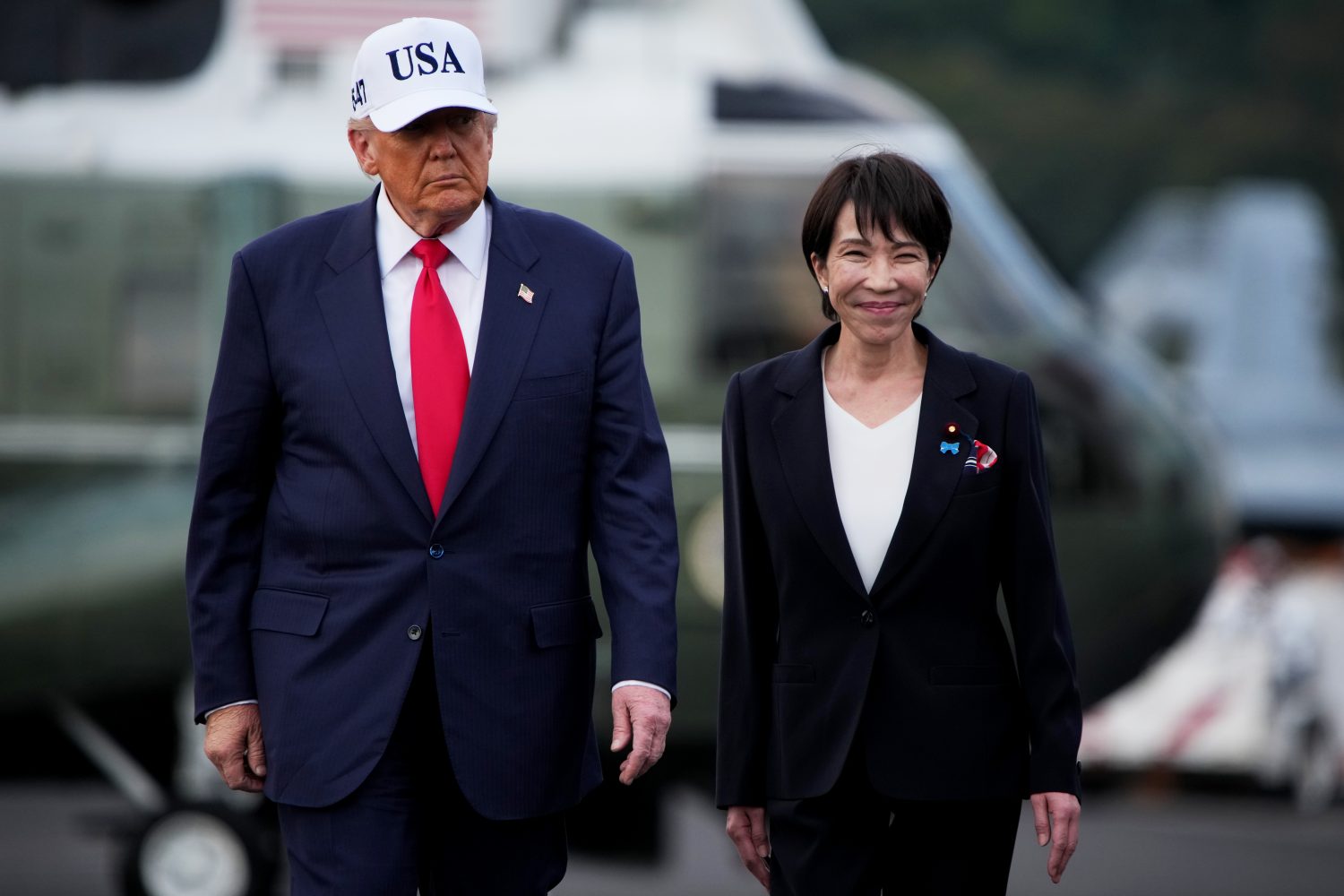
*Trump and Takaichi*
U.S. President Donald Trump and Japanese Prime Minister Sanae Takaichi arrive to speak to troops aboard the USS George Washington in Yokosuka, Japan, on Oct. 28, 2025. Andrew Harnik/Getty Images
1. Get audio access with any FP subscription.
Subscribe Now
ALREADY AN FP SUBSCRIBER? LOGIN
September 22, 2026, 9:21 AM
When Japanese Prime Minister Sanae Takaichi meets with U.S. President Donald Trump on the sidelines of the U.N. General Assembly today, she will have a new plan at her disposal to highlight how Tokyo will do more for the U.S.-Japan security alliance. Her government is undertaking the most substantial overhaul of Japan’s intelligence collection and analysis capabilities since 1945, with the ultimate goal of creating something Japan has never had: its own version of the CIA by 2028.
Although its final name and structure remain unsettled, Tokyo clearly intends for the new agency to conduct clandestine human intelligence (HUMINT) operations overseas against top security threats such as China, North Korea, and Russia. Since the end of World War II, Japan has conspicuously lacked a dedicated foreign intelligence service capable of systematically recruiting and running human sources overseas, in part because of the legacy of intelligence abuses during the imperial era. Yet Japan is hardly an intelligence novice. It has sophisticated technical collection capabilities, particularly in signals and geospatial intelligence. But technology cannot answer every question. Tokyo increasingly recognizes that it needs people on the ground who can penetrate foreign governments and organizations in order to uncover intentions and plans that satellites or intercepted communications cannot.
When Japanese Prime Minister Sanae Takaichi meets with U.S. President Donald Trump on the sidelines of the U.N. General Assembly today, she will have a new plan at her disposal to highlight how Tokyo will do more for the U.S.-Japan security alliance. Her government is undertaking the most substantial overhaul of Japan’s intelligence collection and analysis capabilities since 1945, with the ultimate goal of creating something Japan has never had: its own version of the CIA by 2028.
Although its final name and structure remain unsettled, Tokyo clearly intends for the new agency to conduct clandestine human intelligence (HUMINT) operations overseas against top security threats such as China, North Korea, and Russia. Since the end of World War II, Japan has conspicuously lacked a dedicated foreign intelligence service capable of systematically recruiting and running human sources overseas, in part because of the legacy of intelligence abuses during the imperial era. Yet Japan is hardly an intelligence novice. It has sophisticated technical collection capabilities, particularly in signals and geospatial intelligence. But technology cannot answer every question. Tokyo increasingly recognizes that it needs people on the ground who can penetrate foreign governments and organizations in order to uncover intentions and plans that satellites or intercepted communications cannot.
Japan already has the foreign ministry-led Counter Terrorism Unit-Japan, created in 2015 to collect terrorism-related intelligence overseas through personnel stationed abroad. The government is reportedly considering reorganizing and expanding that apparatus, broadening its mission beyond terrorism to national security intelligence generally and dramatically strengthening its HUMINT role.
Japan is hardly starting from scratch. During the Cold War, Japanese listening stations became highly capable at monitoring Soviet and Chinese military communications. In 1983, for example, Tokyo’s Wakkanai listening station intercepted Soviet fighter communications during the pursuit and shootdown of Korean Air Lines Flight 007. Tokyo eventually released the recordings, providing critical evidence of what had happened but also revealing Japan’s capabilities. The episode illustrated both Japan’s considerable technical intelligence prowess and the enduring dilemma of protecting sources and methods.
Today, North Korea illustrates both the strengths and limitations of Japan’s existing intelligence capabilities. Pyongyang’s 1998 launch of a Taepodong missile over Japan prompted Tokyo to develop its own intelligence satellites, and Japan has since built formidable capabilities for monitoring North Korean missiles and military activity. Yet some of the most consequential North Korean secrets have proved far more difficult to uncover. For decades, Pyongyang denied abducting Japanese citizens until Kim Jong Il finally admitted the practice in 2002. Satellites can photograph missile facilities, and signals intelligence can intercept communications, but neither necessarily reveals what the regime is privately planning or where an abducted Japanese citizen is being held. Those are precisely the kinds of questions human sources can sometimes answer.
Washington should expect that Takaichi and her government will make good on their pledge to establish a Japanese CIA because Tokyo ha
!Foreign Policy
Foreign Policy Get analysis and alerts more quickly in the mobile app.
Install
Back to Foreign Policy Magazine home page
* Latest
* Regions
+ Asia & the Pacific
+ China
+ Middle East & Africa
+ Americas
+ Europe
* Newsletters
Editors’ Picks
Evening roundup with our editors’ favorite stories of the day
!World Brief Icon
World Brief
Your guide to the most important world stories of the day
!China Brief Icon
China Brief
The latest news, analysis, and data from the country each week
Situation Report
Weekly update on what’s driving U.S. national security policy
FP Weekend
A curation of our best book reviews, deep dives, and other reads
!Africa Brief Icon
Africa Brief
Essential analysis of the stories shaping geopolitics on the continent
!South Asia Brief Icon
South Asia Brief
Weekly update on developments in India and its neighbors
The Reading List
Curated guides on geopolitics and current affairs
FP Bookshelf
A monthly guide to FP’s book reviews, excerpts, and reading recommendations
!Latin America Brief Icon
Latin America Brief
One-stop digest of politics, economics, and culture
!Southeast Asia Brief Icon
Southeast Asia Brief
A weekly dispatch with news from the region’s 11 countries
The New Geopolitics
A five-part masterclass in IR theory with Harvard Professor Stephen M. Walt
View All Newsletters
* FP Live
* Latest
* Trending:
* Trump-Xi meeting
* United Nations General Assembly
Search this website
* Preferences
* My FP Feed
* Saved Articles
* Newsletters
* Magazine Archive
* Subscription Settings
* FAQs
* Log Out
Sign In
Sign In
Partner with FP at UNGA81 Partner with FP at UNGA81
Subscribe Subscribe Partner with FP at UNGA81 Partner with FP at UNGA81
Analysis: Japan’s New CIA Could Be Takaichi’s Trump Card
*
*
* Bluesky
* X
Save
1. Create an FP account to save articles to read later.
Sign Up
ALREADY AN FP SUBSCRIBER? LOGIN
1. **Downloadable PDFs** are a benefit of an FP subscription.
Subscribe Now
ALREADY AN FP SUBSCRIBER? LOGIN
Gift
*
*
1. Gifting articles is a subscriber benefit.
Subscribe Now
ALREADY AN FP SUBSCRIBER? LOGIN
2. This article is an Insider exclusive.
Contact us at [email protected] to learn about upgrade options, unlocking the ability to gift this article.
Analysis
Japan’s New CIA Could Be Takaichi’s Trump Card
After decades of reticence, Tokyo is expanding its intelligence gathering abroad.
By **Derek Grossman**, a professor of political science and international relations at the University of Southern California.
!Trump and Takaichi
*Trump and Takaichi*
U.S. President Donald Trump and Japanese Prime Minister Sanae Takaichi arrive to speak to troops aboard the USS George Washington in Yokosuka, Japan, on Oct. 28, 2025. Andrew Harnik/Getty Images
1. Get audio access with any FP subscription.
Subscribe Now
ALREADY AN FP SUBSCRIBER? LOGIN
September 22, 2026, 9:21 AM
When Japanese Prime Minister Sanae Takaichi meets with U.S. President Donald Trump on the sidelines of the U.N. General Assembly today, she will have a new plan at her disposal to highlight how Tokyo will do more for the U.S.-Japan security alliance. Her government is undertaking the most substantial overhaul of Japan’s intelligence collection and analysis capabilities since 1945, with the ultimate goal of creating something Japan has never had: its own version of the CIA by 2028.
Although its final name and structure remain unsettled, Tokyo clearly intends for the new agency to conduct clandestine human intelligence (HUMINT) operations overseas against top security threats such as China, North Korea, and Russia. Since the end of World War II, Japan has conspicuously lacked a dedicated foreign intelligence service capable of systematically recruiting and running human sources overseas, in part because of the legacy of intelligence abuses during the imperial era. Yet Japan is hardly an intelligence novice. It has sophisticated technical collection capabilities, particularly in signals and geospatial intelligence. But technology cannot answer every question. Tokyo increasingly recognizes that it needs people on the ground who can penetrate foreign governments and organizations in order to uncover intentions and plans that satellites or intercepted communications cannot.
When Japanese Prime Minister Sanae Takaichi meets with U.S. President Donald Trump on the sidelines of the U.N. General Assembly today, she will have a new plan at her disposal to highlight how Tokyo will do more for the U.S.-Japan security alliance. Her government is undertaking the most substantial overhaul of Japan’s intelligence collection and analysis capabilities since 1945, with the ultimate goal of creating something Japan has never had: its own version of the CIA by 2028.
Although its final name and structure remain unsettled, Tokyo clearly intends for the new agency to conduct clandestine human intelligence (HUMINT) operations overseas against top security threats such as China, North Korea, and Russia. Since the end of World War II, Japan has conspicuously lacked a dedicated foreign intelligence service capable of systematically recruiting and running human sources overseas, in part because of the legacy of intelligence abuses during the imperial era. Yet Japan is hardly an intelligence novice. It has sophisticated technical collection capabilities, particularly in signals and geospatial intelligence. But technology cannot answer every question. Tokyo increasingly recognizes that it needs people on the ground who can penetrate foreign governments and organizations in order to uncover intentions and plans that satellites or intercepted communications cannot.
Japan already has the foreign ministry-led Counter Terrorism Unit-Japan, created in 2015 to collect terrorism-related intelligence overseas through personnel stationed abroad. The government is reportedly considering reorganizing and expanding that apparatus, broadening its mission beyond terrorism to national security intelligence generally and dramatically strengthening its HUMINT role.
Japan is hardly starting from scratch. During the Cold War, Japanese listening stations became highly capable at monitoring Soviet and Chinese military communications. In 1983, for example, Tokyo’s Wakkanai listening station intercepted Soviet fighter communications during the pursuit and shootdown of Korean Air Lines Flight 007. Tokyo eventually released the recordings, providing critical evidence of what had happened but also revealing Japan’s capabilities. The episode illustrated both Japan’s considerable technical intelligence prowess and the enduring dilemma of protecting sources and methods.
Today, North Korea illustrates both the strengths and limitations of Japan’s existing intelligence capabilities. Pyongyang’s 1998 launch of a Taepodong missile over Japan prompted Tokyo to develop its own intelligence satellites, and Japan has since built formidable capabilities for monitoring North Korean missiles and military activity. Yet some of the most consequential North Korean secrets have proved far more difficult to uncover. For decades, Pyongyang denied abducting Japanese citizens until Kim Jong Il finally admitted the practice in 2002. Satellites can photograph missile facilities, and signals intelligence can intercept communications, but neither necessarily reveals what the regime is privately planning or where an abducted Japanese citizen is being held. Those are precisely the kinds of questions human sources can sometimes answer.
Washington should expect that Takaichi and her government will make good on their pledge to establish a Japanese CIA because Tokyo ha
🔗 Share Article
Tags:#استخبارات#اليابان#تاكايتشي#السياسة الخارجية#الأمن القومي#الشرق الأقصى
Source: Foreign Policy
For Context
Related reads from the same topic or latest developments