Iran's Revolutionary Guards say foreign warships have retreated from the Gulf
Middle East Eye
M
Middle East Eye
Original Source
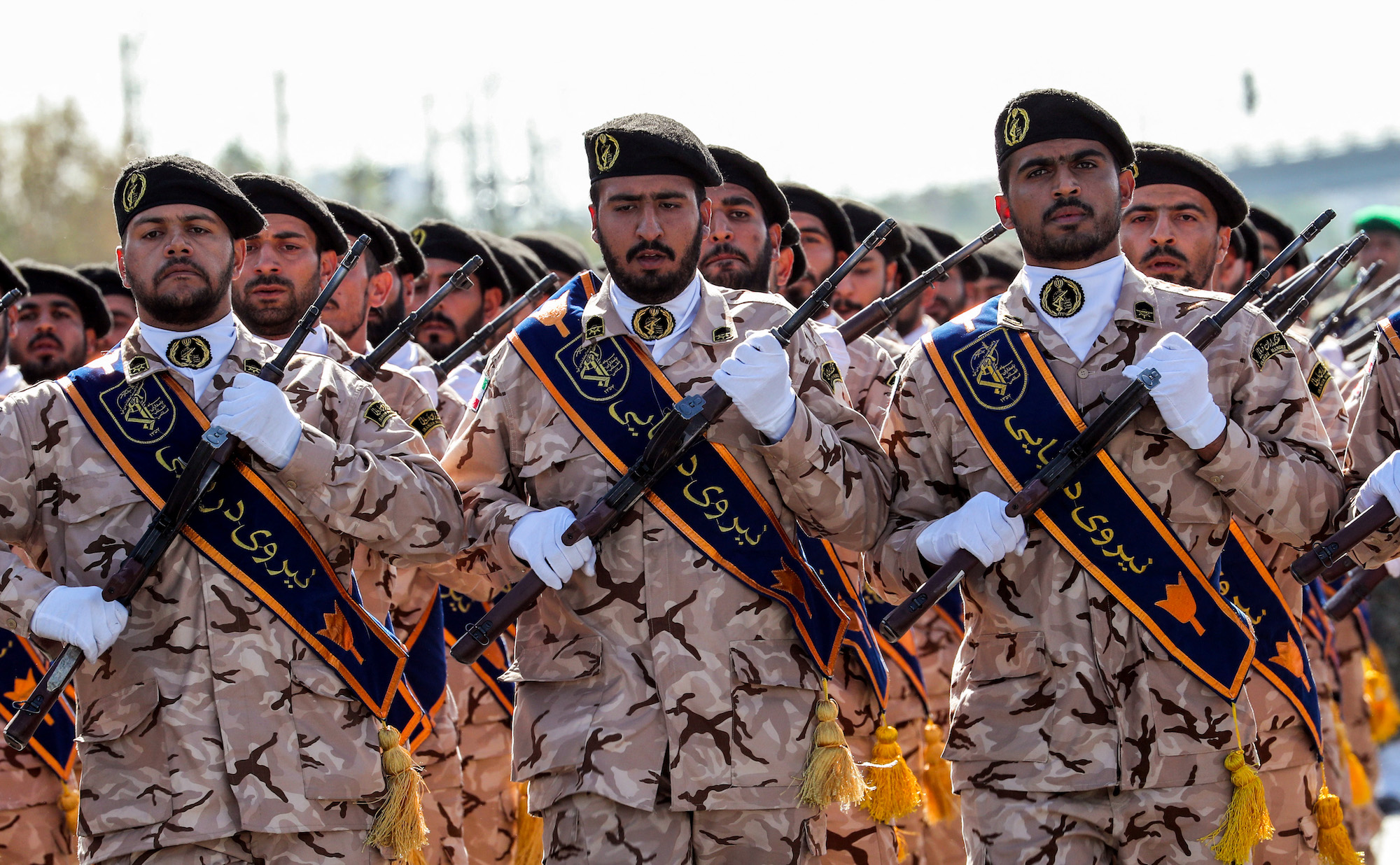
An Iranian Revolutionary Guard commander claimed that Tehran's military capabilities have forced foreign naval forces to retreat more than 1,000 kilometers from Iranian territorial waters. He attributed the shift to the Guard's missiles, drones, and naval strength, though Washington maintains its strategic commitment to controlling the Strait of Hormuz.
An Iranian commander says the Revolutionary Guard’s military capabilities have forced foreign naval forces to keep their distance from Iran, according to state news agency IRNA.
Brigadier-General Yadollah Javani, deputy commander of the IRGC’s political bureau, attributed the shift in the Gulf and Sea of Oman to the force’s missiles, drones and naval strength.
“Previously, dozens of foreign warships and vessels roamed the Gulf,” he said.
“Today, the enemy’s fleet has moved more than 1,000km away from our territorial waters and does not dare approach.”
Javani said “collective security of Islamic countries and the complete withdrawal of the aggressors” would determine the region’s future.
Since the war started in February, Iran has established itself as the dominant military force over the Strait of Hormuz, which serves as the choke point for the rest of the Gulf region, which was traditionally known as the Persian Gulf but has been called the Arabian Gulf by Arab states in recent decades.
The region is crucial for world energy exports. Before the war, the strait carried roughly 20 million barrels per day (bpd) – a fifth of global daily oil consumption – with an estimated 10 to 14 percent of global supply remaining inaccessible six months on.
But shipments have almost returned to pre-war levels, thanks to backroom deals between Gulf states and Iran, and Tehran's own exports.
On Monday, US Secretary of Energy Chris Wright said that 17 million barrels of oil transited the Strait of Hormuz on Monday.
Wright added that this marked the highest level of crude oil to pass through the waterway since the war on Iran disrupted shipping.
Nevertheless, securing control of the strait and negating Iran's influence on supply remains a key US strategic goal.
On Sunday, AP reported US Defense Secretary Pete Hegseth saying the US blockade of the Strait of Hormuz is “ironclad” and that US President Donald Trump has “all the options he needs on the table” if Iran continues to “play games”.
“Iran wants to play games with things like the Strait of Hormuz. They don’t control it, we do,” Hegseth told reporters.
Brigadier-General Yadollah Javani, deputy commander of the IRGC’s political bureau, attributed the shift in the Gulf and Sea of Oman to the force’s missiles, drones and naval strength.
“Previously, dozens of foreign warships and vessels roamed the Gulf,” he said.
“Today, the enemy’s fleet has moved more than 1,000km away from our territorial waters and does not dare approach.”
Javani said “collective security of Islamic countries and the complete withdrawal of the aggressors” would determine the region’s future.
Since the war started in February, Iran has established itself as the dominant military force over the Strait of Hormuz, which serves as the choke point for the rest of the Gulf region, which was traditionally known as the Persian Gulf but has been called the Arabian Gulf by Arab states in recent decades.
The region is crucial for world energy exports. Before the war, the strait carried roughly 20 million barrels per day (bpd) – a fifth of global daily oil consumption – with an estimated 10 to 14 percent of global supply remaining inaccessible six months on.
But shipments have almost returned to pre-war levels, thanks to backroom deals between Gulf states and Iran, and Tehran's own exports.
On Monday, US Secretary of Energy Chris Wright said that 17 million barrels of oil transited the Strait of Hormuz on Monday.
Wright added that this marked the highest level of crude oil to pass through the waterway since the war on Iran disrupted shipping.
Nevertheless, securing control of the strait and negating Iran's influence on supply remains a key US strategic goal.
On Sunday, AP reported US Defense Secretary Pete Hegseth saying the US blockade of the Strait of Hormuz is “ironclad” and that US President Donald Trump has “all the options he needs on the table” if Iran continues to “play games”.
“Iran wants to play games with things like the Strait of Hormuz. They don’t control it, we do,” Hegseth told reporters.
🔗 Share Article
Tags:#إيران#الحرس الثوري#مضيق هرمز#الخليج العربي#القوات البحرية#التوترات الخليجية
Source: Middle East Eye
For Context
Related reads from the same topic or latest developments