Europe
Europe|U.N. Fails to Regulate Lethal Autonomous Weapons, but Plans to Try Again
https://www.nytimes.com/2026/11/21/world/europe/un-lethal-autonomous-weapons.html
U.N. Fails to Regulate Lethal Autonomous Weapons, but Plans to Try Again
Major military powers like the United States and Russia expressed strong resistance to binding restrictions.
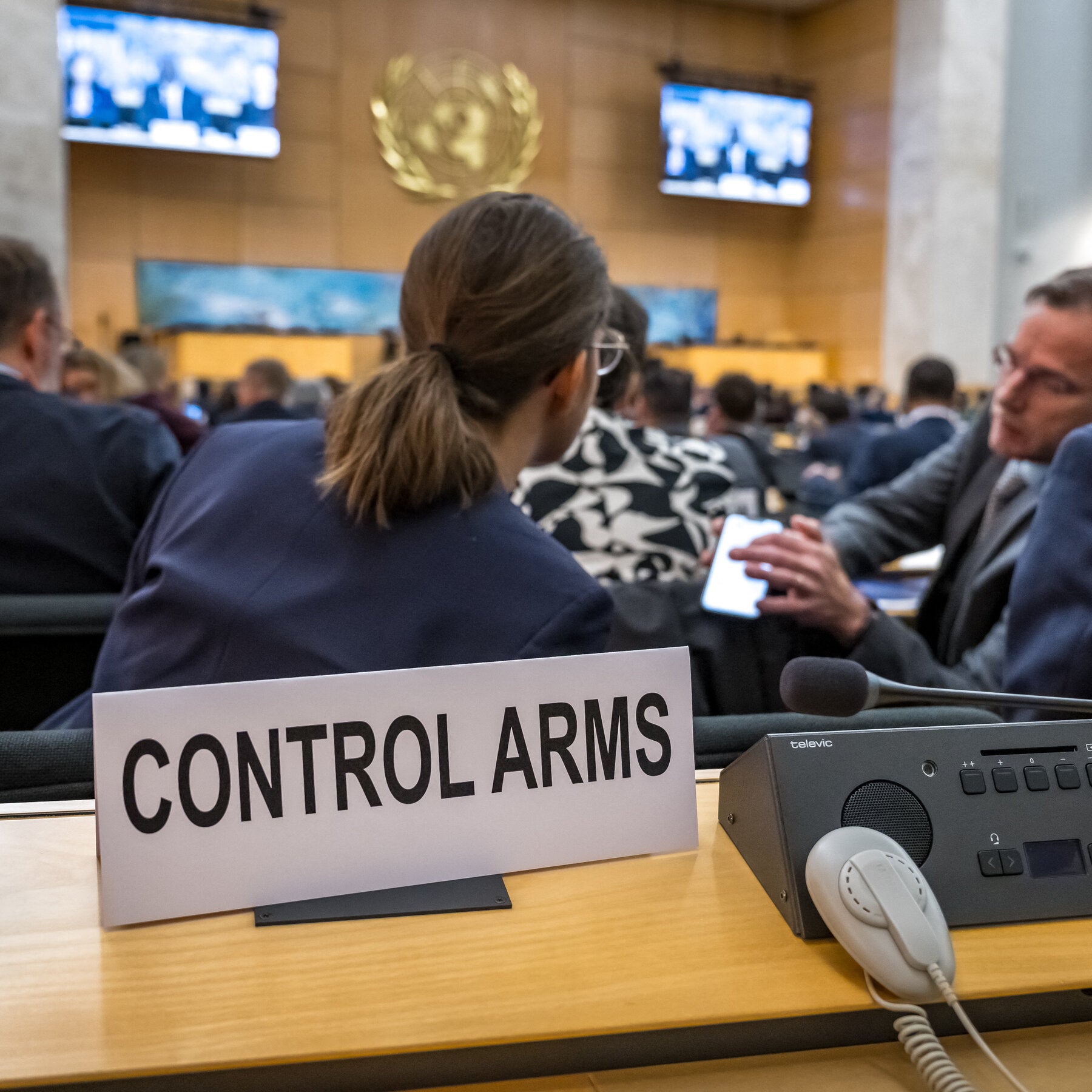
*Delegates attending a conference to discuss lethal autonomous weapons at the United Nations in Geneva on Monday.Credit...Fabrice Coffrini/Agence France-Presse — Getty Images*
By Nick Cumming-Bruce
Reporting from Geneva
Nov. 21, 2026, 8:35 a.m. ET
A weeklong U.N. conference on regulating lethal autonomous weapons ended on Saturday without an agreement to ban or limit use of the technology, after major military powers like the United States and Russia expressed strong resistance to binding restrictions.
Representatives of the 128 countries attending the conference in Geneva pledged to continue discussions, however, and to develop new rules regulating the use of such weapons over the next two years.
That outcome fell short of what a majority of states and disarmament activists had hoped the conference would achieve. They said that the need for legally binding restrictions on lethal autonomous weapons — machines that can kill without any human intervention — has grown increasingly urgent as artificial intelligence and its military uses develop at breakneck speed.
But some of the world’s leading military powers, including the United States, Russia and Israel, balked at attempts to curb their ability to develop new weapons.
Of the major world powers in attendance at the conference, only China expressed a willingness to move toward a legally binding international protocol. Ukraine, which already deploys drones with some autonomous capabilities in its war with Russia, emphasized the need for meaningful human control over such systems.
Julien Thöni, a Swiss diplomat who presided over the conference, said the commitment from major military powers to continue discussions, even at a time of severe geopolitical tension, showed that “multilateral diplomacy can still deliver” results. But disarmament activists said it was too little too late.
“Delaying the creation of a legally binding instrument puts civilians and humanity at risk,” said Nicole van Rooijen, the executive director of Stop Killer Robots, a group that campaigns against lethal autonomous weapons.
The conference, which began on Monday, was the latest in 13 years of discussions on lethal autonomous weapons held under the U.N. Convention on Certain Conventional Weapons. In that time, the idea of technology that can select and attack targets without any human control has moved from the realm of science fiction into reality, as seen on the battlefields of Ukraine and the Middle East.
Alarmed by the rapid development of such weapons, 163 countries voted in October in favor of negotiations on a legally binding protocol. The agreement reached on Saturday “creates a platform for discussion that leaves room for reaching a protocol,” said Bonnie Docherty, a senior arms adviser to Human Rights Watch and a lecturer on international law at Harvard Law School. “But there’s no certainty it will be legally binding.”
“States need to deliver the majority’s call for a new treaty,” she added.
U.N. Fails to Regulate Lethal Autonomous Weapons, but Plans to Try Again
A weeklong U.N. conference in Geneva ended without an agreement to ban or limit lethal autonomous weapons, after major powers including the United States and Russia strongly resisted binding restrictions. Representatives of 128 countries pledged to keep negotiating and to develop new rules over the next two years.
Cross Lines newsroom
Share this article
#الأمم المتحدة#الأسلحة ذاتية التشغيل#نزع السلاح#الذكاء الاصطناعي#جنيف#القانون الدولي
Original source: New York Times