Turkey Is Turning Its Breadbasket Into an Oil Hub
Foreign Policy

Foreign Policy
Original Source
As wars disrupt traditional export routes, Turkey is rapidly transforming the fertile Cukurova Plain in its south into an oil and petrochemical hub, sacrificing the Fertile Crescent's last major agricultural expanse. The expansion could permanently replace farming with energy industries, making the region's agricultural restoration impossible.
As Wars Upend Export Routes, Turkey Is Turning Its Agricultural Heartland Into an Oil Hub
!Foreign Policy
Foreign Policy Get analysis and alerts more quickly in the mobile app.
Install
Back to Foreign Policy Magazine home page
* Latest
* Regions
+ Asia & the Pacific
+ China
+ Middle East & Africa
+ Americas
+ Europe
* Newsletters
Editors’ Picks
Evening roundup with our editors’ favorite stories of the day
!World Brief Icon
World Brief
Your guide to the most important world stories of the day
!China Brief Icon
China Brief
The latest news, analysis, and data from the country each week
Situation Report
Weekly update on what’s driving U.S. national security policy
FP Weekend
A curation of our best book reviews, deep dives, and other reads
!Africa Brief Icon
Africa Brief
Essential analysis of the stories shaping geopolitics on the continent
!South Asia Brief Icon
South Asia Brief
Weekly update on developments in India and its neighbors
The Reading List
Curated guides on geopolitics and current affairs
FP Bookshelf
A monthly guide to FP’s book reviews, excerpts, and reading recommendations
!Latin America Brief Icon
Latin America Brief
One-stop digest of politics, economics, and culture
!Southeast Asia Brief Icon
Southeast Asia Brief
A weekly dispatch with news from the region’s 11 countries
The New Geopolitics
A five-part masterclass in IR theory with Harvard Professor Stephen M. Walt
View All Newsletters
* FP Live
* Latest
* Trending:
* Trump-Xi meeting
Search this website
* Preferences
* My FP Feed
* Saved Articles
* Newsletters
* Magazine Archive
* Subscription Settings
* FAQs
* Log Out
Sign In
Sign In
Team access Team access
Subscribe Subscribe Team access Team access
Report: Turkey Is Turning Its Breadbasket Into an Oil Hub
*
*
* Facebook
* Bluesky
* X
* LinkedIn
* WhatsApp
* Reddit
Save
1. Create an FP account to save articles to read later.
Sign Up
ALREADY AN FP SUBSCRIBER? LOGIN
PDF
1. **Downloadable PDFs** are a benefit of an FP subscription.
Subscribe Now
ALREADY AN FP SUBSCRIBER? LOGIN
Gift
*
*
* WhatsApp
1. Gifting articles is a subscriber benefit.
Subscribe Now
ALREADY AN FP SUBSCRIBER? LOGIN
2. This article is an Insider exclusive.
Contact us at [email protected] to learn about upgrade options, unlocking the ability to gift this article.
Report
Turkey Is Turning Its Breadbasket Into an Oil Hub
As wars disrupt traditional export routes, Ankara is moving quickly to capitalize—at the expense of the last standing heartland of the Fertile Crescent.
September 29, 2026, 5:00 AM
By **Naomi Cohen**, a journalist and documentary filmmaker based in Istanbul.
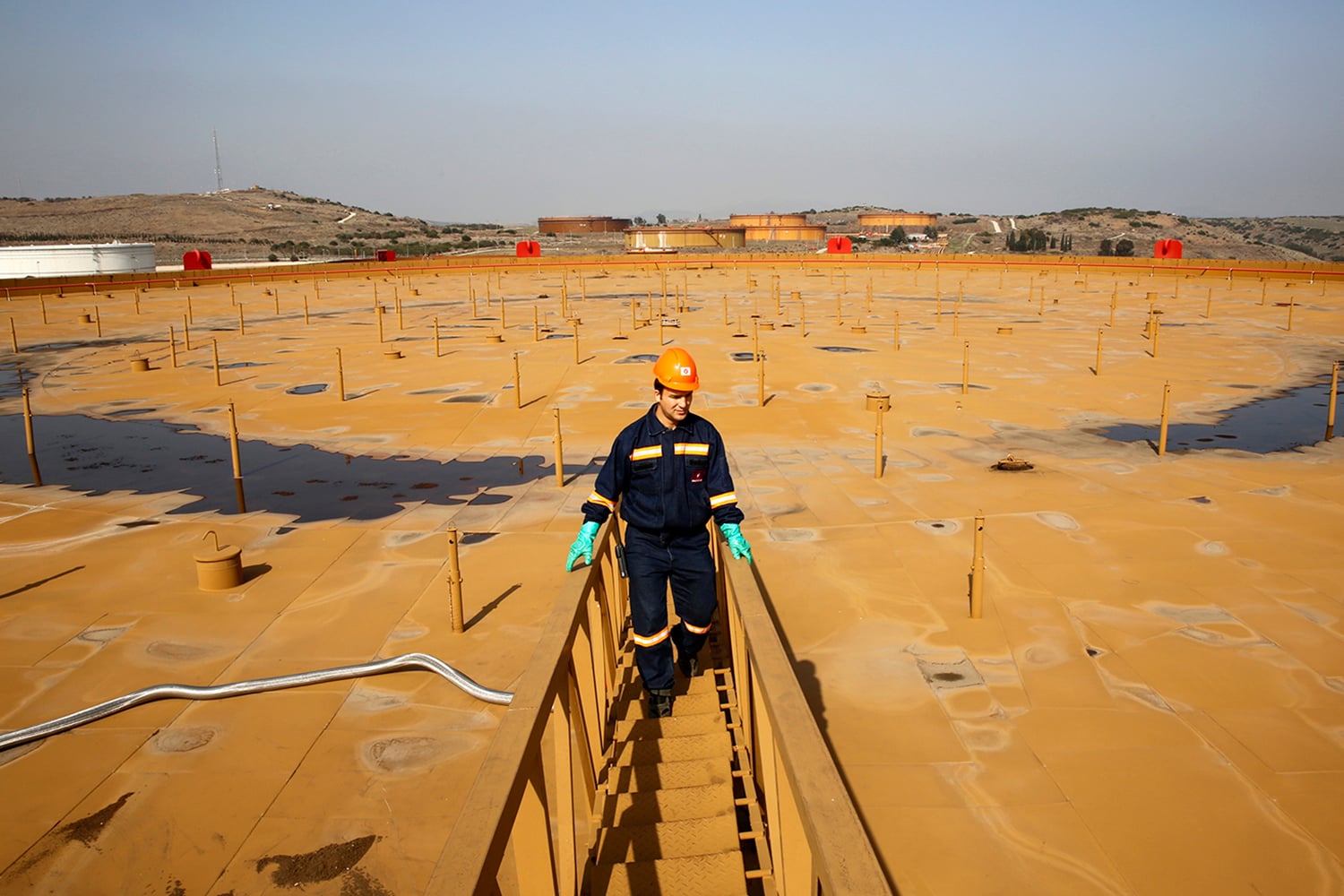
!A worker wearing a bright orange hard hat and dark uniform walks along a narrow catwalk atop a large, flat-topped industrial storage tank.
*A worker wearing a bright orange hard hat and dark uniform walks along a narrow catwalk atop a large, flat-topped industrial storage tank.*
A worker walks on top of an oil tank at Turkey's Mediterranean port of Ceyhan on Feb. 19, 2014. Umit Bektas/Reuters
*
Iran War
Analysis and news.
Across Cukurova, the alluvial plain in southern Turkey that lines the easternmost inlet of the Mediterranean Sea, farmers till land so fertile that it bears three harvests a year. Rivers feed cash crops of cotton, corn, wheat, sunflowers, rapeseed, and soybean; the muggy climate warms greenhouses filled with tomatoes, bananas, and avocados; and the mineral-rich soil supports a wide array of produce—citrus, peanuts, lemons, olives, pomegranates, watermelon, and more.
It is also, however, a key node in a newly vital route for oil otherwise blocked by the wars in Ukraine and Iran. The Fertile Crescent’s last great expanse of farmland spared by centuries of drought, war, and mismanagement is now vulnerable as Turkey moves to accommodate some 850,000 extra barrels of oil per day, with plans for much more.
Across Cukurova, the alluvial plain in southern Turkey that lines the easternmost inlet of the Mediterranean Sea, farmers till land so fertile that it bears three harvests a year. Rivers feed cash crops of cotton, corn, wheat, sunflowers, rapeseed, and soybean; the muggy climate warms greenhouses filled with tomatoes, bananas, and avocados; and the mineral-rich soil supports a wide array of produce—citrus, peanuts, lemons, olives, pomegranates, watermelon, and more.
It is also, however, a key node in a newly vital route for oil otherwise blocked by the wars in Ukraine and Iran. The Fertile Crescent’s last great expanse of farmland spared by centuries of drought, war, and mismanagement is now vulnerable as Turkey moves to accommodate some 850,000 extra barrels of oil per day, with plans for much more.
Existing oil and industrial facilities have already displaced many of Cukurova’s farmers and fishers. But the expansion underway could complete the plain’s transition from an area that can still live off its arable land and abundant waters—now a luxury in the drought-strained region—to an energy shipping and petrochemical hub. Not only could these industries nearly replace farming; they could permanently alter the land and water that sustain it, making it unfeasible for it to ever return.
---
!An agricultural harvesting vehicle with a small red Turkish flag mounted on the cab operates in a field filled with white cotton plants.
*An agricultural harvesting vehicle with a small red Turkish flag mounted on the cab operates in a field filled with white cotton plants.*
A worker harvests cotton in the Cukurova district of Adana, Turkey, on Sept. 12, 2019. Ibrahim Erikan/Anadolu Agency via Getty Images
The center of this transformation is Ceyhan, a district in Adana province with a stretch of villages along the coastline. Known for having some of the most productive farmland in Cukurova, Ceyhan also hosts one of the Mediterranean’s busiest energy ports, where two major crude oil pipelines terminate: the Baku-Tbilisi-Ceyhan (BTC) pipeline, which routes from Azerbaijan through Georgia, and the Kirkuk-Ceyhan pipeline, which brings oil from northern Iraq. In recent months, with Ukrainian drones striking Russian pipelines and Iraqi oil vessels blocked in the Strait of Hormuz, Turkey’s pipelines have offered an alternative to traditional export routes.
Other countries, including Israel, Romania, and Syria, claim that they will be able to bypass these blockages, but the alternative pipelines, both existing and planned, connecting to the Mediterranean or to the Black Sea are low volume, unsafe, or unrealistic. Ceyhan, at least, has two active pipelines that are cheaper and faster than other current options.
“I don’t think that there is a transit route or a hub that is entirely risk-free,” said Carole Nakhle, an energy economist and the founder of Crystol Energy, a British advisory firm. “That’s one area where Turkey perhaps has an advantage.”
Many countries are reacting to the stoppages by turning to alternative energy sources; Turkey is instead doubling down on its oil industry. While demand for oil as a fuel is slowing, demand for it as a raw material for petrochemical products is surging. Turkey is capitalizing on this by scaling up, consolidating, and formalizing oil-related development. It is quadrupling oil storage capacity around the Ceyhan terminals, aiming to meet and eventually exceed the pipelines’ combined capacity of 2.7 million barrels per day. It is also fast-tracking environmental and zoning permits for energy-related projects—including highways, a high-speed rail, logistical centers, and mines—and reviving plans for a massive expansion of petrochemical production.
The largest of the planned petrochemical zones, backed by new multinational financing secured by Turkish conglomerate Ronesans, lies just north of th
!Foreign Policy
Foreign Policy Get analysis and alerts more quickly in the mobile app.
Install
Back to Foreign Policy Magazine home page
* Latest
* Regions
+ Asia & the Pacific
+ China
+ Middle East & Africa
+ Americas
+ Europe
* Newsletters
Editors’ Picks
Evening roundup with our editors’ favorite stories of the day
!World Brief Icon
World Brief
Your guide to the most important world stories of the day
!China Brief Icon
China Brief
The latest news, analysis, and data from the country each week
Situation Report
Weekly update on what’s driving U.S. national security policy
FP Weekend
A curation of our best book reviews, deep dives, and other reads
!Africa Brief Icon
Africa Brief
Essential analysis of the stories shaping geopolitics on the continent
!South Asia Brief Icon
South Asia Brief
Weekly update on developments in India and its neighbors
The Reading List
Curated guides on geopolitics and current affairs
FP Bookshelf
A monthly guide to FP’s book reviews, excerpts, and reading recommendations
!Latin America Brief Icon
Latin America Brief
One-stop digest of politics, economics, and culture
!Southeast Asia Brief Icon
Southeast Asia Brief
A weekly dispatch with news from the region’s 11 countries
The New Geopolitics
A five-part masterclass in IR theory with Harvard Professor Stephen M. Walt
View All Newsletters
* FP Live
* Latest
* Trending:
* Trump-Xi meeting
Search this website
* Preferences
* My FP Feed
* Saved Articles
* Newsletters
* Magazine Archive
* Subscription Settings
* FAQs
* Log Out
Sign In
Sign In
Team access Team access
Subscribe Subscribe Team access Team access
Report: Turkey Is Turning Its Breadbasket Into an Oil Hub
*
*
* Bluesky
* X
Save
1. Create an FP account to save articles to read later.
Sign Up
ALREADY AN FP SUBSCRIBER? LOGIN
1. **Downloadable PDFs** are a benefit of an FP subscription.
Subscribe Now
ALREADY AN FP SUBSCRIBER? LOGIN
Gift
*
*
1. Gifting articles is a subscriber benefit.
Subscribe Now
ALREADY AN FP SUBSCRIBER? LOGIN
2. This article is an Insider exclusive.
Contact us at [email protected] to learn about upgrade options, unlocking the ability to gift this article.
Report
Turkey Is Turning Its Breadbasket Into an Oil Hub
As wars disrupt traditional export routes, Ankara is moving quickly to capitalize—at the expense of the last standing heartland of the Fertile Crescent.
September 29, 2026, 5:00 AM
By **Naomi Cohen**, a journalist and documentary filmmaker based in Istanbul.
!A worker wearing a bright orange hard hat and dark uniform walks along a narrow catwalk atop a large, flat-topped industrial storage tank.
*A worker wearing a bright orange hard hat and dark uniform walks along a narrow catwalk atop a large, flat-topped industrial storage tank.*
A worker walks on top of an oil tank at Turkey's Mediterranean port of Ceyhan on Feb. 19, 2014. Umit Bektas/Reuters
*
Iran War
Analysis and news.
Across Cukurova, the alluvial plain in southern Turkey that lines the easternmost inlet of the Mediterranean Sea, farmers till land so fertile that it bears three harvests a year. Rivers feed cash crops of cotton, corn, wheat, sunflowers, rapeseed, and soybean; the muggy climate warms greenhouses filled with tomatoes, bananas, and avocados; and the mineral-rich soil supports a wide array of produce—citrus, peanuts, lemons, olives, pomegranates, watermelon, and more.
It is also, however, a key node in a newly vital route for oil otherwise blocked by the wars in Ukraine and Iran. The Fertile Crescent’s last great expanse of farmland spared by centuries of drought, war, and mismanagement is now vulnerable as Turkey moves to accommodate some 850,000 extra barrels of oil per day, with plans for much more.
Across Cukurova, the alluvial plain in southern Turkey that lines the easternmost inlet of the Mediterranean Sea, farmers till land so fertile that it bears three harvests a year. Rivers feed cash crops of cotton, corn, wheat, sunflowers, rapeseed, and soybean; the muggy climate warms greenhouses filled with tomatoes, bananas, and avocados; and the mineral-rich soil supports a wide array of produce—citrus, peanuts, lemons, olives, pomegranates, watermelon, and more.
It is also, however, a key node in a newly vital route for oil otherwise blocked by the wars in Ukraine and Iran. The Fertile Crescent’s last great expanse of farmland spared by centuries of drought, war, and mismanagement is now vulnerable as Turkey moves to accommodate some 850,000 extra barrels of oil per day, with plans for much more.
Existing oil and industrial facilities have already displaced many of Cukurova’s farmers and fishers. But the expansion underway could complete the plain’s transition from an area that can still live off its arable land and abundant waters—now a luxury in the drought-strained region—to an energy shipping and petrochemical hub. Not only could these industries nearly replace farming; they could permanently alter the land and water that sustain it, making it unfeasible for it to ever return.
---
!An agricultural harvesting vehicle with a small red Turkish flag mounted on the cab operates in a field filled with white cotton plants.
*An agricultural harvesting vehicle with a small red Turkish flag mounted on the cab operates in a field filled with white cotton plants.*
A worker harvests cotton in the Cukurova district of Adana, Turkey, on Sept. 12, 2019. Ibrahim Erikan/Anadolu Agency via Getty Images
The center of this transformation is Ceyhan, a district in Adana province with a stretch of villages along the coastline. Known for having some of the most productive farmland in Cukurova, Ceyhan also hosts one of the Mediterranean’s busiest energy ports, where two major crude oil pipelines terminate: the Baku-Tbilisi-Ceyhan (BTC) pipeline, which routes from Azerbaijan through Georgia, and the Kirkuk-Ceyhan pipeline, which brings oil from northern Iraq. In recent months, with Ukrainian drones striking Russian pipelines and Iraqi oil vessels blocked in the Strait of Hormuz, Turkey’s pipelines have offered an alternative to traditional export routes.
Other countries, including Israel, Romania, and Syria, claim that they will be able to bypass these blockages, but the alternative pipelines, both existing and planned, connecting to the Mediterranean or to the Black Sea are low volume, unsafe, or unrealistic. Ceyhan, at least, has two active pipelines that are cheaper and faster than other current options.
“I don’t think that there is a transit route or a hub that is entirely risk-free,” said Carole Nakhle, an energy economist and the founder of Crystol Energy, a British advisory firm. “That’s one area where Turkey perhaps has an advantage.”
Many countries are reacting to the stoppages by turning to alternative energy sources; Turkey is instead doubling down on its oil industry. While demand for oil as a fuel is slowing, demand for it as a raw material for petrochemical products is surging. Turkey is capitalizing on this by scaling up, consolidating, and formalizing oil-related development. It is quadrupling oil storage capacity around the Ceyhan terminals, aiming to meet and eventually exceed the pipelines’ combined capacity of 2.7 million barrels per day. It is also fast-tracking environmental and zoning permits for energy-related projects—including highways, a high-speed rail, logistical centers, and mines—and reviving plans for a massive expansion of petrochemical production.
The largest of the planned petrochemical zones, backed by new multinational financing secured by Turkish conglomerate Ronesans, lies just north of th
🔗 Share Article
Tags:#تركيا#سياسة اقتصادية#الطاقة والنفط#الزراعة#البتروكيماويات#جيهان
Source: Foreign Policy
For Context
Related reads from the same topic or latest developments