Syria, Israel hold US-mediated talks in Jordan to de-escalate tensions
Al Jazeera

Al Jazeera
Original Source
Syria's Foreign Minister held talks with Israeli intelligence officials in Jordan, mediated by the US, to discuss mechanisms for halting Israeli attacks and reviving negotiations for a lasting security agreement. Damascus stressed its sovereign right to rebuild its military and determine its alliances in line with national interests.
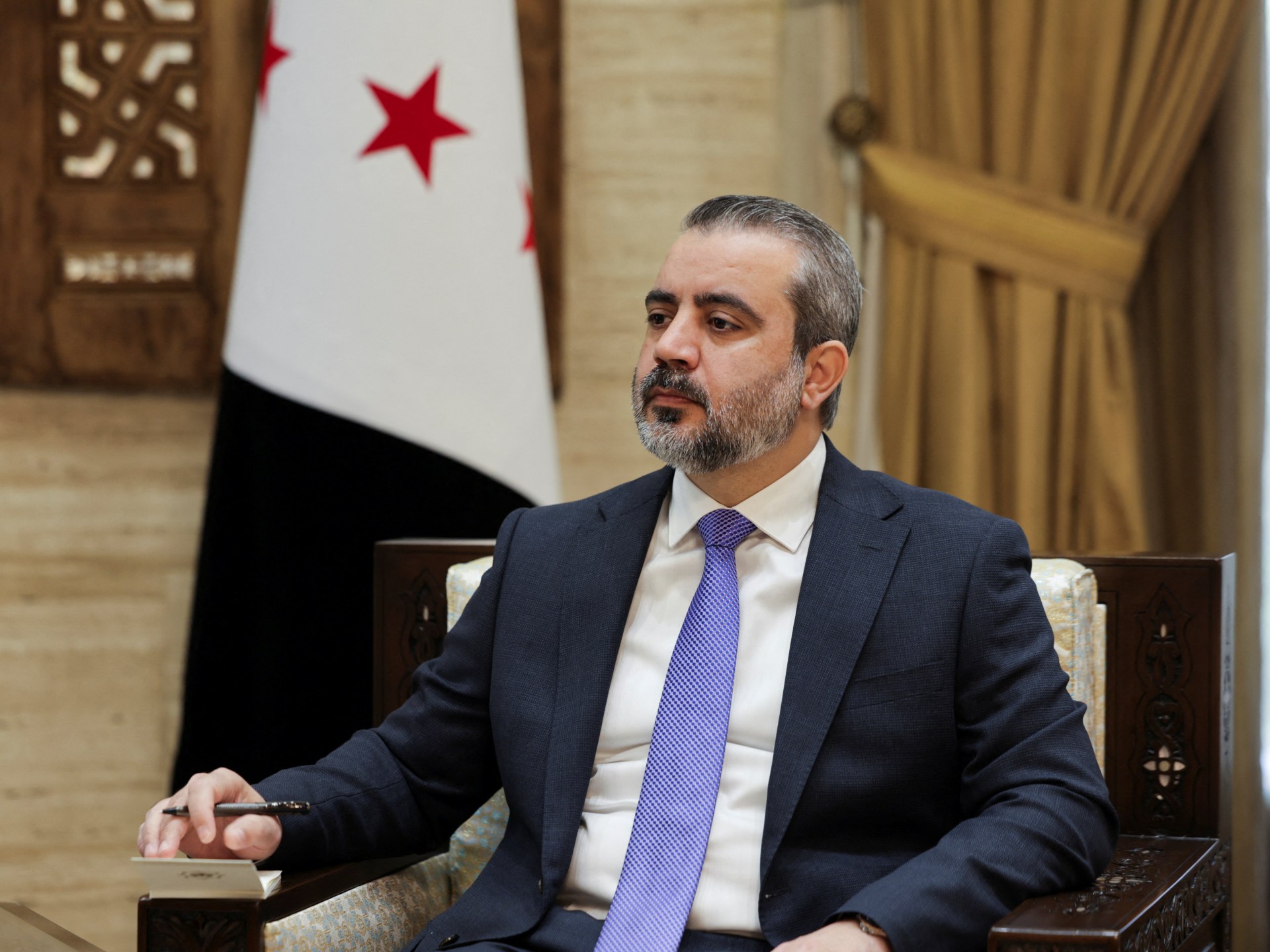
Syria’s Foreign Minister Asaad al-Shaibani has met with Israeli intelligence officials in Jordan, according to Syrian state media, as the two sides work to de-escalate tensions following an Israeli attack on a Syrian airbase near the Turkish border.
Syria’s Sana news agency, citing a diplomatic source, said the talks were mediated by the United States and involved a “high-level Israeli delegation”.
Recommended Stories
list of 3 items
list 1 of 3Israel bombs Syria as US envoy says base attack aimed at ‘baiting’ Turkiye
list 2 of 3Envoy says Israel did not give the US notice before strikes on Syrian base
list 3 of 3Syria’s foreign minister says door open for diplomacy with Israel
end of list
The AFP news agency reported that al-Shaibani met the head of Israel’s Mossad intelligence agency, Roman Gofman.
According to Sana, the discussions “focused on establishing practical mechanisms to halt Israeli attacks, arrests and targeting operations” as well as “reviving negotiations for a lasting security agreement between the two sides”.
They also discussed efforts to ease tensions between Israel and Turkiye and to prevent their rivalry from spilling onto Syrian territory, Sana reported.
The US has sought to broker a security agreement between Israel and the government of Syrian President Ahmed al-Sharaa for more than a year. Israel has launched hundreds of strikes on Syria since the fall of longtime ruler Bashar al-Assad in December 2024 and sent troops into a United Nations-patrolled buffer zone that had long separated Israeli and Syrian forces in the Israeli-occupied Golan Heights.
It also bombed the Abu Duhur airbase in northwestern Idlib on Thursday, claiming the attack was to prevent Turkish troops from deploying at the base, a claim Syria and Turkiye have denied.
Israeli Prime Minister Benjamin Netanyahu and Turkish President Recep Tayyip Erdogan have also traded barbs since the incident, with tensions high between the two leaders.
According to Sana, the Syrian side stressed during Sunday’s talks “that Syria is a sovereign state with the full right to rebuild and develop its national army and determine its alliances and partnerships in line with its national interests”. The Syrian side rejected “any arrangements or mechanisms that would restrict these sovereign rights,” it said.
Syria’s immediate priorities in the talks remained an Israeli withdrawal to positions held before al-Assad’s overthrow and the full restoration of a 1974 disengagement agreement, Sana reported.
The Syrian officials also reaffirmed Damascus’s sovereignty over the Israeli-occupied Golan Heights, it added.
Israel’s ‘red lines’
Israeli media reported that the talks were “positive” and said Israeli officials had adopted a number of red lines going into talks.
These include preventing Turkish military activity in Syria, keeping the Syrian side of the Golan Heights demilitarised, “ensuring the security” of Syria’s Druze community and preventing the Syrian army from acquiring certain strategic weapons systems.
They also conditioned any withdrawal from Syrian territories occupied by Israel on “diplomatic achievements”.
During previous rounds of US-mediated talks, Syria and Israel had agreed on a joint mechanism to share intelligence and defuse tensions. But the negotiations froze at the end of February, when the US and Israel launched their war on Iran, without a date set for resumption.
In an interview published ahead of the meeting, al-Shaibani told Reuters news agency that Damascus did not trust Israel, but that the door remained open for diplomacy. He said Syria had cut off contact entirely after the Israeli attack on Syria’s Abu al-Duhur airbase last week.
Al-Shaibani said the two sides had agreed on paper to “almost everything” around the beginning of the year, including arrangements for security zones in southern Syria and a buffer zone where only UN forces would be present.
Hassan Mneimneh, a political analyst and researcher at the Middle East Institute, told Al Jazeera that the current round of talks was unlikely to de-escalate tensions given Israel’s track record.
“It’s quite the opposite, meaning now that Syria has indicated its desire to have the situation de-escalate, Israel is likely to bring in more demands and have the Americans basically negotiate these new demands with Syria, against any kind of expansion of Turkish presence in the north and beyond the north,” he said.
Mneimneh added that Syria was “afraid that the country will become a battlefield” between Israel and Turkiye and was concerned about Israel’s territorial grab in the country, stretching “all the way to Hermon, to Jabal al-Sheikh in its totality almost, and all the way to three southern provinces”.
So, from the Syrian perspective, Mneimneh added, the talks with Israel seem to be aimed at avoiding “the disintegration of Syrian authority” as well as ensuring any conflict between Israel and Turkiye does not prevent Syria from “forming, establishing, consolidating polity after the fall of” al-Assad.
Syria’s Sana news agency, citing a diplomatic source, said the talks were mediated by the United States and involved a “high-level Israeli delegation”.
Recommended Stories
list of 3 items
list 1 of 3Israel bombs Syria as US envoy says base attack aimed at ‘baiting’ Turkiye
list 2 of 3Envoy says Israel did not give the US notice before strikes on Syrian base
list 3 of 3Syria’s foreign minister says door open for diplomacy with Israel
end of list
The AFP news agency reported that al-Shaibani met the head of Israel’s Mossad intelligence agency, Roman Gofman.
According to Sana, the discussions “focused on establishing practical mechanisms to halt Israeli attacks, arrests and targeting operations” as well as “reviving negotiations for a lasting security agreement between the two sides”.
They also discussed efforts to ease tensions between Israel and Turkiye and to prevent their rivalry from spilling onto Syrian territory, Sana reported.
The US has sought to broker a security agreement between Israel and the government of Syrian President Ahmed al-Sharaa for more than a year. Israel has launched hundreds of strikes on Syria since the fall of longtime ruler Bashar al-Assad in December 2024 and sent troops into a United Nations-patrolled buffer zone that had long separated Israeli and Syrian forces in the Israeli-occupied Golan Heights.
It also bombed the Abu Duhur airbase in northwestern Idlib on Thursday, claiming the attack was to prevent Turkish troops from deploying at the base, a claim Syria and Turkiye have denied.
Israeli Prime Minister Benjamin Netanyahu and Turkish President Recep Tayyip Erdogan have also traded barbs since the incident, with tensions high between the two leaders.
According to Sana, the Syrian side stressed during Sunday’s talks “that Syria is a sovereign state with the full right to rebuild and develop its national army and determine its alliances and partnerships in line with its national interests”. The Syrian side rejected “any arrangements or mechanisms that would restrict these sovereign rights,” it said.
Syria’s immediate priorities in the talks remained an Israeli withdrawal to positions held before al-Assad’s overthrow and the full restoration of a 1974 disengagement agreement, Sana reported.
The Syrian officials also reaffirmed Damascus’s sovereignty over the Israeli-occupied Golan Heights, it added.
Israel’s ‘red lines’
Israeli media reported that the talks were “positive” and said Israeli officials had adopted a number of red lines going into talks.
These include preventing Turkish military activity in Syria, keeping the Syrian side of the Golan Heights demilitarised, “ensuring the security” of Syria’s Druze community and preventing the Syrian army from acquiring certain strategic weapons systems.
They also conditioned any withdrawal from Syrian territories occupied by Israel on “diplomatic achievements”.
During previous rounds of US-mediated talks, Syria and Israel had agreed on a joint mechanism to share intelligence and defuse tensions. But the negotiations froze at the end of February, when the US and Israel launched their war on Iran, without a date set for resumption.
In an interview published ahead of the meeting, al-Shaibani told Reuters news agency that Damascus did not trust Israel, but that the door remained open for diplomacy. He said Syria had cut off contact entirely after the Israeli attack on Syria’s Abu al-Duhur airbase last week.
Al-Shaibani said the two sides had agreed on paper to “almost everything” around the beginning of the year, including arrangements for security zones in southern Syria and a buffer zone where only UN forces would be present.
Hassan Mneimneh, a political analyst and researcher at the Middle East Institute, told Al Jazeera that the current round of talks was unlikely to de-escalate tensions given Israel’s track record.
“It’s quite the opposite, meaning now that Syria has indicated its desire to have the situation de-escalate, Israel is likely to bring in more demands and have the Americans basically negotiate these new demands with Syria, against any kind of expansion of Turkish presence in the north and beyond the north,” he said.
Mneimneh added that Syria was “afraid that the country will become a battlefield” between Israel and Turkiye and was concerned about Israel’s territorial grab in the country, stretching “all the way to Hermon, to Jabal al-Sheikh in its totality almost, and all the way to three southern provinces”.
So, from the Syrian perspective, Mneimneh added, the talks with Israel seem to be aimed at avoiding “the disintegration of Syrian authority” as well as ensuring any conflict between Israel and Turkiye does not prevent Syria from “forming, establishing, consolidating polity after the fall of” al-Assad.
🔗 Share Article
Tags:#سوريا#إسرائيل#الولايات المتحدة#المفاوضات#الأمن#تركيا
Source: Al Jazeera
For Context
Related reads from the same topic or latest developments