How Canada Is Navigating Trump’s Threats
Foreign Policy

Foreign Policy
Original Source
Canadian Foreign Minister Anita Anand insists that Canada and the U.S. economies are deeply integrated, but Canada is diversifying its trade and security partnerships globally. She emphasizes that diversification will continue regardless of U.S. negotiations to ensure long-term resilience and sovereignty.
FP Live: Anita Anand on How Canada Is Navigating Trump’s Threats
!Foreign Policy
Foreign Policy Get analysis and alerts more quickly in the mobile app.
Install
Back to Foreign Policy Magazine home page
* Latest
* Regions
+ Asia & the Pacific
+ China
+ Middle East & Africa
+ Americas
+ Europe
* Newsletters
Editors’ Picks
Evening roundup with our editors’ favorite stories of the day
!World Brief Icon
World Brief
Your guide to the most important world stories of the day
!China Brief Icon
China Brief
The latest news, analysis, and data from the country each week
Situation Report
Weekly update on what’s driving U.S. national security policy
FP Weekend
A curation of our best book reviews, deep dives, and other reads
!Africa Brief Icon
Africa Brief
Essential analysis of the stories shaping geopolitics on the continent
!South Asia Brief Icon
South Asia Brief
Weekly update on developments in India and its neighbors
The Reading List
Curated guides on geopolitics and current affairs
FP Bookshelf
A monthly guide to FP’s book reviews, excerpts, and reading recommendations
!Latin America Brief Icon
Latin America Brief
One-stop digest of politics, economics, and culture
!Southeast Asia Brief Icon
Southeast Asia Brief
A weekly dispatch with news from the region’s 11 countries
The New Geopolitics
A five-part masterclass in IR theory with Harvard Professor Stephen M. Walt
View All Newsletters
* FP Live
* Latest
* Trending:
* Trump-Xi meeting
* United Nations General Assembly
Search this website
* Preferences
* My FP Feed
* Saved Articles
* Newsletters
* Magazine Archive
* Subscription Settings
* FAQs
* Log Out
Sign In
Sign In
Partner with FP at UNGA81 Partner with FP at UNGA81
Subscribe Subscribe Partner with FP at UNGA81 Partner with FP at UNGA81
Q&A: How Canada Is Navigating Trump’s Threats
*
*
* Facebook
* Bluesky
* X
* LinkedIn
* WhatsApp
* Reddit
Save
1. Create an FP account to save articles to read later.
Sign Up
ALREADY AN FP SUBSCRIBER? LOGIN
PDF
1. **Downloadable PDFs** are a benefit of an FP subscription.
Subscribe Now
ALREADY AN FP SUBSCRIBER? LOGIN
Gift
*
*
* WhatsApp
1. Gifting articles is a subscriber benefit.
Subscribe Now
ALREADY AN FP SUBSCRIBER? LOGIN
2. This article is an Insider exclusive.
Contact us at [email protected] to learn about upgrade options, unlocking the ability to gift this article.
Q&A
How Canada Is Navigating Trump’s Threats
A conversation with Foreign Minister Anita Anand.
By **Ravi Agrawal**, the editor in chief of *Foreign Policy*.
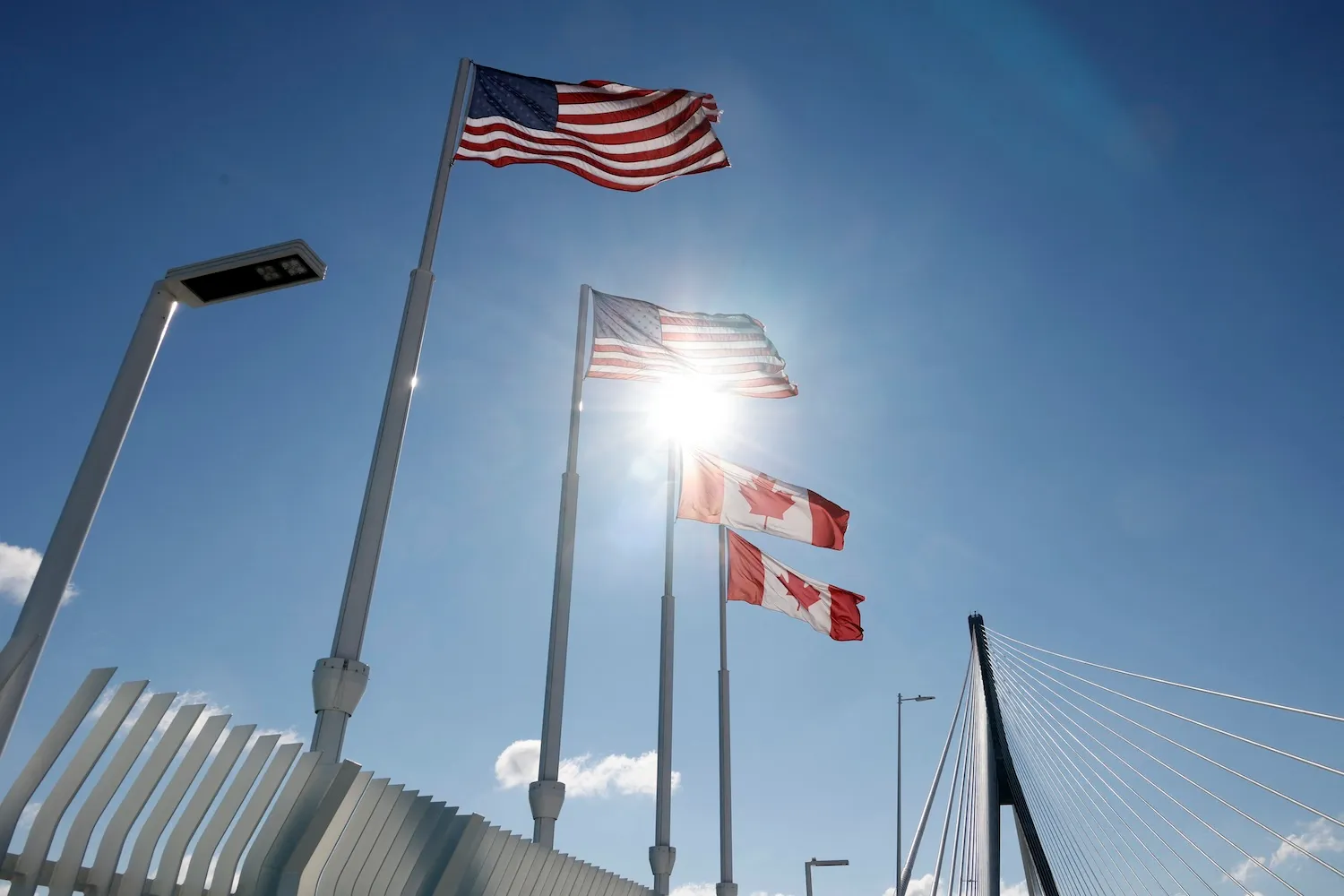
!Canadian and U.S. flags fly across the border connecting Windsor, Ontario, and Detroit on Sept. 6.
*Canadian and U.S. flags fly across the border connecting Windsor, Ontario, and Detroit on Sept. 6.*
Canadian and U.S. flags fly across the border connecting Windsor, Ontario, and Detroit on Sept. 6. Jeff Kowalsky/AFP via Getty Images
*
*
*
September 22, 2026, 12:08 PM
U.S. President Donald Trump has upended relations with several traditional allies but none perhaps more so than Canada, the world’s 11th-largest economy and a country with which the United States shares the planet’s longest land border. Trump has repeatedly referred to Canada as the “51st state”—an unsubtle threat to absorb its territory; he has imposed sanctions on Ottawa, harming its companies and consumers; and he has driven Canada to look to Europe and elsewhere for stable trade and defense partnerships.
On the sidelines of this week’s U.N. General Assembly, I caught up with Anita Anand, Canada’s foreign minister. What follows is a lightly edited transcript of our conversation.
U.S. President Donald Trump has upended relations with several traditional allies but none perhaps more so than Canada, the world’s 11th-largest economy and a country with which the United States shares the planet’s longest land border. Trump has repeatedly referred to Canada as the “51st state”—an unsubtle threat to absorb its territory; he has imposed sanctions on Ottawa, harming its companies and consumers; and he has driven Canada to look to Europe and elsewhere for stable trade and defense partnerships.
On the sidelines of this week’s U.N. General Assembly, I caught up with Anita Anand, Canada’s foreign minister. What follows is a lightly edited transcript of our conversation.
**Ravi Agrawal:** Let’s start with the trade war that your country has with the United States. President Donald Trump says, “We don’t need Canada. They need us.” How do you respond to that?
**Anita Anand:** Our economies, which have been integrated for decades upon decades, are mutually interdependent. If you look at the auto sector, for example, prior to a car finally being produced, it travels back and forth across the border between Canada and the United States several times. It’s just one example of the way in which, over the decades, the auto industry has become symbiotic. This is the case with many other sectors of our economy. Part of what the negotiators are focusing on are the sectoral tariffs, outside of the Canada-United States Free Trade Agreement, in steel, aluminum, lumber, and auto, for example, where the economies and supply chains are integrated. They’re trying to reach a result that benefits both populations.
**RA:** Countries are responding to Trump’s tariffs in a variety of ways. Some have tried flattery and gifts; some are retaliating. Your administration has taken a tough stance—a strategy that helped get Prime Minister Mark Carney elected. I’m curious whether there’s a sense now that this path also comes with a steep economic cost. And if so, how is your administration thinking through those costs and what it means for the Canadian people?
**AA:** A vast majority of goods continue to pass through the Canada-United States border every day without tariffs under the Canada-United States Free Trade Agreement. The work that we will continue to do is to act in the sovereign best interests of our country. That means not only working on trade with the United States but also diversifying our trade relationships across the board. Prior to Prime Minister Carney’s election, we were and continue to be the only G-7 country that has a free trade agreement with every other G-7 country. In addition, over the past year, Canada has signed over 20 security, defense, and economic agreements with countries around the world in service of the trade diversification agenda.
Let’s look at the Indo-Pacific. We signed a free trade agreement with Indonesia last year. We’re negotiating one with the Philippines right now. We hope to conclude a comprehensive economic partnership agreement with India and a free trade agreement with ASEAN \[the Association of Southeast Asian Nations] before the end of this year. That body of work is focused on the Indo-Pacific, but that is an example of what we are doing around the world in terms of trade diversification. It is work that will continue while the Canada-United States relationship and trade negotiations are occurring.
**RA:** Two years from now, if we have a new administration in the United States and the relationship with Canada reverts to the norm, what happens to all these other global moves that Canada has made to de-risk from the United States?
**AA:** The work that we are doing now is in service of our economic robustness, our longevity, our sovereignty, as Canadians and as a country. This would be the strategy regardless. We’re doubling non-U.S. trade over the next 10 years. As the prime minister says, we can give ourselves much more than any country can take away. In other words, we need to ensure our long-term resilience, and that is the case regardless of the trade negotiations between Canada and the United States. It is why the Canada-European Union relationship is gro
!Foreign Policy
Foreign Policy Get analysis and alerts more quickly in the mobile app.
Install
Back to Foreign Policy Magazine home page
* Latest
* Regions
+ Asia & the Pacific
+ China
+ Middle East & Africa
+ Americas
+ Europe
* Newsletters
Editors’ Picks
Evening roundup with our editors’ favorite stories of the day
!World Brief Icon
World Brief
Your guide to the most important world stories of the day
!China Brief Icon
China Brief
The latest news, analysis, and data from the country each week
Situation Report
Weekly update on what’s driving U.S. national security policy
FP Weekend
A curation of our best book reviews, deep dives, and other reads
!Africa Brief Icon
Africa Brief
Essential analysis of the stories shaping geopolitics on the continent
!South Asia Brief Icon
South Asia Brief
Weekly update on developments in India and its neighbors
The Reading List
Curated guides on geopolitics and current affairs
FP Bookshelf
A monthly guide to FP’s book reviews, excerpts, and reading recommendations
!Latin America Brief Icon
Latin America Brief
One-stop digest of politics, economics, and culture
!Southeast Asia Brief Icon
Southeast Asia Brief
A weekly dispatch with news from the region’s 11 countries
The New Geopolitics
A five-part masterclass in IR theory with Harvard Professor Stephen M. Walt
View All Newsletters
* FP Live
* Latest
* Trending:
* Trump-Xi meeting
* United Nations General Assembly
Search this website
* Preferences
* My FP Feed
* Saved Articles
* Newsletters
* Magazine Archive
* Subscription Settings
* FAQs
* Log Out
Sign In
Sign In
Partner with FP at UNGA81 Partner with FP at UNGA81
Subscribe Subscribe Partner with FP at UNGA81 Partner with FP at UNGA81
Q&A: How Canada Is Navigating Trump’s Threats
*
*
* Bluesky
* X
Save
1. Create an FP account to save articles to read later.
Sign Up
ALREADY AN FP SUBSCRIBER? LOGIN
1. **Downloadable PDFs** are a benefit of an FP subscription.
Subscribe Now
ALREADY AN FP SUBSCRIBER? LOGIN
Gift
*
*
1. Gifting articles is a subscriber benefit.
Subscribe Now
ALREADY AN FP SUBSCRIBER? LOGIN
2. This article is an Insider exclusive.
Contact us at [email protected] to learn about upgrade options, unlocking the ability to gift this article.
Q&A
How Canada Is Navigating Trump’s Threats
A conversation with Foreign Minister Anita Anand.
By **Ravi Agrawal**, the editor in chief of *Foreign Policy*.
!Canadian and U.S. flags fly across the border connecting Windsor, Ontario, and Detroit on Sept. 6.
*Canadian and U.S. flags fly across the border connecting Windsor, Ontario, and Detroit on Sept. 6.*
Canadian and U.S. flags fly across the border connecting Windsor, Ontario, and Detroit on Sept. 6. Jeff Kowalsky/AFP via Getty Images
*
*
*
September 22, 2026, 12:08 PM
U.S. President Donald Trump has upended relations with several traditional allies but none perhaps more so than Canada, the world’s 11th-largest economy and a country with which the United States shares the planet’s longest land border. Trump has repeatedly referred to Canada as the “51st state”—an unsubtle threat to absorb its territory; he has imposed sanctions on Ottawa, harming its companies and consumers; and he has driven Canada to look to Europe and elsewhere for stable trade and defense partnerships.
On the sidelines of this week’s U.N. General Assembly, I caught up with Anita Anand, Canada’s foreign minister. What follows is a lightly edited transcript of our conversation.
U.S. President Donald Trump has upended relations with several traditional allies but none perhaps more so than Canada, the world’s 11th-largest economy and a country with which the United States shares the planet’s longest land border. Trump has repeatedly referred to Canada as the “51st state”—an unsubtle threat to absorb its territory; he has imposed sanctions on Ottawa, harming its companies and consumers; and he has driven Canada to look to Europe and elsewhere for stable trade and defense partnerships.
On the sidelines of this week’s U.N. General Assembly, I caught up with Anita Anand, Canada’s foreign minister. What follows is a lightly edited transcript of our conversation.
**Ravi Agrawal:** Let’s start with the trade war that your country has with the United States. President Donald Trump says, “We don’t need Canada. They need us.” How do you respond to that?
**Anita Anand:** Our economies, which have been integrated for decades upon decades, are mutually interdependent. If you look at the auto sector, for example, prior to a car finally being produced, it travels back and forth across the border between Canada and the United States several times. It’s just one example of the way in which, over the decades, the auto industry has become symbiotic. This is the case with many other sectors of our economy. Part of what the negotiators are focusing on are the sectoral tariffs, outside of the Canada-United States Free Trade Agreement, in steel, aluminum, lumber, and auto, for example, where the economies and supply chains are integrated. They’re trying to reach a result that benefits both populations.
**RA:** Countries are responding to Trump’s tariffs in a variety of ways. Some have tried flattery and gifts; some are retaliating. Your administration has taken a tough stance—a strategy that helped get Prime Minister Mark Carney elected. I’m curious whether there’s a sense now that this path also comes with a steep economic cost. And if so, how is your administration thinking through those costs and what it means for the Canadian people?
**AA:** A vast majority of goods continue to pass through the Canada-United States border every day without tariffs under the Canada-United States Free Trade Agreement. The work that we will continue to do is to act in the sovereign best interests of our country. That means not only working on trade with the United States but also diversifying our trade relationships across the board. Prior to Prime Minister Carney’s election, we were and continue to be the only G-7 country that has a free trade agreement with every other G-7 country. In addition, over the past year, Canada has signed over 20 security, defense, and economic agreements with countries around the world in service of the trade diversification agenda.
Let’s look at the Indo-Pacific. We signed a free trade agreement with Indonesia last year. We’re negotiating one with the Philippines right now. We hope to conclude a comprehensive economic partnership agreement with India and a free trade agreement with ASEAN \[the Association of Southeast Asian Nations] before the end of this year. That body of work is focused on the Indo-Pacific, but that is an example of what we are doing around the world in terms of trade diversification. It is work that will continue while the Canada-United States relationship and trade negotiations are occurring.
**RA:** Two years from now, if we have a new administration in the United States and the relationship with Canada reverts to the norm, what happens to all these other global moves that Canada has made to de-risk from the United States?
**AA:** The work that we are doing now is in service of our economic robustness, our longevity, our sovereignty, as Canadians and as a country. This would be the strategy regardless. We’re doubling non-U.S. trade over the next 10 years. As the prime minister says, we can give ourselves much more than any country can take away. In other words, we need to ensure our long-term resilience, and that is the case regardless of the trade negotiations between Canada and the United States. It is why the Canada-European Union relationship is gro
🔗 Share Article
Tags:#كندا#ترامب#التجارة الحرة#العلاقات الدولية#السياسة الخارجية#تنويع الاقتصاد
Source: Foreign Policy
For Context
Related reads from the same topic or latest developments