NASA scan discovers new, 'once in a century' Moon crater
France 24
F
France 24
Original Source
NASA researchers have discovered a massive crater on the Moon formed in spring 2024 from a comet or asteroid impact—a rare event occurring only once per century or longer. The crater, named "McGetchin," measures 222 meters wide and represents invaluable data for NASA's lunar base construction plans.
A researcher at NASA has found a massive, recently-formed crater on the Moon, a rare occurrence that only happens "once in a century or even longer", according to scientists. The crater, dubbed "McGetchin", measures 730 feet (222 metres) wide, NASA said in a blog post.
It is believed to have been created in the spring of 2024 from a comet or asteroid colliding with the Moon, with researchers describing the object that caused it to be the size of a building three-to-six stories high.
"Scientists estimate that an impact of this magnitude happens on the Moon about once in a century or even longer," NASA said in the blog post.
Such a large-scale event is estimated to occur only once every 132 years, researchers said, making this a treasure trove of information as NASA prepares to build a base for astronauts on the moon.
“This event constitutes a statistically rare, effectively once-in-a-lifetime observation,” the scientists wrote in one of two studies appearing on the subject Wednesday in the journal Science Advances.
Although the crater had been there for years, it was not discovered until Robert Wagner, a researcher with NASA's Lunar Reconnaissance Orbiter (LRO), noticed it in a new scan of the Moon's surface.
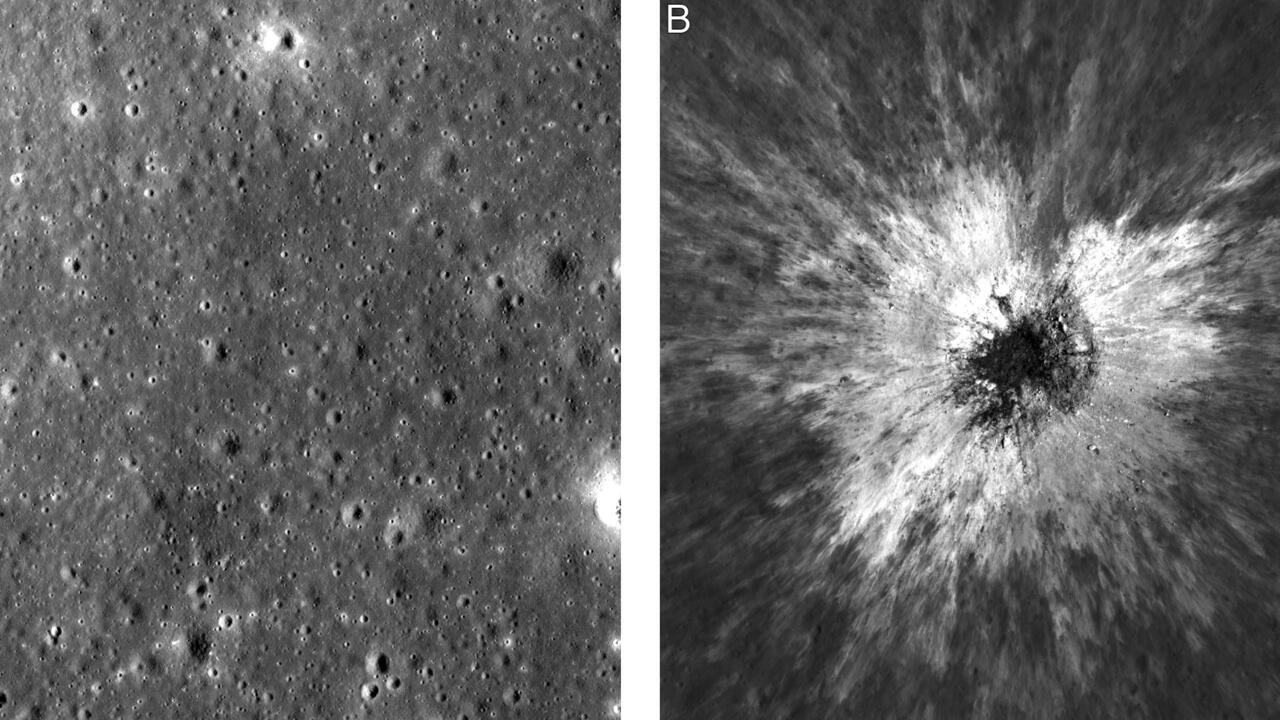
The crater appeared as a "large bright spot circled by a dark halo" by the LRO probe, which has been studying the Moon since 2009.
A study published Wednesday in the journal Science Advances determined it was the largest new crater ever discovered in the solar system.
While the Moon has numerous craters, many of which are far bigger than McGetchin, researching a crater's formation in real time can help build understanding of the Moon's geology.
This in turn could better prepare future crewed missions to the Moon, which are currently planned by both the United States and China.
Unlike Earth, the Moon has virtually no atmospheric layer, so space debris does not slow down or burn up before colliding with the surface.
(FRANCE 24 with AP, AFP)
It is believed to have been created in the spring of 2024 from a comet or asteroid colliding with the Moon, with researchers describing the object that caused it to be the size of a building three-to-six stories high.
"Scientists estimate that an impact of this magnitude happens on the Moon about once in a century or even longer," NASA said in the blog post.
Such a large-scale event is estimated to occur only once every 132 years, researchers said, making this a treasure trove of information as NASA prepares to build a base for astronauts on the moon.
“This event constitutes a statistically rare, effectively once-in-a-lifetime observation,” the scientists wrote in one of two studies appearing on the subject Wednesday in the journal Science Advances.
Although the crater had been there for years, it was not discovered until Robert Wagner, a researcher with NASA's Lunar Reconnaissance Orbiter (LRO), noticed it in a new scan of the Moon's surface.
The crater appeared as a "large bright spot circled by a dark halo" by the LRO probe, which has been studying the Moon since 2009.
A study published Wednesday in the journal Science Advances determined it was the largest new crater ever discovered in the solar system.
While the Moon has numerous craters, many of which are far bigger than McGetchin, researching a crater's formation in real time can help build understanding of the Moon's geology.
This in turn could better prepare future crewed missions to the Moon, which are currently planned by both the United States and China.
Unlike Earth, the Moon has virtually no atmospheric layer, so space debris does not slow down or burn up before colliding with the surface.
(FRANCE 24 with AP, AFP)
🔗 Share Article
Tags:#ناسا#القمر#اكتشاف علمي#الفضاء#أبحاث جيولوجية#الاستكشاف القمري
Source: France 24
For Context
Related reads from the same topic or latest developments