Russian strike on buses kills 33, say officials, as deadly attacks on Ukraine surge
BBC World

BBC World
Original Source
A Russian glide bomb attack on two civilian buses in the frontline city of Kramatorsk killed at least 30 people, officials said, as Moscow intensifies strikes across Ukraine with mounting civilian casualties. The assault prompted President Zelensky to vow retaliation and the UK Foreign Secretary to announce new sanctions on Russia's war machine.
At least 30 people have been killed in a Russian glide bomb attack on two civilian buses in the eastern front line city of Kramatorsk, rescue officials say.
Authorities said three people were also killed in the village of Bilenke, part of the Kramatorsk community.
Another 18 people were wounded, said Donetsk regional head Vadym Filashkin, accusing Russia of targeting buses carrying passengers to kill as many civilians as possible.
Kramatorsk and neighbouring Slovyansk are part of a so-called fortress belt that Moscow is trying to seize as part of Russian President Vladimir Putin's claim to the entire Ukrainian industrial region of Donbas.
Ukraine's President Volodymyr Zelensky said: "This strike will not go without our response."
In a post on Telegram, he said: "Russia is trying to destroy all life in Donbas, and the world needs to react to this. React harshly - exactly as the Russians deserve for all the deaths they have caused."
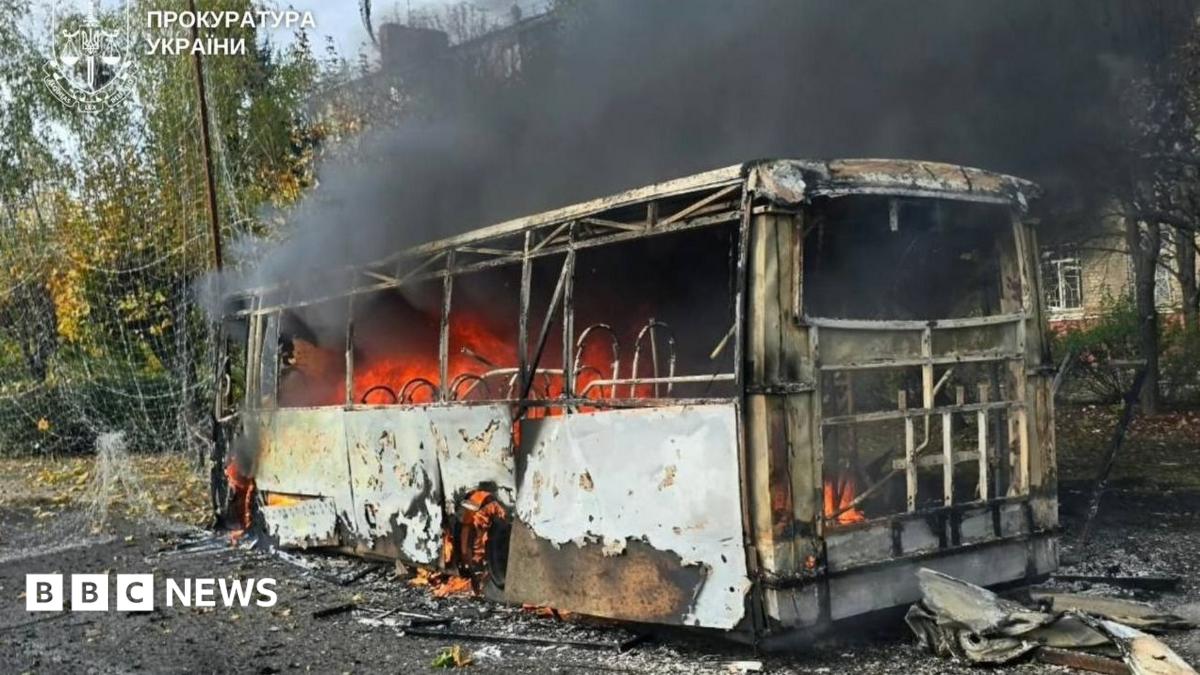
Images posted by local prosecutors showed the burning metal shell of the bus along with debris and some of the victims on the road.
Moscow is yet to comment on the latest attack. It follows a dramatic surge in Russian attacks across the country and a heavy increase in civilian casualties.
According to the UN, Ukraine saw more civilians killed by August this year than were killed in all of 2025.
In one single attack that destroyed a five-storey block of flats in Pryluky east of Kyiv early on Wednesday, 22 people were killed, including five children. Three of the children were only one year old.
UK Foreign Secretary Ed Miliband, meeting Zelensky in Kyiv on Thursday, said the attack in Pryluky showed Putin's "evil intent and evil strategy".
He announced "more sanctions on Russia, on the war machine of Putin, on the shadow fleet, on the oil companies, on the crypto, on the financing of the war" and told Zelensky the UK would stand with Ukraine "as long as it takes for you to prevail in this conflict".
After the deadly attack on Kramatorsk, Donetsk regional head Filashkin appealed to anyone who was still in the eastern front line region to move to safer parts of Ukraine.
Given the sharp deterioration of security in the two neighbouring cities, he said all public transport had been ordered to stop. The safety of civilians was paramount, and "we have no right to risk the lives of passengers and drivers", he said.
Moscow has often cited the "liberation" and "protection" of the predominantly Russian-speaking Donbas as justification for the full-scale invasion of Ukraine. It is made up of two regions - Luhansk and Donetsk - and with most of Luhansk under Russian control, the Kremlin is also aiming to capture remaining 20% of Donetsk territory still held by Ukraine.
For much of the war Kramatorsk acted as a logistics and supply hub for the Ukrainian military, however it has now come under almost daily Russian attack as its military moves closer to the east of the city.
Glide bombs in particular have been launched at Slovyansk and Kramatorsk. The bombs are fitted with winglets so they glide towards their target rather than simply fall. In late August as many as nine glide bombs were fired at Kramatorsk in one day.
Kramatorsk City Council described the strike as a "horrific crime committed by the Russian army against the civilian population".
"Once again, the Russians have struck a location where there are absolutely no military targets," it said.
Authorities said three people were also killed in the village of Bilenke, part of the Kramatorsk community.
Another 18 people were wounded, said Donetsk regional head Vadym Filashkin, accusing Russia of targeting buses carrying passengers to kill as many civilians as possible.
Kramatorsk and neighbouring Slovyansk are part of a so-called fortress belt that Moscow is trying to seize as part of Russian President Vladimir Putin's claim to the entire Ukrainian industrial region of Donbas.
Ukraine's President Volodymyr Zelensky said: "This strike will not go without our response."
In a post on Telegram, he said: "Russia is trying to destroy all life in Donbas, and the world needs to react to this. React harshly - exactly as the Russians deserve for all the deaths they have caused."
Images posted by local prosecutors showed the burning metal shell of the bus along with debris and some of the victims on the road.
Moscow is yet to comment on the latest attack. It follows a dramatic surge in Russian attacks across the country and a heavy increase in civilian casualties.
According to the UN, Ukraine saw more civilians killed by August this year than were killed in all of 2025.
In one single attack that destroyed a five-storey block of flats in Pryluky east of Kyiv early on Wednesday, 22 people were killed, including five children. Three of the children were only one year old.
UK Foreign Secretary Ed Miliband, meeting Zelensky in Kyiv on Thursday, said the attack in Pryluky showed Putin's "evil intent and evil strategy".
He announced "more sanctions on Russia, on the war machine of Putin, on the shadow fleet, on the oil companies, on the crypto, on the financing of the war" and told Zelensky the UK would stand with Ukraine "as long as it takes for you to prevail in this conflict".
After the deadly attack on Kramatorsk, Donetsk regional head Filashkin appealed to anyone who was still in the eastern front line region to move to safer parts of Ukraine.
Given the sharp deterioration of security in the two neighbouring cities, he said all public transport had been ordered to stop. The safety of civilians was paramount, and "we have no right to risk the lives of passengers and drivers", he said.
Moscow has often cited the "liberation" and "protection" of the predominantly Russian-speaking Donbas as justification for the full-scale invasion of Ukraine. It is made up of two regions - Luhansk and Donetsk - and with most of Luhansk under Russian control, the Kremlin is also aiming to capture remaining 20% of Donetsk territory still held by Ukraine.
For much of the war Kramatorsk acted as a logistics and supply hub for the Ukrainian military, however it has now come under almost daily Russian attack as its military moves closer to the east of the city.
Glide bombs in particular have been launched at Slovyansk and Kramatorsk. The bombs are fitted with winglets so they glide towards their target rather than simply fall. In late August as many as nine glide bombs were fired at Kramatorsk in one day.
Kramatorsk City Council described the strike as a "horrific crime committed by the Russian army against the civilian population".
"Once again, the Russians have struck a location where there are absolutely no military targets," it said.
🔗 Share Article
Tags:#أوكرانيا#روسيا#الصراع الروسي الأوكراني#المدنيون#كراماتورسك#الجرائم الحربية
Source: BBC World
For Context
Related reads from the same topic or latest developments