Brussels Mulls Additional Ukraine Loan as the U.S. Retreats
By using this website, you agree to our use of cookies. This use includes personalization of content and ads, and traffic analytics. Review our Privacy Policy for more information.
Foreign Policy Get analysis and alerts more quickly in the mobile app.
Install
Back to Foreign Policy Magazine home page
Evening roundup with our editors’ favorite stories of the day
World Brief
Your guide to the most important world stories of the day
China Brief
The latest news, analysis, and data from the country each week
Situation Report
Weekly update on what’s driving U.S. national security policy
FP Weekend
A curation of our best book reviews, deep dives, and other reads
Africa Brief
Essential analysis of the stories shaping geopolitics on the continent
South Asia Brief
Weekly update on developments in India and its neighbors
The Reading List
Curated guides on geopolitics and current affairs
FP Bookshelf
A monthly guide to FP’s book reviews, excerpts, and reading recommendations
Latin America Brief
One-stop digest of politics, economics, and culture
Southeast Asia Brief
A weekly dispatch with news from the region’s 11 countries
The New Geopolitics
A five-part masterclass in IR theory with Harvard Professor Stephen M. Walt
View All Newsletters
Give a gift Give a gift
Subscribe Subscribe Give a gift Give a gift
Analysis: Europe Steps Into the Breach on Ukraine
1. Create an FP account to save articles to read later.
Sign Up
ALREADY AN FP SUBSCRIBER? LOGIN
PDF
1. **Downloadable PDFs** are a benefit of an FP subscription.
ALREADY AN FP SUBSCRIBER? LOGIN
Gift
1. Gifting articles is a subscriber benefit.
ALREADY AN FP SUBSCRIBER? LOGIN
2. This article is an Insider exclusive.
Contact us at [email protected] to learn about upgrade options, unlocking the ability to gift this article.
Analysis
Europe Steps Into the Breach on Ukraine
Brussels will likely finalize this week an additional 45 billion euros for Kyiv, even as Washington retreats.
By **Keith Johnson**, a staff writer at *Foreign Policy* covering geoeconomics and energy.
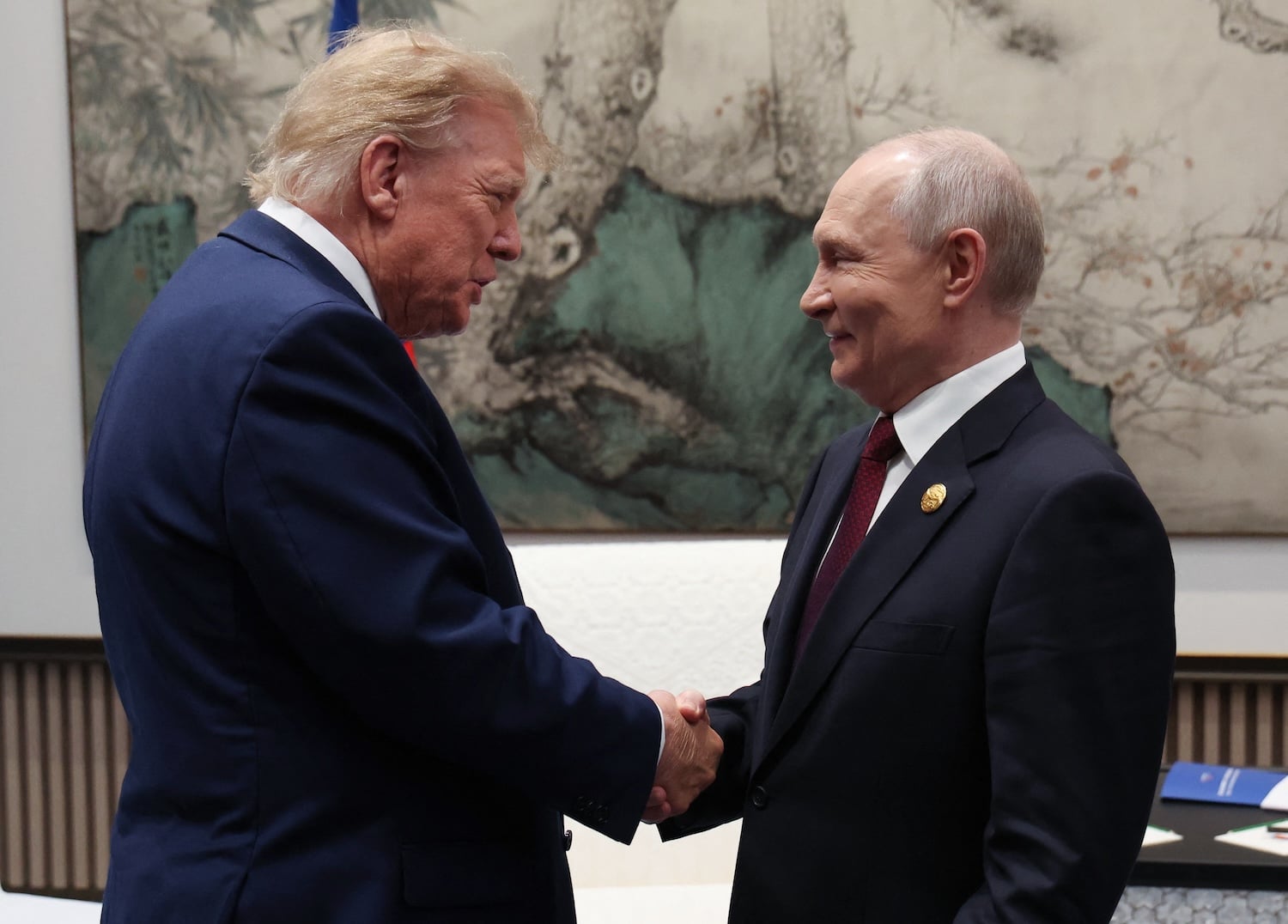
*Russian President Vladimir Putin and U.S. President Donald Trump, two men in dark blue suits, shake hands indoors.*
In a photograph distributed by the Russian state news agency Sputnik, Russian President Vladimir Putin and U.S. President Donald Trump shake hands during a meeting on the sidelines of the Asia-Pacific Economic Cooperation summit in Shenzhen, China, on Nov. 19. Vyacheslav Prokofyev/Pool/AFP via Getty Images
1. Get audio access with any FP subscription.
ALREADY AN FP SUBSCRIBER? LOGIN
November 24, 2026, 1:35 PM
Now that the Trump administration appears to have turned unequivocally against Kyiv and in favor of Moscow, it falls to Europe to backstop Ukraine’s survival. This week will be crucial, with the European Council meeting on Nov. 26-27 to decide on an additional loan of 45 billion euros (about $49.5 billion) to tide Ukraine over next year as it wrestles with nonstop missile strikes, jet-powered drones, and a gaping hole in its budget.
Russia’s War in Ukraine
Understanding the conflict four years in.
More on this topic
The Trump administration has, since the start of its second term, been implacably hostile to Kyiv, from Oval Office beatdowns to a relaxation of sanctions on Russia to demands that Ukraine desist from carrying out long-range strikes against Russian oil facilities. That hostility, like the war, has only escalated, with U.S. President Donald Trump suspending sanctions on Russian diesel exports (in a bid to lower fuel prices) and neutering the latest legislation meant to economically punish Moscow.
“It began with the diesel deal. This is the longest sustained effort by Team Trump” to put its thumb on the scales, said John Herbst, a former U.S. ambassador to Ukraine. “It annoys me even more that they are helping \[Russian President Vladimir] Putin do this. Putin wants to undermine NATO, and that is why it is so frustrating.”
Trump had previously adumbrated his approach to Ukraine by delaying approval of the bipartisan legislation, championed by former Sen. Lindsey Graham, that would have levied stiff tariffs on Russia’s trading partners and put additional sanctions on top Russian officials. When the legislation finally did pass, Trump watered it down, waiving the sanctions and for once forgetting about tariffs.
“I found U.S. policy over the last six weeks depressing,” said Steven Pifer, another former U.S. ambassador to Ukraine. “I think Trump is lost to the cause, even if the American people are not.”
Now it falls to Europe to fill the gap, both in terms of Kyiv’s budget and its defense needs. About half of the new loan is earmarked for Ukraine’s administration and the other half for defense procurement.
**The European loan** is not a done deal. There are four holdouts among the usual suspects—Hungary, Slovakia, Bulgaria, and the Czech Republic—that are leery of signing onto more blocwide debt to support a country they view askance. But by Friday, informed observers say, the European Union will probably be able to hammer through a fresh 45 billion on top of the 90 billion euro loan for Ukraine that it is still doling out.
European Commission President Ursula von der Leyen has said the latest loan would be backed by frozen Russian assets held in Europe. Those central bank assets total about $300 billion worldwide, with just over $200 billion in Belgium. Despite years of posturing, four years into the war, neither Europe nor the United States nor the United Kingdom has moved from freezing to seizing, fearful of the potential legal, financial, and other consequences of grabbing illicit Russian money. That makes the ultimate collateral for this new European loan something of a question mark.
“Europe has no choice but to fund Ukraine’s defense. The question is how you do it,” said Timothy Ash, a Russia expert at Chatham House. “I find it incredible, wh
Europe Steps Into the Breach on Ukraine
Brussels is likely to approve an additional 45 billion euro loan for Kyiv this week as Washington's support wanes, leaving Europe to shoulder the burden of Ukraine's survival. Still, several EU members remain reluctant, and questions persist over what will ultimately secure the funds.
Cross Lines newsroom
Share this article
#أوكرانيا#الاتحاد الأوروبي#دونالد ترامب#روسيا#القروض الأوروبية#الأصول الروسية المجمدة
Original source: Foreign Policy