‘What Is Happening Today Is Development in Reverse’
Foreign Policy

Foreign Policy
Original Source
UNDP Administrator Alexander De Croo explains how development work must continue during active conflicts, not wait for crises to end. He details the agency's efforts to rebuild energy infrastructure and support populations in Ukraine, Afghanistan, Gaza, and Haiti amid ongoing devastation.
UNDP’s Alexander De Croo on Building Infrastructure in Ukraine, Afghanistan, and Gaza
By using this website, you agree to our use of cookies. This use includes personalization of content and ads, and traffic analytics. Review our Privacy Policy for more information.
!Foreign Policy
Foreign Policy Get analysis and alerts more quickly in the mobile app.
Install
Back to Foreign Policy Magazine home page
* Latest
* Regions
+ Asia & the Pacific
+ China
+ Middle East & Africa
+ Americas
+ Europe
* Newsletters
Editors’ Picks
Evening roundup with our editors’ favorite stories of the day
!World Brief Icon
World Brief
Your guide to the most important world stories of the day
!China Brief Icon
China Brief
The latest news, analysis, and data from the country each week
Situation Report
Weekly update on what’s driving U.S. national security policy
FP Weekend
A curation of our best book reviews, deep dives, and other reads
!Africa Brief Icon
Africa Brief
Essential analysis of the stories shaping geopolitics on the continent
!South Asia Brief Icon
South Asia Brief
Weekly update on developments in India and its neighbors
The Reading List
Curated guides on geopolitics and current affairs
FP Bookshelf
A monthly guide to FP’s book reviews, excerpts, and reading recommendations
!Latin America Brief Icon
Latin America Brief
One-stop digest of politics, economics, and culture
!Southeast Asia Brief Icon
Southeast Asia Brief
A weekly dispatch with news from the region’s 11 countries
The New Geopolitics
A five-part masterclass in IR theory with Harvard Professor Stephen M. Walt
View All Newsletters
* FP Live
* Latest
* Trending:
* Brazil's election
* Canada-EU ties
Search this website
* Preferences
* My FP Feed
* Saved Articles
* Newsletters
* Magazine Archive
* Subscription Settings
* FAQs
* Log Out
Sign In
Sign In
Team access Team access
Subscribe Subscribe Team access Team access
Q&A: ‘What Is Happening Today Is Development in Reverse’
*
*
* Facebook
* Bluesky
* X
* LinkedIn
* WhatsApp
* Reddit
Save Save
1. Create an FP account to save articles to read later.
Sign Up
ALREADY AN FP SUBSCRIBER? LOGIN
PDF PDF
1. **Downloadable PDFs** are a benefit of an FP subscription.
Subscribe Now
ALREADY AN FP SUBSCRIBER? LOGIN
Gift Gift
*
*
* WhatsApp
1. Gifting articles is a subscriber benefit.
Subscribe Now
ALREADY AN FP SUBSCRIBER? LOGIN
2. This article is an Insider exclusive.
Contact us at [email protected] to learn about upgrade options, unlocking the ability to gift this article.
Q&A
‘What Is Happening Today Is Development in Reverse’
A conversation with UNDP chief Alexander De Croo about building infrastructure in active conflict zones.
By **Ravi Agrawal**, the editor in chief of *Foreign Policy*.
No audio? Hover over the video player, and tap the Click to Unmute button.
Subtitles are also available. Closed captioning provided by Vimeo and may contain minor inconsistencies.
Already an FP Subscriber? Login
Register now to watch this on-demand recording.
|
Ask a Question
Ask a Question
1. Only FP subscribers can submit questions for FP Live interviews.
Subscribe
ALREADY AN FP SUBSCRIBER? LOGIN
2. Only FP subscribers can submit questions for FP Live interviews.
Subscribe
ALREADY AN FP SUBSCRIBER? LOGIN
Listen to the full podcast
October 2, 2026, 12:32 PM
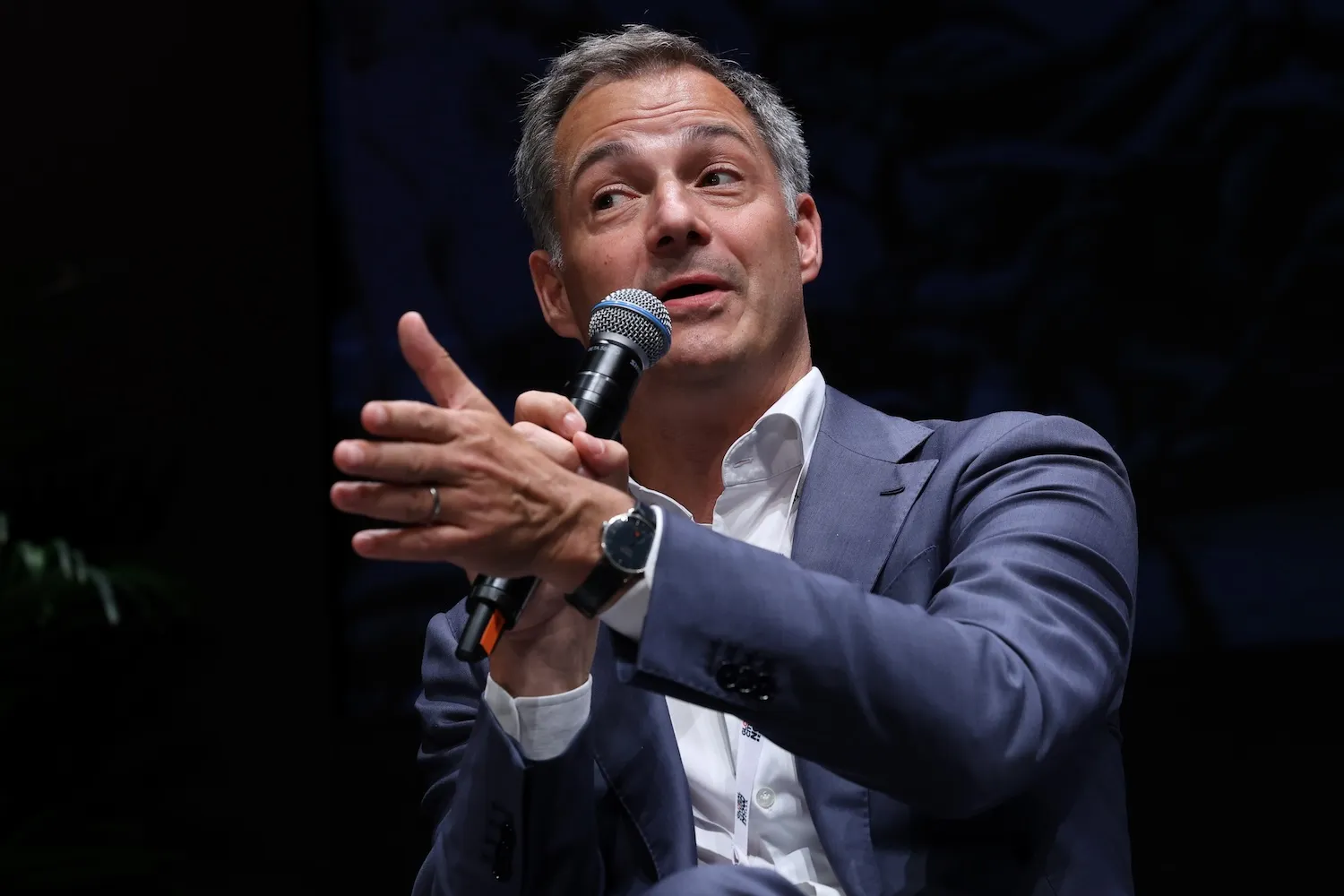
Development work is hard enough on its own, but how does one build infrastructure while a war is raging around you? According to Alexander De Croo, the administrator of the United Nations Development Program (UNDP), “if a crisis is ongoing, it doesn’t mean you should wait for the crisis to end before doing recovery work.” De Croo is a former Belgian prime minister—a role in which he was actively expanding his country’s defense budget—who is now finding ways to raise money for development work in Afghanistan, Gaza, Haiti, Ukraine, and beyond.
I spoke with De Croo in front of a live audience at FP’s Development Forum, held last week on the sidelines of the U.N. General Assembly. The full interview is available in the video box atop this page or on the FP Live podcast on Spotify, YouTube, or Apple. What follows here is a lightly edited transcript.
Development work is hard enough on its own, but how does one build infrastructure while a war is raging around you? According to Alexander De Croo, the administrator of the United Nations Development Program (UNDP), “if a crisis is ongoing, it doesn’t mean you should wait for the crisis to end before doing recovery work.” De Croo is a former Belgian prime minister—a role in which he was actively expanding his country’s defense budget—who is now finding ways to raise money for development work in Afghanistan, Gaza, Haiti, Ukraine, and beyond.
I spoke with De Croo in front of a live audience at FP’s Development Forum, held last week on the sidelines of the U.N. General Assembly. The full interview is available in the video box atop this page or on the FP Live podcast on Spotify, YouTube, or Apple. What follows here is a lightly edited transcript.
**Ravi Agrawal:** You just got back from Ukraine. Russia is hitting civilian and energy infrastructure regularly. How do you think about development in an environment where the very opposite is still ongoing—and could be for months and years to come?
**Alexander De Croo:** Let’s first hope that it will not be ongoing for months and years to come.
This is the majority of our work. The UNDP delivers about $5 billion in aid per year. Sixty percent of that work happens in conflict zones and fragile environments. This is, unfortunately, the state of the world we live in.
We try to give the Ukrainian population a chance of having a decent life, and we do recovery work. People often have the view that recovery efforts happen once a crisis is over. That’s not how we work. In circumstances such as the one in Ukraine, you need to provide lifesaving aid, but you also need to focus on future-building from the start: making sure that the private sector can still function, that people have shelter, that healthcare and education systems keep functioning. If a crisis is ongoing, it doesn’t mean you should wait for the crisis to end before doing recovery work.
**RA:** Give me some details on the work you are doing in Ukraine. Where can the UNDP be most helpful?
**ADC:** The largest part of the work we do in Ukraine is on energy infrastructure. Today, energy security and security in the classic sense are intimately linked. No access to electricity means no schools, hospitals, water, or sewage. Available electricity, especially as it gets closer to winter—winters in Ukraine are not easy—makes the difference between surviving or not in a particular location. Today, 6.6 million Ukrainians are dependent on the work we do to continue providing them with electricity. The needs are gigantic. Half of the country’s generation capacity has been destroyed.
We are building the energy infrastructure of the future. Classic energy grids are very vulnerable in a period of war, because if you target the chokepoint, the whole grid goes out. We are now building decentralized grids using renewable energy. This has advantages in many domains, such as on the cost side. But these are also grids with much more redundancy. We also build a lot of passive protection around this infrastructure, which the world has never done. In the past, electricity grids did not have to be built to be drone-resistant. This is, unfortunately, the new face of war.
The face of war in Ukraine itself has dramatically changed. The front line used to be the “contact line” in eastern Ukraine. Today, the whole country is the front line. Civil infrastructure and civilians are being targeted. This is energy infrastructure, but
By using this website, you agree to our use of cookies. This use includes personalization of content and ads, and traffic analytics. Review our Privacy Policy for more information.
!Foreign Policy
Foreign Policy Get analysis and alerts more quickly in the mobile app.
Install
Back to Foreign Policy Magazine home page
* Latest
* Regions
+ Asia & the Pacific
+ China
+ Middle East & Africa
+ Americas
+ Europe
* Newsletters
Editors’ Picks
Evening roundup with our editors’ favorite stories of the day
!World Brief Icon
World Brief
Your guide to the most important world stories of the day
!China Brief Icon
China Brief
The latest news, analysis, and data from the country each week
Situation Report
Weekly update on what’s driving U.S. national security policy
FP Weekend
A curation of our best book reviews, deep dives, and other reads
!Africa Brief Icon
Africa Brief
Essential analysis of the stories shaping geopolitics on the continent
!South Asia Brief Icon
South Asia Brief
Weekly update on developments in India and its neighbors
The Reading List
Curated guides on geopolitics and current affairs
FP Bookshelf
A monthly guide to FP’s book reviews, excerpts, and reading recommendations
!Latin America Brief Icon
Latin America Brief
One-stop digest of politics, economics, and culture
!Southeast Asia Brief Icon
Southeast Asia Brief
A weekly dispatch with news from the region’s 11 countries
The New Geopolitics
A five-part masterclass in IR theory with Harvard Professor Stephen M. Walt
View All Newsletters
* FP Live
* Latest
* Trending:
* Brazil's election
* Canada-EU ties
Search this website
* Preferences
* My FP Feed
* Saved Articles
* Newsletters
* Magazine Archive
* Subscription Settings
* FAQs
* Log Out
Sign In
Sign In
Team access Team access
Subscribe Subscribe Team access Team access
Q&A: ‘What Is Happening Today Is Development in Reverse’
*
*
* Bluesky
* X
Save Save
1. Create an FP account to save articles to read later.
Sign Up
ALREADY AN FP SUBSCRIBER? LOGIN
PDF PDF
1. **Downloadable PDFs** are a benefit of an FP subscription.
Subscribe Now
ALREADY AN FP SUBSCRIBER? LOGIN
Gift Gift
*
*
1. Gifting articles is a subscriber benefit.
Subscribe Now
ALREADY AN FP SUBSCRIBER? LOGIN
2. This article is an Insider exclusive.
Contact us at [email protected] to learn about upgrade options, unlocking the ability to gift this article.
Q&A
‘What Is Happening Today Is Development in Reverse’
A conversation with UNDP chief Alexander De Croo about building infrastructure in active conflict zones.
By **Ravi Agrawal**, the editor in chief of *Foreign Policy*.
No audio? Hover over the video player, and tap the Click to Unmute button.
Subtitles are also available. Closed captioning provided by Vimeo and may contain minor inconsistencies.
Already an FP Subscriber? Login
Register now to watch this on-demand recording.
|
Ask a Question
Ask a Question
1. Only FP subscribers can submit questions for FP Live interviews.
Subscribe
ALREADY AN FP SUBSCRIBER? LOGIN
2. Only FP subscribers can submit questions for FP Live interviews.
Subscribe
ALREADY AN FP SUBSCRIBER? LOGIN
Listen to the full podcast
October 2, 2026, 12:32 PM
Development work is hard enough on its own, but how does one build infrastructure while a war is raging around you? According to Alexander De Croo, the administrator of the United Nations Development Program (UNDP), “if a crisis is ongoing, it doesn’t mean you should wait for the crisis to end before doing recovery work.” De Croo is a former Belgian prime minister—a role in which he was actively expanding his country’s defense budget—who is now finding ways to raise money for development work in Afghanistan, Gaza, Haiti, Ukraine, and beyond.
I spoke with De Croo in front of a live audience at FP’s Development Forum, held last week on the sidelines of the U.N. General Assembly. The full interview is available in the video box atop this page or on the FP Live podcast on Spotify, YouTube, or Apple. What follows here is a lightly edited transcript.
Development work is hard enough on its own, but how does one build infrastructure while a war is raging around you? According to Alexander De Croo, the administrator of the United Nations Development Program (UNDP), “if a crisis is ongoing, it doesn’t mean you should wait for the crisis to end before doing recovery work.” De Croo is a former Belgian prime minister—a role in which he was actively expanding his country’s defense budget—who is now finding ways to raise money for development work in Afghanistan, Gaza, Haiti, Ukraine, and beyond.
I spoke with De Croo in front of a live audience at FP’s Development Forum, held last week on the sidelines of the U.N. General Assembly. The full interview is available in the video box atop this page or on the FP Live podcast on Spotify, YouTube, or Apple. What follows here is a lightly edited transcript.
**Ravi Agrawal:** You just got back from Ukraine. Russia is hitting civilian and energy infrastructure regularly. How do you think about development in an environment where the very opposite is still ongoing—and could be for months and years to come?
**Alexander De Croo:** Let’s first hope that it will not be ongoing for months and years to come.
This is the majority of our work. The UNDP delivers about $5 billion in aid per year. Sixty percent of that work happens in conflict zones and fragile environments. This is, unfortunately, the state of the world we live in.
We try to give the Ukrainian population a chance of having a decent life, and we do recovery work. People often have the view that recovery efforts happen once a crisis is over. That’s not how we work. In circumstances such as the one in Ukraine, you need to provide lifesaving aid, but you also need to focus on future-building from the start: making sure that the private sector can still function, that people have shelter, that healthcare and education systems keep functioning. If a crisis is ongoing, it doesn’t mean you should wait for the crisis to end before doing recovery work.
**RA:** Give me some details on the work you are doing in Ukraine. Where can the UNDP be most helpful?
**ADC:** The largest part of the work we do in Ukraine is on energy infrastructure. Today, energy security and security in the classic sense are intimately linked. No access to electricity means no schools, hospitals, water, or sewage. Available electricity, especially as it gets closer to winter—winters in Ukraine are not easy—makes the difference between surviving or not in a particular location. Today, 6.6 million Ukrainians are dependent on the work we do to continue providing them with electricity. The needs are gigantic. Half of the country’s generation capacity has been destroyed.
We are building the energy infrastructure of the future. Classic energy grids are very vulnerable in a period of war, because if you target the chokepoint, the whole grid goes out. We are now building decentralized grids using renewable energy. This has advantages in many domains, such as on the cost side. But these are also grids with much more redundancy. We also build a lot of passive protection around this infrastructure, which the world has never done. In the past, electricity grids did not have to be built to be drone-resistant. This is, unfortunately, the new face of war.
The face of war in Ukraine itself has dramatically changed. The front line used to be the “contact line” in eastern Ukraine. Today, the whole country is the front line. Civil infrastructure and civilians are being targeted. This is energy infrastructure, but
🔗 Share Article
Tags:#التنمية الدولية#البرنامج الإنمائي للأمم المتحدة#أوكرانيا#إعادة البناء#البنية التحتية#المناطق النزاع
Source: Foreign Policy
For Context
Related reads from the same topic or latest developments