France’s Long, Fervent History of Protest
New York Times
N
New York Times
Original Source
Recent student protests have reignited France's centuries-old tradition of civil resistance that defines its political culture. Demonstrations are so central to French governance that they are considered a fourth branch of government when legislative, executive, and judicial bodies fail to respond.
France’s Long, Fervent History of Protest - The New York Times
Skip to contentSkip to site index
Europe
Log in
Saturday, October 10, 2026
Today’s Paper
* Home
* + U.S.
+ International
+ Canada
+ Español
+ 中文
Student Protests in France
* What to Know
* Photos
* Movement Broadens
* Engulfed by Crisis
* History of French Protests
Advertisement
SKIP ADVERTISEMENT
Supported by
SKIP ADVERTISEMENT
France’s Long, Fervent History of Protest
Student demonstrations in recent weeks re-lit a centuries-old torch of civil resistance. How do they compare to previous movements in France?
Listen · 6:41 min
*
*
*
*
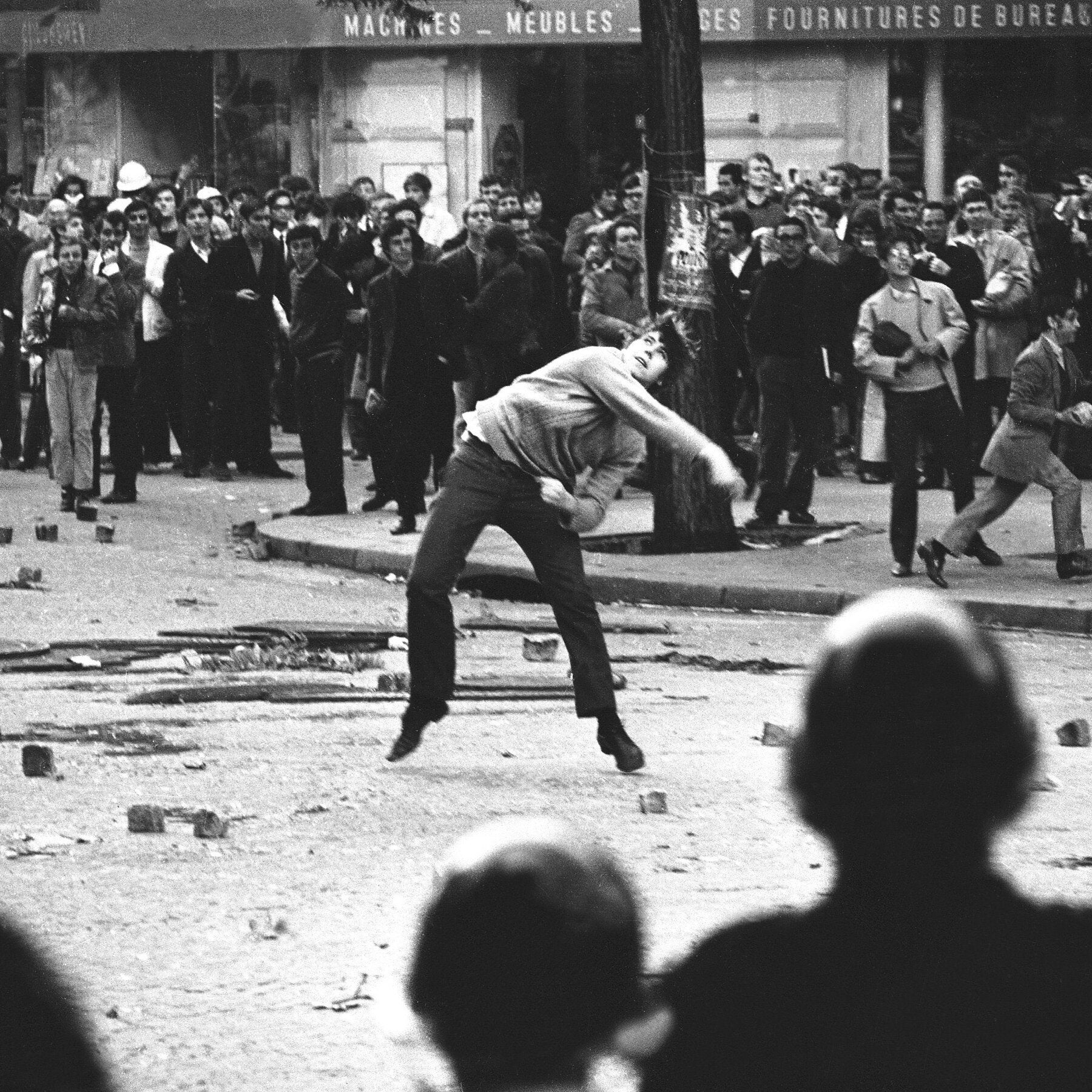
!A young man is throwing an object at police officers wearing helmets. A large crowd watches.
*A student attacking the police in Paris during the May 1968 student uprising.Credit...Gamma-Keystone, via Getty Images*
By Zane Irwin
Oct. 9, 2026
See more of our coverage in your search results.Encuentra más de nuestra cobertura en los resultados de búsqueda. Add The New York Times on GoogleAgrega The New York Times en Google
Do you hear the people sing?
On Thursday, thousands of protesters, many of them high schoolers, broke out into the national anthem at Place de la Bastille, where in 1789 a mob stormed a royal prison, touching off the French Revolution.
Protests are so embedded in French political life that “the streets” are considered a fourth branch of government, a last resort when the legislative, executive and judicial are unresponsive, according to David A. Bell, a history professor at Princeton University.
Modern France sprang out of a bloody revolt in 1789, whose symbolism has been invoked in movements ever since, as it was on Thursday. From street revolts throughout the 19th century — including a short-lived one in 1832 that inspired “Les Misérables” — to the Yellow Vest protests that began in 2018, that tradition has thrived.
France also possesses a distinct political culture, said Julian Bourg, a history professor at Boston College. “In contrast to the Anglo-American tradition, which sees the state as some foreign, invasive body threatening individual freedom, in France, there’s a long tradition that the state embodies the people,” he said, and that the state is thus “directly accountable to the people.”
Most importantly, Mr. Bell said, protests are common because of a sense that they work. Demonstrations in the 1930s led to worker protections that are still jealously guarded. And French leaders have offered some concessions in recent protests — though some advocates have dismissed those as a “smoke screen.”
Certain aspects set these protests apart. For the first time in decades, Mr. Bourg said, high school students were the first to act. And historians also note the role of social media in allowing movements to spread like wildfire, as opposed to uprisings from past generations that took longer to ripple out from Paris.
Zane Irwin is an international reporter and a member of the 2026-27 Times Fellowship, a program for journalists early in their careers.
*
*
*
*
Related Content
*
*
*
*
*
*
*
*
*
*
*
*
*
*
*
*
*
*
*
Advertisement
SKIP ADVERTISEMENT
Site Index
Site Information Navigation
* © 2026 The New York Times Company
+ NYTCo
+ Contact Us
+ Accessibility
+ Work with us
+ Advertise
+ T Brand Studio
+ Privacy Policy
+ Cookie Policy
+ Terms of Service
+ Terms of Sale
+ Site Map
+ Canada
+ International
+ Help
+ Subscriptions
+
Skip to contentSkip to site index
Europe
Log in
Saturday, October 10, 2026
Today’s Paper
* Home
* + U.S.
+ International
+ Canada
+ Español
+ 中文
Student Protests in France
* What to Know
* Photos
* Movement Broadens
* Engulfed by Crisis
* History of French Protests
Advertisement
SKIP ADVERTISEMENT
Supported by
SKIP ADVERTISEMENT
France’s Long, Fervent History of Protest
Student demonstrations in recent weeks re-lit a centuries-old torch of civil resistance. How do they compare to previous movements in France?
Listen · 6:41 min
*
*
*
*
!A young man is throwing an object at police officers wearing helmets. A large crowd watches.
*A student attacking the police in Paris during the May 1968 student uprising.Credit...Gamma-Keystone, via Getty Images*
By Zane Irwin
Oct. 9, 2026
See more of our coverage in your search results.Encuentra más de nuestra cobertura en los resultados de búsqueda. Add The New York Times on GoogleAgrega The New York Times en Google
Do you hear the people sing?
On Thursday, thousands of protesters, many of them high schoolers, broke out into the national anthem at Place de la Bastille, where in 1789 a mob stormed a royal prison, touching off the French Revolution.
Protests are so embedded in French political life that “the streets” are considered a fourth branch of government, a last resort when the legislative, executive and judicial are unresponsive, according to David A. Bell, a history professor at Princeton University.
Modern France sprang out of a bloody revolt in 1789, whose symbolism has been invoked in movements ever since, as it was on Thursday. From street revolts throughout the 19th century — including a short-lived one in 1832 that inspired “Les Misérables” — to the Yellow Vest protests that began in 2018, that tradition has thrived.
France also possesses a distinct political culture, said Julian Bourg, a history professor at Boston College. “In contrast to the Anglo-American tradition, which sees the state as some foreign, invasive body threatening individual freedom, in France, there’s a long tradition that the state embodies the people,” he said, and that the state is thus “directly accountable to the people.”
Most importantly, Mr. Bell said, protests are common because of a sense that they work. Demonstrations in the 1930s led to worker protections that are still jealously guarded. And French leaders have offered some concessions in recent protests — though some advocates have dismissed those as a “smoke screen.”
Certain aspects set these protests apart. For the first time in decades, Mr. Bourg said, high school students were the first to act. And historians also note the role of social media in allowing movements to spread like wildfire, as opposed to uprisings from past generations that took longer to ripple out from Paris.
Zane Irwin is an international reporter and a member of the 2026-27 Times Fellowship, a program for journalists early in their careers.
*
*
*
*
Related Content
*
*
*
*
*
*
*
*
*
*
*
*
*
*
*
*
*
*
*
Advertisement
SKIP ADVERTISEMENT
Site Index
Site Information Navigation
* © 2026 The New York Times Company
+ NYTCo
+ Contact Us
+ Accessibility
+ Work with us
+ Advertise
+ T Brand Studio
+ Privacy Policy
+ Cookie Policy
+ Terms of Service
+ Terms of Sale
+ Site Map
+ Canada
+ International
+ Help
+ Subscriptions
+
🔗 Share Article
Tags:#فرنسا#احتجاجات#طلاب#الثورة الفرنسية#الحياة السياسية#المقاومة المدنية
Source: New York Times
For Context
Related reads from the same topic or latest developments