American Forces Withdraw From Iraq 23 Years After Invading
New York Times
N
New York Times
Original Source
The United States officially withdrew its final forces from Iraq on Wednesday, ending a 23-year military presence that began with the 2003 invasion. A seasoned correspondent reflects on how fundamental American misunderstandings of Iraqi society persisted throughout the conflict.
American Forces Withdraw From Iraq 23 Years After Invading - The New York Times
Skip to contentSkip to site index
Log in
* Home
* + U.S.
+ International
+ Canada
+ Español
+ 中文
Middle East|What I Saw as the U.S. Debacle in Iraq Unfurled
https://www.nytimes.com/2026/09/30/world/middleeast/iraq-us-troop-withdrawal.html
*
*
*
*
You have a preview view of this article while we are checking your access. When we have confirmed access, the full article content will load.
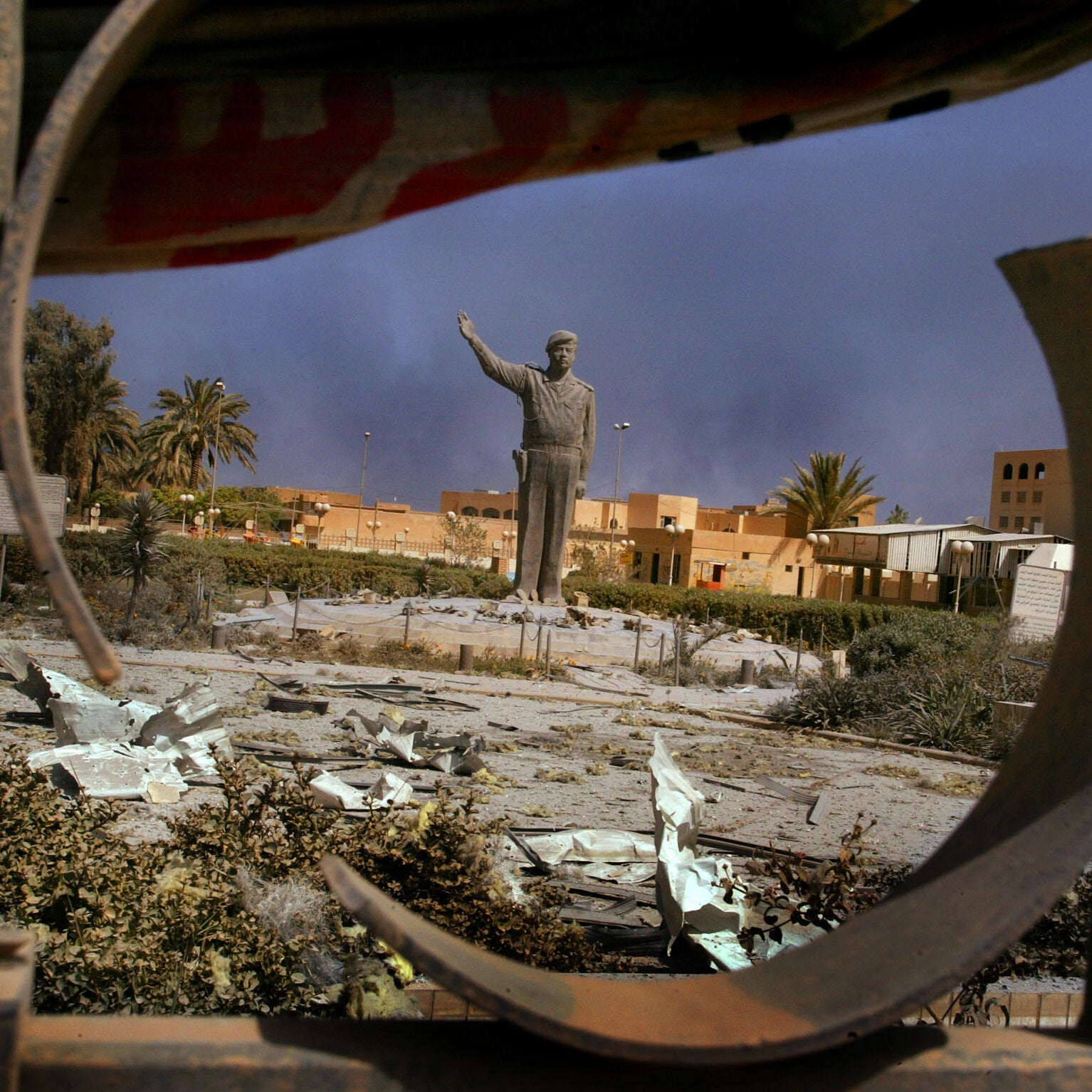
!A statue of a man with one arm raised is seen in the distance, amid rusted metal and rubble.
Reporter’s Notebook
What I Saw as the U.S. Debacle in Iraq Unfurled
The Americans did not understand the country when they invaded in 2003. Over a correspondent’s many trips there, it was not clear that this ever changed much.
*In March 2003, a statue of Saddam Hussein was still standing near a communications center in Baghdad that had been bombed two days earlier. A month later, the statue would be downed as well.Credit...Tyler Hicks/The New York Times*
Reporter’s Notebook
What I Saw as the U.S. Debacle in Iraq Unfurled
The Americans did not understand the country when they invaded in 2003. Over a correspondent’s many trips there, it was not clear that this ever changed much.
In March 2003, a statue of Saddam Hussein was still standing near a communications center in Baghdad that had been bombed two days earlier. A month later, the statue would be downed as well.Credit...Tyler Hicks/The New York Times
Supported by
SKIP ADVERTISEMENT
Listen · 9:23 min
*
*
*
*
By Alissa J. Rubin
Alissa J. Rubin has been a foreign correspondent for The Times for almost two decades, reporting across the Middle East, Afghanistan and Europe.
Sept. 30, 2026Updated 7:10 a.m. ET
I got to Iraq a few weeks after the U.S. Army did. It was just a couple of days after the statue of the Iraqi dictator Saddam Hussein was pulled down in Baghdad by a crowd that included U.S. Marines.
That was April 2003.
I had assured my family that I would stay for maybe a week. At the time a correspondent for The Los Angeles Times, I recall telling relatives that I just wanted to “get the lay of the land and take a look around.” That ended up taking longer than I thought.
From the beginning, the United States did not understand the country it was storming into. Twenty-three years later, as it pulls the last of its forces out, it probably still does not. I know I am still working to fully grasp it.
There were so few U.S. service members left in Iraq at the end that when the last ones officially withdrew on Wednesday it made little difference in the daily lives of Iraqis. But that was hardly the case when the first American forces arrived on March 20, 2003.
Image!Boys peer and reach into a destroyed car. Men standing outside the car can be seen through a windshield with a bullet hole.
*Iraqis surrounded a destroyed car on April 29, 2003, near the Al Qa’ed School in Fallujah, Iraq. A demonstration in front of the school, which was occupied by the U.S. Army, had turned bloody the night before, when Americans opened fire on the crowd.Credit...Tyler Hicks/The New York Times*
The early days of the invasion, which toppled a hated despot, were so heady with possibility that it was easy to dismiss the warning signs.
---
Thank you for your patience while we verify access. If you are in Reader mode please exit and log into your Times account, or subscribe for all of The Times.
---
Thank you for your patience while we verify access.
Already a subscriber? Log in.
Want all of The Times? Subscribe.
Related Content
*
*
*
*
*
*
*
*
*
*
*
*
*
*
*
*
*
*
*
Advertisement
SKIP ADVERTISEMENT
Site Index
Site Information Navigation
* © 2026 The New York Times Company
+ NYTCo
+ Contact Us
+ Accessibility
+ Work with us
+ Advertise
+ T Brand Studio
+ Privacy Policy
+ Cookie Policy
+ Terms of Service
+ Terms of Sale
+ Site Map
+ Canada
+ International
+ Help
+ Subscriptions
+
+ California Notices
Skip to contentSkip to site index
Log in
* Home
* + U.S.
+ International
+ Canada
+ Español
+ 中文
Middle East|What I Saw as the U.S. Debacle in Iraq Unfurled
https://www.nytimes.com/2026/09/30/world/middleeast/iraq-us-troop-withdrawal.html
*
*
*
*
You have a preview view of this article while we are checking your access. When we have confirmed access, the full article content will load.
!A statue of a man with one arm raised is seen in the distance, amid rusted metal and rubble.
Reporter’s Notebook
What I Saw as the U.S. Debacle in Iraq Unfurled
The Americans did not understand the country when they invaded in 2003. Over a correspondent’s many trips there, it was not clear that this ever changed much.
*In March 2003, a statue of Saddam Hussein was still standing near a communications center in Baghdad that had been bombed two days earlier. A month later, the statue would be downed as well.Credit...Tyler Hicks/The New York Times*
Reporter’s Notebook
What I Saw as the U.S. Debacle in Iraq Unfurled
The Americans did not understand the country when they invaded in 2003. Over a correspondent’s many trips there, it was not clear that this ever changed much.
In March 2003, a statue of Saddam Hussein was still standing near a communications center in Baghdad that had been bombed two days earlier. A month later, the statue would be downed as well.Credit...Tyler Hicks/The New York Times
Supported by
SKIP ADVERTISEMENT
Listen · 9:23 min
*
*
*
*
By Alissa J. Rubin
Alissa J. Rubin has been a foreign correspondent for The Times for almost two decades, reporting across the Middle East, Afghanistan and Europe.
Sept. 30, 2026Updated 7:10 a.m. ET
I got to Iraq a few weeks after the U.S. Army did. It was just a couple of days after the statue of the Iraqi dictator Saddam Hussein was pulled down in Baghdad by a crowd that included U.S. Marines.
That was April 2003.
I had assured my family that I would stay for maybe a week. At the time a correspondent for The Los Angeles Times, I recall telling relatives that I just wanted to “get the lay of the land and take a look around.” That ended up taking longer than I thought.
From the beginning, the United States did not understand the country it was storming into. Twenty-three years later, as it pulls the last of its forces out, it probably still does not. I know I am still working to fully grasp it.
There were so few U.S. service members left in Iraq at the end that when the last ones officially withdrew on Wednesday it made little difference in the daily lives of Iraqis. But that was hardly the case when the first American forces arrived on March 20, 2003.
Image!Boys peer and reach into a destroyed car. Men standing outside the car can be seen through a windshield with a bullet hole.
*Iraqis surrounded a destroyed car on April 29, 2003, near the Al Qa’ed School in Fallujah, Iraq. A demonstration in front of the school, which was occupied by the U.S. Army, had turned bloody the night before, when Americans opened fire on the crowd.Credit...Tyler Hicks/The New York Times*
The early days of the invasion, which toppled a hated despot, were so heady with possibility that it was easy to dismiss the warning signs.
---
Thank you for your patience while we verify access. If you are in Reader mode please exit and log into your Times account, or subscribe for all of The Times.
---
Thank you for your patience while we verify access.
Already a subscriber? Log in.
Want all of The Times? Subscribe.
Related Content
*
*
*
*
*
*
*
*
*
*
*
*
*
*
*
*
*
*
*
Advertisement
SKIP ADVERTISEMENT
Site Index
Site Information Navigation
* © 2026 The New York Times Company
+ NYTCo
+ Contact Us
+ Accessibility
+ Work with us
+ Advertise
+ T Brand Studio
+ Privacy Policy
+ Cookie Policy
+ Terms of Service
+ Terms of Sale
+ Site Map
+ Canada
+ International
+ Help
+ Subscriptions
+
+ California Notices
🔗 Share Article
Tags:#العراق#الانسحاب الأمريكي#الشرق الأوسط#العلاقات الأمريكية-العراقية#صدام حسين#الحرب والسياسة
Source: New York Times
For Context
Related reads from the same topic or latest developments