A C-Section in Shackles: A Palestinian Woman’s Harrowing Birth in Israeli Detention
The Intercept
T
The Intercept
Original Source
A Palestinian woman detained without charges endured her entire pregnancy in Israeli custody, denied adequate food and medical care, only to deliver her premature baby via cesarean section surrounded by armed soldiers. Her case documents systemic abuse of pregnant Palestinian women in Israeli prisons.
A Palestinian Woman’s C-Section Surrounded by Armed Israeli Soldiers
Support Us
Support Us
* Iran
* Midterms
* Justice
* War on Gaza
* Unmasking ICE
* Chilling Dissent
Support Us
* Special Investigations
* Voices
* Podcasts
* TomDispatch
* Press Freedom Defense Fund
* Join the Newsletter
* About
* Contact Us
* How to Donate
* Impact & Reports
* Jobs
* Become a Source
*
*
*
*
*
*
*
*
*
© THE INTERCEPT
ALL RIGHTS RESERVED
Terms of Use Privacy
* Iran
* Midterms
* Justice
* War on Gaza
* Unmasking ICE
* Chilling Dissent
* About
* Support Us
A C-Section in Shackles: A Palestinian Woman’s Harrowing Birth in Israeli Detention
Dana Joudeh was denied proper food and medical care throughout her pregnancy in an Israeli prison. She gave birth to a premature baby surrounded by armed guards.
Aseel Mousa
October 10 2026, 6:00 a.m. ET
*
* Share on Facebook
*
* Share on X
* Share on LinkedIn
* Share on WhatsApp
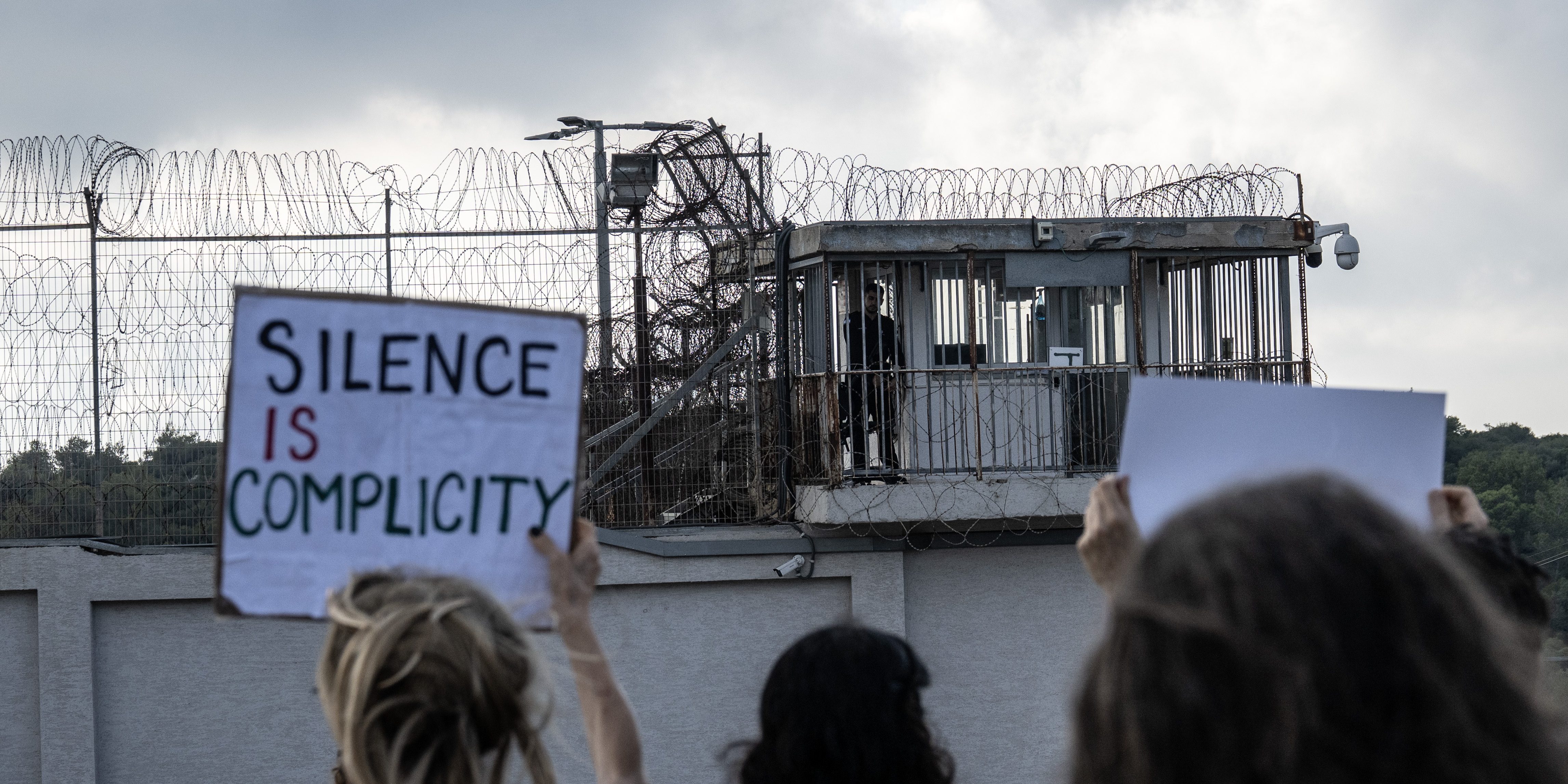
!HAIFA, ISRAEL - AUGUST 22: Palestinian and Israeli human rights activists gather outside Damon Prison near Haifa, Israel, on August 22, 2026, to protest the ongoing administrative detention and reported mistreatment of Palestinian female political prisoners. Demonstrators held banners calling for an immediate end to indefinite detention without trial or charge, highlighting systemic rights violations and severe prison conditions while demanding the release of all detained women. (Photo by Mostafa Alkharouf/Anadolu via Getty Images)
Palestinian and Israeli human rights activists gather outside Damon Prison near Haifa, Israel, on Aug. 22, 2026, to protest the ongoing administrative detention and reported mistreatment of Palestinian female political prisoners. Photo: Mostafa Alkharouf/Anadolu via Getty Images
Dana Joudeh was in shackles when she found out she was pregnant.
The 35-year-old from the West Bank city of Nablus was newly married and had just spent her first night in an Israeli prison. Israeli forces had arrested her without charges and put her under administrative detention, an arbitrary condition for holding Palestinians hostage. She lost consciousness in front of Israeli soldiers at Sharon Prison, a temporary detention facility in the city of Netanya, and they took her to a hospital blindfolded. There, with her hands and feet bound in chains, she was given a pregnancy test that came back positive.
Joudeh would never get to experience the joys and travails of pregnancy outside of prison. She was in Israeli custody from the moment she found out, until she gave birth.
Like Joudeh, pregnant Palestinian women arrested by Israeli security forces since October 7, 2023, are forced to endure a physically and medically complex process in conditions characterized by inadequate access to food, family visits, and medicine, as well as frequent reports of violence.
The total number of pregnancies in custody among the hundreds of women seized since October 7 is unknown, but Joudeh is only the second documented example of a woman who gave birth while under Israeli detention in nearly 17 years, according to Palestinian prisoners’ rights advocates. Many cases, advocates say, may have gone unreported.
The Intercept spoke to Joudeh through her sister, Maram, who sat with Joudeh by her side while sharing a detailed account of her sister’s six-month pregnancy, which ended in a premature cesarean section.
Corroborated by statements and reports published by the Palestinian Prisoners’ Society and the Commission of Detainees and Ex-Detainees Affairs, among others, Joudeh’s story offers a glimpse into what it’s like to go through pregnancy while locked in Israel’s prison system, where she struggled to obtain basic prenatal care and relied on other prisoners to share their already limited food.
“She went through every kind of suffering in there,” Maram said.
Israeli forces used sound grenades inside the prison, according to Joudeh’s family and her lawyer, Hassan Abbadi, who provides volunteer legal support for detained Palestinians. They said soldiers would force the women to lie face down on the floor.
“Female prisoners are subjected to all forms of violence and are deprived of the most basic rights,” said Abbadi, who regularly visits Palestinian women in Israeli prisons. He described shortages of underwear, attacks by police dogs, and strip searches, among other forms of mistreatment.
Joudeh’s pregnancy unfolded against a broader surge in Israeli arrests and violence across the occupied Palestinian territories. As of September, Israel was holding roughly 9,350 Palestinian prisoners and detainees, including 90 women and more than 350 children, according to Palestinian prisoners’ organizations. More than 3,100 of them are being held under administrative detention, without charge or trial.
For Joudeh, who was transferred to Damon Prison in Haifa soon after discovering she was pregnant, there was little effort to make accommodations for her pregnancy. According to Maram and Abbadi, the food was scarce and of poor quality, consisting usually of a slice of toast and lentils, chickpeas, or hummus. Sometimes, the prisoners received a few olives, and the other women incarcerated with Joudeh would offer a part of their own meager portions and give it to her.
In a small cell she shared with 13 other women, she discussed baby names with Manar Karaja, another detainee who was pregnant at the same time. According to Amany Sarahneh, the media director of the Palestinian Prisoners’ Society, Karaja was still pregnant and still in Israeli detention as of October 6.
As her pregnancy progressed, Joudeh grew increasingly worried about her baby. She repeatedly asked for medical tests to make sure that both she and the fetus were healthy, Maram said, but her requests were refused.
“I would reassure myself by the baby’s heartbeat, and later, when I started feeling her move,” Maram relayed on behalf of her sister, who sat next to her at Maram’s home in Ramallah. “I needed vitamins and folic acid, but they refused to give them to me.”
In response to outreach from The Intercept, a spokesperson for the Israeli military directed queries to the Israel Prison Service. An Israel Prison Service spokesperson said the agency could not comment on individual detainees’ cases, but described a detailed list of Joudeh’s experiences as “false.”
Most Read
Palestinian women have faced pregnancy and childbirth inside Israeli prisons for decades, often under harsh conditions and with limited medical care. The first documented Palestinian woman to give birth in Israeli custody was Zakia Shammout, who delivered her daughter Nadia in 1972 at Neve Tirza prison in Ramla, assisted by fellow prisoners. The last documented case before the start of Israel’s ongoing genocide was Fatima al-Zaq, who gave birth to her son Youssef in prison in 2008; the 17-year-old was killed in July 2025 after an Israeli drone hit his family’s apartment on Al-Thawra Street, in central Gaza City.
In September 2025, Tahani Abu Samhan gave birth to her son Yahya while in Israeli custody. Then, a year later, there was Joudeh.
Joudeh suffered from debilitating headaches while pregnant, but basic pain relief was difficult to obtain. Prison authorities refused to give her Acamol, a common brand of acetaminophen, which is generally considered safe for use during pregnancy despite recent guidance to the contrary from health officials in the U.S.
The other women found ways to help. One prisoner would sometimes pretend that she had a headache herself, ask for a painkiller, and secretly give the tablet to Joudeh.
“She was crying most of the time,” Maram said.
By July, Joudeh had contracted scabies, a rash caused by highly contagious mites that results in severe itching and pain. The women were given single container of a topical treatment to share among the entire cell, and it wasn’t enough for everyone who was infected. They resorted to mixing the treatment with chlorine to make it stretch further, Maram sa
Support Us
Support Us
* Iran
* Midterms
* Justice
* War on Gaza
* Unmasking ICE
* Chilling Dissent
Support Us
* Special Investigations
* Voices
* Podcasts
* TomDispatch
* Press Freedom Defense Fund
* Join the Newsletter
* About
* Contact Us
* How to Donate
* Impact & Reports
* Jobs
* Become a Source
*
*
*
*
*
*
*
*
*
© THE INTERCEPT
ALL RIGHTS RESERVED
Terms of Use Privacy
* Iran
* Midterms
* Justice
* War on Gaza
* Unmasking ICE
* Chilling Dissent
* About
* Support Us
A C-Section in Shackles: A Palestinian Woman’s Harrowing Birth in Israeli Detention
Dana Joudeh was denied proper food and medical care throughout her pregnancy in an Israeli prison. She gave birth to a premature baby surrounded by armed guards.
Aseel Mousa
October 10 2026, 6:00 a.m. ET
*
* Share on Facebook
*
* Share on X
* Share on LinkedIn
* Share on WhatsApp
!HAIFA, ISRAEL - AUGUST 22: Palestinian and Israeli human rights activists gather outside Damon Prison near Haifa, Israel, on August 22, 2026, to protest the ongoing administrative detention and reported mistreatment of Palestinian female political prisoners. Demonstrators held banners calling for an immediate end to indefinite detention without trial or charge, highlighting systemic rights violations and severe prison conditions while demanding the release of all detained women. (Photo by Mostafa Alkharouf/Anadolu via Getty Images)
Palestinian and Israeli human rights activists gather outside Damon Prison near Haifa, Israel, on Aug. 22, 2026, to protest the ongoing administrative detention and reported mistreatment of Palestinian female political prisoners. Photo: Mostafa Alkharouf/Anadolu via Getty Images
Dana Joudeh was in shackles when she found out she was pregnant.
The 35-year-old from the West Bank city of Nablus was newly married and had just spent her first night in an Israeli prison. Israeli forces had arrested her without charges and put her under administrative detention, an arbitrary condition for holding Palestinians hostage. She lost consciousness in front of Israeli soldiers at Sharon Prison, a temporary detention facility in the city of Netanya, and they took her to a hospital blindfolded. There, with her hands and feet bound in chains, she was given a pregnancy test that came back positive.
Joudeh would never get to experience the joys and travails of pregnancy outside of prison. She was in Israeli custody from the moment she found out, until she gave birth.
Like Joudeh, pregnant Palestinian women arrested by Israeli security forces since October 7, 2023, are forced to endure a physically and medically complex process in conditions characterized by inadequate access to food, family visits, and medicine, as well as frequent reports of violence.
The total number of pregnancies in custody among the hundreds of women seized since October 7 is unknown, but Joudeh is only the second documented example of a woman who gave birth while under Israeli detention in nearly 17 years, according to Palestinian prisoners’ rights advocates. Many cases, advocates say, may have gone unreported.
The Intercept spoke to Joudeh through her sister, Maram, who sat with Joudeh by her side while sharing a detailed account of her sister’s six-month pregnancy, which ended in a premature cesarean section.
Corroborated by statements and reports published by the Palestinian Prisoners’ Society and the Commission of Detainees and Ex-Detainees Affairs, among others, Joudeh’s story offers a glimpse into what it’s like to go through pregnancy while locked in Israel’s prison system, where she struggled to obtain basic prenatal care and relied on other prisoners to share their already limited food.
“She went through every kind of suffering in there,” Maram said.
Israeli forces used sound grenades inside the prison, according to Joudeh’s family and her lawyer, Hassan Abbadi, who provides volunteer legal support for detained Palestinians. They said soldiers would force the women to lie face down on the floor.
“Female prisoners are subjected to all forms of violence and are deprived of the most basic rights,” said Abbadi, who regularly visits Palestinian women in Israeli prisons. He described shortages of underwear, attacks by police dogs, and strip searches, among other forms of mistreatment.
Joudeh’s pregnancy unfolded against a broader surge in Israeli arrests and violence across the occupied Palestinian territories. As of September, Israel was holding roughly 9,350 Palestinian prisoners and detainees, including 90 women and more than 350 children, according to Palestinian prisoners’ organizations. More than 3,100 of them are being held under administrative detention, without charge or trial.
For Joudeh, who was transferred to Damon Prison in Haifa soon after discovering she was pregnant, there was little effort to make accommodations for her pregnancy. According to Maram and Abbadi, the food was scarce and of poor quality, consisting usually of a slice of toast and lentils, chickpeas, or hummus. Sometimes, the prisoners received a few olives, and the other women incarcerated with Joudeh would offer a part of their own meager portions and give it to her.
In a small cell she shared with 13 other women, she discussed baby names with Manar Karaja, another detainee who was pregnant at the same time. According to Amany Sarahneh, the media director of the Palestinian Prisoners’ Society, Karaja was still pregnant and still in Israeli detention as of October 6.
As her pregnancy progressed, Joudeh grew increasingly worried about her baby. She repeatedly asked for medical tests to make sure that both she and the fetus were healthy, Maram said, but her requests were refused.
“I would reassure myself by the baby’s heartbeat, and later, when I started feeling her move,” Maram relayed on behalf of her sister, who sat next to her at Maram’s home in Ramallah. “I needed vitamins and folic acid, but they refused to give them to me.”
In response to outreach from The Intercept, a spokesperson for the Israeli military directed queries to the Israel Prison Service. An Israel Prison Service spokesperson said the agency could not comment on individual detainees’ cases, but described a detailed list of Joudeh’s experiences as “false.”
Most Read
Palestinian women have faced pregnancy and childbirth inside Israeli prisons for decades, often under harsh conditions and with limited medical care. The first documented Palestinian woman to give birth in Israeli custody was Zakia Shammout, who delivered her daughter Nadia in 1972 at Neve Tirza prison in Ramla, assisted by fellow prisoners. The last documented case before the start of Israel’s ongoing genocide was Fatima al-Zaq, who gave birth to her son Youssef in prison in 2008; the 17-year-old was killed in July 2025 after an Israeli drone hit his family’s apartment on Al-Thawra Street, in central Gaza City.
In September 2025, Tahani Abu Samhan gave birth to her son Yahya while in Israeli custody. Then, a year later, there was Joudeh.
Joudeh suffered from debilitating headaches while pregnant, but basic pain relief was difficult to obtain. Prison authorities refused to give her Acamol, a common brand of acetaminophen, which is generally considered safe for use during pregnancy despite recent guidance to the contrary from health officials in the U.S.
The other women found ways to help. One prisoner would sometimes pretend that she had a headache herself, ask for a painkiller, and secretly give the tablet to Joudeh.
“She was crying most of the time,” Maram said.
By July, Joudeh had contracted scabies, a rash caused by highly contagious mites that results in severe itching and pain. The women were given single container of a topical treatment to share among the entire cell, and it wasn’t enough for everyone who was infected. They resorted to mixing the treatment with chlorine to make it stretch further, Maram sa
🔗 Share Article
Tags:#فلسطين#الاعتقال#حقوق المرأة#السجون الإسرائيلية#انتهاكات إنسانية#الحمل والولادة
Source: The Intercept
For Context
Related reads from the same topic or latest developments