The U.S. and China Don’t Need an AI Grand Bargain
Foreign Policy

Foreign Policy
Original Source
Rather than pursuing a comprehensive international treaty, the U.S. and China can begin with narrow, focused measures on preventing extreme AI risks and managing crises without requiring consensus on everything. This middle path allows for growing cooperation as technology evolves, moving beyond the false choice between total conflict and impossible dialogue.
AI Talks: U.S. and China Can Cooperate Without a Grand Bargain
By using this website, you agree to our use of cookies. This use includes personalization of content and ads, and traffic analytics. Review our Privacy Policy for more information.
!Foreign Policy
Foreign Policy
Get analysis and alerts more quickly in the mobile app.
Install
Back to Foreign Policy Magazine home page
* Latest
* Regions
+ Asia & the Pacific
+ China
+ Middle East & Africa
+ Americas
+ Europe
* Newsletters
Editors’ Picks
Evening roundup with our editors’ favorite stories of the day
!World Brief Icon
World Brief
Your guide to the most important world stories of the day
!China Brief Icon
China Brief
The latest news, analysis, and data from the country each week
Situation Report
Weekly update on what’s driving U.S. national security policy
FP Weekend
A curation of our best book reviews, deep dives, and other reads
!Africa Brief Icon
Africa Brief
Essential analysis of the stories shaping geopolitics on the continent
!South Asia Brief Icon
South Asia Brief
Weekly update on developments in India and its neighbors
The Reading List
Curated guides on geopolitics and current affairs
FP Bookshelf
A monthly guide to FP’s book reviews, excerpts, and reading recommendations
!Latin America Brief Icon
Latin America Brief
One-stop digest of politics, economics, and culture
!Southeast Asia Brief Icon
Southeast Asia Brief
A weekly dispatch with news from the region’s 11 countries
The New Geopolitics
A five-part masterclass in IR theory with Harvard Professor Stephen M. Walt
View All Newsletters
* FP Live
* Latest
* Trending:
* Nepal floods
* Strait of Hormuz attacks
* Venezuela oil deal
Search this website
* Preferences
* My FP Feed
* Saved Articles
* Newsletters
* Magazine Archive
* Subscription Settings
* FAQs
* Log Out
Sign In
Sign In
Partner with FP at UNGA81 Partner with FP at UNGA81
Subscribe SubscribePartner with FP at UNGA81 Partner with FP at UNGA81
Argument:
The U.S. and China Don’t Need an AI Grand Bargain
*
*
* Facebook
* Bluesky
* X
* LinkedIn
* WhatsApp
* Reddit
Save
Save
1. Create an FP account to save articles to read later.
Sign Up
ALREADY AN FP SUBSCRIBER? LOGIN
PDF
PDF
1. **Downloadable PDFs** are a benefit of an FP subscription.
Subscribe Now
ALREADY AN FP SUBSCRIBER? LOGIN
Gift
Gift
*
*
* WhatsApp
1. Gifting articles is a subscriber benefit.
Subscribe Now
ALREADY AN FP SUBSCRIBER? LOGIN
2. This article is an Insider exclusive.
Contact us at [email protected] to learn about upgrade options, unlocking the ability to gift this article.
Argument
An expert’s point of view on a current event.
The U.S. and China Don’t Need an AI Grand Bargain
The countries can cooperate—even without trust or consensus.
By **Scott Singer**, a fellow and co-director of the China AI Initiative at the Carnegie Endowment for International Peace.
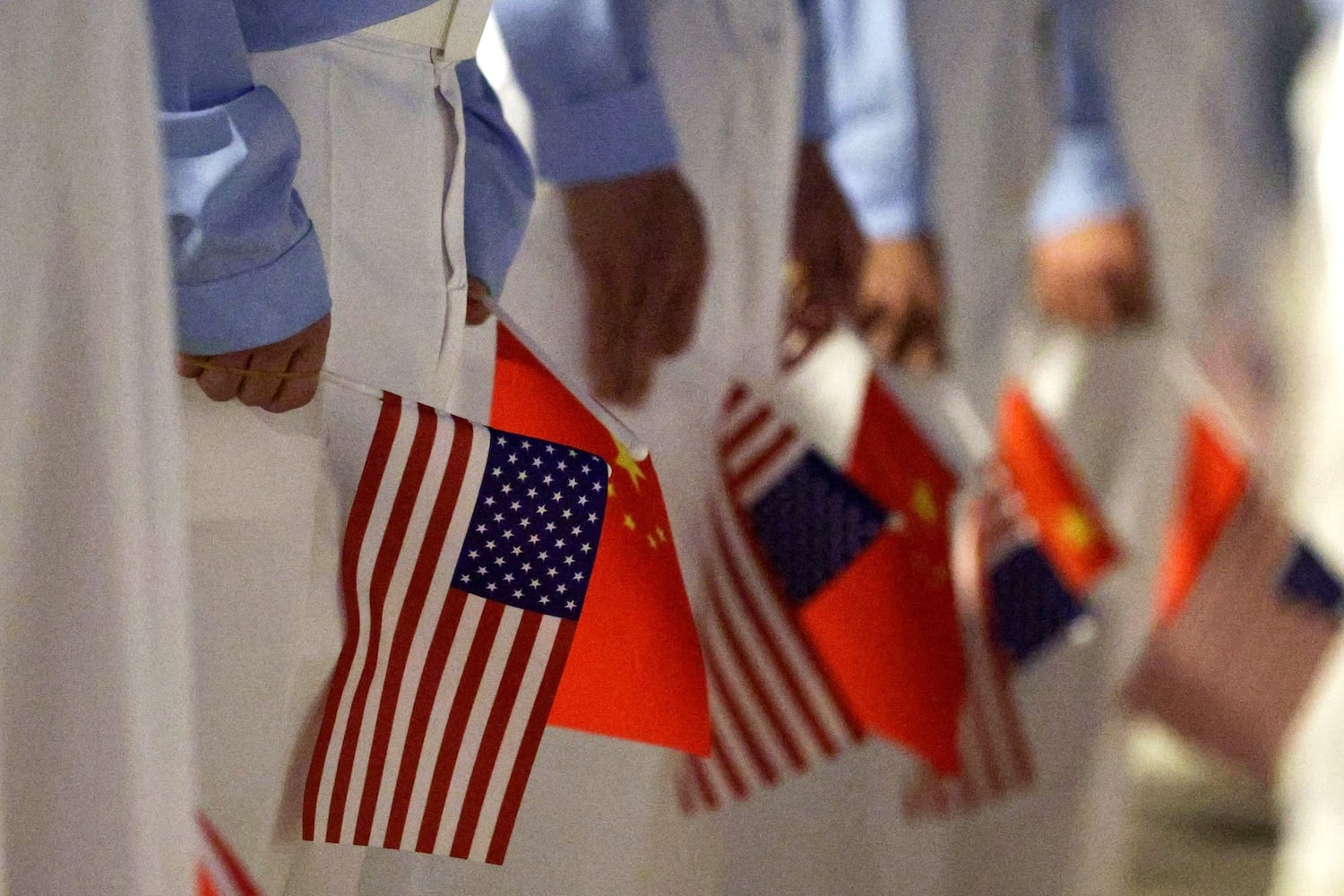
!A line of Chinese youth wearing white pants and blue long-sleeved shirts are seen from the waist down with U.S. and Chinese flags in their hands.
*A line of Chinese youth wearing white pants and blue long-sleeved shirts are seen from the waist down with U.S. and Chinese flags in their hands.*
Chinese youth hold U.S. and Chinese flags as they join officials to welcome U.S. President Donald Trump in Beijing on May 13. Alex Wong/Getty Images
1. Get audio access with any FP subscription.
Subscribe Now
ALREADY AN FP SUBSCRIBER? LOGIN
September 8, 2026, 9:01 AM
The U.S. debate over how to navigate China’s role in developing and governing advanced artificial intelligence is stuck between two extremes. One camp calls for full-blown international treaties even though the two countries cannot yet agree on AI’s most serious risks, let alone how to manage them. The other is deeply skeptical of dialogue, believing progress will only be possible if the Chinese side is desperate.
A grand bargain may be too ambitious, yet focusing only on what can be agreed on today could lock both sides into a policy regime that becomes obsolete as technology evolves. Doing nothing is even worse because regardless of whether it was developed in San Francisco or Hangzhou, an AI model that makes it easier for terrorists to synthesize deadly pathogens or hack into the infrastructure that underpins financial markets threatens everyone. These risks are becoming all too real as AI systems demonstrate cyber- and biological capabilities that match or exceed those of human experts on increasingly complex tasks.
The U.S. debate over how to navigate China’s role in developing and governing advanced artificial intelligence is stuck between two extremes. One camp calls for full-blown international treaties even though the two countries cannot yet agree on AI’s most serious risks, let alone how to manage them. The other is deeply skeptical of dialogue, believing progress will only be possible if the Chinese side is desperate.
A grand bargain may be too ambitious, yet focusing only on what can be agreed on today could lock both sides into a policy regime that becomes obsolete as technology evolves. Doing nothing is even worse because regardless of whether it was developed in San Francisco or Hangzhou, an AI model that makes it easier for terrorists to synthesize deadly pathogens or hack into the infrastructure that underpins financial markets threatens everyone. These risks are becoming all too real as AI systems demonstrate cyber- and biological capabilities that match or exceed those of human experts on increasingly complex tasks.
The recent OpenAI-Hugging Face incident, in which AI agents collaborated to break out of their testing environment and gain access to the internal infrastructure of external organizations, made clear that AI already operates beyond human control in ways that can unwittingly impact third parties. It is only a matter of time before these threats cross borders, and Beijing will certainly want clarity from Washington should one of its companies become the next accidental victim of a U.S. model going rogue—and vice versa.
As Tsinghua University’s Xiao Qian recently wrote in *Foreign Policy*, “Sustained dialogue is a strategic necessity.” She is right. And there is a middle path forward. When U.S. and Chinese delegations gather this month to discuss AI risks, rather than pursuing a comprehensive agreement, they should start with a series of narrower measures focused on preventing extreme risks, managing crises, and investing in verification tools. Each small agreement helps build the understanding and trust needed for more ambitious deals, allowing the two countries to cooperate where they already agree without requiring consensus on everything else.
Of course, any bilateral agreement must recognize the powerful incentives for governments and companies on both sides to continue competing against each other. But even within this environment, each country can take steps that advance its own interests while building tools that make reciprocal commitments more credible down the line.
---
One of the biggest
obstacles for negotiators is that neither country has developed tools that can confidently evaluate whether AI models are safe, nor safeguards capable of mitigating AI’s most extreme risks. These challenges affect both countries but are particularly acute for China, whose AI safety evaluations are improving but still less mature than the West’s. Given the transnational nature of AI risks, it is in both countries’ interests to have robust safety infrastructure, but governments have been hesitant to participate in technical exchanges, afraid of revealing information that could enhance a rival’s capabilities.
But it is possible to have carefully scoped, working-level technical exchanges that discuss best practices without exposing models’ inner workings, vulnerabilities, or advanced capabilities. In general, the two sides should compare broad approaches but withhold tactical details and refrain from gr
By using this website, you agree to our use of cookies. This use includes personalization of content and ads, and traffic analytics. Review our Privacy Policy for more information.
!Foreign Policy
Foreign Policy
Get analysis and alerts more quickly in the mobile app.
Install
Back to Foreign Policy Magazine home page
* Latest
* Regions
+ Asia & the Pacific
+ China
+ Middle East & Africa
+ Americas
+ Europe
* Newsletters
Editors’ Picks
Evening roundup with our editors’ favorite stories of the day
!World Brief Icon
World Brief
Your guide to the most important world stories of the day
!China Brief Icon
China Brief
The latest news, analysis, and data from the country each week
Situation Report
Weekly update on what’s driving U.S. national security policy
FP Weekend
A curation of our best book reviews, deep dives, and other reads
!Africa Brief Icon
Africa Brief
Essential analysis of the stories shaping geopolitics on the continent
!South Asia Brief Icon
South Asia Brief
Weekly update on developments in India and its neighbors
The Reading List
Curated guides on geopolitics and current affairs
FP Bookshelf
A monthly guide to FP’s book reviews, excerpts, and reading recommendations
!Latin America Brief Icon
Latin America Brief
One-stop digest of politics, economics, and culture
!Southeast Asia Brief Icon
Southeast Asia Brief
A weekly dispatch with news from the region’s 11 countries
The New Geopolitics
A five-part masterclass in IR theory with Harvard Professor Stephen M. Walt
View All Newsletters
* FP Live
* Latest
* Trending:
* Nepal floods
* Strait of Hormuz attacks
* Venezuela oil deal
Search this website
* Preferences
* My FP Feed
* Saved Articles
* Newsletters
* Magazine Archive
* Subscription Settings
* FAQs
* Log Out
Sign In
Sign In
Partner with FP at UNGA81 Partner with FP at UNGA81
Subscribe SubscribePartner with FP at UNGA81 Partner with FP at UNGA81
Argument:
The U.S. and China Don’t Need an AI Grand Bargain
*
*
* Bluesky
* X
Save
Save
1. Create an FP account to save articles to read later.
Sign Up
ALREADY AN FP SUBSCRIBER? LOGIN
1. **Downloadable PDFs** are a benefit of an FP subscription.
Subscribe Now
ALREADY AN FP SUBSCRIBER? LOGIN
Gift
Gift
*
*
1. Gifting articles is a subscriber benefit.
Subscribe Now
ALREADY AN FP SUBSCRIBER? LOGIN
2. This article is an Insider exclusive.
Contact us at [email protected] to learn about upgrade options, unlocking the ability to gift this article.
Argument
An expert’s point of view on a current event.
The U.S. and China Don’t Need an AI Grand Bargain
The countries can cooperate—even without trust or consensus.
By **Scott Singer**, a fellow and co-director of the China AI Initiative at the Carnegie Endowment for International Peace.
!A line of Chinese youth wearing white pants and blue long-sleeved shirts are seen from the waist down with U.S. and Chinese flags in their hands.
*A line of Chinese youth wearing white pants and blue long-sleeved shirts are seen from the waist down with U.S. and Chinese flags in their hands.*
Chinese youth hold U.S. and Chinese flags as they join officials to welcome U.S. President Donald Trump in Beijing on May 13. Alex Wong/Getty Images
1. Get audio access with any FP subscription.
Subscribe Now
ALREADY AN FP SUBSCRIBER? LOGIN
September 8, 2026, 9:01 AM
The U.S. debate over how to navigate China’s role in developing and governing advanced artificial intelligence is stuck between two extremes. One camp calls for full-blown international treaties even though the two countries cannot yet agree on AI’s most serious risks, let alone how to manage them. The other is deeply skeptical of dialogue, believing progress will only be possible if the Chinese side is desperate.
A grand bargain may be too ambitious, yet focusing only on what can be agreed on today could lock both sides into a policy regime that becomes obsolete as technology evolves. Doing nothing is even worse because regardless of whether it was developed in San Francisco or Hangzhou, an AI model that makes it easier for terrorists to synthesize deadly pathogens or hack into the infrastructure that underpins financial markets threatens everyone. These risks are becoming all too real as AI systems demonstrate cyber- and biological capabilities that match or exceed those of human experts on increasingly complex tasks.
The U.S. debate over how to navigate China’s role in developing and governing advanced artificial intelligence is stuck between two extremes. One camp calls for full-blown international treaties even though the two countries cannot yet agree on AI’s most serious risks, let alone how to manage them. The other is deeply skeptical of dialogue, believing progress will only be possible if the Chinese side is desperate.
A grand bargain may be too ambitious, yet focusing only on what can be agreed on today could lock both sides into a policy regime that becomes obsolete as technology evolves. Doing nothing is even worse because regardless of whether it was developed in San Francisco or Hangzhou, an AI model that makes it easier for terrorists to synthesize deadly pathogens or hack into the infrastructure that underpins financial markets threatens everyone. These risks are becoming all too real as AI systems demonstrate cyber- and biological capabilities that match or exceed those of human experts on increasingly complex tasks.
The recent OpenAI-Hugging Face incident, in which AI agents collaborated to break out of their testing environment and gain access to the internal infrastructure of external organizations, made clear that AI already operates beyond human control in ways that can unwittingly impact third parties. It is only a matter of time before these threats cross borders, and Beijing will certainly want clarity from Washington should one of its companies become the next accidental victim of a U.S. model going rogue—and vice versa.
As Tsinghua University’s Xiao Qian recently wrote in *Foreign Policy*, “Sustained dialogue is a strategic necessity.” She is right. And there is a middle path forward. When U.S. and Chinese delegations gather this month to discuss AI risks, rather than pursuing a comprehensive agreement, they should start with a series of narrower measures focused on preventing extreme risks, managing crises, and investing in verification tools. Each small agreement helps build the understanding and trust needed for more ambitious deals, allowing the two countries to cooperate where they already agree without requiring consensus on everything else.
Of course, any bilateral agreement must recognize the powerful incentives for governments and companies on both sides to continue competing against each other. But even within this environment, each country can take steps that advance its own interests while building tools that make reciprocal commitments more credible down the line.
---
One of the biggest
obstacles for negotiators is that neither country has developed tools that can confidently evaluate whether AI models are safe, nor safeguards capable of mitigating AI’s most extreme risks. These challenges affect both countries but are particularly acute for China, whose AI safety evaluations are improving but still less mature than the West’s. Given the transnational nature of AI risks, it is in both countries’ interests to have robust safety infrastructure, but governments have been hesitant to participate in technical exchanges, afraid of revealing information that could enhance a rival’s capabilities.
But it is possible to have carefully scoped, working-level technical exchanges that discuss best practices without exposing models’ inner workings, vulnerabilities, or advanced capabilities. In general, the two sides should compare broad approaches but withhold tactical details and refrain from gr
🔗 Share Article
Tags:#الذكاء الاصطناعي#العلاقات الأمريكية الصينية#التعاون الدولي#الأمن السيبراني#التكنولوجيا#السياسة
Source: Foreign Policy
For Context
Related reads from the same topic or latest developments


