Ian Bremmer: 'We have passed peak Trump in terms of disruption on the global stage'
France 24
F
France 24
Original Source
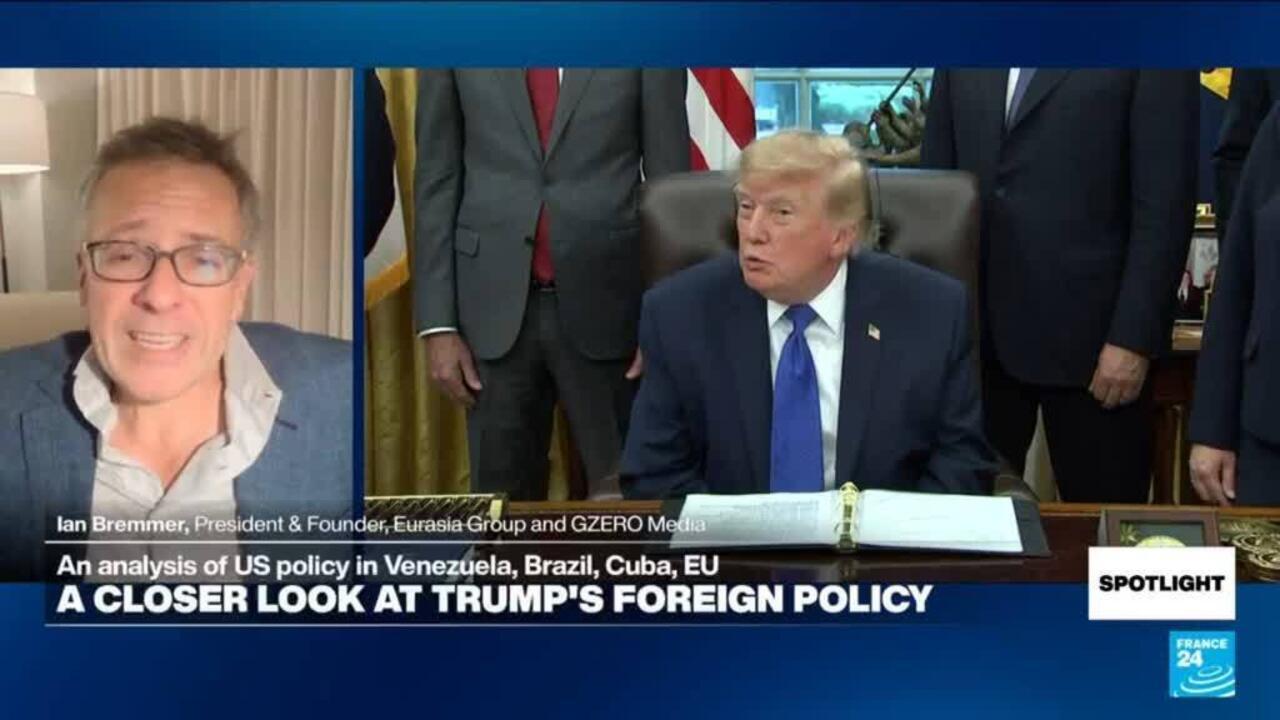
International relations analyst Ian Bremmer emphasizes that the Trump phenomenon is deeply personal and unrelated to the Republican Party, with voters ultimately determining the political consequences of his second term. He sharply criticized the administration's Venezuela policy and its "victor takes the spoils" doctrine, arguing it fundamentally contradicts the principles on which America built the postwar international order.
Yet Bremmer is equally emphatic about something else: “America, of course, is a democracy where the people do express their will.” Ultimately, he believes, the political consequences of Trump’s second term will be determined by voters. He has argued that Republicans risk losing the House, and possibly the Senate, in the upcoming congressional elections.
For Bremmer, however, the Trump phenomenon is also deeply personal. “President Trump and his administration frequently put themselves above the interests of the country,” he says. “And this really has nothing to do with the Republican Party.” Trump, he points out, was once a Democrat. In Bremmer’s view, this makes the phenomenon distinctly Trumpian, and suggesting that “this pattern will go away after Trump.”
Meanwhile, Trump has mastered what Steve Bannon famously called “flooding the zone”: overwhelming the political system with a torrent of executive orders, announcements, and initiatives. But Bremmer cautions against assuming that everything the president declares, or orders, automatically becomes American policy.
“Trump says a lot of things, and he even writes a lot of executive orders,” Bremmer observes, “but what ends up being executed and implemented turns out to be a fraction of that.”
Courts, Congress, foreign governments, economic interests and, at times, members of Trump’s own party have all acted as constraints on what the administration can actually implement.
And yet, beyond the domestic political struggle, Trump’s foreign policy is reshaping America’s relationship with the world. And while "Trump is deeply unpopular in France, across Europe, in Canada and the UK, he's actually quite popular among most of the Latin American countries".
Across much of Latin America, there has been a rightward political shift, and Trump’s hardline policies have found greater resonance, particularly where questions of security, borders, drugs and instability are immediate and consequential. Venezuela, meanwhile, has become one of the most consequential and controversial expressions of his foreign policy, and a centerpiece of what has come to be called the “Donroe Doctrine,” a Trump-era interpretation of the Monroe Doctrine asserting a more forceful American role throughout the Western Hemisphere.
The stakes became particularly stark after the United States captured Venezuelan President Nicolás Maduro and his wife, Cilia Flores, in a military operation in January 2026. Trump subsequently said the United States would oversee Venezuela during the transition.
At the United Nations General Assembly in September, Trump himself invoked the language of conquest and plunder when speaking about Venezuela and the United States’ post-Maduro role. After describing a major oil deal between the United States and Venezuela, he declared: “To the victor belong the spoils.”
It was precisely this worldview that prompted one of Bremmer’s sharpest critiques of Trump, expressed in an interview with Katy Tur on MS NOW during the week of the General Assembly.
“The most consequential thing,” Bremmer argued, “is when President Trump spoke about Venezuela, declaring, ‘To the victor goes the spoils,’ which is the way he sees Iran. It’s the way he sees AI. But it’s absolutely antithetical to the reason the United States set up the United Nations after World War II.”
He described Trump’s UN speech as “a knife in the creation of that order,” arguing that “you couldn't have said something that was more problematic for what the Americans used to stand for on the ashes of the Second World War that we won.”
Bremmer contrasts that philosophy with the principle he believes originally shaped the postwar international order: not that victory entitles you to the gains, but that it carries great responsibility: for governance, stability, and peace, not only for the United States but for all nations of the world.
So what happens when the country that built the postwar order begins to challenge the principles on which that order rests?
For Bremmer, however, the Trump phenomenon is also deeply personal. “President Trump and his administration frequently put themselves above the interests of the country,” he says. “And this really has nothing to do with the Republican Party.” Trump, he points out, was once a Democrat. In Bremmer’s view, this makes the phenomenon distinctly Trumpian, and suggesting that “this pattern will go away after Trump.”
Meanwhile, Trump has mastered what Steve Bannon famously called “flooding the zone”: overwhelming the political system with a torrent of executive orders, announcements, and initiatives. But Bremmer cautions against assuming that everything the president declares, or orders, automatically becomes American policy.
“Trump says a lot of things, and he even writes a lot of executive orders,” Bremmer observes, “but what ends up being executed and implemented turns out to be a fraction of that.”
Courts, Congress, foreign governments, economic interests and, at times, members of Trump’s own party have all acted as constraints on what the administration can actually implement.
And yet, beyond the domestic political struggle, Trump’s foreign policy is reshaping America’s relationship with the world. And while "Trump is deeply unpopular in France, across Europe, in Canada and the UK, he's actually quite popular among most of the Latin American countries".
Across much of Latin America, there has been a rightward political shift, and Trump’s hardline policies have found greater resonance, particularly where questions of security, borders, drugs and instability are immediate and consequential. Venezuela, meanwhile, has become one of the most consequential and controversial expressions of his foreign policy, and a centerpiece of what has come to be called the “Donroe Doctrine,” a Trump-era interpretation of the Monroe Doctrine asserting a more forceful American role throughout the Western Hemisphere.
The stakes became particularly stark after the United States captured Venezuelan President Nicolás Maduro and his wife, Cilia Flores, in a military operation in January 2026. Trump subsequently said the United States would oversee Venezuela during the transition.
At the United Nations General Assembly in September, Trump himself invoked the language of conquest and plunder when speaking about Venezuela and the United States’ post-Maduro role. After describing a major oil deal between the United States and Venezuela, he declared: “To the victor belong the spoils.”
It was precisely this worldview that prompted one of Bremmer’s sharpest critiques of Trump, expressed in an interview with Katy Tur on MS NOW during the week of the General Assembly.
“The most consequential thing,” Bremmer argued, “is when President Trump spoke about Venezuela, declaring, ‘To the victor goes the spoils,’ which is the way he sees Iran. It’s the way he sees AI. But it’s absolutely antithetical to the reason the United States set up the United Nations after World War II.”
He described Trump’s UN speech as “a knife in the creation of that order,” arguing that “you couldn't have said something that was more problematic for what the Americans used to stand for on the ashes of the Second World War that we won.”
Bremmer contrasts that philosophy with the principle he believes originally shaped the postwar international order: not that victory entitles you to the gains, but that it carries great responsibility: for governance, stability, and peace, not only for the United States but for all nations of the world.
So what happens when the country that built the postwar order begins to challenge the principles on which that order rests?
🔗 Share Article
Tags:#ترامب#السياسة الخارجية الأمريكية#فنزويلا#النظام الدولي#الأمم المتحدة#إيان بريمر
Source: France 24
For Context
Related reads from the same topic or latest developments