Europe Needs a Real Policy on Israel-Palestine
Foreign Policy

Foreign Policy
Original Source
With shifting American public opinion on Israel, Europe has a strategic opportunity to become an active player rather than merely a financial contributor in Middle East peace efforts. Through "constructive conditionality," the EU can support Israel's legitimate security needs while conditioning further cooperation on respect for international law and Palestinian rights.
Europe Needs a Real Policy on Israel-Palestine
By using this website, you agree to our use of cookies. This use includes personalization of content and ads, and traffic analytics. Review our Privacy Policy for more information.
!Foreign Policy
Foreign Policy
Get analysis and alerts more quickly in the mobile app.
Install
Back to Foreign Policy Magazine home page
* Latest
* Regions
+ Asia & the Pacific
+ China
+ Middle East & Africa
+ Americas
+ Europe
* Newsletters
Editors’ Picks
Evening roundup with our editors’ favorite stories of the day
!World Brief Icon
World Brief
Your guide to the most important world stories of the day
!China Brief Icon
China Brief
The latest news, analysis, and data from the country each week
Situation Report
Weekly update on what’s driving U.S. national security policy
FP Weekend
A curation of our best book reviews, deep dives, and other reads
!Africa Brief Icon
Africa Brief
Essential analysis of the stories shaping geopolitics on the continent
!South Asia Brief Icon
South Asia Brief
Weekly update on developments in India and its neighbors
The Reading List
Curated guides on geopolitics and current affairs
FP Bookshelf
A monthly guide to FP’s book reviews, excerpts, and reading recommendations
!Latin America Brief Icon
Latin America Brief
One-stop digest of politics, economics, and culture
!Southeast Asia Brief Icon
Southeast Asia Brief
A weekly dispatch with news from the region’s 11 countries
The New Geopolitics
A five-part masterclass in IR theory with Harvard Professor Stephen M. Walt
View All Newsletters
* FP Live
* Latest
* Trending:
* Nepal floods
* Strait of Hormuz attacks
* Venezuela oil deal
Search this website
* Preferences
* My FP Feed
* Saved Articles
* Newsletters
* Magazine Archive
* Subscription Settings
* FAQs
* Log Out
Sign In
Sign In
Partner with FP at UNGA81 Partner with FP at UNGA81
Subscribe SubscribePartner with FP at UNGA81 Partner with FP at UNGA81
Argument:
Europe Needs a Real Policy on Israel-Palestine
*
*
* Facebook
* Bluesky
* X
* LinkedIn
* WhatsApp
* Reddit
Save
1. Create an FP account to save articles to read later.
Sign Up
ALREADY AN FP SUBSCRIBER? LOGIN
PDF
1. **Downloadable PDFs** are a benefit of an FP subscription.
Subscribe Now
ALREADY AN FP SUBSCRIBER? LOGIN
Gift
*
*
* WhatsApp
1. Gifting articles is a subscriber benefit.
Subscribe Now
ALREADY AN FP SUBSCRIBER? LOGIN
2. This article is an Insider exclusive.
Contact us at [email protected] to learn about upgrade options, unlocking the ability to gift this article.
Argument
An expert’s point of view on a current event.
Europe Needs a Real Policy on Israel-Palestine
As U.S. opinion shifts, Europe has an opportunity to be a player, not just a payer.
By **Sven Koopmans**, the chair of negotiation and conflict resolution at the Hague Centre for Strategic Studies, and **Grace Wermenbol**, a senior visiting fellow at the German Marshall Fund.
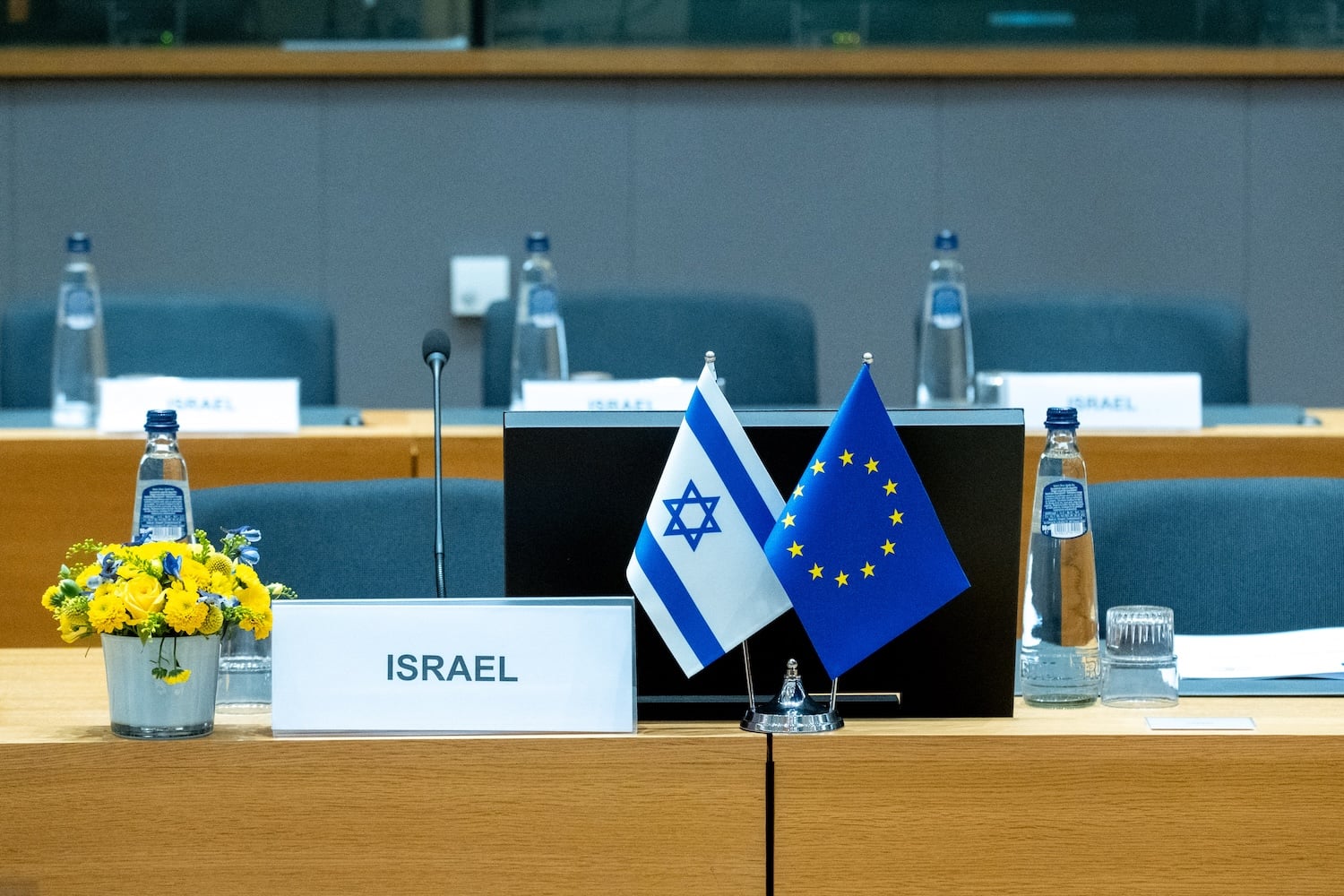
!Flags during the meeting of the EU-Israel Association Council in the presence of the Israeli foreign minister and the foreign ministers of the EU countries at the European Council in Brussels.
*Flags during the meeting of the EU-Israel Association Council in the presence of the Israeli foreign minister and the foreign ministers of the EU countries at the European Council in Brussels.*
Flags during the meeting of the EU-Israel Association Council in the presence of the Israeli foreign minister and the foreign ministers of the EU countries at the European Council in Brussels, on Feb. 24, 2025. Martin Bertrand / Hans Lucas / AFP via Getty Images
1. Get audio access with any FP subscription.
Subscribe Now
ALREADY AN FP SUBSCRIBER? LOGIN
September 8, 2026, 10:13 AM
In November 1998, Gaza International Airport opened to much fanfare, a bagpipe and red carpet on hand to welcome the landing of the first jet. U.S. President Bill Clinton subsequently hailed this moment as a tangible outcome of the Oslo peace agreements. European countries had footed much of the airport’s $86 million bill.
Three years later, during the Second Intifada, Israeli forces bombed the airport’s control tower and later bulldozed the runway—while also destroying other EU-funded development projects. The fate of the Gaza airport came to symbolize the predicament Europe found itself in. When it comes to the Israeli-Palestinian conflict, Europe is seen as a “payer, not a player.”
In November 1998, Gaza International Airport opened to much fanfare, a bagpipe and red carpet on hand to welcome the landing of the first jet. U.S. President Bill Clinton subsequently hailed this moment as a tangible outcome of the Oslo peace agreements. European countries had footed much of the airport’s $86 million bill.
Three years later, during the Second Intifada, Israeli forces bombed the airport’s control tower and later bulldozed the runway—while also destroying other EU-funded development projects. The fate of the Gaza airport came to symbolize the predicament Europe found itself in. When it comes to the Israeli-Palestinian conflict, Europe is seen as a “payer, not a player.”
As Europe now faces a reckoning over its Israel policy and grows less willing to defer to Washington, the EU has a chance to become a player. Through “constructive conditionality”—backing Israel’s legitimate security needs while making further cooperation contingent on respect for international law and Palestinian rights—it can advance a more independent foreign policy and, by building a landing pad for eventual U.S. policy shifts, extend the weight of its choices beyond its borders.
---
For decades, European
policy toward Israel has largely deferred to Washington. The 27 EU member states are deeply divided. Historically, a minority, led by Ireland, has strongly favored Palestinian independence, while a bigger group, led by Germany, has unwaveringly stood by Israel, with others shifting according to their government. These divisions have hampered Europe from taking any initiative beyond providing material assistance to U.S. peace efforts and to the parties directly. The EU was excluded from the Trump-orchestrated Abraham Accords, which normalized relations between Israel and four Arab states in 2020. It still contributed funds after the fact.
The EU started to change tack during the Biden administration. In these years, one of us served as the EU special representative for the Middle East peace process. The White House, laser-focused on creating official ties between Israel and Saudi Arabia, underestimated the international community’s wish to end the decades-long Israeli occupation. This meant Washington was following rather than leading when, on Sept. 18, 2023, the EU and Saudi Arabia, together with Egypt, Jordan, and the Arab League, launched their own peace initiative. It involved some 60 states, including a reluctant U.S., and focused on identifying political, economic, and security support that would facilitate a comprehensive regional peace.
But three weeks later the situation changed irrevocably, when Hamas launched an attack on Israel that killed roughly 1,200 people and took hundreds of hostages. Israel’s military response, backed by U.S. political and military support, has killed an estimated 73,000 Palestinians to date, reduced Gaza to rubble, and led to accusations of an Israeli-perpetrated genocide. It has also pushed both the U.S. and Europe to reconsider their long-standing Israel policies.
A majority of the U.S. public now holds unfavorable views of Israel, driven by growing public criticism of Israel’s treatment of Palestinians and its seemingly endless military actions across the Middle East, including a semi-dormant war with Iran. In a survey published in April, Pew found that 60 percent of Americans have an unfavorable view of Israel, up 7 points in a single year and almost 20 points since 2022. The shift is particularly pronounced under Democrats, but the decline in support is bipart
By using this website, you agree to our use of cookies. This use includes personalization of content and ads, and traffic analytics. Review our Privacy Policy for more information.
!Foreign Policy
Foreign Policy
Get analysis and alerts more quickly in the mobile app.
Install
Back to Foreign Policy Magazine home page
* Latest
* Regions
+ Asia & the Pacific
+ China
+ Middle East & Africa
+ Americas
+ Europe
* Newsletters
Editors’ Picks
Evening roundup with our editors’ favorite stories of the day
!World Brief Icon
World Brief
Your guide to the most important world stories of the day
!China Brief Icon
China Brief
The latest news, analysis, and data from the country each week
Situation Report
Weekly update on what’s driving U.S. national security policy
FP Weekend
A curation of our best book reviews, deep dives, and other reads
!Africa Brief Icon
Africa Brief
Essential analysis of the stories shaping geopolitics on the continent
!South Asia Brief Icon
South Asia Brief
Weekly update on developments in India and its neighbors
The Reading List
Curated guides on geopolitics and current affairs
FP Bookshelf
A monthly guide to FP’s book reviews, excerpts, and reading recommendations
!Latin America Brief Icon
Latin America Brief
One-stop digest of politics, economics, and culture
!Southeast Asia Brief Icon
Southeast Asia Brief
A weekly dispatch with news from the region’s 11 countries
The New Geopolitics
A five-part masterclass in IR theory with Harvard Professor Stephen M. Walt
View All Newsletters
* FP Live
* Latest
* Trending:
* Nepal floods
* Strait of Hormuz attacks
* Venezuela oil deal
Search this website
* Preferences
* My FP Feed
* Saved Articles
* Newsletters
* Magazine Archive
* Subscription Settings
* FAQs
* Log Out
Sign In
Sign In
Partner with FP at UNGA81 Partner with FP at UNGA81
Subscribe SubscribePartner with FP at UNGA81 Partner with FP at UNGA81
Argument:
Europe Needs a Real Policy on Israel-Palestine
*
*
* Bluesky
* X
Save
1. Create an FP account to save articles to read later.
Sign Up
ALREADY AN FP SUBSCRIBER? LOGIN
1. **Downloadable PDFs** are a benefit of an FP subscription.
Subscribe Now
ALREADY AN FP SUBSCRIBER? LOGIN
Gift
*
*
1. Gifting articles is a subscriber benefit.
Subscribe Now
ALREADY AN FP SUBSCRIBER? LOGIN
2. This article is an Insider exclusive.
Contact us at [email protected] to learn about upgrade options, unlocking the ability to gift this article.
Argument
An expert’s point of view on a current event.
Europe Needs a Real Policy on Israel-Palestine
As U.S. opinion shifts, Europe has an opportunity to be a player, not just a payer.
By **Sven Koopmans**, the chair of negotiation and conflict resolution at the Hague Centre for Strategic Studies, and **Grace Wermenbol**, a senior visiting fellow at the German Marshall Fund.
!Flags during the meeting of the EU-Israel Association Council in the presence of the Israeli foreign minister and the foreign ministers of the EU countries at the European Council in Brussels.
*Flags during the meeting of the EU-Israel Association Council in the presence of the Israeli foreign minister and the foreign ministers of the EU countries at the European Council in Brussels.*
Flags during the meeting of the EU-Israel Association Council in the presence of the Israeli foreign minister and the foreign ministers of the EU countries at the European Council in Brussels, on Feb. 24, 2025. Martin Bertrand / Hans Lucas / AFP via Getty Images
1. Get audio access with any FP subscription.
Subscribe Now
ALREADY AN FP SUBSCRIBER? LOGIN
September 8, 2026, 10:13 AM
In November 1998, Gaza International Airport opened to much fanfare, a bagpipe and red carpet on hand to welcome the landing of the first jet. U.S. President Bill Clinton subsequently hailed this moment as a tangible outcome of the Oslo peace agreements. European countries had footed much of the airport’s $86 million bill.
Three years later, during the Second Intifada, Israeli forces bombed the airport’s control tower and later bulldozed the runway—while also destroying other EU-funded development projects. The fate of the Gaza airport came to symbolize the predicament Europe found itself in. When it comes to the Israeli-Palestinian conflict, Europe is seen as a “payer, not a player.”
In November 1998, Gaza International Airport opened to much fanfare, a bagpipe and red carpet on hand to welcome the landing of the first jet. U.S. President Bill Clinton subsequently hailed this moment as a tangible outcome of the Oslo peace agreements. European countries had footed much of the airport’s $86 million bill.
Three years later, during the Second Intifada, Israeli forces bombed the airport’s control tower and later bulldozed the runway—while also destroying other EU-funded development projects. The fate of the Gaza airport came to symbolize the predicament Europe found itself in. When it comes to the Israeli-Palestinian conflict, Europe is seen as a “payer, not a player.”
As Europe now faces a reckoning over its Israel policy and grows less willing to defer to Washington, the EU has a chance to become a player. Through “constructive conditionality”—backing Israel’s legitimate security needs while making further cooperation contingent on respect for international law and Palestinian rights—it can advance a more independent foreign policy and, by building a landing pad for eventual U.S. policy shifts, extend the weight of its choices beyond its borders.
---
For decades, European
policy toward Israel has largely deferred to Washington. The 27 EU member states are deeply divided. Historically, a minority, led by Ireland, has strongly favored Palestinian independence, while a bigger group, led by Germany, has unwaveringly stood by Israel, with others shifting according to their government. These divisions have hampered Europe from taking any initiative beyond providing material assistance to U.S. peace efforts and to the parties directly. The EU was excluded from the Trump-orchestrated Abraham Accords, which normalized relations between Israel and four Arab states in 2020. It still contributed funds after the fact.
The EU started to change tack during the Biden administration. In these years, one of us served as the EU special representative for the Middle East peace process. The White House, laser-focused on creating official ties between Israel and Saudi Arabia, underestimated the international community’s wish to end the decades-long Israeli occupation. This meant Washington was following rather than leading when, on Sept. 18, 2023, the EU and Saudi Arabia, together with Egypt, Jordan, and the Arab League, launched their own peace initiative. It involved some 60 states, including a reluctant U.S., and focused on identifying political, economic, and security support that would facilitate a comprehensive regional peace.
But three weeks later the situation changed irrevocably, when Hamas launched an attack on Israel that killed roughly 1,200 people and took hundreds of hostages. Israel’s military response, backed by U.S. political and military support, has killed an estimated 73,000 Palestinians to date, reduced Gaza to rubble, and led to accusations of an Israeli-perpetrated genocide. It has also pushed both the U.S. and Europe to reconsider their long-standing Israel policies.
A majority of the U.S. public now holds unfavorable views of Israel, driven by growing public criticism of Israel’s treatment of Palestinians and its seemingly endless military actions across the Middle East, including a semi-dormant war with Iran. In a survey published in April, Pew found that 60 percent of Americans have an unfavorable view of Israel, up 7 points in a single year and almost 20 points since 2022. The shift is particularly pronounced under Democrats, but the decline in support is bipart
🔗 Share Article
Tags:#إسرائيل#فلسطين#السياسة الأوروبية#السلام في الشرق الأوسط#الاتحاد الأوروبي#الصراع الإسرائيلي الفلسطيني
Source: Foreign Policy
For Context
Related reads from the same topic or latest developments


