A Saudi-Emirati Thaw Can Help Contain Iran
Foreign Policy

Foreign Policy
Original Source
A recent thaw between Saudi Arabia and the UAE offers an opportunity for Gulf states to forge a unified response to ongoing Iranian threats. Regional coordination on deterrence, conditional engagement, and freedom of navigation is essential to address mounting security challenges.
A Saudi-Emirati Thaw Can Help Contain Iran
!Foreign Policy
Foreign Policy
Get analysis and alerts more quickly in the mobile app.
Install
Back to Foreign Policy Magazine home page
* Latest
* Regions
+ Asia & the Pacific
+ China
+ Middle East & Africa
+ Americas
+ Europe
* Newsletters
Editors’ Picks
Evening roundup with our editors’ favorite stories of the day
!World Brief Icon
World Brief
Your guide to the most important world stories of the day
!China Brief Icon
China Brief
The latest news, analysis, and data from the country each week
Situation Report
Weekly update on what’s driving U.S. national security policy
FP Weekend
A curation of our best book reviews, deep dives, and other reads
!Africa Brief Icon
Africa Brief
Essential analysis of the stories shaping geopolitics on the continent
!South Asia Brief Icon
South Asia Brief
Weekly update on developments in India and its neighbors
The Reading List
Curated guides on geopolitics and current affairs
FP Bookshelf
A monthly guide to FP’s book reviews, excerpts, and reading recommendations
!Latin America Brief Icon
Latin America Brief
One-stop digest of politics, economics, and culture
!Southeast Asia Brief Icon
Southeast Asia Brief
A weekly dispatch with news from the region’s 11 countries
The New Geopolitics
A five-part masterclass in IR theory with Harvard Professor Stephen M. Walt
View All Newsletters
* FP Live
* Latest
* Trending:
* Iran war
* Britain's new prime minister
Search this website
* Preferences
* My FP Feed
* Saved Articles
* Newsletters
* Magazine Archive
* Subscription Settings
* FAQs
* Log Out
Sign In
Sign In
Equip your team with FP Enterprise Equip your team with FP Enterprise
SUBSCRIBE SUBSCRIBEUpgrade & get a limited-edition tote Upgrade & get a limited-edition tote
Argument:
A Saudi-Emirati Thaw Can Help Contain Iran
*
*
* Facebook
* Bluesky
* X
* LinkedIn
* WhatsApp
* Reddit
Save
1. Create an FP account to save articles to read later.
Sign Up
ALREADY AN FP SUBSCRIBER? LOGIN
PDF
1. **Downloadable PDFs** are a benefit of an FP subscription.
Subscribe Now
ALREADY AN FP SUBSCRIBER? LOGIN
Gift
*
*
* WhatsApp
1. Gifting articles is a subscriber benefit.
Subscribe Now
ALREADY AN FP SUBSCRIBER? LOGIN
2. This article is an Insider exclusive.
Contact us at [email protected] to learn about upgrade options, unlocking the ability to gift this article.
Argument
An expert’s point of view on a current event.
A Saudi-Emirati Thaw Can Help Contain Iran
The Gulf needs a joint front on deterrence, engagement, and freedom of navigation.
By **Allison Minor**, the Director for Middle East Integration at the Atlantic Council, and **April Longley Alley**, a senior fellow at the Washington Institute.
!Commercial vessels are pictured offshore in Dubai on March 11.
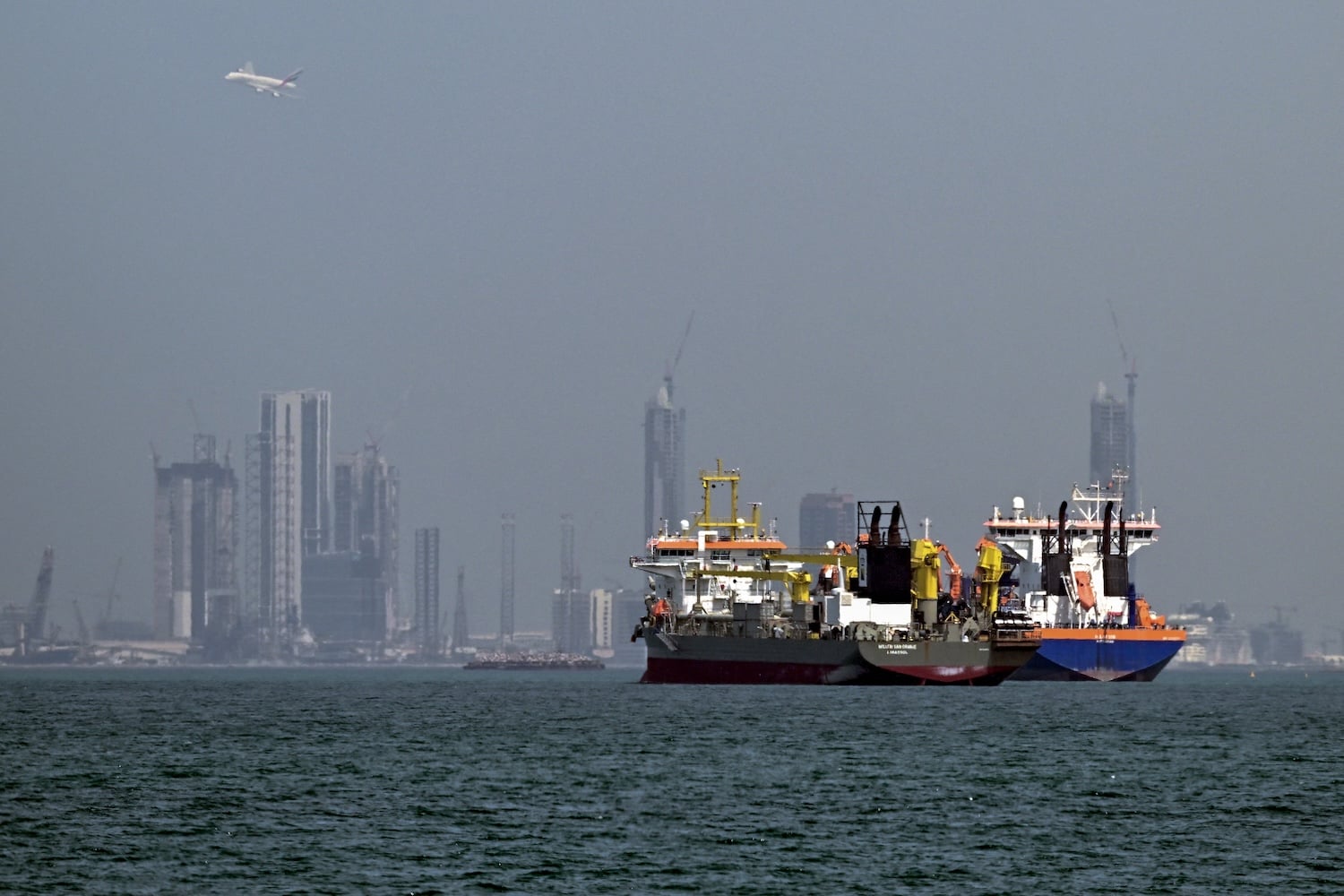
*Commercial vessels are pictured offshore in Dubai on March 11.*
Commercial vessels offshore Dubai on March 11. AFP via Getty Images
1. Get audio access with any FP subscription.
Subscribe Now
ALREADY AN FP SUBSCRIBER? LOGIN
August 3, 2026, 10:04 AM
Following months of tension, senior Emirati and Saudi officials recently released what appeared to be coordinated messages affirming the strong ties between the two countries. It is too early to know if this signaling will translate into tangible actions to repair a strained relationship. But even a moderate thawing of Saudi-Emirati tensions could create an opportunity for Gulf states to forge a more effective response to continued threats from Tehran.
The need for coordination is increasingly urgent. The region faces yet another round of escalation between Iran and the United States, plus an evolving crisis with the Houthis in the Bab el-Mandeb that could create a double chokepoint crisis. Even if active fighting subsides, Tehran is unlikely to abandon its strategy of threatening neighbors and leveraging the Strait of Hormuz as the country struggles to reconstitute and rebuild. And there is little reason to think that, whatever course U.S.-Iran negotiations take, Gulf countries’ security concerns will be fully addressed.
Following months of tension, senior Emirati and Saudi officials recently released what appeared to be coordinated messages affirming the strong ties between the two countries. It is too early to know if this signaling will translate into tangible actions to repair a strained relationship. But even a moderate thawing of Saudi-Emirati tensions could create an opportunity for Gulf states to forge a more effective response to continued threats from Tehran.
The need for coordination is increasingly urgent. The region faces yet another round of escalation between Iran and the United States, plus an evolving crisis with the Houthis in the Bab el-Mandeb that could create a double chokepoint crisis. Even if active fighting subsides, Tehran is unlikely to abandon its strategy of threatening neighbors and leveraging the Strait of Hormuz as the country struggles to reconstitute and rebuild. And there is little reason to think that, whatever course U.S.-Iran negotiations take, Gulf countries’ security concerns will be fully addressed.
All this means that the Gulf states cannot rely on Washington or bilateral engagement with Tehran to address their security challenges. Instead, greater coordination between Gulf capitals offers the best path forward. Three elements are essential to make this strategy work.
The first is deterrence. The limits of the U.S. security umbrella have been laid bare. Iran’s drone warfare against Gulf economic targets makes it clear that, even with an impressive missile defense system, deterrence by denial will not be enough. Gulf states now face the difficult challenge of convincing Iran that continued attacks against the Gulf or disruption to Hormuz will result in unacceptable costs. While they should continue to invest in stronger and more integrated air and missile defenses, this means defining red lines that they are willing to collectively defend.
At a minimum, the red lines should include the principle that an attack on any Gulf country will elicit a response from all Gulf countries. This would not necessarily be a military response, but it would involve all Gulf capitals bringing their own unique leverage to bear. In theory, Gulf countries are well placed to mobilize military, economic, and diplomatic consequences for Iran, in cooperation with European and Asian partners. But the greater challenge is their willingness to deploy those tools and their impact on the calculus of a regime that has already borne so much pain, especially militarily.
As Iran seeks to recover from the war, Gulf economic and diplomatic tools are likely to prove more effective than military options. These could include cutting off the significant trade ties that still exist between some Gulf countries and Iran and shutting down the Gulf-based exchange houses, shadow companies, and transshipment routes that have played an important role in Iranian sanctions evasion for years.
Yet a coordinated Gulf deterrent will only work if Saudi Arabia and the United Arab Emirates agree on a plan for communicating and enforcing consistent red lines. If a single state seeks to mobilize a deterrent independent of its neighbors, Iran can simply isolate that country: If all ships can move through Hormuz except the UAE’s, it will be much harder to mobilize any sort of international action. If all Gulf cities are safe except for Dubai, capital, corporate headquarters, and flights will simply shift to Riyadh and Doha. Other Gulf states, particularly Oman, may choose not to participate in a Gulf response against Iran, but they must commit not to undermine Gulf deterrent actions, such as facilitating new avenues for Iranian sanctions evasion.
The second priority is conditional engagement. Conditional economic support to Tehran is an important tool for Gulf states, but it will only be effective if all Gulf capitals uphold consistent con
!Foreign Policy
Foreign Policy
Get analysis and alerts more quickly in the mobile app.
Install
Back to Foreign Policy Magazine home page
* Latest
* Regions
+ Asia & the Pacific
+ China
+ Middle East & Africa
+ Americas
+ Europe
* Newsletters
Editors’ Picks
Evening roundup with our editors’ favorite stories of the day
!World Brief Icon
World Brief
Your guide to the most important world stories of the day
!China Brief Icon
China Brief
The latest news, analysis, and data from the country each week
Situation Report
Weekly update on what’s driving U.S. national security policy
FP Weekend
A curation of our best book reviews, deep dives, and other reads
!Africa Brief Icon
Africa Brief
Essential analysis of the stories shaping geopolitics on the continent
!South Asia Brief Icon
South Asia Brief
Weekly update on developments in India and its neighbors
The Reading List
Curated guides on geopolitics and current affairs
FP Bookshelf
A monthly guide to FP’s book reviews, excerpts, and reading recommendations
!Latin America Brief Icon
Latin America Brief
One-stop digest of politics, economics, and culture
!Southeast Asia Brief Icon
Southeast Asia Brief
A weekly dispatch with news from the region’s 11 countries
The New Geopolitics
A five-part masterclass in IR theory with Harvard Professor Stephen M. Walt
View All Newsletters
* FP Live
* Latest
* Trending:
* Iran war
* Britain's new prime minister
Search this website
* Preferences
* My FP Feed
* Saved Articles
* Newsletters
* Magazine Archive
* Subscription Settings
* FAQs
* Log Out
Sign In
Sign In
Equip your team with FP Enterprise Equip your team with FP Enterprise
SUBSCRIBE SUBSCRIBEUpgrade & get a limited-edition tote Upgrade & get a limited-edition tote
Argument:
A Saudi-Emirati Thaw Can Help Contain Iran
*
*
* Bluesky
* X
Save
1. Create an FP account to save articles to read later.
Sign Up
ALREADY AN FP SUBSCRIBER? LOGIN
1. **Downloadable PDFs** are a benefit of an FP subscription.
Subscribe Now
ALREADY AN FP SUBSCRIBER? LOGIN
Gift
*
*
1. Gifting articles is a subscriber benefit.
Subscribe Now
ALREADY AN FP SUBSCRIBER? LOGIN
2. This article is an Insider exclusive.
Contact us at [email protected] to learn about upgrade options, unlocking the ability to gift this article.
Argument
An expert’s point of view on a current event.
A Saudi-Emirati Thaw Can Help Contain Iran
The Gulf needs a joint front on deterrence, engagement, and freedom of navigation.
By **Allison Minor**, the Director for Middle East Integration at the Atlantic Council, and **April Longley Alley**, a senior fellow at the Washington Institute.
!Commercial vessels are pictured offshore in Dubai on March 11.
*Commercial vessels are pictured offshore in Dubai on March 11.*
Commercial vessels offshore Dubai on March 11. AFP via Getty Images
1. Get audio access with any FP subscription.
Subscribe Now
ALREADY AN FP SUBSCRIBER? LOGIN
August 3, 2026, 10:04 AM
Following months of tension, senior Emirati and Saudi officials recently released what appeared to be coordinated messages affirming the strong ties between the two countries. It is too early to know if this signaling will translate into tangible actions to repair a strained relationship. But even a moderate thawing of Saudi-Emirati tensions could create an opportunity for Gulf states to forge a more effective response to continued threats from Tehran.
The need for coordination is increasingly urgent. The region faces yet another round of escalation between Iran and the United States, plus an evolving crisis with the Houthis in the Bab el-Mandeb that could create a double chokepoint crisis. Even if active fighting subsides, Tehran is unlikely to abandon its strategy of threatening neighbors and leveraging the Strait of Hormuz as the country struggles to reconstitute and rebuild. And there is little reason to think that, whatever course U.S.-Iran negotiations take, Gulf countries’ security concerns will be fully addressed.
Following months of tension, senior Emirati and Saudi officials recently released what appeared to be coordinated messages affirming the strong ties between the two countries. It is too early to know if this signaling will translate into tangible actions to repair a strained relationship. But even a moderate thawing of Saudi-Emirati tensions could create an opportunity for Gulf states to forge a more effective response to continued threats from Tehran.
The need for coordination is increasingly urgent. The region faces yet another round of escalation between Iran and the United States, plus an evolving crisis with the Houthis in the Bab el-Mandeb that could create a double chokepoint crisis. Even if active fighting subsides, Tehran is unlikely to abandon its strategy of threatening neighbors and leveraging the Strait of Hormuz as the country struggles to reconstitute and rebuild. And there is little reason to think that, whatever course U.S.-Iran negotiations take, Gulf countries’ security concerns will be fully addressed.
All this means that the Gulf states cannot rely on Washington or bilateral engagement with Tehran to address their security challenges. Instead, greater coordination between Gulf capitals offers the best path forward. Three elements are essential to make this strategy work.
The first is deterrence. The limits of the U.S. security umbrella have been laid bare. Iran’s drone warfare against Gulf economic targets makes it clear that, even with an impressive missile defense system, deterrence by denial will not be enough. Gulf states now face the difficult challenge of convincing Iran that continued attacks against the Gulf or disruption to Hormuz will result in unacceptable costs. While they should continue to invest in stronger and more integrated air and missile defenses, this means defining red lines that they are willing to collectively defend.
At a minimum, the red lines should include the principle that an attack on any Gulf country will elicit a response from all Gulf countries. This would not necessarily be a military response, but it would involve all Gulf capitals bringing their own unique leverage to bear. In theory, Gulf countries are well placed to mobilize military, economic, and diplomatic consequences for Iran, in cooperation with European and Asian partners. But the greater challenge is their willingness to deploy those tools and their impact on the calculus of a regime that has already borne so much pain, especially militarily.
As Iran seeks to recover from the war, Gulf economic and diplomatic tools are likely to prove more effective than military options. These could include cutting off the significant trade ties that still exist between some Gulf countries and Iran and shutting down the Gulf-based exchange houses, shadow companies, and transshipment routes that have played an important role in Iranian sanctions evasion for years.
Yet a coordinated Gulf deterrent will only work if Saudi Arabia and the United Arab Emirates agree on a plan for communicating and enforcing consistent red lines. If a single state seeks to mobilize a deterrent independent of its neighbors, Iran can simply isolate that country: If all ships can move through Hormuz except the UAE’s, it will be much harder to mobilize any sort of international action. If all Gulf cities are safe except for Dubai, capital, corporate headquarters, and flights will simply shift to Riyadh and Doha. Other Gulf states, particularly Oman, may choose not to participate in a Gulf response against Iran, but they must commit not to undermine Gulf deterrent actions, such as facilitating new avenues for Iranian sanctions evasion.
The second priority is conditional engagement. Conditional economic support to Tehran is an important tool for Gulf states, but it will only be effective if all Gulf capitals uphold consistent con
🔗 Share Article
Tags:#إيران#السعودية#الإمارات#الخليج#الأمن الإقليمي#مضيق هرمز
Source: Foreign Policy
For Context
Related reads from the same topic or latest developments


