Congress Can Do More to Curb Kushner’s Conflicts of Interest
Foreign Policy

Foreign Policy
Original Source
A new congressional investigation into Jared Kushner's conflicts of interest reveals that his investment firm, financed primarily by Gulf monarchies, has become a major shareholder in Israeli military suppliers—all while he negotiates Middle East peace deals as the president's son-in-law.
Congress Can Do More to Curb Kushner’s Conflicts of Interest
By using this website, you agree to our use of cookies. This use includes personalization of content and ads, and traffic analytics. Review our Privacy Policy for more information.
!Foreign Policy
Foreign Policy Get analysis and alerts more quickly in the mobile app.
Install
Back to Foreign Policy Magazine home page
* Latest
* Regions
+ Asia & the Pacific
+ China
+ Middle East & Africa
+ Americas
+ Europe
* Newsletters
Editors’ Picks
Evening roundup with our editors’ favorite stories of the day
!World Brief Icon
World Brief
Your guide to the most important world stories of the day
!China Brief Icon
China Brief
The latest news, analysis, and data from the country each week
Situation Report
Weekly update on what’s driving U.S. national security policy
FP Weekend
A curation of our best book reviews, deep dives, and other reads
!Africa Brief Icon
Africa Brief
Essential analysis of the stories shaping geopolitics on the continent
!South Asia Brief Icon
South Asia Brief
Weekly update on developments in India and its neighbors
The Reading List
Curated guides on geopolitics and current affairs
FP Bookshelf
A monthly guide to FP’s book reviews, excerpts, and reading recommendations
!Latin America Brief Icon
Latin America Brief
One-stop digest of politics, economics, and culture
!Southeast Asia Brief Icon
Southeast Asia Brief
A weekly dispatch with news from the region’s 11 countries
The New Geopolitics
A five-part masterclass in IR theory with Harvard Professor Stephen M. Walt
View All Newsletters
* FP Live
* Latest
* Trending:
* France's student protests
* Brazil's election
Search this website
* Preferences
* My FP Feed
* Saved Articles
* Newsletters
* Magazine Archive
* Subscription Settings
* FAQs
* Log Out
Sign In
Sign In
Team access Team access
Subscribe Subscribe Team access Team access
Argument: Congress Can Do More to Curb Kushner’s Conflicts of Interest
*
*
* Facebook
* Bluesky
* X
* LinkedIn
* WhatsApp
* Reddit
Save
1. Create an FP account to save articles to read later.
Sign Up
ALREADY AN FP SUBSCRIBER? LOGIN
PDF
1. **Downloadable PDFs** are a benefit of an FP subscription.
Subscribe Now
ALREADY AN FP SUBSCRIBER? LOGIN
Gift
*
*
* WhatsApp
1. Gifting articles is a subscriber benefit.
Subscribe Now
ALREADY AN FP SUBSCRIBER? LOGIN
2. This article is an Insider exclusive.
Contact us at [email protected] to learn about upgrade options, unlocking the ability to gift this article.
Argument
An expert’s point of view on a current event.
Congress Can Do More to Curb Kushner’s Conflicts of Interest
No one should be getting paid by the countries they are conducting diplomacy with, especially not the president’s son-in-law.
By **Sarah Leah Whitson**, a lawyer and a co-author of the recently published *From Apartheid to Democracy: A Blueprint for Peace in Israel-Palestine*.
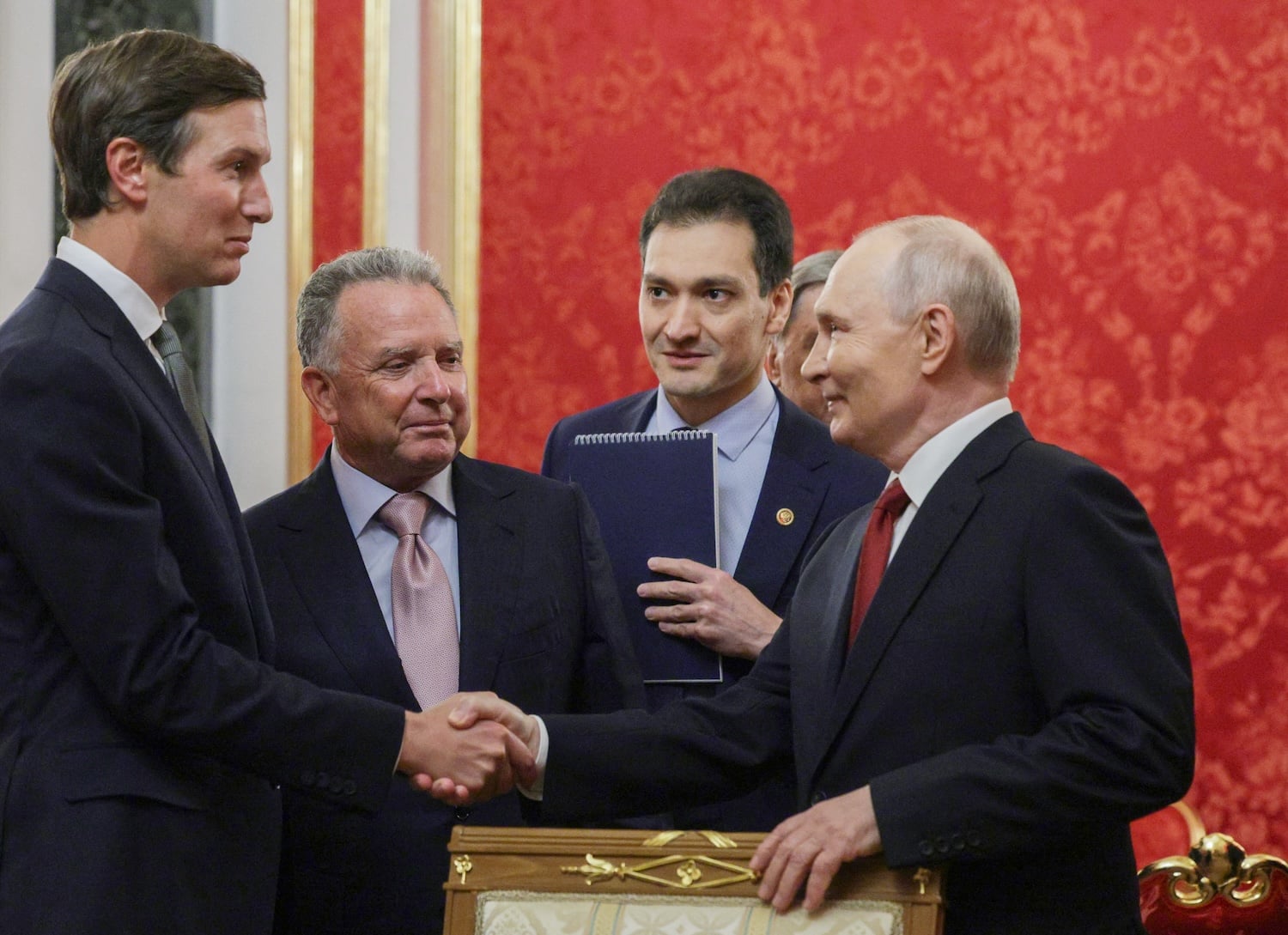
!Russian President Vladimir Putin welcomes US special envoy Steve Witkoff and US President Donald Trump's son-in-law Jared Kushner prior to their talks in Moscow on September 5.
*Russian President Vladimir Putin welcomes US special envoy Steve Witkoff and US President Donald Trump's son-in-law Jared Kushner prior to their talks in Moscow on September 5.*
Russian President Vladimir Putin welcomes US special envoy Steve Witkoff and US President Donald Trump's son-in-law Jared Kushner prior to their talks in Moscow on September 5. Gavriil GRIGOROV / POOL / AFP via Getty Images
1. Get audio access with any FP subscription.
Subscribe Now
ALREADY AN FP SUBSCRIBER? LOGIN
October 12, 2026, 9:09 AM
On Oct. 6, the ranking member of the U.S. House Oversight Committee, Robert Garcia, opened a new investigation into Jared Kushner’s possible conflicts of interest. The president’s son-in-law holds dual roles, as a “volunteer” diplomatic negotiator for President Donald Trump, and the owner of the increasingly lucrative investment firm Affinity Partners, financed overwhelmingly by Saudi Arabia and other Persian Gulf monarchies. The investigation came on the heels of startling revelations by CNN that Affinity Partners had become the largest shareholder in an Israeli conglomerate, Phoenix Financial, that in turn holds shares in at least nine Israeli military suppliers—all while Kushner was tasked with helping to negotiate a peace deal between Israel and Hamas.
Trump’s Second Term
Ongoing reports and analysis
This wasn’t the first time that there had been warnings about Kushner’s conflicts of interest. In April 2022, the nonprofit organization DAWN urged the U.S. Justice Department and Congress to investigate revelations that Saudi Arabia’s Public Investment Fund had invested $2 billion in Kushner’s newly launched fund. Kushner had established Affinity Partners just six months earlier, on Jan. 21, 2021—one day after the first Trump administration ended and Kushner left his formal White House position. Riyadh’s investment fund was initially by far Affinity’s largest investor and possibly remains its largest.
On Oct. 6, the ranking member of the U.S. House Oversight Committee, Robert Garcia, opened a new investigation into Jared Kushner’s possible conflicts of interest. The president’s son-in-law holds dual roles, as a “volunteer” diplomatic negotiator for President Donald Trump, and the owner of the increasingly lucrative investment firm Affinity Partners, financed overwhelmingly by Saudi Arabia and other Persian Gulf monarchies. The investigation came on the heels of startling revelations by CNN that Affinity Partners had become the largest shareholder in an Israeli conglomerate, Phoenix Financial, that in turn holds shares in at least nine Israeli military suppliers—all while Kushner was tasked with helping to negotiate a peace deal between Israel and Hamas.
Trump’s Second Term
Ongoing reports and analysis
This wasn’t the first time that there had been warnings about Kushner’s conflicts of interest. In April 2022, the nonprofit organization DAWN urged the U.S. Justice Department and Congress to investigate revelations that Saudi Arabia’s Public Investment Fund had invested $2 billion in Kushner’s newly launched fund. Kushner had established Affinity Partners just six months earlier, on Jan. 21, 2021—one day after the first Trump administration ended and Kushner left his formal White House position. Riyadh’s investment fund was initially by far Affinity’s largest investor and possibly remains its largest.
In June 2022, Rep. Carolyn Maloney opened an investigation into whether Kushner had traded on his government position to secure the Saudi billions and whether his financial interests had influenced U.S. policy. Sen. Ron Wyden followed with another investigation launched in 2024, examining Affinity’s foreign-government payments, alleged disclosure loopholes, and possible circumvention of the Foreign Agents Registration Act (FARA).
As a result of these investigations, Congress learned a great deal about Affinity, including the fact that as of March 2024, at least 99 percent of Affinity’s then-$3 billion under management came from foreign sources, principally Saudi Arabia and the United Arab Emirates. These were both governments that Kushner had strongly supported while working in the first Trump administration, and they were now paying his firm tens of millions of dollars annually in investment advisory fees.
During Trump’s first term, Kushner had pushed for approvals of massive weapons sales to Saudi Arabia and the UAE. He also promoted his close friend Saudi Crown Prince Mohammed bin Salman in Washington as a reformer, helped to rehabilitate the crown prince’s tattered reputation following the murder of Jamal Khashoggi, and reportedly even provided Mohammed bin Salman wi
By using this website, you agree to our use of cookies. This use includes personalization of content and ads, and traffic analytics. Review our Privacy Policy for more information.
!Foreign Policy
Foreign Policy Get analysis and alerts more quickly in the mobile app.
Install
Back to Foreign Policy Magazine home page
* Latest
* Regions
+ Asia & the Pacific
+ China
+ Middle East & Africa
+ Americas
+ Europe
* Newsletters
Editors’ Picks
Evening roundup with our editors’ favorite stories of the day
!World Brief Icon
World Brief
Your guide to the most important world stories of the day
!China Brief Icon
China Brief
The latest news, analysis, and data from the country each week
Situation Report
Weekly update on what’s driving U.S. national security policy
FP Weekend
A curation of our best book reviews, deep dives, and other reads
!Africa Brief Icon
Africa Brief
Essential analysis of the stories shaping geopolitics on the continent
!South Asia Brief Icon
South Asia Brief
Weekly update on developments in India and its neighbors
The Reading List
Curated guides on geopolitics and current affairs
FP Bookshelf
A monthly guide to FP’s book reviews, excerpts, and reading recommendations
!Latin America Brief Icon
Latin America Brief
One-stop digest of politics, economics, and culture
!Southeast Asia Brief Icon
Southeast Asia Brief
A weekly dispatch with news from the region’s 11 countries
The New Geopolitics
A five-part masterclass in IR theory with Harvard Professor Stephen M. Walt
View All Newsletters
* FP Live
* Latest
* Trending:
* France's student protests
* Brazil's election
Search this website
* Preferences
* My FP Feed
* Saved Articles
* Newsletters
* Magazine Archive
* Subscription Settings
* FAQs
* Log Out
Sign In
Sign In
Team access Team access
Subscribe Subscribe Team access Team access
Argument: Congress Can Do More to Curb Kushner’s Conflicts of Interest
*
*
* Bluesky
* X
Save
1. Create an FP account to save articles to read later.
Sign Up
ALREADY AN FP SUBSCRIBER? LOGIN
1. **Downloadable PDFs** are a benefit of an FP subscription.
Subscribe Now
ALREADY AN FP SUBSCRIBER? LOGIN
Gift
*
*
1. Gifting articles is a subscriber benefit.
Subscribe Now
ALREADY AN FP SUBSCRIBER? LOGIN
2. This article is an Insider exclusive.
Contact us at [email protected] to learn about upgrade options, unlocking the ability to gift this article.
Argument
An expert’s point of view on a current event.
Congress Can Do More to Curb Kushner’s Conflicts of Interest
No one should be getting paid by the countries they are conducting diplomacy with, especially not the president’s son-in-law.
By **Sarah Leah Whitson**, a lawyer and a co-author of the recently published *From Apartheid to Democracy: A Blueprint for Peace in Israel-Palestine*.
!Russian President Vladimir Putin welcomes US special envoy Steve Witkoff and US President Donald Trump's son-in-law Jared Kushner prior to their talks in Moscow on September 5.
*Russian President Vladimir Putin welcomes US special envoy Steve Witkoff and US President Donald Trump's son-in-law Jared Kushner prior to their talks in Moscow on September 5.*
Russian President Vladimir Putin welcomes US special envoy Steve Witkoff and US President Donald Trump's son-in-law Jared Kushner prior to their talks in Moscow on September 5. Gavriil GRIGOROV / POOL / AFP via Getty Images
1. Get audio access with any FP subscription.
Subscribe Now
ALREADY AN FP SUBSCRIBER? LOGIN
October 12, 2026, 9:09 AM
On Oct. 6, the ranking member of the U.S. House Oversight Committee, Robert Garcia, opened a new investigation into Jared Kushner’s possible conflicts of interest. The president’s son-in-law holds dual roles, as a “volunteer” diplomatic negotiator for President Donald Trump, and the owner of the increasingly lucrative investment firm Affinity Partners, financed overwhelmingly by Saudi Arabia and other Persian Gulf monarchies. The investigation came on the heels of startling revelations by CNN that Affinity Partners had become the largest shareholder in an Israeli conglomerate, Phoenix Financial, that in turn holds shares in at least nine Israeli military suppliers—all while Kushner was tasked with helping to negotiate a peace deal between Israel and Hamas.
Trump’s Second Term
Ongoing reports and analysis
This wasn’t the first time that there had been warnings about Kushner’s conflicts of interest. In April 2022, the nonprofit organization DAWN urged the U.S. Justice Department and Congress to investigate revelations that Saudi Arabia’s Public Investment Fund had invested $2 billion in Kushner’s newly launched fund. Kushner had established Affinity Partners just six months earlier, on Jan. 21, 2021—one day after the first Trump administration ended and Kushner left his formal White House position. Riyadh’s investment fund was initially by far Affinity’s largest investor and possibly remains its largest.
On Oct. 6, the ranking member of the U.S. House Oversight Committee, Robert Garcia, opened a new investigation into Jared Kushner’s possible conflicts of interest. The president’s son-in-law holds dual roles, as a “volunteer” diplomatic negotiator for President Donald Trump, and the owner of the increasingly lucrative investment firm Affinity Partners, financed overwhelmingly by Saudi Arabia and other Persian Gulf monarchies. The investigation came on the heels of startling revelations by CNN that Affinity Partners had become the largest shareholder in an Israeli conglomerate, Phoenix Financial, that in turn holds shares in at least nine Israeli military suppliers—all while Kushner was tasked with helping to negotiate a peace deal between Israel and Hamas.
Trump’s Second Term
Ongoing reports and analysis
This wasn’t the first time that there had been warnings about Kushner’s conflicts of interest. In April 2022, the nonprofit organization DAWN urged the U.S. Justice Department and Congress to investigate revelations that Saudi Arabia’s Public Investment Fund had invested $2 billion in Kushner’s newly launched fund. Kushner had established Affinity Partners just six months earlier, on Jan. 21, 2021—one day after the first Trump administration ended and Kushner left his formal White House position. Riyadh’s investment fund was initially by far Affinity’s largest investor and possibly remains its largest.
In June 2022, Rep. Carolyn Maloney opened an investigation into whether Kushner had traded on his government position to secure the Saudi billions and whether his financial interests had influenced U.S. policy. Sen. Ron Wyden followed with another investigation launched in 2024, examining Affinity’s foreign-government payments, alleged disclosure loopholes, and possible circumvention of the Foreign Agents Registration Act (FARA).
As a result of these investigations, Congress learned a great deal about Affinity, including the fact that as of March 2024, at least 99 percent of Affinity’s then-$3 billion under management came from foreign sources, principally Saudi Arabia and the United Arab Emirates. These were both governments that Kushner had strongly supported while working in the first Trump administration, and they were now paying his firm tens of millions of dollars annually in investment advisory fees.
During Trump’s first term, Kushner had pushed for approvals of massive weapons sales to Saudi Arabia and the UAE. He also promoted his close friend Saudi Crown Prince Mohammed bin Salman in Washington as a reformer, helped to rehabilitate the crown prince’s tattered reputation following the murder of Jamal Khashoggi, and reportedly even provided Mohammed bin Salman wi
🔗 Share Article
Tags:#جارد كوشنر#تضارب المصالح#الكونغرس الأمريكي#السياسة الخارجية#السعودية#الدبلوماسية
Source: Foreign Policy
For Context
Related reads from the same topic or latest developments