Review: 'My Undesirable Friends: Part II' Documentary Shows Brutal Reality of Russian Journalists in Exile
By using this website, you agree to our use of cookies. This use includes personalization of content and ads, and traffic analytics. Review our Privacy Policy for more information.
Foreign Policy Get analysis and alerts more quickly in the mobile app.
Install
Back to Foreign Policy Magazine home page
Evening roundup with our editors’ favorite stories of the day
World Brief
Your guide to the most important world stories of the day
China Brief
The latest news, analysis, and data from the country each week
Situation Report
Weekly update on what’s driving U.S. national security policy
FP Weekend
A curation of our best book reviews, deep dives, and other reads
Africa Brief
Essential analysis of the stories shaping geopolitics on the continent
South Asia Brief
Weekly update on developments in India and its neighbors
The Reading List
Curated guides on geopolitics and current affairs
FP Bookshelf
A monthly guide to FP’s book reviews, excerpts, and reading recommendations
Latin America Brief
One-stop digest of politics, economics, and culture
Southeast Asia Brief
A weekly dispatch with news from the region’s 11 countries
The New Geopolitics
A five-part masterclass in IR theory with Harvard Professor Stephen M. Walt
View All Newsletters
Give a gift Give a gift
Subscribe Subscribe Give a gift Give a gift
Review: The Journalists Who Left Russia—But Can’t Escape It
1. Create an FP account to save articles to read later.
Sign Up
ALREADY AN FP SUBSCRIBER? LOGIN
PDF
1. **Downloadable PDFs** are a benefit of an FP subscription.
ALREADY AN FP SUBSCRIBER? LOGIN
Gift
1. Gifting articles is a subscriber benefit.
ALREADY AN FP SUBSCRIBER? LOGIN
2. This article is an Insider exclusive.
Contact us at [email protected] to learn about upgrade options, unlocking the ability to gift this article.
Review
The Journalists Who Left Russia—But Can’t Escape It
An intimate documentary follows a group of exiles determined to tell their country the truth.
November 13, 2026, 2:56 PM
By **Anastasia Edel**, a writer and social historian.
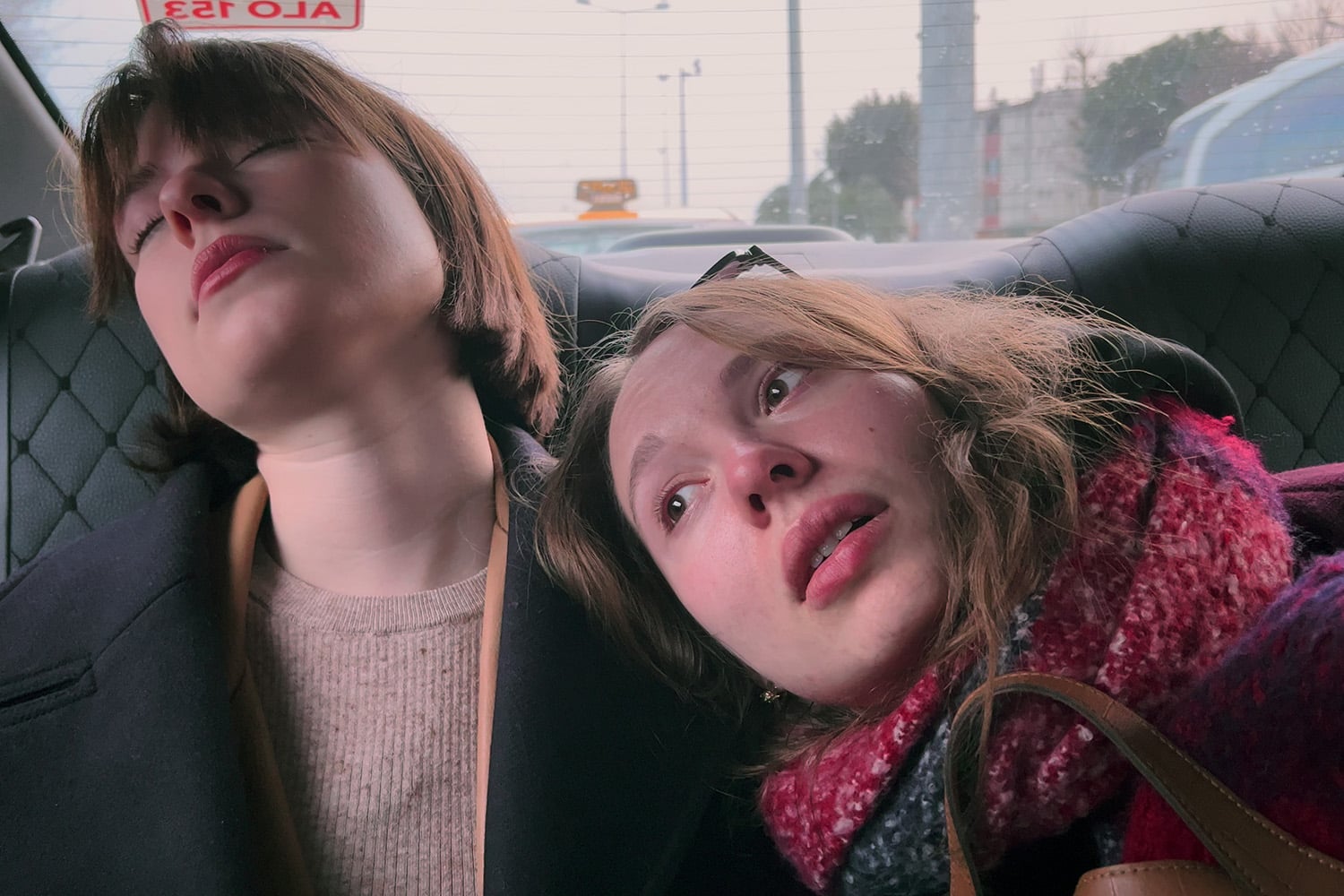
*Two women sit in the backseat of a car; the woman on the left leans her head back with her eyes closed, while the woman on the right wears a red patterned scarf and rests her head on the other's shoulder, looking up.*
Ksenia Mironova and Valeria Ratnikova take a cab ride in Istanbul, where they fled after Russia’s full-scale invasion of Ukraine, in March 2022. Cinetic
1. Get audio access with any FP subscription.
ALREADY AN FP SUBSCRIBER? LOGIN
What does a citizen owe to their country? And what if that country is Russia?
Russia’s War in Ukraine
Understanding the conflict four years in.
More on this topic
Such is the moral dilemma afflicting the characters of *My Undesirable Friends: Part II – Exile*, Julia Loktev’s sequel to her acclaimed 2024 documentary about the unraveling of Russia’s last independent television channel, Dozhd (or TV Rain), in the wake of the full-scale invasion of Ukraine. The first installment chronicles the channel’s final days in Moscow in March of 2022, and *Part II* follows its journalists into exile.
What does a citizen owe to their country? And what if that country is Russia?
Such is the moral dilemma afflicting the characters of *My Undesirable Friends: Part II – Exile*, Julia Loktev’s sequel to her acclaimed 2024 documentary about the unraveling of Russia’s last independent television channel, Dozhd (or TV Rain), in the wake of the full-scale invasion of Ukraine. The first installment chronicles the channel’s final days in Moscow in March of 2022, and *Part II* follows its journalists into exile.
Russia’s War in Ukraine
Understanding the conflict four years in.
More on this topic
Loktev’s protagonists, almost all women, fled as Russia imposed censorship laws that made their already dangerous jobs punishable by up to 15 years in prison. Within days of Dozhd’s disbandment, sometimes hours, they scooped up their laptops, pets, children, and underwear and flew wherever they could without a new visa—Istanbul, Tbilisi, Prague, Tel Aviv.
They resisted Russian President Vladimir Putin and his government, yet wherever they go, they remain citizens of a country that is invading and killing its neighbors and are held responsible for the war it wages in their name.
“You feel like it’s 1941 and you’re simultaneously the German and the Jew” says journalist Anna Nemzer, as she reloads her vape cartridge.
Loktev’s subjects are buffeted by cognitive dissonance and must constantly explain themselves—to their Georgian and Latvian hosts, who urge them to “tell Putin to stop the war”; to their Ukrainian sources, who resent the very language that they speak; to their Russian parents who tell them to stop writing anti-government “bullshit” and come home; and even to themselves, wondering what they could have done differently to stop their country’s slide into fascism, and whether their work matters when Russian missiles continue to rain down on Ukraine.
Loktev, who shot the film herself on an iPhone, gives these questions room. At six hours, this film is even longer than its predecessor—a bold choice—but the sheer accumulation of ordinary moments makes this exploration of exile intimate and compelling. For viewers willing to grapple with existential dilemmas and lucky enough to live near an art-house cinema, the movie’s length may be a boon. After all, its central questions are ones that take a lifetime to sort out.
Perhaps no one takes up these questions more bluntly than Elena Kostyuchenko of the recently shuttered *Novaya Gazeta*, where, during her tenure, four of her colleagues were murdered. “All of us … spent many years, thoroughly, in great detail, in very good, well-written articles describing the coming of fascism in Russia,” she says. “Well, there you fucking go. So we wrote all those articles.” Elsewhere, she is just as unsparing about the failure to stop Putin from turning Russia into what it is today: “We didn’t want to sacrifice our comfort.”
Alesya Marokhovskaya expresses similar unease as she recalls watching someone get beaten at a protest. “My job is to film,” she says. “You don’t rush in to defend the person. You film them, because, well, that’s your job.”
Despite those doubts, the journalists keep doing journalism. They provide truthful coverage of the war to Russian-speaking audiences through YouTube channels, podcasts, and eventually live broadcasts from Riga, Latvia, where Dozhd secured a broadcasting license. But they are walking on eggshells. A series of on-air missteps that led to questions about the station’s allegiances ultimately cost Dozhd its initial broadcasting license, forcing it to relocate to the Netherlands, where it operates today.
The Journalists Who Left Russia—But Can’t Escape It
An intimate documentary follows a group of Russian journalists in exile who remain determined to tell the truth to their country despite the heavy personal cost. The film exposes the moral contradiction they live with: they oppose the Kremlin, yet remain bound to a nation waging war on its neighbor.
Cross Lines newsroom
Share this article
#الصحافة الروسية#المنفى#دوجد#الحرب في أوكرانيا#الرقابة#جوليا لوكتيف
Original source: Foreign Policy