InternationalAvailable in English
The Key Election Issues Dividing Israelis as They Vote
Editorial
Cross Lines editing
Source
New York Times
New York Times
N
New York Times
Original Source
Four years of internal turmoil, war and growing global isolation have left Israelis deeply divided over their country's future ahead of Tuesday's national elections. Opinion polls suggest a close race in which neither Prime Minister Benjamin Netanyahu's party nor his opponents may secure a majority.
The Key Election Issues Dividing Israelis as They Vote - The New York Times
Skip to contentSkip to site index
Middle East
Log in
Tuesday, October 27, 2026
Today’s Paper
* Home
* + U.S.
+ International
+ Canada
+ Español
+ 中文
Israel’s Election
* liveUpdates
* What to Know
* How It Could Unfold
* The Candidates
* The Key Issues
* What’s at Stake
Advertisement
SKIP ADVERTISEMENT
You have a preview view of this article while we are checking your access. When we have confirmed access, the full article content will load.
Supported by
SKIP ADVERTISEMENT
The Issues Dividing Israelis as They Vote
The question of accountability for the government’s failures in the Hamas-led attacks on Oct. 7, 2023, looms over the election.
*
*
*
*
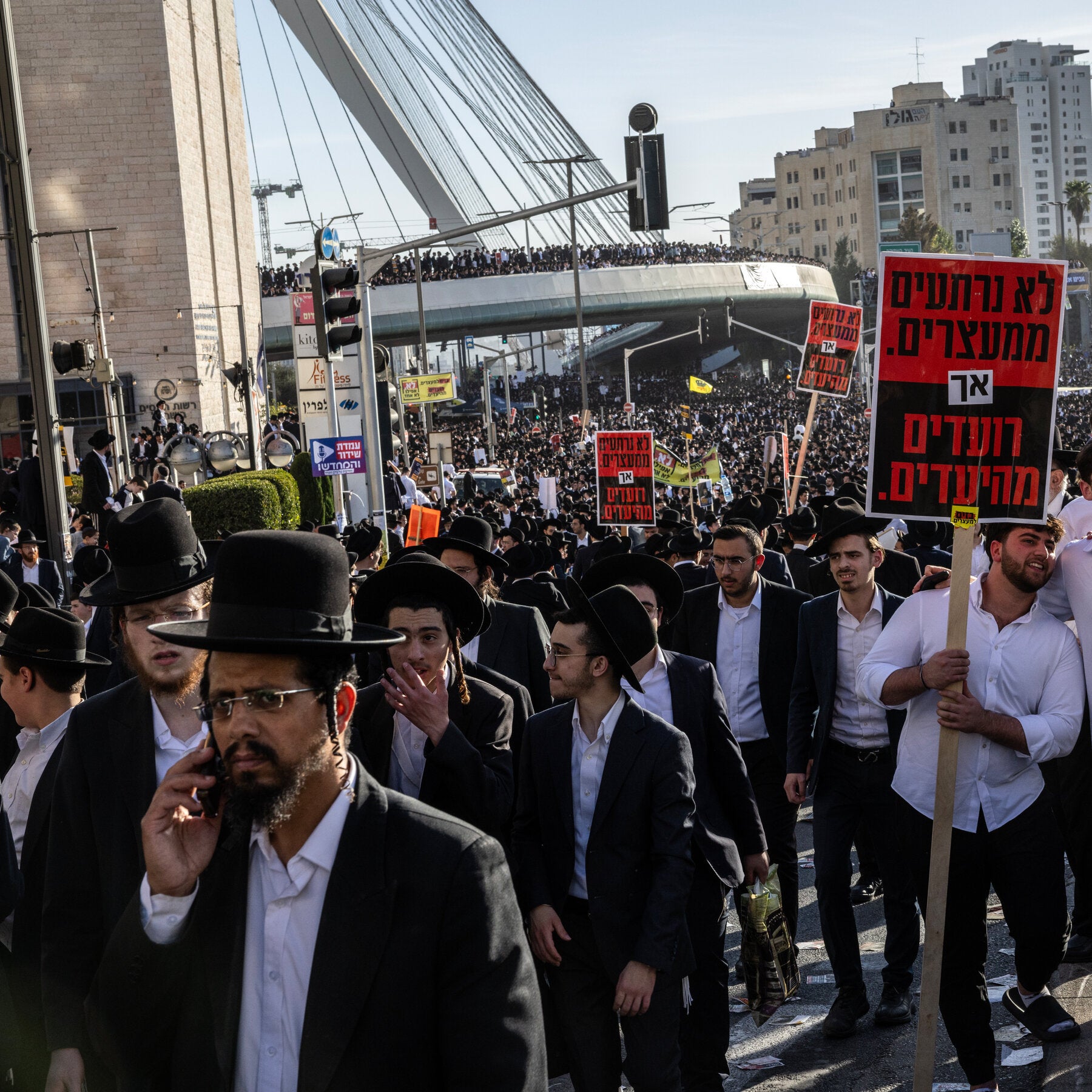
!Men in dark hats and suits gather on a street. A small group in white button-up shirts and dark trousers poses for a selfie. One of them holds and red and black sign with Hebrew lettering on it.
*Ultra-Orthodox Israelis protesting military conscription for members of their community in Jerusalem last year.Credit...David Guttenfelder/The New York Times*
By Aaron Boxerman
Reporting from Jerusalem
Oct. 27, 2026Updated 7:07 a.m. ET
See more of our coverage in your search results.Encuentra más de nuestra cobertura en los resultados de búsqueda. Add The New York Times on GoogleAgrega The New York Times en Google
Four years of internal turmoil, war and growing global isolation have left Israelis bitterly divided over their country’s future as they vote in national elections on Tuesday. Opinion polls suggest it will be a close race with the possibility that neither Prime Minister Benjamin Netanyahu’s party nor his opponents will secure a majority.
Many Israelis see the election as choice over whether to continue the rule of the country’s most hard-line, right-wing government ever, and the dominant fault line is Mr. Netanyahu himself. Critics say he has steered Israel to the lowest point in its history, while his supporters see him as an indispensable leader who has tried to destroy Israel’s enemies in Gaza, Lebanon and Iran.
Beyond Mr. Netanyahu’s leadership, however, there are plenty of issues polarizing the country.
Accountability for the Oct. 7 attacks
The Hamas-led attacks of Oct. 7, 2023, loom over the vote. About 1,200 Israelis were killed in the assault and 250 were seized as hostages, according to the Israeli authorities, making it the deadliest day in Israeli history.
Israel’s military response in Gaza leveled much of the enclave and killed more than 70,000 people, according to local officials, who do not distinguish between civilians and combatants. Most of the enclave’s two million residents were displaced, often multiple times.
Three years later, Israelis still have no official answer about why Mr. Netanyahu’s government and the Israeli military failed to foresee the attacks and then struggled to respond even as Hamas fighters invaded villages and a music festival, killing civilians.
Mr. Netanyahu’s opponents — a bloc of opposition parties and their leaders — have said they would establish an independent inquiry with broad authority, appointed by the president of the Supreme Court. Mr. Netanyahu has called for a “democratic and equitable” commission that would be made of an equal number of representatives of the coalition and the opposition.
---
Thank you for your patience while we verify access. If you are in Reader mode please exit and log into your Times account, or subscribe for all of The Times.
---
Thank you for your patience while we verify access.
Already a subscriber? Log in.
Want all of The Times? Subscribe.
Related Content
*
*
*
*
*
*
*
*
*
*
*
*
*
*
*
*
*
*
*
Advertisement
SKIP ADVERTISEMENT
Site Index
Site Information Navigation
* © 2026 The New York Times Company
+ NYTCo
+ Contact Us
+ Accessibility
+ Work with us
+ Advertise
+ T Brand Studio
+ Privacy Policy
+ Cookie Policy
+ Terms of Service
+ Terms of Sale
+ Site Map
+ Canada
+ International
+ Help
+ Subscriptions
+
Share Article
Tags:#إسرائيل#الانتخابات الإسرائيلية#بنيامين نتنياهو#هجمات السابع من أكتوبر#حماس#غزة
Source: New York Times
For Context
Related reads from the same topic or latest developments