Misuse of AI is brands’ top reputational threat, new survey says
The Guardian US
T
The Guardian US
Original Source
A new survey of over 150 public affairs leaders has identified AI misuse as the top reputational threat to companies, surpassing other risks including harm to children and geopolitical conflicts. The Global Risk Advisory Council warned businesses must take immediate preventive measures to protect their brands as AI deployment accelerates while public trust in the technology declines.
Misusing artificial intelligence (AI) is the top threat to companies’ reputations – more so than being accused of putting children in the way of mental, emotional or physical harm and issues exposed by the US-Israel war on Iran, among other brand risks, according to a new survey of more than 150 public affairs leaders.
Those findings in the new edition of the quarterly Reputation Risk Index, released on Tuesday, came on the heels of other perhaps more dire warnings from leading tech figures that AI in the wrong hands could precipitate existential threats on a mass scale such as nuclear war or destruction by bioweaponry.
The index’s publisher, the Global Risk Advisory Council, acknowledged that misuse of AI is not a particularly new concern in its area of focus, having been identified as a top worry repeatedly since the first edition of the survey in April 2025.
But the council said what is new is its attaching an advisory to its latest survey advising business leaders to “take immediate and decisive action to mitigate potential long-term brand damage” with respect to AI, as the technology has “become a clear and present danger to public confidence for many corporations”.
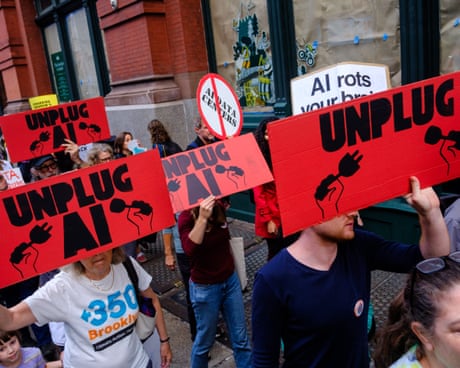
“As AI is rapidly deployed for productivity gains, we have also seen diminishing public trust in the technology, elevating the need for businesses to take measures to protect their brands,” council chair Isabel Casillas Guzman said in a statement. “In this environment, AI use or overuse can quickly damage a company’s standing with customers, investors, or other key stakeholders, making it essential for companies to deploy preventive tactics now.”
The creators of the council and the Reputation Risk Index – the Washington DC-based public affairs firm Global Situation Room – said such tactics include removing or reducing the use of AI content and relying on humans for customer service.
The Global Situation Room said that the Reputation Risk Index released on Tuesday surveyed former heads of state, government ministers and senior executives from more than 20 countries in five continents who were invited to participate after establishing their credentials in responding to crises.
Respondents to that survey collectively perceived the technology to have shown great promise in creating “organizational efficiency” – while simultaneously “accelerating safety and data concerns, hacks, fraud, straining privacy protections, upending the workforce, and dragging companies into court as lawsuits increasingly link AI products to real-world harm”.
Meanwhile, actions or accusations of putting children at risk of mental, emotional or physical harm also ranked highly behind misused AI – along with infringing individuals’ sensitive information, according to the index results published on Tuesday.
Unethical or illegal behavior used to gain a strategic advantage or profit and, separately, poor strategic or operational decisions resulting in reduced financial or public standing rounded out the top five, according to the index.
The index noted that its preceding edition released in July identified supply chain issues, divisive political stances and other factors associated with the war that the Trump’s administration started in Iran alongside Israel as the leading risk to companies’ reputations. But those surveyed indicated that those anxieties had eased as the conflict dragged out – and perhaps despite it remaining unresolved since it was launched in February.
“The geopolitical shock … hasn’t gone away, but its first, sharpest reputational blow has faded, and the conflict has slipped out of the top tier [of concerns] even as it grinds on,” Guzman said in a “message from the chair” included in the index.
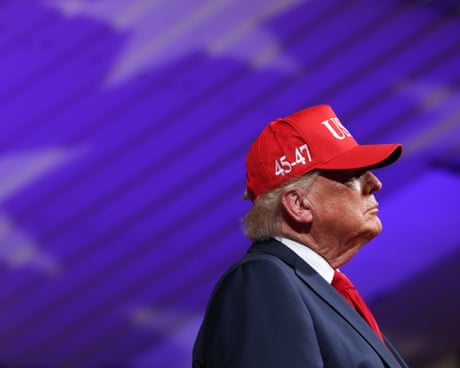
Guzman put out her message two days after Donald Trump’s administration named a new AI czar: director of national intelligence Jay Clayton. The president said in a social media post that Clayton would oversee an entity coordinating “the federal government’s engagement with consumers, public interest groups, religious organizations, critical infrastructure providers, and” AI tech companies.
Clayton had previously told federal lawmakers that AI was a “gamechanger” but also posed “a threat”.
Those findings in the new edition of the quarterly Reputation Risk Index, released on Tuesday, came on the heels of other perhaps more dire warnings from leading tech figures that AI in the wrong hands could precipitate existential threats on a mass scale such as nuclear war or destruction by bioweaponry.
The index’s publisher, the Global Risk Advisory Council, acknowledged that misuse of AI is not a particularly new concern in its area of focus, having been identified as a top worry repeatedly since the first edition of the survey in April 2025.
But the council said what is new is its attaching an advisory to its latest survey advising business leaders to “take immediate and decisive action to mitigate potential long-term brand damage” with respect to AI, as the technology has “become a clear and present danger to public confidence for many corporations”.
“As AI is rapidly deployed for productivity gains, we have also seen diminishing public trust in the technology, elevating the need for businesses to take measures to protect their brands,” council chair Isabel Casillas Guzman said in a statement. “In this environment, AI use or overuse can quickly damage a company’s standing with customers, investors, or other key stakeholders, making it essential for companies to deploy preventive tactics now.”
The creators of the council and the Reputation Risk Index – the Washington DC-based public affairs firm Global Situation Room – said such tactics include removing or reducing the use of AI content and relying on humans for customer service.
The Global Situation Room said that the Reputation Risk Index released on Tuesday surveyed former heads of state, government ministers and senior executives from more than 20 countries in five continents who were invited to participate after establishing their credentials in responding to crises.
Respondents to that survey collectively perceived the technology to have shown great promise in creating “organizational efficiency” – while simultaneously “accelerating safety and data concerns, hacks, fraud, straining privacy protections, upending the workforce, and dragging companies into court as lawsuits increasingly link AI products to real-world harm”.
Meanwhile, actions or accusations of putting children at risk of mental, emotional or physical harm also ranked highly behind misused AI – along with infringing individuals’ sensitive information, according to the index results published on Tuesday.
Unethical or illegal behavior used to gain a strategic advantage or profit and, separately, poor strategic or operational decisions resulting in reduced financial or public standing rounded out the top five, according to the index.
The index noted that its preceding edition released in July identified supply chain issues, divisive political stances and other factors associated with the war that the Trump’s administration started in Iran alongside Israel as the leading risk to companies’ reputations. But those surveyed indicated that those anxieties had eased as the conflict dragged out – and perhaps despite it remaining unresolved since it was launched in February.
“The geopolitical shock … hasn’t gone away, but its first, sharpest reputational blow has faded, and the conflict has slipped out of the top tier [of concerns] even as it grinds on,” Guzman said in a “message from the chair” included in the index.
Guzman put out her message two days after Donald Trump’s administration named a new AI czar: director of national intelligence Jay Clayton. The president said in a social media post that Clayton would oversee an entity coordinating “the federal government’s engagement with consumers, public interest groups, religious organizations, critical infrastructure providers, and” AI tech companies.
Clayton had previously told federal lawmakers that AI was a “gamechanger” but also posed “a threat”.
🔗 Share Article
Tags:#الذكاء الاصطناعي#سمعة الشركات#الأعمال التجارية#الاستراتيجية الإعلامية#تقييم المخاطر#الشؤون العامة
Source: The Guardian US
For Context
Related reads from the same topic or latest developments