India: Are food safety rules too much to swallow?
DW World
D
DW World
Original Source
India's food safety regulator is intensifying inspections at luxury hotels and major food companies, uncovering serious hygiene and labeling violations. The crackdown raises critical questions about enforcement effectiveness and whether routine scrutiny will become standard practice or remain reactive.
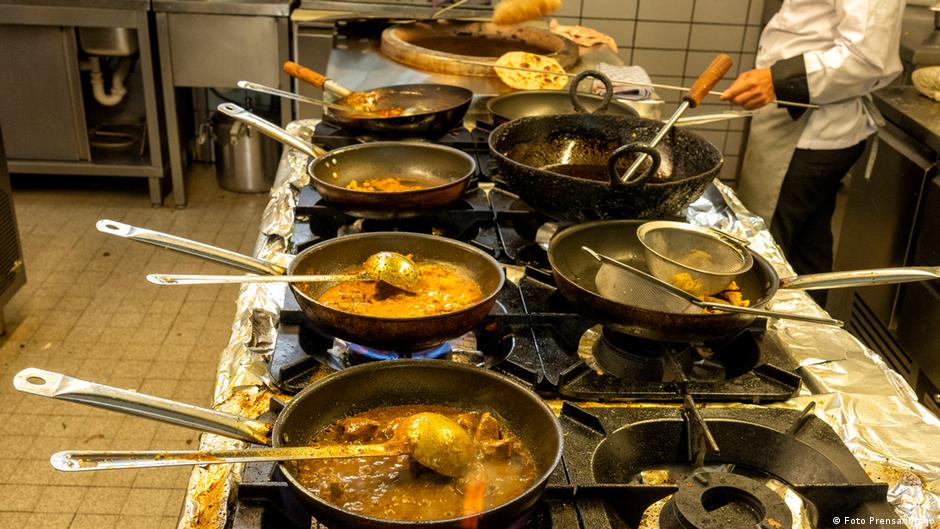
Over the past few months, inspectors from the Food Safety and Standards Authority of India (FSSAI) raided kitchens at five-star hotels in New Delhi's Aerocity, including the JW Marriott and Andaz.
The inspectors reported "several serious food safety and hygiene deficiencies" at the Andaz, including "improper segregation of vegetarian and non-vegetarian food, pest activity, poor sanitation, inadequate food handler hygiene and improper storage practices."
During their visit to the JW Marriott property, inspectors observed "serious hygiene and sanitation deficiencies," including "unclean utensils and food-contact surfaces, visible particulate matter in the drinking water" and "inadequate pest control."
Both hotels said they were cooperating fully with regulators and reviewing or implementing corrective measures while reaffirming their commitment to food safety, hygiene and guest well-being.
Beyond hotel kitchens
The FSSAI crackdown is not limited to premium restaurants. The regulator has also issued more than 150 notices since July to leading food and beverage companies, primarily over misleading advertisements, health claims and labeling.
The concerns highlighted by the recent raids are reflected in the FSSAI's testing data.
In 2023-24 and 2024-25, authorities tested about 170,000 food samples each year, with roughly 1 in 5 found to be non-conforming. In 2025-26, the testing showed only a slight improvement: Out of 223,808 samples, 40,023 failed to meet safety or labeling standards, according to provisional data given to Parliament in July. "Non-conforming" includes adulterated, substandard, contaminated and misbranded food.
Sunil Ghadiok, a veteran hotelier with more than 45 years in the industry and founder of Enserve Hospitality and Management Services, said the "lapses" did not reflect the industry as a whole.
"Lapses occur because food safety depends on execution at the operational level. The bigger concern is not the existence of standards, but the commitment to overall hygiene and food safety," Ghadiok told DW. He said inspections needed to become more regular and go where the risk is.
"A complaint or a high-profile inspection should not be what brings food safety back into focus."
Rules versus reality
India seems to be struggling to routinely enforce its food rules.
FSSAI's Hygiene Rating Scheme for restaurants is voluntary. Businesses can apply for a rating, but they are not required to participate. Food-safety enforcement can therefore become highly visible when something goes wrong, while routine scrutiny is less apparent.
Yash Bhanage, founder and COO of Hunger Inc Hospitality, which runs The Bombay Canteen, O Pedro and Bombay Sweet Shop, said food safety issues were not necessarily linked to the size or reputation of an establishment.
"Food safety cannot be treated as a checklist that you complete because an inspector is coming. It has to become part of the operating culture of a restaurant," Bhanage told DW. The challenge, he said, was maintaining standards across changing staff, suppliers, multiple shifts and busy periods.
However, Bhanage said the current attention on food safety was "an opportunity for the industry to move from a culture of compliance to a culture of prevention."
Manu Chandra, chef and restaurateur, said the industry's systems needed to reach further.
"A robust ecosystem has to be built around the [food and beverage] sector, which in many ways remains disorganized. There is a strong need for systems to be in place, and FSSAI's rules must trickle down, but right now they don't reach every corner of the industry," Chandra told DW. "Better traceability and stronger checks across the supply chain will help the sector in a big way."
The crackdown is already prompting some businesses to strengthen their own systems.
Samir Kuckreja of Tasanaya Hospitality, a Delhi-based hospitality consulting firm, said restaurants and hotels were seeking more help with food-safety audits, operating procedures and staff training.
"We first assess how the kitchen functions and tailor training to address specific shortcomings. Unannounced inspections followed by frequent audits usually offer better results than scheduled visits or self-assessment checklists," Kuckreja told DW.
India's food regulator also under scrutiny
The same question of enforcement extends beyond restaurants.
FSSAI's action against major food and beverage companies has included labeling and violations related to misleading claims.
Separately, the Supreme Court has been questioning the regulator over its proposed front-of-pack warning labels for packaged foods high in sugar, salt or fat.
The court has asked FSSAI to provide greater clarity on the scientific basis and thresholds for the proposed warnings, with the case due to return later this month.
The two issues are separate, but both raise a broader question about how effectively food safety rules are translated into practice.
The recent raids have shown what inspectors can uncover. The question now is whether that scrutiny becomes routine.
"The real measure of a mature food-safety system is what happens on the 364 days when nobody is inspecting you," said Bhanage.
Edited by: Keith Walker
The inspectors reported "several serious food safety and hygiene deficiencies" at the Andaz, including "improper segregation of vegetarian and non-vegetarian food, pest activity, poor sanitation, inadequate food handler hygiene and improper storage practices."
During their visit to the JW Marriott property, inspectors observed "serious hygiene and sanitation deficiencies," including "unclean utensils and food-contact surfaces, visible particulate matter in the drinking water" and "inadequate pest control."
Both hotels said they were cooperating fully with regulators and reviewing or implementing corrective measures while reaffirming their commitment to food safety, hygiene and guest well-being.
Beyond hotel kitchens
The FSSAI crackdown is not limited to premium restaurants. The regulator has also issued more than 150 notices since July to leading food and beverage companies, primarily over misleading advertisements, health claims and labeling.
The concerns highlighted by the recent raids are reflected in the FSSAI's testing data.
In 2023-24 and 2024-25, authorities tested about 170,000 food samples each year, with roughly 1 in 5 found to be non-conforming. In 2025-26, the testing showed only a slight improvement: Out of 223,808 samples, 40,023 failed to meet safety or labeling standards, according to provisional data given to Parliament in July. "Non-conforming" includes adulterated, substandard, contaminated and misbranded food.
Sunil Ghadiok, a veteran hotelier with more than 45 years in the industry and founder of Enserve Hospitality and Management Services, said the "lapses" did not reflect the industry as a whole.
"Lapses occur because food safety depends on execution at the operational level. The bigger concern is not the existence of standards, but the commitment to overall hygiene and food safety," Ghadiok told DW. He said inspections needed to become more regular and go where the risk is.
"A complaint or a high-profile inspection should not be what brings food safety back into focus."
Rules versus reality
India seems to be struggling to routinely enforce its food rules.
FSSAI's Hygiene Rating Scheme for restaurants is voluntary. Businesses can apply for a rating, but they are not required to participate. Food-safety enforcement can therefore become highly visible when something goes wrong, while routine scrutiny is less apparent.
Yash Bhanage, founder and COO of Hunger Inc Hospitality, which runs The Bombay Canteen, O Pedro and Bombay Sweet Shop, said food safety issues were not necessarily linked to the size or reputation of an establishment.
"Food safety cannot be treated as a checklist that you complete because an inspector is coming. It has to become part of the operating culture of a restaurant," Bhanage told DW. The challenge, he said, was maintaining standards across changing staff, suppliers, multiple shifts and busy periods.
However, Bhanage said the current attention on food safety was "an opportunity for the industry to move from a culture of compliance to a culture of prevention."
Manu Chandra, chef and restaurateur, said the industry's systems needed to reach further.
"A robust ecosystem has to be built around the [food and beverage] sector, which in many ways remains disorganized. There is a strong need for systems to be in place, and FSSAI's rules must trickle down, but right now they don't reach every corner of the industry," Chandra told DW. "Better traceability and stronger checks across the supply chain will help the sector in a big way."
The crackdown is already prompting some businesses to strengthen their own systems.
Samir Kuckreja of Tasanaya Hospitality, a Delhi-based hospitality consulting firm, said restaurants and hotels were seeking more help with food-safety audits, operating procedures and staff training.
"We first assess how the kitchen functions and tailor training to address specific shortcomings. Unannounced inspections followed by frequent audits usually offer better results than scheduled visits or self-assessment checklists," Kuckreja told DW.
India's food regulator also under scrutiny
The same question of enforcement extends beyond restaurants.
FSSAI's action against major food and beverage companies has included labeling and violations related to misleading claims.
Separately, the Supreme Court has been questioning the regulator over its proposed front-of-pack warning labels for packaged foods high in sugar, salt or fat.
The court has asked FSSAI to provide greater clarity on the scientific basis and thresholds for the proposed warnings, with the case due to return later this month.
The two issues are separate, but both raise a broader question about how effectively food safety rules are translated into practice.
The recent raids have shown what inspectors can uncover. The question now is whether that scrutiny becomes routine.
"The real measure of a mature food-safety system is what happens on the 364 days when nobody is inspecting you," said Bhanage.
Edited by: Keith Walker
🔗 Share Article
Tags:#الهند#سلامة الغذاء#التفتيش والمراقبة#الامتثال التنظيمي#قطاع الضيافة#الصحة العامة
Source: DW World
For Context
Related reads from the same topic or latest developments