Who are Yemen's Houthis and what do they want?
Middle East Eye
M
Middle East Eye
Original Source
Houthi attacks on Riyadh's King Khalid International Airport killed 13 people and wounded 309 in the deadliest assault on Saudi territory in over a decade. The strikes mark an escalation following the collapse of a UN-backed truce in July and the return of full-scale conflict in Yemen.
A strike on King Khalid International Airport in Riyadh on Saturday killed 13 people and wounded 309, in the deadliest attack on Saudi soil in more than a decade. Another strike on the airport on Sunday killed one more person.
The Saudi-led coalition blamed Yemen's Houthis and called the attack a war crime.
In a statement on Sunday, Houthi military spokesman Yahya Saree said the group had targeted the airport "in three stages" since Friday evening, closing it completely, and warned that Saudi airports were "unsafe", except those serving Mecca and Medina.
The attack capped a summer of escalation. A UN-backed truce that had largely frozen Yemen's war since 2022 broke down in July after Saudi Arabia bombed Sanaa airport, and the Houthis then declared a maritime blockade on the kingdom.
In September, the Sanaa-based group seized the Red Sea port of Mokha and pushed towards the Bab al-Mandab strait.
Saudi-backed government forces launched a counter-offensive in early October, and the UN special envoy has warned that Yemen has returned to full-scale war.
Heavy clashes are continuing around the strategically important city of Taiz, which sits above the Red Sea coast. The renewed fighting has displaced 130,000 people.
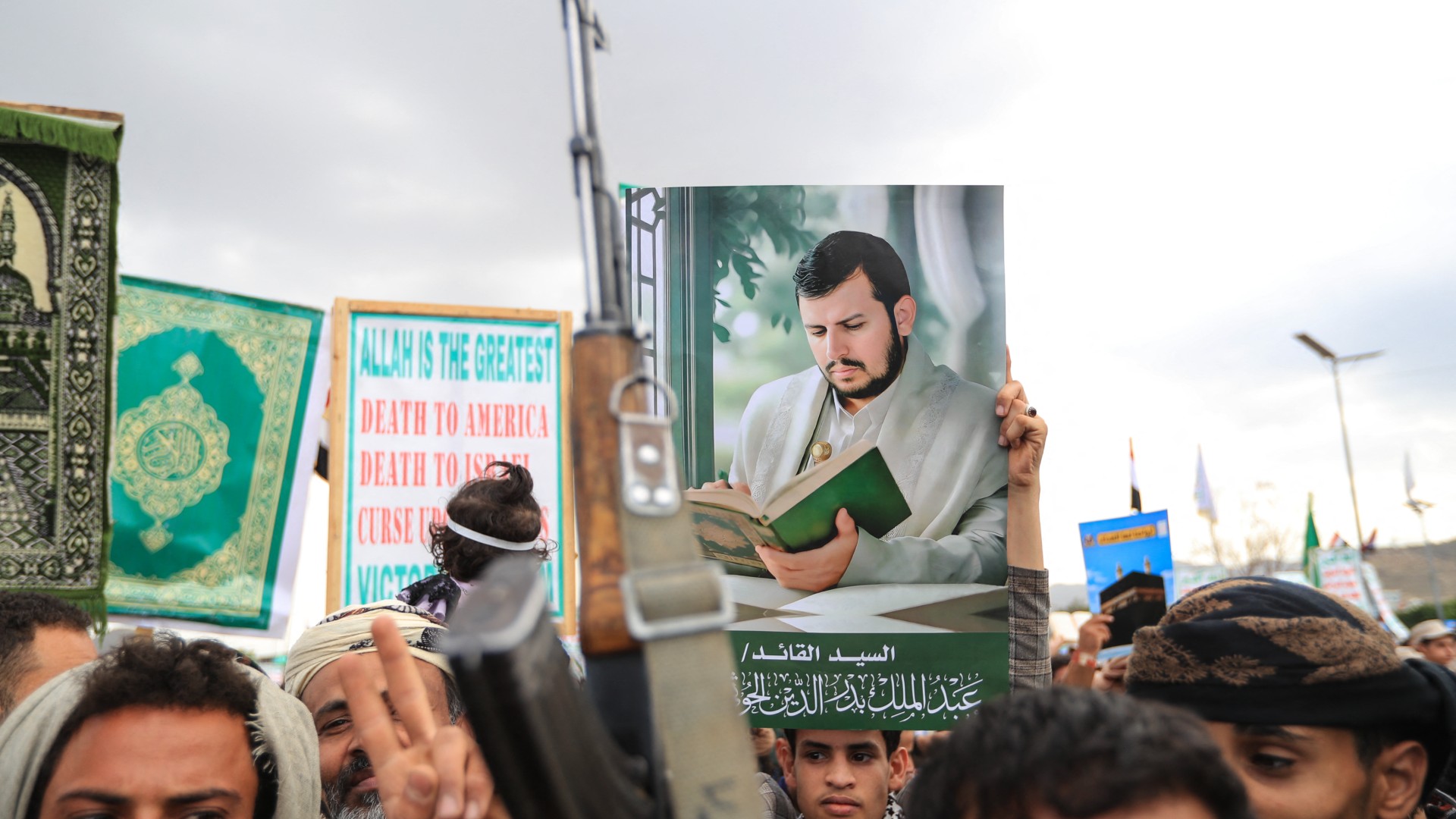
Who are the Houthis?
Officially known as Ansar Allah, or "helpers of God", the movement emerged in Yemen's far north in the 1990s around the cleric Hussein al-Houthi.
It is rooted in Zaydism, a branch of Shia Islam whose followers are a minority in Yemen but concentrated in the northern highlands.
The group fought six rounds of war with the government of former president Ali Abdullah Saleh between 2004 and 2010. Hussein al-Houthi was killed in the first and leadership passed to his brother, Abdul-Malik al-Houthi, who still heads the movement.
Houthi fighters captured Sanaa in September 2014, and in March 2015, Saudi Arabia led a military coalition into Yemen in support of the internationally recognised government, which has mostly governed from Riyadh and the southern Yemeni city of Aden.
By the time of the 2022 truce, the Houthis held about 30 percent of Yemen's territory but around 80 percent of its population.
What do they want?
At home, the Houthis have sought greater autonomy for the north and, increasingly, recognition as Yemen's governing authority.
They have demanded an end to what they describe as a Saudi land, air and naval siege of Yemen, a characterisation Riyadh rejects.
In his statement on Sunday, Saree said the group would keep escalating attacks deep inside Saudi Arabia under what he called an equation of "siege for siege, escalation for escalation", until the "aggression" stopped and the siege on Yemen was lifted.
Their ambitions, however, extend beyond Yemen.
The movement's frames its politics in opposition to US and Israeli power in the region.
Since 2023, the group has attacked more than 100 commercial ships in the Red Sea and Gulf of Aden, saying it was acting in solidarity with Palestinians during Israel's genocide in Gaza. The strikes were temporarily halted in May 2025 in a ceasefire deal with Washington, brokered by Oman.
In March, it began firing missiles at Israel in support of Tehran after the US and Israel launched their war on Iran.
How close are they to Iran?
Iran counts Ansar Allah as part of its "Axis of Resistance" alongside Hezbollah and Hamas, and has courted the group since at least the late 2000s. Much of the Houthi arsenal has been designed or supplied by Tehran.
The Houthis deny being an Iranian proxy.
After the Riyadh strikes, Iran's foreign ministry spokesman Esmaeil Baqaei said on Monday that Tehran was "deeply concerned" by the escalation between the Houthis and Saudi Arabia, and offered to help facilitate dialogue between the two sides.
How strong are they militarily?
The Houthi fighting force grew from an estimated 30,000 in 2015 to around 350,000 by 2024, although counts vary.
The group has no conventional navy and little air power, but it fields drones, explosive-laden drone boats and medium-range ballistic missiles that have reached targets about 2,000km away in Israel.
Why does the Bab al-Mandab matter?
The strait links the Red Sea to the Gulf of Aden and is the southern approach to the Suez Canal.
The Saudi-led coalition blamed Yemen's Houthis and called the attack a war crime.
In a statement on Sunday, Houthi military spokesman Yahya Saree said the group had targeted the airport "in three stages" since Friday evening, closing it completely, and warned that Saudi airports were "unsafe", except those serving Mecca and Medina.
The attack capped a summer of escalation. A UN-backed truce that had largely frozen Yemen's war since 2022 broke down in July after Saudi Arabia bombed Sanaa airport, and the Houthis then declared a maritime blockade on the kingdom.
In September, the Sanaa-based group seized the Red Sea port of Mokha and pushed towards the Bab al-Mandab strait.
Saudi-backed government forces launched a counter-offensive in early October, and the UN special envoy has warned that Yemen has returned to full-scale war.
Heavy clashes are continuing around the strategically important city of Taiz, which sits above the Red Sea coast. The renewed fighting has displaced 130,000 people.
Who are the Houthis?
Officially known as Ansar Allah, or "helpers of God", the movement emerged in Yemen's far north in the 1990s around the cleric Hussein al-Houthi.
It is rooted in Zaydism, a branch of Shia Islam whose followers are a minority in Yemen but concentrated in the northern highlands.
The group fought six rounds of war with the government of former president Ali Abdullah Saleh between 2004 and 2010. Hussein al-Houthi was killed in the first and leadership passed to his brother, Abdul-Malik al-Houthi, who still heads the movement.
Houthi fighters captured Sanaa in September 2014, and in March 2015, Saudi Arabia led a military coalition into Yemen in support of the internationally recognised government, which has mostly governed from Riyadh and the southern Yemeni city of Aden.
By the time of the 2022 truce, the Houthis held about 30 percent of Yemen's territory but around 80 percent of its population.
What do they want?
At home, the Houthis have sought greater autonomy for the north and, increasingly, recognition as Yemen's governing authority.
They have demanded an end to what they describe as a Saudi land, air and naval siege of Yemen, a characterisation Riyadh rejects.
In his statement on Sunday, Saree said the group would keep escalating attacks deep inside Saudi Arabia under what he called an equation of "siege for siege, escalation for escalation", until the "aggression" stopped and the siege on Yemen was lifted.
Their ambitions, however, extend beyond Yemen.
The movement's frames its politics in opposition to US and Israeli power in the region.
Since 2023, the group has attacked more than 100 commercial ships in the Red Sea and Gulf of Aden, saying it was acting in solidarity with Palestinians during Israel's genocide in Gaza. The strikes were temporarily halted in May 2025 in a ceasefire deal with Washington, brokered by Oman.
In March, it began firing missiles at Israel in support of Tehran after the US and Israel launched their war on Iran.
How close are they to Iran?
Iran counts Ansar Allah as part of its "Axis of Resistance" alongside Hezbollah and Hamas, and has courted the group since at least the late 2000s. Much of the Houthi arsenal has been designed or supplied by Tehran.
The Houthis deny being an Iranian proxy.
After the Riyadh strikes, Iran's foreign ministry spokesman Esmaeil Baqaei said on Monday that Tehran was "deeply concerned" by the escalation between the Houthis and Saudi Arabia, and offered to help facilitate dialogue between the two sides.
How strong are they militarily?
The Houthi fighting force grew from an estimated 30,000 in 2015 to around 350,000 by 2024, although counts vary.
The group has no conventional navy and little air power, but it fields drones, explosive-laden drone boats and medium-range ballistic missiles that have reached targets about 2,000km away in Israel.
Why does the Bab al-Mandab matter?
The strait links the Red Sea to the Gulf of Aden and is the southern approach to the Suez Canal.
🔗 Share Article
Tags:#الحوثيون#السعودية#اليمن#الصراع#البحر الأحمر#إيران
Source: Middle East Eye
For Context
Related reads from the same topic or latest developments