Right-Wing Trans Hate Comes for the WNBA
The Intercept
T
The Intercept
Original Source
Right-wing activists are orchestrating a manufactured culture war against transgender athletes, weaponizing women's basketball as a political battleground despite the absence of any trans women players in the league. Experts warn this campaign foreshadows broader attacks on women's rights.
Right-Wing Trans Hate Comes for the WNBA
Support Us
Support Us
* Iran
* Midterms
* Justice
* War on Gaza
* Unmasking ICE
* Chilling Dissent
Support Us
* Special Investigations
* Voices
* Podcasts
* TomDispatch
* Press Freedom Defense Fund
* Join the Newsletter
* About
* Contact Us
* How to Donate
* Impact & Reports
* Jobs
* Become a Source
*
*
*
*
*
*
*
*
*
© THE INTERCEPT
ALL RIGHTS RESERVED
Terms of UsePrivacy
* Iran
* Midterms
* Justice
* War on Gaza
* Unmasking ICE
* Chilling Dissent
* About
* Support Us
Right-Wing Trans Hate Comes for the WNBA
How the right’s attacks on trans people have infiltrated a sports league with no trans women.
The Intercept Briefing
August 28 2026, 6:00 a.m. ET
*
* Share on Facebook
*
* Share on X
* Share on LinkedIn
* Share on WhatsApp
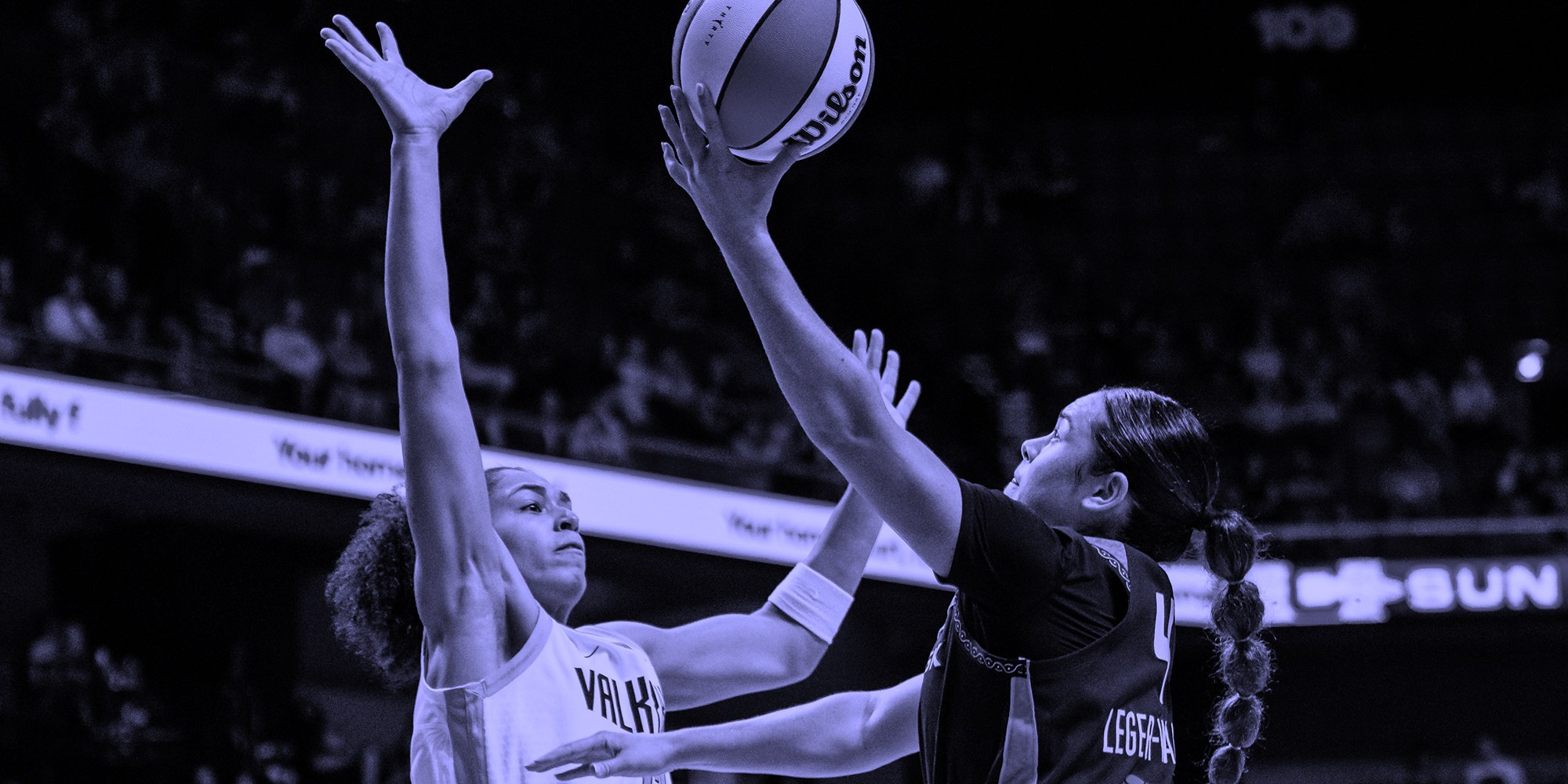
Charlisse Leger-Walker of the Connecticut Sun drives to the rim against Janelle Salaun of the Golden State Valkyries during a WNBA basketball game at Mohegan Sun Arena on Aug. 26, 2026, in Uncasville, Conn.
Photo: Joe Buglewicz/Getty Images
The WNBA is
having a moment. Viewership is up. Attendance for this year’s WNBA All-Star Game surpassed the NBA’s All-Star Game. Games and events can be viewed in a record number of places, from broadcast to cable and streaming. And just this week, Angel Reese of the Atlanta Dream set a single-game record.
But the stories about the WNBA capturing national attention in recent weeks are about none of that. Instead, the focus has been on two retired NBA players, including Enes Kanter Freedom, who showed up courtside at an August 23 Chicago Sky–Indiana Fever game wearing a T-shirt that said “Woman: noun. adult human female.”
“I don’t believe that he’s being genuine in any realm, in order to create this mass hysteria of sorts for an issue that’s actually simply a non-issue,” says Angela Perry, a WNBA content creator, tells The Intercept Briefing. “There are no trans women in the WNBA; there are none attempting to be in the WNBA.”
This week on The Intercept Briefing podcast, host Jessica Washington speaks to Perry and journalist Katelyn Burns about how the premier women’s professional basketball league has found itself at the center of a right-wing manufactured panic.
“The right has made such hay out of trans women in women’s sports that they need to keep inventing controversies in order to keep this issue front of mind,” says Burns who writes for the independent newsletter Burns Notice and co-hosts the Cancel Me, Daddy podcast.
“We have a midterm election coming up, and to be frank with you, the only thing that the right has done besides terrorizing immigrants is banning trans women from women’s sports. It’s at the center of almost all of their policies,” continues Burns. “They are inventing controversies about trans people in sports where there are no trans people involved.”
“This is about women in general. They’re already talking about not wanting women to have the right to vote,” says Perry. “This isn’t just about sports. There’s a political party trying to scale us back to what they perceive was a time where things were better. But really, it was when women were more controlled.”
“The bigger issue is that the people who think that they’re protected, it’s always going to get to the protected class eventually,” warns Perry. “Right now, the focus is trans, and people think they’re safe because ‘I’m not trans. I’m a cis woman and I’m protected.’ But it will impact you.”
For more, listen to the full conversation of The Intercept Briefing on Apple Podcasts, Spotify, YouTube, or wherever you listen.
**Transcript**
**Akela Lacy:** Welcome to The Intercept Briefing, I’m Akela Lacy, senior politics reporter at The Intercept.
**Jessica Washington:** And I’m Jessica Washington, politics reporter at The Intercept.
**AL:** Jessie, in typical August fashion, it feels like things have kind of slowed down somewhat with Washington in recess amid the final days of summer. I’m personally looking forward to having a little space to catch our breaths, as we enter the final midterm stretch before everyone turns their attention toward November. But there’s still plenty to cover.
ICE announced a record high in July arrests and deportations, and the Department of Homeland Security is continuing to expand its attacks on *legal* immigration. Nobody fret: Democrats are still melting down over Hasan Piker, while House Minority Leader Hakeem Jeffries met recently with Jared Kushner. A majority-Black town in Indiana went without power — and very little news attention — for two weeks. Dolly Parton died. And as we close out the sixth month of the Iran war, the Trump administration made a big show of announcing an “economic D-Day” with new sweeping sanctions and claiming, yet again, that this would end the war.
What have you been hearing on those fronts this week?
**JW:** I have to say: The second Trump administration is the only time in history where this could be considered a slow news cycle. But yeah, there’s a lot to talk about.
So with ICE, we have really been seeing a huge surge in detention and deportations. What I’ve been hearing from advocates on the ground is that it’s also coincided with an increase in violence. We’re seeing ICE use tactics like car kettling, even putting pepper spray and pepper balls into vehicles on the road. There’s a lot of dangerous activity happening with ICE — and a lot less coverage than we saw in January and February.
In regards to Gary, Indiana, I think it’s been heartening and disheartening of a news cycle, in the sense that at first people really were not paying attention. So for those who don’t know: Thousands of residents in the predominantly Black community \[were] without power for two weeks after a storm caused massive outages. There’s a lot of anger right now because people are simultaneously being squeezed by these exorbitant electricity bills, but then they also don’t have power to meet their basic survival needs — for their medical equipment, for their refrigeration of food.
It’s a story that we keep seeing repeat. In Jackson, Mississippi, for example, residents of the also predominantly Black community, have been plagued for years by both expensive water bills and years of water shut-offs and boil-water notices. We just keep seeing people squeezed at both ends. You somehow don’t have access to the resources you need to survive, and you’re practically paying a second mortgage for the pleasure.
**AL:** Jessie, you’ve also been reporting this week on the fallout over the fight regarding trans rights in sports. This is not my wheelhouse. Can you get us up to speed on what happened, and where does the fight stand now?
**JW:** I had a great conversation with Angela Perry, a content creator who covers the WNBA and women’s basketball, and Katelyn Burns, who writes for the independent newsletter Burns Notice — she also co-hosts the Cancel Me, Daddy podcast — about how the WNBA, a league with no trans women in it, found itself at the center of a right-wing culture war on transgender rights.
The right-wing outrage machine started off focusing on perceived racial grievances, claiming WNBA star Caitlin Clark, who is white, had been unfairly targeted because of her race. Media Matters recently documented Fox News spending over 13 1/2 hours of its summer coverage on the WNBA, largely focusing in on race and, more recently, trans inclusion.
Then enters WNBA player Sophie Cunningham, who has become a darling of the right, earning the moniker “MAGA Barbie.” Cunningham first started getting attention for these high-profile moments of her defending her teammate Clark on the court. Both Cunningham and Clark are white and straight in a league that is predominantly Black and LGBTQ+ inclusive. And these moments quickly became fodder, as noted, for a racist, right-wing backlash fueled by Fox News and other outlets against Black players, who were called overly aggressive and were subject to racist harassment
Support Us
Support Us
* Iran
* Midterms
* Justice
* War on Gaza
* Unmasking ICE
* Chilling Dissent
Support Us
* Special Investigations
* Voices
* Podcasts
* TomDispatch
* Press Freedom Defense Fund
* Join the Newsletter
* About
* Contact Us
* How to Donate
* Impact & Reports
* Jobs
* Become a Source
*
*
*
*
*
*
*
*
*
© THE INTERCEPT
ALL RIGHTS RESERVED
Terms of UsePrivacy
* Iran
* Midterms
* Justice
* War on Gaza
* Unmasking ICE
* Chilling Dissent
* About
* Support Us
Right-Wing Trans Hate Comes for the WNBA
How the right’s attacks on trans people have infiltrated a sports league with no trans women.
The Intercept Briefing
August 28 2026, 6:00 a.m. ET
*
* Share on Facebook
*
* Share on X
* Share on LinkedIn
* Share on WhatsApp
Charlisse Leger-Walker of the Connecticut Sun drives to the rim against Janelle Salaun of the Golden State Valkyries during a WNBA basketball game at Mohegan Sun Arena on Aug. 26, 2026, in Uncasville, Conn.
Photo: Joe Buglewicz/Getty Images
The WNBA is
having a moment. Viewership is up. Attendance for this year’s WNBA All-Star Game surpassed the NBA’s All-Star Game. Games and events can be viewed in a record number of places, from broadcast to cable and streaming. And just this week, Angel Reese of the Atlanta Dream set a single-game record.
But the stories about the WNBA capturing national attention in recent weeks are about none of that. Instead, the focus has been on two retired NBA players, including Enes Kanter Freedom, who showed up courtside at an August 23 Chicago Sky–Indiana Fever game wearing a T-shirt that said “Woman: noun. adult human female.”
“I don’t believe that he’s being genuine in any realm, in order to create this mass hysteria of sorts for an issue that’s actually simply a non-issue,” says Angela Perry, a WNBA content creator, tells The Intercept Briefing. “There are no trans women in the WNBA; there are none attempting to be in the WNBA.”
This week on The Intercept Briefing podcast, host Jessica Washington speaks to Perry and journalist Katelyn Burns about how the premier women’s professional basketball league has found itself at the center of a right-wing manufactured panic.
“The right has made such hay out of trans women in women’s sports that they need to keep inventing controversies in order to keep this issue front of mind,” says Burns who writes for the independent newsletter Burns Notice and co-hosts the Cancel Me, Daddy podcast.
“We have a midterm election coming up, and to be frank with you, the only thing that the right has done besides terrorizing immigrants is banning trans women from women’s sports. It’s at the center of almost all of their policies,” continues Burns. “They are inventing controversies about trans people in sports where there are no trans people involved.”
“This is about women in general. They’re already talking about not wanting women to have the right to vote,” says Perry. “This isn’t just about sports. There’s a political party trying to scale us back to what they perceive was a time where things were better. But really, it was when women were more controlled.”
“The bigger issue is that the people who think that they’re protected, it’s always going to get to the protected class eventually,” warns Perry. “Right now, the focus is trans, and people think they’re safe because ‘I’m not trans. I’m a cis woman and I’m protected.’ But it will impact you.”
For more, listen to the full conversation of The Intercept Briefing on Apple Podcasts, Spotify, YouTube, or wherever you listen.
**Transcript**
**Akela Lacy:** Welcome to The Intercept Briefing, I’m Akela Lacy, senior politics reporter at The Intercept.
**Jessica Washington:** And I’m Jessica Washington, politics reporter at The Intercept.
**AL:** Jessie, in typical August fashion, it feels like things have kind of slowed down somewhat with Washington in recess amid the final days of summer. I’m personally looking forward to having a little space to catch our breaths, as we enter the final midterm stretch before everyone turns their attention toward November. But there’s still plenty to cover.
ICE announced a record high in July arrests and deportations, and the Department of Homeland Security is continuing to expand its attacks on *legal* immigration. Nobody fret: Democrats are still melting down over Hasan Piker, while House Minority Leader Hakeem Jeffries met recently with Jared Kushner. A majority-Black town in Indiana went without power — and very little news attention — for two weeks. Dolly Parton died. And as we close out the sixth month of the Iran war, the Trump administration made a big show of announcing an “economic D-Day” with new sweeping sanctions and claiming, yet again, that this would end the war.
What have you been hearing on those fronts this week?
**JW:** I have to say: The second Trump administration is the only time in history where this could be considered a slow news cycle. But yeah, there’s a lot to talk about.
So with ICE, we have really been seeing a huge surge in detention and deportations. What I’ve been hearing from advocates on the ground is that it’s also coincided with an increase in violence. We’re seeing ICE use tactics like car kettling, even putting pepper spray and pepper balls into vehicles on the road. There’s a lot of dangerous activity happening with ICE — and a lot less coverage than we saw in January and February.
In regards to Gary, Indiana, I think it’s been heartening and disheartening of a news cycle, in the sense that at first people really were not paying attention. So for those who don’t know: Thousands of residents in the predominantly Black community \[were] without power for two weeks after a storm caused massive outages. There’s a lot of anger right now because people are simultaneously being squeezed by these exorbitant electricity bills, but then they also don’t have power to meet their basic survival needs — for their medical equipment, for their refrigeration of food.
It’s a story that we keep seeing repeat. In Jackson, Mississippi, for example, residents of the also predominantly Black community, have been plagued for years by both expensive water bills and years of water shut-offs and boil-water notices. We just keep seeing people squeezed at both ends. You somehow don’t have access to the resources you need to survive, and you’re practically paying a second mortgage for the pleasure.
**AL:** Jessie, you’ve also been reporting this week on the fallout over the fight regarding trans rights in sports. This is not my wheelhouse. Can you get us up to speed on what happened, and where does the fight stand now?
**JW:** I had a great conversation with Angela Perry, a content creator who covers the WNBA and women’s basketball, and Katelyn Burns, who writes for the independent newsletter Burns Notice — she also co-hosts the Cancel Me, Daddy podcast — about how the WNBA, a league with no trans women in it, found itself at the center of a right-wing culture war on transgender rights.
The right-wing outrage machine started off focusing on perceived racial grievances, claiming WNBA star Caitlin Clark, who is white, had been unfairly targeted because of her race. Media Matters recently documented Fox News spending over 13 1/2 hours of its summer coverage on the WNBA, largely focusing in on race and, more recently, trans inclusion.
Then enters WNBA player Sophie Cunningham, who has become a darling of the right, earning the moniker “MAGA Barbie.” Cunningham first started getting attention for these high-profile moments of her defending her teammate Clark on the court. Both Cunningham and Clark are white and straight in a league that is predominantly Black and LGBTQ+ inclusive. And these moments quickly became fodder, as noted, for a racist, right-wing backlash fueled by Fox News and other outlets against Black players, who were called overly aggressive and were subject to racist harassment
🔗 Share Article
Tags:#دوري السلات النسائي#حقوق المتحولين جنسياً#اليمين الأمريكي#الثقافة السياسية#التمييز العنصري#حقوق النساء
Source: The Intercept
For Context
Related reads from the same topic or latest developments


