Russia and North Korea Are Scrambling Trump’s Alliance Strategy
Foreign Policy

Foreign Policy
Original Source
Russia and North Korea's deepening military cooperation exposes a critical flaw in the Trump administration's burden-sharing strategy: threats cannot be regionalized when adversaries strengthen one another across theaters. The combat experience North Korea gains fighting alongside Russia in Ukraine will directly shape the military calculus for future conflicts in Northeast Asia.
Russia and North Korea Are Scrambling Trump's Alliance Strategy
!Foreign Policy
Foreign Policy
Get analysis and alerts more quickly in the mobile app.
Install
Back to Foreign Policy Magazine home page
* Latest
* Regions
+ Asia & the Pacific
+ China
+ Middle East & Africa
+ Americas
+ Europe
* Newsletters
Editors’ Picks
Evening roundup with our editors’ favorite stories of the day
!World Brief Icon
World Brief
Your guide to the most important world stories of the day
!China Brief Icon
China Brief
The latest news, analysis, and data from the country each week
Situation Report
Weekly update on what’s driving U.S. national security policy
FP Weekend
A curation of our best book reviews, deep dives, and other reads
!Africa Brief Icon
Africa Brief
Essential analysis of the stories shaping geopolitics on the continent
!South Asia Brief Icon
South Asia Brief
Weekly update on developments in India and its neighbors
The Reading List
Curated guides on geopolitics and current affairs
FP Bookshelf
A monthly guide to FP’s book reviews, excerpts, and reading recommendations
!Latin America Brief Icon
Latin America Brief
One-stop digest of politics, economics, and culture
!Southeast Asia Brief Icon
Southeast Asia Brief
A weekly dispatch with news from the region’s 11 countries
The New Geopolitics
A five-part masterclass in IR theory with Harvard Professor Stephen M. Walt
View All Newsletters
* FP Live
* Latest
* Trending:
* Iran war
* China's bet on AI
Search this website
* Preferences
* My FP Feed
* Saved Articles
* Newsletters
* Magazine Archive
* Subscription Settings
* FAQs
* Log Out
Sign In
Sign In
Partner with FP at UNGA81 Partner with FP at UNGA81
Subscribe SubscribePartner with FP at UNGA81 Partner with FP at UNGA81
Analysis:
Russia and North Korea Are Scrambling Trump’s Alliance Strategy
*
*
* Facebook
* Bluesky
* X
* LinkedIn
* WhatsApp
* Reddit
Save
1. Create an FP account to save articles to read later.
Sign Up
ALREADY AN FP SUBSCRIBER? LOGIN
PDF
1. **Downloadable PDFs** are a benefit of an FP subscription.
Subscribe Now
ALREADY AN FP SUBSCRIBER? LOGIN
Gift
*
*
* WhatsApp
1. Gifting articles is a subscriber benefit.
Subscribe Now
ALREADY AN FP SUBSCRIBER? LOGIN
2. This article is an Insider exclusive.
Contact us at [email protected] to learn about upgrade options, unlocking the ability to gift this article.
Analysis
Russia and North Korea Are Scrambling Trump’s Alliance Strategy
Pyongyang’s military is sharpening itself on Ukrainian battlefields. What does that mean for U.S. defense coordination?
By **Donggak Heo**, a member of the youth advisory group of the Republic of Korea’s Ministry of National Defense and a former policy aide at the country’s National Assembly. He is also a nonresident Kelly fellow at Pacific Forum.
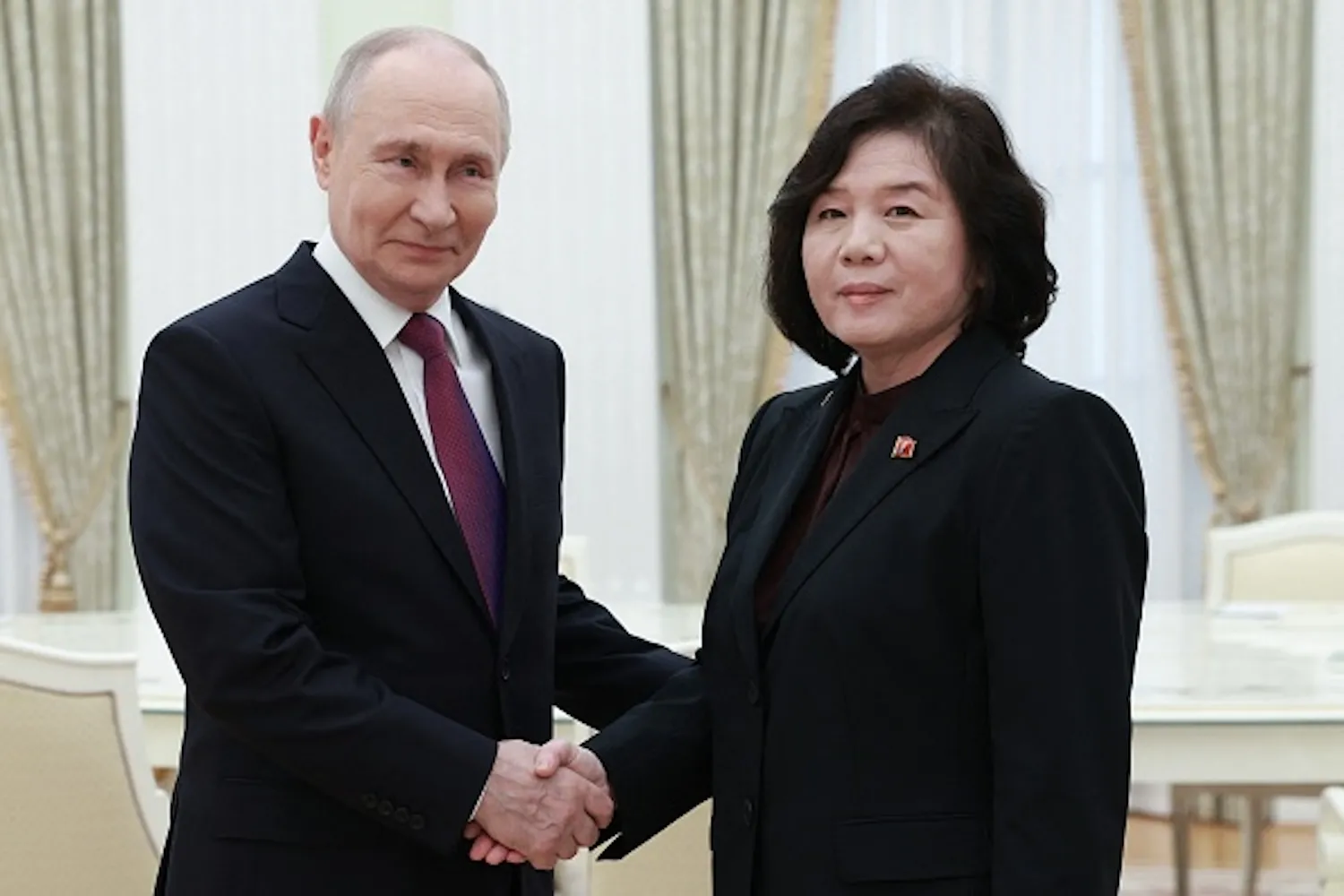
!Russian President Vladimir Putin shakes hands with North Korean Foreign Affairs Minister Choe Son Hui during a meeting in Moscow on July 19.
*Russian President Vladimir Putin shakes hands with North Korean Foreign Affairs Minister Choe Son Hui during a meeting in Moscow on July 19.*
Russian President Vladimir Putin shakes hands with North Korean Foreign Affairs Minister Choe Son Hui during a meeting in Moscow on July 19. Alexander Shcherbak/Pool/AFP via Getty Images
1. Get audio access with any FP subscription.
Subscribe Now
ALREADY AN FP SUBSCRIBER? LOGIN
August 28, 2026, 9:44 AM
U.S. President Donald Trump’s decision last week to scale down the annual Ulchi Freedom Shield military exercise with South Korea came at an awkward moment, given Ukrainian President Volodymyr Zelensky’s recent warning that North Korea’s military capacity is expanding. U.S. and South Korean military planners had designed this year’s drills to account for expected changes in modern warfare, including drones, GPS disruption, and cyberattacks. But the drills were also intended to help prepare for a North Korea that is gaining invaluable wartime experience from its involvement in Russia’s war with Ukraine.
In the days after Zelensky’s warning—when he also appealed to South Korea for help strengthening Ukraine’s air defenses—Russian forces used North Korean ballistic missiles in a deadly attack on the Ukrainian city of Zaporizhzhia, and Pyongyang launched another ballistic missile from its east coast. Lessons from that battlefield will shape any future military clash that the United States and South Korea might face in Northeast Asia.
U.S. President Donald Trump’s decision last week to scale down the annual Ulchi Freedom Shield military exercise with South Korea came at an awkward moment, given Ukrainian President Volodymyr Zelensky’s recent warning that North Korea’s military capacity is expanding. U.S. and South Korean military planners had designed this year’s drills to account for expected changes in modern warfare, including drones, GPS disruption, and cyberattacks. But the drills were also intended to help prepare for a North Korea that is gaining invaluable wartime experience from its involvement in Russia’s war with Ukraine.
In the days after Zelensky’s warning—when he also appealed to South Korea for help strengthening Ukraine’s air defenses—Russian forces used North Korean ballistic missiles in a deadly attack on the Ukrainian city of Zaporizhzhia, and Pyongyang launched another ballistic missile from its east coast. Lessons from that battlefield will shape any future military clash that the United States and South Korea might face in Northeast Asia.
These developments expose a problem for the Trump administration’s foreign-policy strategy—specifically, its intended division of defense labor among U.S. allies. Washington wants its allies to assume more responsibility for security in their own regions, freeing the United States to concentrate resources on other priorities. But Russia and North Korea are making those regions increasingly difficult to separate, leaving allies such as South Korea to carry more of the burden even as conflicts elsewhere make the threats that they face harder to deter. Washington can regionalize responsibility, but it cannot regionalize threats.
---
The Trump administration’s 2025 National Security Strategy calls for “burden-sharing and burden-shifting,” requesting that wealthy allies assume primary defense responsibility for their regions so the United States can act as the “convener” and “supporter” of a broader burden-sharing network. The 2026 National Defense Strategy (NDS) further specifies that European allies are expected to take primary responsibility for Europe’s conventional defense and the lead in supporting Ukraine. South Korea is described as capable of taking primary responsibility for deterring North Korea, with “critical but more limited” U.S. support.
According to the NDS, greater South Korean responsibility will grant U.S. forces more flexibility to respond to contingencies elsewhere in the Indo-Pacific. This has raised concerns in Seoul about South Korea’s ability to deter North Korea with less U.S. support.
The burden-sharing and -shifting strategy is part of the Trump administration’s answer to what the NDS calls the “simultaneity problem”: the possibility that U.S. adversaries could act together or exploit crises opportunistically, across several theaters. If allies can maintain favorable balances in their own regions, the logic goes, then Washington can focus its forces where they are most necessary rather than trying to dominate every zone at once.
The strengthening Russia-North Korea relationship exposes a complication with that logic, because one theater is changing the threat in another. North Korea has supplied Russia with large quantities of artillery ammunition and ballistic missiles, and it has sent roughly 15,000 troopsto Russia’s Kursk region. Zelensky recently claimed that another 30,000 to 50,000 troops could be deployed to Russia (which North Korean leader Kim Jong Un’s sister, Kim Yo Jong, has since dismissed as
!Foreign Policy
Foreign Policy
Get analysis and alerts more quickly in the mobile app.
Install
Back to Foreign Policy Magazine home page
* Latest
* Regions
+ Asia & the Pacific
+ China
+ Middle East & Africa
+ Americas
+ Europe
* Newsletters
Editors’ Picks
Evening roundup with our editors’ favorite stories of the day
!World Brief Icon
World Brief
Your guide to the most important world stories of the day
!China Brief Icon
China Brief
The latest news, analysis, and data from the country each week
Situation Report
Weekly update on what’s driving U.S. national security policy
FP Weekend
A curation of our best book reviews, deep dives, and other reads
!Africa Brief Icon
Africa Brief
Essential analysis of the stories shaping geopolitics on the continent
!South Asia Brief Icon
South Asia Brief
Weekly update on developments in India and its neighbors
The Reading List
Curated guides on geopolitics and current affairs
FP Bookshelf
A monthly guide to FP’s book reviews, excerpts, and reading recommendations
!Latin America Brief Icon
Latin America Brief
One-stop digest of politics, economics, and culture
!Southeast Asia Brief Icon
Southeast Asia Brief
A weekly dispatch with news from the region’s 11 countries
The New Geopolitics
A five-part masterclass in IR theory with Harvard Professor Stephen M. Walt
View All Newsletters
* FP Live
* Latest
* Trending:
* Iran war
* China's bet on AI
Search this website
* Preferences
* My FP Feed
* Saved Articles
* Newsletters
* Magazine Archive
* Subscription Settings
* FAQs
* Log Out
Sign In
Sign In
Partner with FP at UNGA81 Partner with FP at UNGA81
Subscribe SubscribePartner with FP at UNGA81 Partner with FP at UNGA81
Analysis:
Russia and North Korea Are Scrambling Trump’s Alliance Strategy
*
*
* Bluesky
* X
Save
1. Create an FP account to save articles to read later.
Sign Up
ALREADY AN FP SUBSCRIBER? LOGIN
1. **Downloadable PDFs** are a benefit of an FP subscription.
Subscribe Now
ALREADY AN FP SUBSCRIBER? LOGIN
Gift
*
*
1. Gifting articles is a subscriber benefit.
Subscribe Now
ALREADY AN FP SUBSCRIBER? LOGIN
2. This article is an Insider exclusive.
Contact us at [email protected] to learn about upgrade options, unlocking the ability to gift this article.
Analysis
Russia and North Korea Are Scrambling Trump’s Alliance Strategy
Pyongyang’s military is sharpening itself on Ukrainian battlefields. What does that mean for U.S. defense coordination?
By **Donggak Heo**, a member of the youth advisory group of the Republic of Korea’s Ministry of National Defense and a former policy aide at the country’s National Assembly. He is also a nonresident Kelly fellow at Pacific Forum.
!Russian President Vladimir Putin shakes hands with North Korean Foreign Affairs Minister Choe Son Hui during a meeting in Moscow on July 19.
*Russian President Vladimir Putin shakes hands with North Korean Foreign Affairs Minister Choe Son Hui during a meeting in Moscow on July 19.*
Russian President Vladimir Putin shakes hands with North Korean Foreign Affairs Minister Choe Son Hui during a meeting in Moscow on July 19. Alexander Shcherbak/Pool/AFP via Getty Images
1. Get audio access with any FP subscription.
Subscribe Now
ALREADY AN FP SUBSCRIBER? LOGIN
August 28, 2026, 9:44 AM
U.S. President Donald Trump’s decision last week to scale down the annual Ulchi Freedom Shield military exercise with South Korea came at an awkward moment, given Ukrainian President Volodymyr Zelensky’s recent warning that North Korea’s military capacity is expanding. U.S. and South Korean military planners had designed this year’s drills to account for expected changes in modern warfare, including drones, GPS disruption, and cyberattacks. But the drills were also intended to help prepare for a North Korea that is gaining invaluable wartime experience from its involvement in Russia’s war with Ukraine.
In the days after Zelensky’s warning—when he also appealed to South Korea for help strengthening Ukraine’s air defenses—Russian forces used North Korean ballistic missiles in a deadly attack on the Ukrainian city of Zaporizhzhia, and Pyongyang launched another ballistic missile from its east coast. Lessons from that battlefield will shape any future military clash that the United States and South Korea might face in Northeast Asia.
U.S. President Donald Trump’s decision last week to scale down the annual Ulchi Freedom Shield military exercise with South Korea came at an awkward moment, given Ukrainian President Volodymyr Zelensky’s recent warning that North Korea’s military capacity is expanding. U.S. and South Korean military planners had designed this year’s drills to account for expected changes in modern warfare, including drones, GPS disruption, and cyberattacks. But the drills were also intended to help prepare for a North Korea that is gaining invaluable wartime experience from its involvement in Russia’s war with Ukraine.
In the days after Zelensky’s warning—when he also appealed to South Korea for help strengthening Ukraine’s air defenses—Russian forces used North Korean ballistic missiles in a deadly attack on the Ukrainian city of Zaporizhzhia, and Pyongyang launched another ballistic missile from its east coast. Lessons from that battlefield will shape any future military clash that the United States and South Korea might face in Northeast Asia.
These developments expose a problem for the Trump administration’s foreign-policy strategy—specifically, its intended division of defense labor among U.S. allies. Washington wants its allies to assume more responsibility for security in their own regions, freeing the United States to concentrate resources on other priorities. But Russia and North Korea are making those regions increasingly difficult to separate, leaving allies such as South Korea to carry more of the burden even as conflicts elsewhere make the threats that they face harder to deter. Washington can regionalize responsibility, but it cannot regionalize threats.
---
The Trump administration’s 2025 National Security Strategy calls for “burden-sharing and burden-shifting,” requesting that wealthy allies assume primary defense responsibility for their regions so the United States can act as the “convener” and “supporter” of a broader burden-sharing network. The 2026 National Defense Strategy (NDS) further specifies that European allies are expected to take primary responsibility for Europe’s conventional defense and the lead in supporting Ukraine. South Korea is described as capable of taking primary responsibility for deterring North Korea, with “critical but more limited” U.S. support.
According to the NDS, greater South Korean responsibility will grant U.S. forces more flexibility to respond to contingencies elsewhere in the Indo-Pacific. This has raised concerns in Seoul about South Korea’s ability to deter North Korea with less U.S. support.
The burden-sharing and -shifting strategy is part of the Trump administration’s answer to what the NDS calls the “simultaneity problem”: the possibility that U.S. adversaries could act together or exploit crises opportunistically, across several theaters. If allies can maintain favorable balances in their own regions, the logic goes, then Washington can focus its forces where they are most necessary rather than trying to dominate every zone at once.
The strengthening Russia-North Korea relationship exposes a complication with that logic, because one theater is changing the threat in another. North Korea has supplied Russia with large quantities of artillery ammunition and ballistic missiles, and it has sent roughly 15,000 troopsto Russia’s Kursk region. Zelensky recently claimed that another 30,000 to 50,000 troops could be deployed to Russia (which North Korean leader Kim Jong Un’s sister, Kim Yo Jong, has since dismissed as
🔗 Share Article
Tags:#السياسة الخارجية الأمريكية#كوريا الشمالية#روسيا#الدفاع والأمن#استراتيجية التحالفات#شرق آسيا
Source: Foreign Policy
For Context
Related reads from the same topic or latest developments


