Israeli elections: Grotesque court spectacle sets a chilling precedent
Middle East Eye
M
Middle East Eye
Original Source
Israel's Supreme Court upheld the disqualification of an Arab candidate from parliamentary elections for the first time, setting a dangerous precedent for democratic norms. The decision was supported by both right-wing ruling parties and centrist Zionist opposition alike.
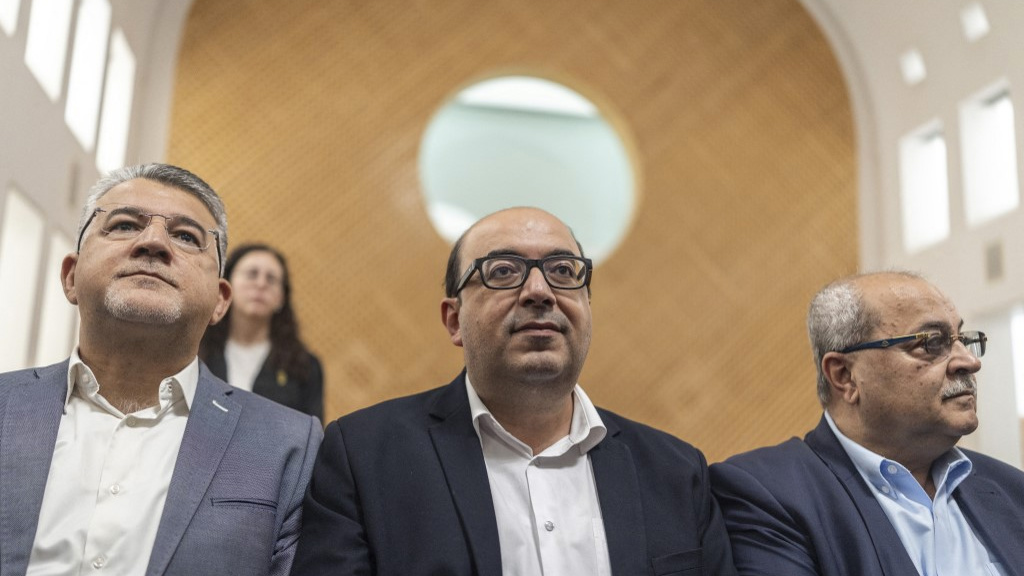
If Israel still had any masks left to conceal the depths of its anti-democratic descent, they were shattered in the Supreme Court last week, when an expanded panel of nine justices heard petitions seeking to disqualify all Arab lists from running for the Knesset, as well as two individual candidates: Hadash MK Ofer Cassif and Balad leader Sami Abu Shehadeh.
It is a ritual repeated in every Israeli election: the Central Elections Committee, a political body dominated by the governing coalition, broadly disqualifies Arab parties and individual candidates. The Supreme Court then overturns those decisions in order to preserve Israel’s image as a democratic state.
This time, in a profoundly dangerous precedent, the court did not overturn the committee’s decision regarding Abu Shehadeh, and upheld his disqualification from running for parliament.
This was not the only red line crossed. Under Israeli law, an individual or a list can be disqualified from running for the Knesset on several grounds, including rejecting Israel’s character as a Jewish and democratic state, and supporting armed struggle against the state.
Because the first could theoretically be used not only to disqualify Arab parties, but also non-Zionist ultra-Orthodox parties, the court has over the years found ways around this obstacle.
As for supporting armed struggle, right-wing parties have long invested enormous resources in trying to pin this accusation on Arab parties and representatives. Every statement made by a Palestinian candidate over the years, every article they have written, every social-media post or event they have attended - all are examined under a magnifying glass, in hopes of somehow proving such support.
This time, the “trophy” they found was an article by Abu Shehadeh published in Arabic on 8 October 2023, the day after the Hamas attack, offering an initial analysis of the event and the reality that had emerged.
Broad support
The petition to disqualify Abu Shehadeh on the basis of that article was filed by National Security Minister Itamar Ben Gvir, the ideological descendant of Meir Kahane, whose own movement was declared a terrorist organisation and outlawed in 1994 after the Ibrahimi Mosque massacre, carried out by Kahanist Baruch Goldstein.
The fact that the disqualification petition was filed by Ben Gvir - a man convicted of supporting a terrorist organisation, who had a framed photograph of the mass murderer Goldstein in his living room, and who celebrated his most recent birthday with a cake bearing a festive image of a noose, which has become his trademark - should alone have been enough for any decent party to reject it.
Yet this is where the first dangerous precedent emerged. Not only was the disqualification petition supported by the Jewish right and centrist opposition parties; it was also backed by the Democrats, led by Yair Golan - the party supposedly representing the Zionist left, which speaks frequently of “Jewish-Arab partnership”.
Like everything else in the only democracy in the universe, even the right to be morally outraged is a privilege reserved exclusively for Jews
That partnership, it turns out, can easily be tossed into the garbage the moment the Zionist left seeks to prove its loyalty to the other Zionist parties with which it hopes to form the next government. For that purpose, they will not hesitate to throw under the bus a Palestinian leader engaged in a political struggle for justice and equality.
The second precedent set in this case is far more serious and dangerous. For the first time, the Supreme Court did not overturn an entirely political decision by the Central Elections Committee, and instead upheld Abu Shehadeh’s disqualification from running for the Knesset.
This was despite the objections of a long list of prominent legal scholars, including former Deputy Attorney General Dina Zilber, law professor Barak Medina, academic David Harel, and even attorney Moshe Cohen-Eliya, a law professor associated with the far right, whose own analysis concluded that there was no legal basis for the disqualification.
But these proceedings had very little, if anything, to do with law. More than anything, the case resembled a Shin Bet interrogation.
I sat in the courtroom, stunned, and watched this disgraceful hearing for more than three hours. The Otzma Yehudit (Jewish Power) party was represented by Ben Gvir himself, and by attorney Ze’ev Wolf, previously convicted of murdering a Palestinian man in Jerusalem’s Old City in November 1992, two years after Rabbi Meir Kahane’s assassination. He was later pardoned.
This is the Jewish and democratic state: two men convicted of terrorism-related offences seeking to silence a Palestinian leader who has devoted his life to a political struggle for equality and justice. They are backed by the entire Zionist spectrum, from right to left, as well as by the Supreme Court itself.
Moral outrage
In a country whose political and military leaders have called for the indiscriminate annihilation of a civilian population and the starvation of more than two million people in Gaza; a country facing proceedings over the commission of genocide, and whose prime minister is the subject of an arrest warrant issued by the International Criminal Court; in this country, a Palestinian public leader is given a show trial over an article he wrote.
This is Israeli democracy in all its glory.
There is not enough space here to recount all the miserable absurdities that unfolded during the hearing. But one thing in particular caught my attention: the emotionally charged vocabulary used by the justices and the lawyers on the right. One expression, above all, kept recurring: “disgust”.
They felt disgust at the fairly elementary analysis in Abu Shehadeh’s article, in which he wrote that a pressure cooker eventually explodes, and that the struggle must be redirected towards political channels. They felt disgust at Cassif’s uncompromising solidarity with the oppressed. They felt disgust at Balad’s insistence on genuine equality and substantive democracy for everyone.
Even I, a candidate ranked 15th on the Joint List for the Knesset, representing Balad, apparently managed to arouse a measure of their disgust because of an article in which I wrote about the obligation to distinguish between combatants and a civilian population.
The genocide in Gaza, with its tens of thousands of victims and two million people starved and dehydrated, many of whom have been orphaned, maimed and displaced, needless to say, did not arouse their disgust.
The Palestinians sitting in the courtroom, stone-faced as they watched this grotesque spectacle unfold, expressed no disgust.
Perhaps their souls, crushed day after day beneath the wheels of Jewish supremacy, are simply too exhausted to feel disgust anymore. Or perhaps they know all too well that, like everything else in the only democracy in the universe, even the right to be morally outraged is a privilege reserved exclusively for Jews.
It is a ritual repeated in every Israeli election: the Central Elections Committee, a political body dominated by the governing coalition, broadly disqualifies Arab parties and individual candidates. The Supreme Court then overturns those decisions in order to preserve Israel’s image as a democratic state.
This time, in a profoundly dangerous precedent, the court did not overturn the committee’s decision regarding Abu Shehadeh, and upheld his disqualification from running for parliament.
This was not the only red line crossed. Under Israeli law, an individual or a list can be disqualified from running for the Knesset on several grounds, including rejecting Israel’s character as a Jewish and democratic state, and supporting armed struggle against the state.
Because the first could theoretically be used not only to disqualify Arab parties, but also non-Zionist ultra-Orthodox parties, the court has over the years found ways around this obstacle.
As for supporting armed struggle, right-wing parties have long invested enormous resources in trying to pin this accusation on Arab parties and representatives. Every statement made by a Palestinian candidate over the years, every article they have written, every social-media post or event they have attended - all are examined under a magnifying glass, in hopes of somehow proving such support.
This time, the “trophy” they found was an article by Abu Shehadeh published in Arabic on 8 October 2023, the day after the Hamas attack, offering an initial analysis of the event and the reality that had emerged.
Broad support
The petition to disqualify Abu Shehadeh on the basis of that article was filed by National Security Minister Itamar Ben Gvir, the ideological descendant of Meir Kahane, whose own movement was declared a terrorist organisation and outlawed in 1994 after the Ibrahimi Mosque massacre, carried out by Kahanist Baruch Goldstein.
The fact that the disqualification petition was filed by Ben Gvir - a man convicted of supporting a terrorist organisation, who had a framed photograph of the mass murderer Goldstein in his living room, and who celebrated his most recent birthday with a cake bearing a festive image of a noose, which has become his trademark - should alone have been enough for any decent party to reject it.
Yet this is where the first dangerous precedent emerged. Not only was the disqualification petition supported by the Jewish right and centrist opposition parties; it was also backed by the Democrats, led by Yair Golan - the party supposedly representing the Zionist left, which speaks frequently of “Jewish-Arab partnership”.
Like everything else in the only democracy in the universe, even the right to be morally outraged is a privilege reserved exclusively for Jews
That partnership, it turns out, can easily be tossed into the garbage the moment the Zionist left seeks to prove its loyalty to the other Zionist parties with which it hopes to form the next government. For that purpose, they will not hesitate to throw under the bus a Palestinian leader engaged in a political struggle for justice and equality.
The second precedent set in this case is far more serious and dangerous. For the first time, the Supreme Court did not overturn an entirely political decision by the Central Elections Committee, and instead upheld Abu Shehadeh’s disqualification from running for the Knesset.
This was despite the objections of a long list of prominent legal scholars, including former Deputy Attorney General Dina Zilber, law professor Barak Medina, academic David Harel, and even attorney Moshe Cohen-Eliya, a law professor associated with the far right, whose own analysis concluded that there was no legal basis for the disqualification.
But these proceedings had very little, if anything, to do with law. More than anything, the case resembled a Shin Bet interrogation.
I sat in the courtroom, stunned, and watched this disgraceful hearing for more than three hours. The Otzma Yehudit (Jewish Power) party was represented by Ben Gvir himself, and by attorney Ze’ev Wolf, previously convicted of murdering a Palestinian man in Jerusalem’s Old City in November 1992, two years after Rabbi Meir Kahane’s assassination. He was later pardoned.
This is the Jewish and democratic state: two men convicted of terrorism-related offences seeking to silence a Palestinian leader who has devoted his life to a political struggle for equality and justice. They are backed by the entire Zionist spectrum, from right to left, as well as by the Supreme Court itself.
Moral outrage
In a country whose political and military leaders have called for the indiscriminate annihilation of a civilian population and the starvation of more than two million people in Gaza; a country facing proceedings over the commission of genocide, and whose prime minister is the subject of an arrest warrant issued by the International Criminal Court; in this country, a Palestinian public leader is given a show trial over an article he wrote.
This is Israeli democracy in all its glory.
There is not enough space here to recount all the miserable absurdities that unfolded during the hearing. But one thing in particular caught my attention: the emotionally charged vocabulary used by the justices and the lawyers on the right. One expression, above all, kept recurring: “disgust”.
They felt disgust at the fairly elementary analysis in Abu Shehadeh’s article, in which he wrote that a pressure cooker eventually explodes, and that the struggle must be redirected towards political channels. They felt disgust at Cassif’s uncompromising solidarity with the oppressed. They felt disgust at Balad’s insistence on genuine equality and substantive democracy for everyone.
Even I, a candidate ranked 15th on the Joint List for the Knesset, representing Balad, apparently managed to arouse a measure of their disgust because of an article in which I wrote about the obligation to distinguish between combatants and a civilian population.
The genocide in Gaza, with its tens of thousands of victims and two million people starved and dehydrated, many of whom have been orphaned, maimed and displaced, needless to say, did not arouse their disgust.
The Palestinians sitting in the courtroom, stone-faced as they watched this grotesque spectacle unfold, expressed no disgust.
Perhaps their souls, crushed day after day beneath the wheels of Jewish supremacy, are simply too exhausted to feel disgust anymore. Or perhaps they know all too well that, like everything else in the only democracy in the universe, even the right to be morally outraged is a privilege reserved exclusively for Jews.
🔗 Share Article
Tags:#إسرائيل#انتخابات#محكمة عليا#التمييز#العرب الفلسطينيون#ديمقراطية
Source: Middle East Eye
For Context
Related reads from the same topic or latest developments