Death, displacement and disease: A young Gaza doctor on life under Israeli bombardment
Middle East Eye
M
Middle East Eye
Original Source
A young Palestinian doctor who survived Israel's war on Gaza recounts her harrowing experience volunteering at Nasser Hospital amid siege and bombardment after her family's second displacement. She describes hunger, psychological trauma, and the loss of relatives, while using relentless work as a coping mechanism.
A young Palestinian doctor who survived Israel's genocidal war on Gaza has described what it was like confronting the burden of patient care almost immediately after graduating.
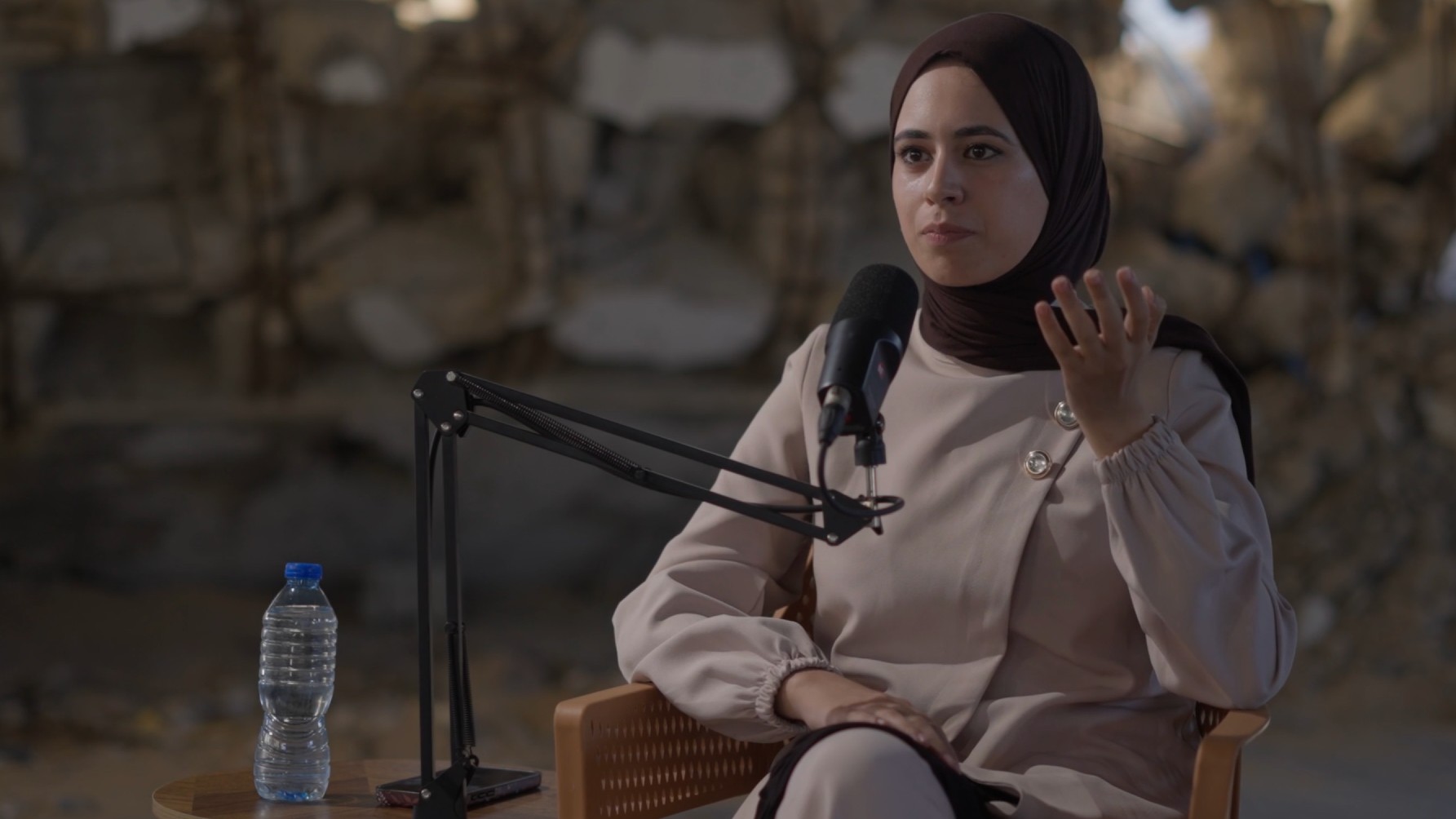
In the first episode of Middle East Eye's The Gaza Podcast, which was recorded inside the besieged enclave, Maryam Youssef described the horrors she experienced while volunteering - and living - at Nasser Hospital.
She recalls contracting chickenpox and being forced to isolate in a room for days as bombs rained down around her, and how she has struggled to process the trauma of surviving the conflict.
"I had chickenpox after two days [of starting work at the hospital]," Youssef told podcast host Hussam Tannera.
Asked how she continued working while infected, she said: "I basically locked myself in my room and I stayed there for four to five days."
"The first two days no one knew. On the third day, I think that's when people that I work with began to notice and they give me some meds."
Youssef said she began volunteering at Nasser Hospital shortly after her family was displaced for a second time, leaving her with nowhere else to go.
Nasser Hospital in Khan Younis, like many other hospitals in the enclave, had been repeatedly targeted, besieged and raided by Israeli forces - most notably during a major siege in early 2024 and a deadly double-tap air strike in August 2025.
'I think I was hungry most of the time, just as everyone else was'
- Maryam Youssef, doctor
Thousands of Palestinians had sought shelter at the hospital after repeated Israeli evacuation orders, leaving them trapped in a constant state of fear and uncertainty, unsure where they could go next or whether anywhere would be safe.
"I think I was hungry most of the time, just as everyone else was," Youssef said, when describing the period when Israel completely withheld food from entering Gaza.
"I was drained because even before this, I was staying in the hospital most of the time."
Even after a so-called ceasefire went into effect in October 2025, more than 1.7 million Palestinians remain internally displaced, according to the World Health Organization (WHO). Most are living in overcrowded conditions with inadequate shelter, water and sanitation, increasing the risk of disease outbreaks.
The UN body OCHA has reported that, as a result, 94 percent of the population are in urgent need of shelter and basic household assistance.
'Keeping myself busy'
The conditions Youssef described are part of a wider health crisis that has persisted since the ceasefire was announced in October 2025.
Last week, the WHO reported that only 19 of Gaza's 36 hospitals were even partially functioning, with none fully operational.
Essential medicines, diagnostics, medical equipment and fuel all remain in critically short supply.
"Because of the blockade, we have had to re-use single-use items," Youssef lamented.
"You have to hold scissors at a certain angle if you want them to cut. That's not the best way to treat patients, but because of our situation we have to think about what not only is best, but also what do we have."
According to Palestinian authorities, at least 1,402 Palestinians have been killed and nearly 5,000 injured since the ceasefire took hold.
Youssef said that during the height of the war she was struggling to process her grief after her uncle and his entire family were killed - only learning of their deaths through a Telegram news channel.
"I called my mother and my mom didn't answer - and then my sister told me yes, that's all [the information] I got," she said.
Youssef said her response was to immerse herself in treating wounded Palestinians.
"I went down to the ED [emergency department]. There were multiple casualties downstairs, and that's how I kept myself busy."
Survival mode
During the podcast, Youssef said she refused to tell her mother about contracting chickenpox until recently because she was still grieving the loss of her brother.
"I didn't feel okay to tell her this because she herself had lost her brother too, and she was worried," she said.
She described living through the war as entering a "survival mode" in which she had not yet fully processed what had happened.
"I don't think I have processed it," she said. "I'm in the, I'm processing right now."
"When you're in that mode, you're in survival mode, and I think I just recently unlocked this mode, because this is a very big burden, and I didn't feel like I am ready to face it yet."
Her account reflects the wider psychological toll of prolonged war and displacement in Gaza.
The WHO has previously estimated that about one million people in Gaza are in need of mental health and psychological support.
For Youssef, processing the experience has not meant leaving it behind. Now completing her internship at a primary healthcare clinic in Gaza, she said the international community still fails to understand what life is like after the ceasefire.
"Most people believe that life is going on and we have moved on," she said.
Instead, she said: "The war reshaped itself."
"It's not constant bombing all the time, and it's not like before when 100 people are dying every day... but it's still happening, it's a constant rhythm."
Slow road to reconstruction
Her comments come as the gulf between the conditions on the ground and the Board of Peace's plans for the enclave continue to widen.
The US-backed body unveiled a plan last week in which Jared Kushner, US President Donald Trump's son-in-law, acknowledged that progress had been slower than hoped.
The Board said some $18bn had been committed to rebuild the enclave, but only $280m had actually been called, highlighting the gap between pledges and the money available for projects.
It estimates that full recovery and reconstruction could cost about $71.4bn over the next decade.
'I make a lot of jokes about it [what life was like at the hospital]. I think this is my way of processing it, like dark humour. It's a defence mechanism'
- Maryam Youssef, doctor
Nickolay Mladenov, the Board's director-general, also acknowledged major political obstacles to implementing plans for the enclave.
"Discussions with Israel right now are not easy because of the elections there. Everything is a little bit more emotional, a little bit more politically sensitive," he said.
He also made clear that there was no fixed timeline for the plan.
"We are not bound by a calendar - we're bound by verification," he said.
For doctors such as Youssef, the consequences of the war extend far beyond the immediate demands of treating patients.
She said she was only now beginning to process what she had experienced, with humour becoming one of the ways she coped with the trauma.
"I make a lot of jokes about it [what life was like at the hospital]. I think this is my way of processing it, like dark humour. It's a defence mechanism."
In the first episode of Middle East Eye's The Gaza Podcast, which was recorded inside the besieged enclave, Maryam Youssef described the horrors she experienced while volunteering - and living - at Nasser Hospital.
She recalls contracting chickenpox and being forced to isolate in a room for days as bombs rained down around her, and how she has struggled to process the trauma of surviving the conflict.
"I had chickenpox after two days [of starting work at the hospital]," Youssef told podcast host Hussam Tannera.
Asked how she continued working while infected, she said: "I basically locked myself in my room and I stayed there for four to five days."
"The first two days no one knew. On the third day, I think that's when people that I work with began to notice and they give me some meds."
Youssef said she began volunteering at Nasser Hospital shortly after her family was displaced for a second time, leaving her with nowhere else to go.
Nasser Hospital in Khan Younis, like many other hospitals in the enclave, had been repeatedly targeted, besieged and raided by Israeli forces - most notably during a major siege in early 2024 and a deadly double-tap air strike in August 2025.
'I think I was hungry most of the time, just as everyone else was'
- Maryam Youssef, doctor
Thousands of Palestinians had sought shelter at the hospital after repeated Israeli evacuation orders, leaving them trapped in a constant state of fear and uncertainty, unsure where they could go next or whether anywhere would be safe.
"I think I was hungry most of the time, just as everyone else was," Youssef said, when describing the period when Israel completely withheld food from entering Gaza.
"I was drained because even before this, I was staying in the hospital most of the time."
Even after a so-called ceasefire went into effect in October 2025, more than 1.7 million Palestinians remain internally displaced, according to the World Health Organization (WHO). Most are living in overcrowded conditions with inadequate shelter, water and sanitation, increasing the risk of disease outbreaks.
The UN body OCHA has reported that, as a result, 94 percent of the population are in urgent need of shelter and basic household assistance.
'Keeping myself busy'
The conditions Youssef described are part of a wider health crisis that has persisted since the ceasefire was announced in October 2025.
Last week, the WHO reported that only 19 of Gaza's 36 hospitals were even partially functioning, with none fully operational.
Essential medicines, diagnostics, medical equipment and fuel all remain in critically short supply.
"Because of the blockade, we have had to re-use single-use items," Youssef lamented.
"You have to hold scissors at a certain angle if you want them to cut. That's not the best way to treat patients, but because of our situation we have to think about what not only is best, but also what do we have."
According to Palestinian authorities, at least 1,402 Palestinians have been killed and nearly 5,000 injured since the ceasefire took hold.
Youssef said that during the height of the war she was struggling to process her grief after her uncle and his entire family were killed - only learning of their deaths through a Telegram news channel.
"I called my mother and my mom didn't answer - and then my sister told me yes, that's all [the information] I got," she said.
Youssef said her response was to immerse herself in treating wounded Palestinians.
"I went down to the ED [emergency department]. There were multiple casualties downstairs, and that's how I kept myself busy."
Survival mode
During the podcast, Youssef said she refused to tell her mother about contracting chickenpox until recently because she was still grieving the loss of her brother.
"I didn't feel okay to tell her this because she herself had lost her brother too, and she was worried," she said.
She described living through the war as entering a "survival mode" in which she had not yet fully processed what had happened.
"I don't think I have processed it," she said. "I'm in the, I'm processing right now."
"When you're in that mode, you're in survival mode, and I think I just recently unlocked this mode, because this is a very big burden, and I didn't feel like I am ready to face it yet."
Her account reflects the wider psychological toll of prolonged war and displacement in Gaza.
The WHO has previously estimated that about one million people in Gaza are in need of mental health and psychological support.
For Youssef, processing the experience has not meant leaving it behind. Now completing her internship at a primary healthcare clinic in Gaza, she said the international community still fails to understand what life is like after the ceasefire.
"Most people believe that life is going on and we have moved on," she said.
Instead, she said: "The war reshaped itself."
"It's not constant bombing all the time, and it's not like before when 100 people are dying every day... but it's still happening, it's a constant rhythm."
Slow road to reconstruction
Her comments come as the gulf between the conditions on the ground and the Board of Peace's plans for the enclave continue to widen.
The US-backed body unveiled a plan last week in which Jared Kushner, US President Donald Trump's son-in-law, acknowledged that progress had been slower than hoped.
The Board said some $18bn had been committed to rebuild the enclave, but only $280m had actually been called, highlighting the gap between pledges and the money available for projects.
It estimates that full recovery and reconstruction could cost about $71.4bn over the next decade.
'I make a lot of jokes about it [what life was like at the hospital]. I think this is my way of processing it, like dark humour. It's a defence mechanism'
- Maryam Youssef, doctor
Nickolay Mladenov, the Board's director-general, also acknowledged major political obstacles to implementing plans for the enclave.
"Discussions with Israel right now are not easy because of the elections there. Everything is a little bit more emotional, a little bit more politically sensitive," he said.
He also made clear that there was no fixed timeline for the plan.
"We are not bound by a calendar - we're bound by verification," he said.
For doctors such as Youssef, the consequences of the war extend far beyond the immediate demands of treating patients.
She said she was only now beginning to process what she had experienced, with humour becoming one of the ways she coped with the trauma.
"I make a lot of jokes about it [what life was like at the hospital]. I think this is my way of processing it, like dark humour. It's a defence mechanism."
🔗 Share Article
Tags:#غزة#الطب#الصراع الإسرائيلي الفلسطيني#الصحة النفسية#النزوح#الحصار
Source: Middle East Eye
For Context
Related reads from the same topic or latest developments