Driver in Munich Car Ramming Attack Given Life in Prison
New York Times
N
New York Times
Original Source
A Munich court sentenced a 25-year-old Afghan refugee to life imprisonment for a 2025 car ramming attack that killed two people and wounded dozens. The judges ruled that religious extremism motivated the assault and determined he would not be eligible for parole after 15 years, as is standard in German life sentences.
Driver in Munich Car Ramming Attack Given Life in Prison - The New York Times
Skip to contentSkip to site index
Europe
Today’s Paper
Europe
|
Driver in Munich Car Ramming Attack Given Life in Prison
https://www.nytimes.com/2026/08/06/world/europe/munich-car-attack-driver-sentence.html
*
*
*
Advertisement
SKIP ADVERTISEMENT
Supported by
SKIP ADVERTISEMENT
Driver in Munich Car Ramming Attack Given Life in Prison
The attack, in 2025, was one of several carried out in Germany in recent years by men with migrant backgrounds, shaking the public’s sense of safety.
Listen · 2:47 min
*
*
*
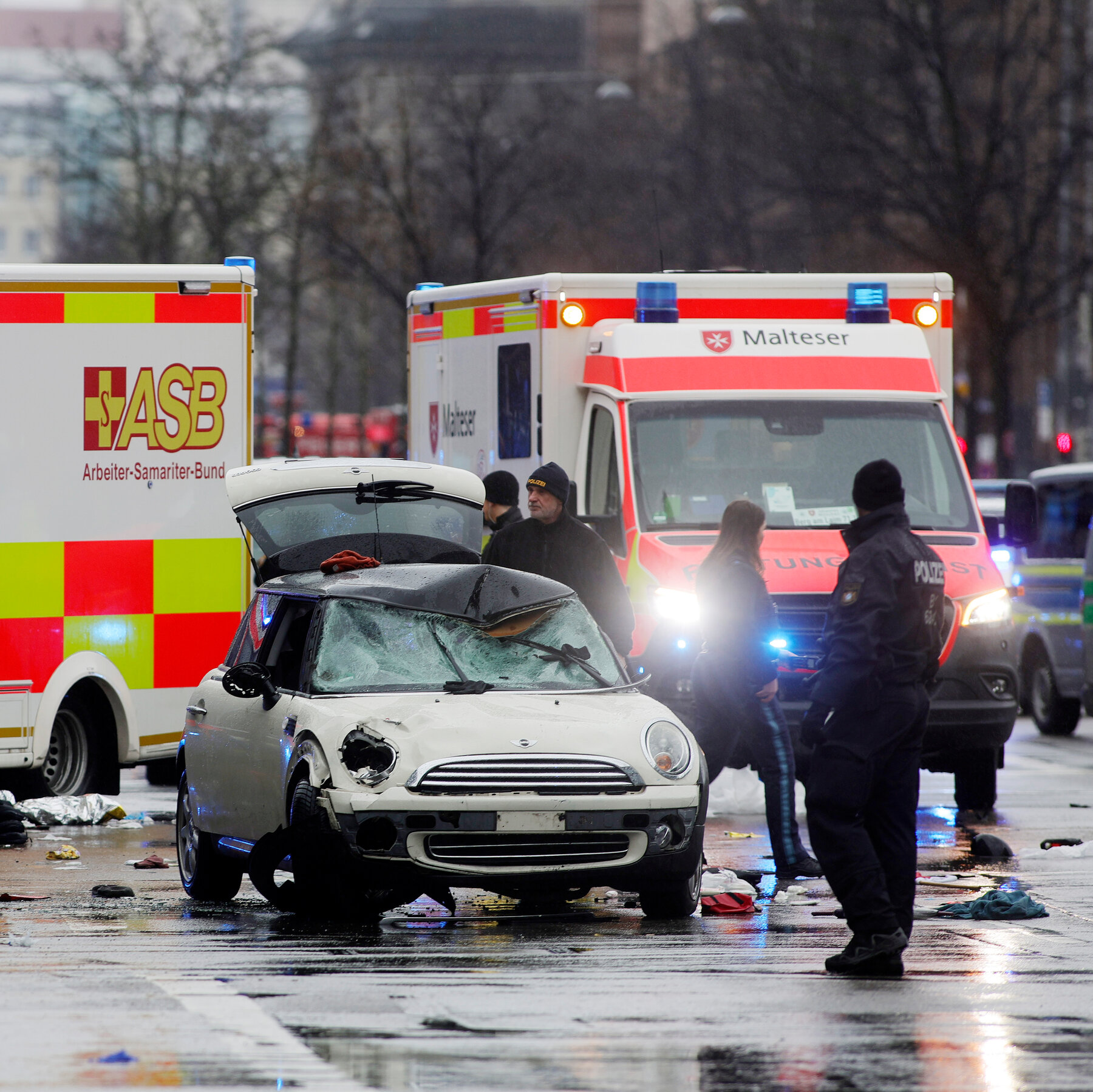
!Several emergency vehicles are parked behind a white Mini Cooper with a broken windshield and headlight. Emergency responders stand nearby.
*Police officers and emergency workers at the site of a car ramming in Munich in 2025.
Credit...
Johannes Simon/Getty Images*
By
Christopher F. Schuetze
Reporting from Berlin
Aug. 6, 2026, 8:46 a.m. ET
See more of our coverage in your search results. Encuentra más de nuestra cobertura en los resultados de búsqueda. Add The New York Times on Google Agrega The New York Times en Google
A 25-year-old Afghan refugee who deliberately crashed his car into a crowd of people on a street in Munich in 2025, killing two people and wounding dozens more, was sentenced on Thursday to life in prison.
The judges at a court in Munich said that the man had been motivated by religious extremism and ruled that he would not automatically be eligible for parole after 15 years, as is normally the case with life sentences in Germany.
The sentence comes as a series of unconnected attacks carried out by men with migrant backgrounds has shaken Germans’ sense of public safety and helped turn public opinion against refugees, ultimately boosting the country’s far-right, anti-immigration Alternative for Germany party.
The latest such attack was last month, when a German citizen of Lebanese descent with a history of criminal convictions and terrorist aspirations rammed a van into revelers leaving a gay Pride celebration in Berlin, killing one woman and injuring 29 other people.
In June, a court in Magdeburg handed down a life sentence to a Saudi-born psychologist who had plowed a rental car into a Christmas market in December 2024, killing six and wounding hundreds.
The assailant in the Munich attack, whom authorities have identified only as Farhad N. in keeping with German privacy rules, drove his white Mini Cooper into a marching crowd of around 1,400 trade union supporters. Police officers who were already on the scene because they were accompanying the march quickly arrested him. Over 40 people were seriously wounded, and a woman and her 2-year-old daughter died days later in the hospital.
Farhad N.’s asylum claim had been rejected in 2020, but he was allowed to stay and work in Germany because it was considered too dangerous to deport him to Afghanistan, which is controlled by the Taliban, according to investigations by Der Spiegel, a German news outlet.
On the surface, the man appeared integrated into German society. He worked as a security guard and had thousands of followers on Instagram, where he was a fitness influencer. But in their ruling, the judges said that he held an extremist religious worldview that motivated his attack.
“The defendant intended to perform an act pleasing to God and to prove himself to be a good Muslim in the eyes of Allah, himself and his family,” Michael Höhne, the lead judge, said as he read out the sentence on Thursday.
Christopher F. Schuetze is a reporter for The Times based in Berlin, covering politics, society and culture in Germany, Austria and Switzerland.
*
*
*
Related Content
*
*
*
*
*
*
*
*
*
*
*
*
*
*
*
*
*
*
*
Advertisement
SKIP ADVERTISEMENT
Site Index
Site Information Navigation
* ©2026 The New York Times Company
* NYTCo
* Contact Us
* Accessibility
* Work with us
* Advertise
* T Brand Studio
* Privacy Policy
* Cookie Policy
* Terms of Service
* Terms of Sale
* Site Map
* Canada
* International
* Help
* Subscriptions
* Manage Privacy Preferences
Skip to contentSkip to site index
Europe
Today’s Paper
Europe
|
Driver in Munich Car Ramming Attack Given Life in Prison
https://www.nytimes.com/2026/08/06/world/europe/munich-car-attack-driver-sentence.html
*
*
*
Advertisement
SKIP ADVERTISEMENT
Supported by
SKIP ADVERTISEMENT
Driver in Munich Car Ramming Attack Given Life in Prison
The attack, in 2025, was one of several carried out in Germany in recent years by men with migrant backgrounds, shaking the public’s sense of safety.
Listen · 2:47 min
*
*
*
!Several emergency vehicles are parked behind a white Mini Cooper with a broken windshield and headlight. Emergency responders stand nearby.
*Police officers and emergency workers at the site of a car ramming in Munich in 2025.
Credit...
Johannes Simon/Getty Images*
By
Christopher F. Schuetze
Reporting from Berlin
Aug. 6, 2026, 8:46 a.m. ET
See more of our coverage in your search results. Encuentra más de nuestra cobertura en los resultados de búsqueda. Add The New York Times on Google Agrega The New York Times en Google
A 25-year-old Afghan refugee who deliberately crashed his car into a crowd of people on a street in Munich in 2025, killing two people and wounding dozens more, was sentenced on Thursday to life in prison.
The judges at a court in Munich said that the man had been motivated by religious extremism and ruled that he would not automatically be eligible for parole after 15 years, as is normally the case with life sentences in Germany.
The sentence comes as a series of unconnected attacks carried out by men with migrant backgrounds has shaken Germans’ sense of public safety and helped turn public opinion against refugees, ultimately boosting the country’s far-right, anti-immigration Alternative for Germany party.
The latest such attack was last month, when a German citizen of Lebanese descent with a history of criminal convictions and terrorist aspirations rammed a van into revelers leaving a gay Pride celebration in Berlin, killing one woman and injuring 29 other people.
In June, a court in Magdeburg handed down a life sentence to a Saudi-born psychologist who had plowed a rental car into a Christmas market in December 2024, killing six and wounding hundreds.
The assailant in the Munich attack, whom authorities have identified only as Farhad N. in keeping with German privacy rules, drove his white Mini Cooper into a marching crowd of around 1,400 trade union supporters. Police officers who were already on the scene because they were accompanying the march quickly arrested him. Over 40 people were seriously wounded, and a woman and her 2-year-old daughter died days later in the hospital.
Farhad N.’s asylum claim had been rejected in 2020, but he was allowed to stay and work in Germany because it was considered too dangerous to deport him to Afghanistan, which is controlled by the Taliban, according to investigations by Der Spiegel, a German news outlet.
On the surface, the man appeared integrated into German society. He worked as a security guard and had thousands of followers on Instagram, where he was a fitness influencer. But in their ruling, the judges said that he held an extremist religious worldview that motivated his attack.
“The defendant intended to perform an act pleasing to God and to prove himself to be a good Muslim in the eyes of Allah, himself and his family,” Michael Höhne, the lead judge, said as he read out the sentence on Thursday.
Christopher F. Schuetze is a reporter for The Times based in Berlin, covering politics, society and culture in Germany, Austria and Switzerland.
*
*
*
Related Content
*
*
*
*
*
*
*
*
*
*
*
*
*
*
*
*
*
*
*
Advertisement
SKIP ADVERTISEMENT
Site Index
Site Information Navigation
* ©2026 The New York Times Company
* NYTCo
* Contact Us
* Accessibility
* Work with us
* Advertise
* T Brand Studio
* Privacy Policy
* Cookie Policy
* Terms of Service
* Terms of Sale
* Site Map
* Canada
* International
* Help
* Subscriptions
* Manage Privacy Preferences
🔗 Share Article
Tags:#ألمانيا#ميونخ#هجوم دهس#لاجئ أفغاني#التطرف الديني#الأمان العام
Source: New York Times
For Context
Related reads from the same topic or latest developments


