InternationalAvailable in English
French authorities struggle to regain control after deadly weekend of protests
Editorial
Cross Lines editing
Source
Middle East Eye
Middle East Eye
M
Middle East Eye
Original Source
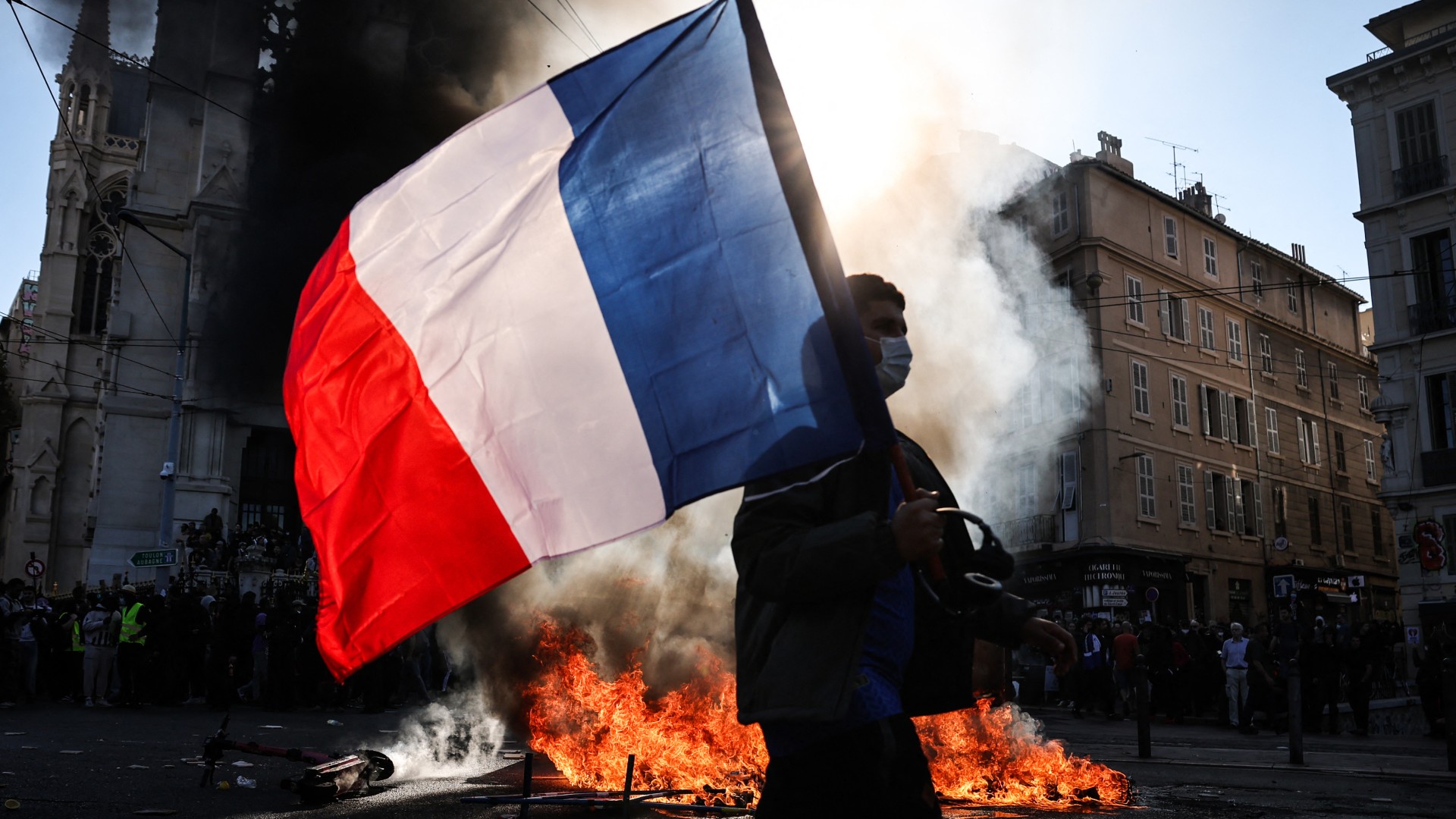
France is grappling with a weekend of violence that left two people dead and thousands injured, as police struggled to keep control of the streets during the final months of Emmanuel Macron's presidency. Prime Minister Sebastien Lecornu now faces mounting pressure to contain unrest that is among the worst the country has seen since 1968.
France is reeling from a weekend of violence that left two people dead and thousands injured, as police appeared to lose control of the streets and plunged the final months of Emmanuel Macron’s presidency into crisis.
French Prime Minister Sebastien Lecornu held a crisis meeting on Monday after some of the country’s worst unrest since May 1968, when mass protests by students and workers brought France to the brink of revolution.
Lecornu asked some municipalities to impose partial curfews and did not rule out declaring a state of emergency.
Speaking to reporters, he said he was "fully resolved to restoring public order" and that, if authorities deemed a state of emergency necessary, "we could do so". At this stage, however, partial curfews seemed "more appropriate", he added.
Police arrested at least 2,000 people amid widespread reports of serious injuries among protesters, including two who lost their hands to stun grenades.
Earlier this month, a French police stun grenade blew off a 15-year-old boy’s hand.
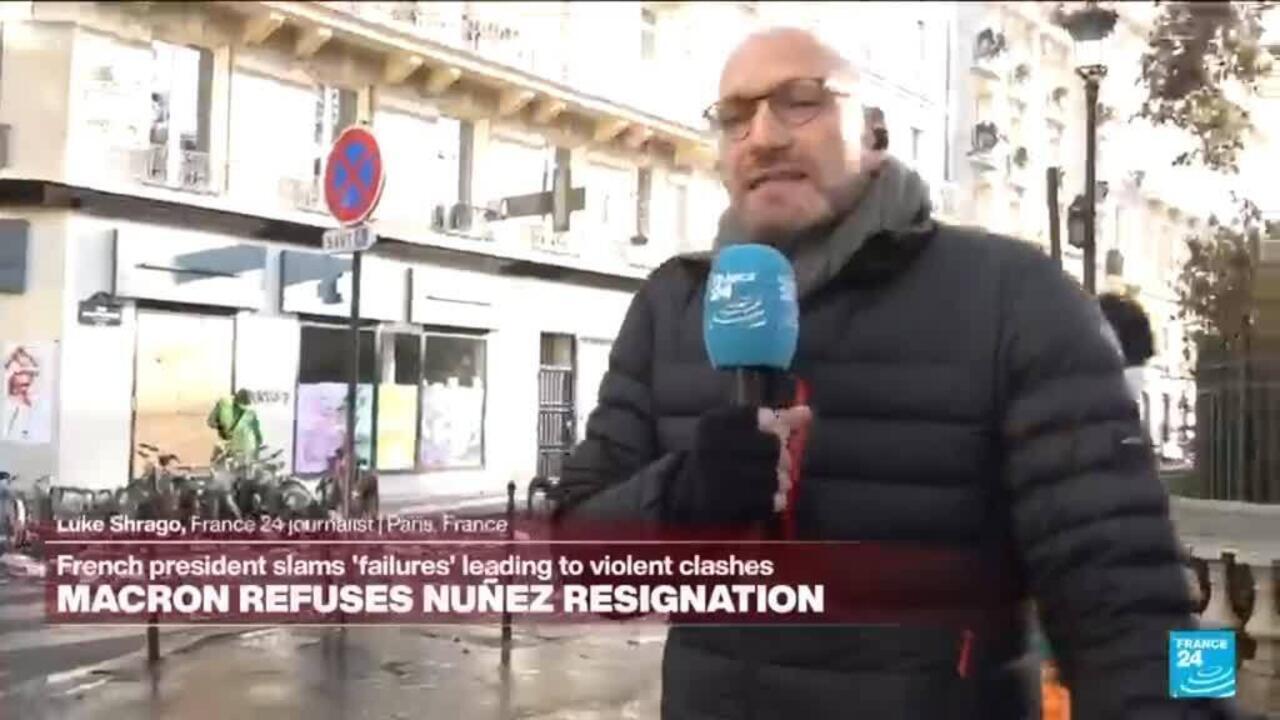
Macron also rejected Interior Minister Laurent Nunez’s offer to resign despite “failures in anticipation and intelligence” that authorities identified as worsening the crisis.
Nunez was asked to stay to preserve the operational chain of command as police and security forces struggled to contain the unrest.
“Those who destroyed must pay,” Macron said on Sunday evening. “Those who looted must pay back. Those who sought to bring down the Republic will be held accountable.”
On Saturday, half a million people took to the streets against the rising cost of living, poor state education and deteriorating public services.
By some estimates, looters and others damaged or destroyed more than 1,500 shops and businesses.
The protests began in September with strikes by students and teachers in impoverished Paris suburbs demanding more resources for their ill-equipped schools.
Although authorities met their demands, the strikes struck a chord nationwide. People long frustrated with the education system and the economy launched protests of their own.
A heavy-handed police crackdown, particularly violence against students, drove thousands more onto the streets.
Paris like a 'war zone'
In Marseille, authorities banned public gatherings and demonstrations from midday until 8pm on Monday after protests and looting swept the city over the weekend, according to an order issued by the local administration.
By the end of the weekend, Paris looked like a “war zone,” one visitor told Reuters.
“It’s heartbreaking, heartbreaking seeing our city like this,” said Farida, a 59-year-old Marseille resident who did not give her surname, according to Reuters.
“If every protest ends with all the shop windows smashed and stores trashed, this simply cannot go on - it cannot go on.”
The unrest comes as fiscal and social crises batter the European Union’s second-largest economy.
France narrowly avoided recession in the second quarter of this year, while the energy price shock from the Israeli-US war on Iran has hit the country hard.
The Wall Street Journal warned a few weeks ago that growing “uncertainty about the country’s political and fiscal future has also contributed to a slowdown in what was once one of Europe’s more reliable growth engines.”
A survey by France’s largest employers’ federation, Medef, underscored businesses’ concerns about political uncertainty, with 82 percent of respondents expressing pessimism about the government’s economic policies.
Another 66 percent said their companies could face bankruptcy or become more financially vulnerable unless economic policies change over the next few years.
Share Article
Tags:#فرنسا#احتجاجات#إيمانويل ماكرون#سيباستيان لوكورنو#حظر التجول#الاضطرابات الاجتماعية
Source: Middle East Eye
For Context
Related reads from the same topic or latest developments