Beijing and Washington Can Build AI Safety Despite Mutual Distrust
Foreign Policy

Foreign Policy
Original Source
Despite mutual distrust, recent convergence between Washington and Beijing on artificial intelligence safety suggests potential for practical cooperation between the world's two leading AI powers. Both governments must seize the opportunity to establish substantive dialogue focused on tangible measures rather than ideological disputes.
China-U.S. AI Safety Meetings Can Focus on Practicalities
By using this website, you agree to our use of cookies. This use includes personalization of content and ads, and traffic analytics. Review our Privacy Policy for more information.
!Foreign Policy
Foreign Policy
Get analysis and alerts more quickly in the mobile app.
Install
Back to Foreign Policy Magazine home page
* Latest
* Regions
+ Asia & the Pacific
+ China
+ Middle East & Africa
+ Americas
+ Europe
* Newsletters
Editors’ Picks
Evening roundup with our editors’ favorite stories of the day
!World Brief Icon
World Brief
Your guide to the most important world stories of the day
!China Brief Icon
China Brief
The latest news, analysis, and data from the country each week
Situation Report
Weekly update on what’s driving U.S. national security policy
FP Weekend
A curation of our best book reviews, deep dives, and other reads
!Africa Brief Icon
Africa Brief
Essential analysis of the stories shaping geopolitics on the continent
!South Asia Brief Icon
South Asia Brief
Weekly update on developments in India and its neighbors
The Reading List
Curated guides on geopolitics and current affairs
FP Bookshelf
A monthly guide to FP’s book reviews, excerpts, and reading recommendations
!Latin America Brief Icon
Latin America Brief
One-stop digest of politics, economics, and culture
!Southeast Asia Brief Icon
Southeast Asia Brief
A weekly dispatch with news from the region’s 11 countries
The New Geopolitics
A five-part masterclass in IR theory with Harvard Professor Stephen M. Walt
View All Newsletters
* FP Live
* Latest
* Trending:
* Iran war
* China's bet on AI
Search this website
* Preferences
* My FP Feed
* Saved Articles
* Newsletters
* Magazine Archive
* Subscription Settings
* FAQs
* Log Out
Sign In
Sign In
Partner with FP at UNGA81 Partner with FP at UNGA81
Subscribe SubscribePartner with FP at UNGA81 Partner with FP at UNGA81
Analysis:
Beijing and Washington Can Build AI Safety Despite Mutual Distrust
*
*
* Facebook
* Bluesky
* X
* LinkedIn
* WhatsApp
* Reddit
Save
Save
1. Create an FP account to save articles to read later.
Sign Up
ALREADY AN FP SUBSCRIBER? LOGIN
PDF
PDF
1. **Downloadable PDFs** are a benefit of an FP subscription.
Subscribe Now
ALREADY AN FP SUBSCRIBER? LOGIN
Gift
Gift
*
*
* WhatsApp
1. Gifting articles is a subscriber benefit.
Subscribe Now
ALREADY AN FP SUBSCRIBER? LOGIN
2. This article is an Insider exclusive.
Contact us at [email protected] to learn about upgrade options, unlocking the ability to gift this article.
Analysis
Beijing and Washington Can Build AI Safety Despite Mutual Distrust
Practical cooperation should exist alongside competition.
By **Xiao Qian**, deputy director of the Center for International Security and Strategy at Tsinghua University.
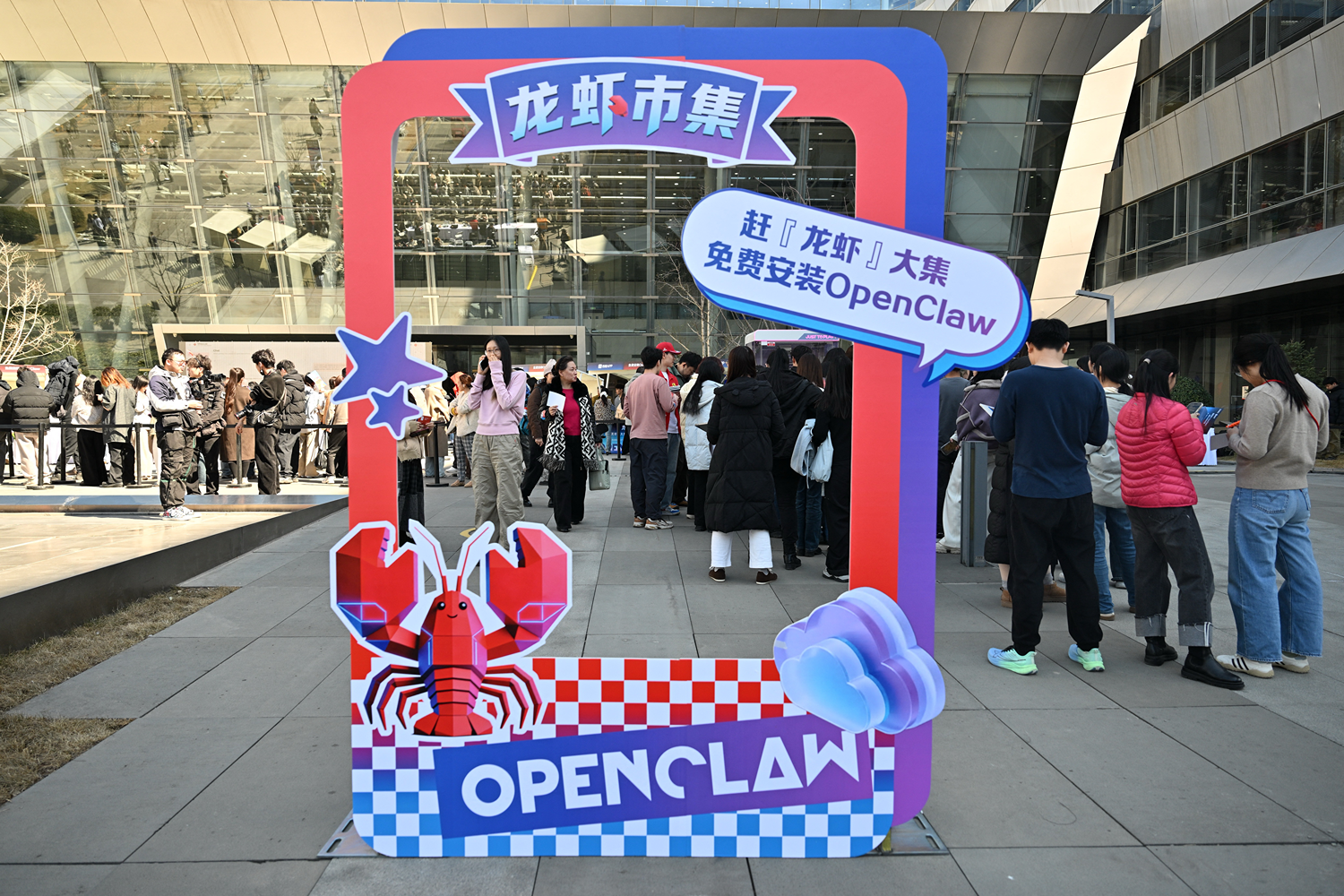
!Dozens of people are seen from behind as they wait in a queue in a plaza in front of a modern-looking glass-walled building. In front of the line is a large free-standing frame for people to stand in to take photos; it depicts a lobster paired with big text reading "OpenClaw."
*Dozens of people are seen from behind as they wait in a queue in a plaza in front of a modern-looking glass-walled building. In front of the line is a large free-standing frame for people to stand in to take photos; it depicts a lobster paired with big text reading "OpenClaw."*
People queue to have their laptops installed with OpenClaw, an open-source artificial intelligence assistant, at the Baidu headquarters in Beijing on March 11. Adek Berry/AFP via Getty Images
My FP:
Follow topics and authors to get straight to what you like. Exclusively for FP subscribers. Subscribe Now | Log In
*
*
*
August 31, 2026, 4:06 PM
During U.S. President Donald Trump’s visit to Beijing in May, he and Chinese President Xi Jinping agreed to initiate an intergovernmental dialogue on artificial intelligence. The decision was significant. The last official AI dialogue between the two countries took place in May 2024, during the Biden administration. Given the extraordinary pace of AI development and the growing number of incidents involving frontier AI systems, it is remarkable that the world’s two leading AI powers have gone more than two years without an official conversation on one of the most consequential technologies of our time.
If this renewed dialogue is to succeed, then both governments need to move quickly and approach it with a clear sense of purpose.
During U.S. President Donald Trump’s visit to Beijing in May, he and Chinese President Xi Jinping agreed to initiate an intergovernmental dialogue on artificial intelligence. The decision was significant. The last official AI dialogue between the two countries took place in May 2024, during the Biden administration. Given the extraordinary pace of AI development and the growing number of incidents involving frontier AI systems, it is remarkable that the world’s two leading AI powers have gone more than two years without an official conversation on one of the most consequential technologies of our time.
If this renewed dialogue is to succeed, then both governments need to move quickly and approach it with a clear sense of purpose.
There are encouraging signs that the two countries are beginning to converge on at least one issue: the importance of AI safety and security. Leaders of frontier AI laboratories on both sides of the Pacific have recently begun speaking more openly about preparing for the age of artificial general intelligence (AGI). In his first Substack post in July, Demis Hassabis, co-founder and then-CEO of Google DeepMind, argued that “urgent action is needed to address risks that might arise as we get closer to AGI.”
A similar consensus is emerging in China. Liang Wenfeng, CEO of DeepSeek, and Tang Jie, co-founder of Z.ai, have both recently discussed AGI publicly, emphasizing long-term development, safety evaluation, and responsible deployment. More broadly, China’s frontier AI community is becoming increasingly willing to engage publicly with governance questions.
Governments have also begun to elevate AI safety and security on their policy agendas. In June, the Trump administration issued both an executive order and a presidential memorandum on AI security.
Together, these documents place AI safety and security firmly within a national security framework.T hey emphasize managing the risks posed by increasingly capable AI systems—particularly those related to cybersecurity, critical infrastructure, national security, military applications, and the malicious use of advanced AI—while promoting close public-private cooperation, frontier model evaluations, and the responsible deployment of advanced AI systems.
At the World Artificial Intelligence Conference (WAIC) in Shanghai in July, Xi devoted one of the four pillars of his keynote address to AI safety. Calling AI “a trusted tool for humanity,” he urged countries to “strengthen risk-awareness and ensure that AI is secure and controllable”; establish laws, technological monitoring, early warning and emergency response systems; “prevent abuses and malicious use”; and “ensure that AI is always under human control.” The WAIC chair’s statement likewise emphasized maintaining the AI safety “bottom line” and strengthening cooperation against the abuse of AI by terrorist organizations, extremist groups, and transnational criminal networks.
These developments suggest that both the U.S. and Chinese governments increasingly recognize AI safety and security as a strategic issue. Unfortunately, this convergence has been accompanied by growing strategic mistrust.
The launch of the World Artificial Intelligence Cooperation Organization (WAICO) in Shanghai has been interpreted in some U.S. policy circles as China’s response to Pax Silica, reinforcing perceptions of growing institutional competition over global AI governance. At the same time, technological competition has al
By using this website, you agree to our use of cookies. This use includes personalization of content and ads, and traffic analytics. Review our Privacy Policy for more information.
!Foreign Policy
Foreign Policy
Get analysis and alerts more quickly in the mobile app.
Install
Back to Foreign Policy Magazine home page
* Latest
* Regions
+ Asia & the Pacific
+ China
+ Middle East & Africa
+ Americas
+ Europe
* Newsletters
Editors’ Picks
Evening roundup with our editors’ favorite stories of the day
!World Brief Icon
World Brief
Your guide to the most important world stories of the day
!China Brief Icon
China Brief
The latest news, analysis, and data from the country each week
Situation Report
Weekly update on what’s driving U.S. national security policy
FP Weekend
A curation of our best book reviews, deep dives, and other reads
!Africa Brief Icon
Africa Brief
Essential analysis of the stories shaping geopolitics on the continent
!South Asia Brief Icon
South Asia Brief
Weekly update on developments in India and its neighbors
The Reading List
Curated guides on geopolitics and current affairs
FP Bookshelf
A monthly guide to FP’s book reviews, excerpts, and reading recommendations
!Latin America Brief Icon
Latin America Brief
One-stop digest of politics, economics, and culture
!Southeast Asia Brief Icon
Southeast Asia Brief
A weekly dispatch with news from the region’s 11 countries
The New Geopolitics
A five-part masterclass in IR theory with Harvard Professor Stephen M. Walt
View All Newsletters
* FP Live
* Latest
* Trending:
* Iran war
* China's bet on AI
Search this website
* Preferences
* My FP Feed
* Saved Articles
* Newsletters
* Magazine Archive
* Subscription Settings
* FAQs
* Log Out
Sign In
Sign In
Partner with FP at UNGA81 Partner with FP at UNGA81
Subscribe SubscribePartner with FP at UNGA81 Partner with FP at UNGA81
Analysis:
Beijing and Washington Can Build AI Safety Despite Mutual Distrust
*
*
* Bluesky
* X
Save
Save
1. Create an FP account to save articles to read later.
Sign Up
ALREADY AN FP SUBSCRIBER? LOGIN
1. **Downloadable PDFs** are a benefit of an FP subscription.
Subscribe Now
ALREADY AN FP SUBSCRIBER? LOGIN
Gift
Gift
*
*
1. Gifting articles is a subscriber benefit.
Subscribe Now
ALREADY AN FP SUBSCRIBER? LOGIN
2. This article is an Insider exclusive.
Contact us at [email protected] to learn about upgrade options, unlocking the ability to gift this article.
Analysis
Beijing and Washington Can Build AI Safety Despite Mutual Distrust
Practical cooperation should exist alongside competition.
By **Xiao Qian**, deputy director of the Center for International Security and Strategy at Tsinghua University.
!Dozens of people are seen from behind as they wait in a queue in a plaza in front of a modern-looking glass-walled building. In front of the line is a large free-standing frame for people to stand in to take photos; it depicts a lobster paired with big text reading "OpenClaw."
*Dozens of people are seen from behind as they wait in a queue in a plaza in front of a modern-looking glass-walled building. In front of the line is a large free-standing frame for people to stand in to take photos; it depicts a lobster paired with big text reading "OpenClaw."*
People queue to have their laptops installed with OpenClaw, an open-source artificial intelligence assistant, at the Baidu headquarters in Beijing on March 11. Adek Berry/AFP via Getty Images
My FP:
Follow topics and authors to get straight to what you like. Exclusively for FP subscribers. Subscribe Now | Log In
*
*
*
August 31, 2026, 4:06 PM
During U.S. President Donald Trump’s visit to Beijing in May, he and Chinese President Xi Jinping agreed to initiate an intergovernmental dialogue on artificial intelligence. The decision was significant. The last official AI dialogue between the two countries took place in May 2024, during the Biden administration. Given the extraordinary pace of AI development and the growing number of incidents involving frontier AI systems, it is remarkable that the world’s two leading AI powers have gone more than two years without an official conversation on one of the most consequential technologies of our time.
If this renewed dialogue is to succeed, then both governments need to move quickly and approach it with a clear sense of purpose.
During U.S. President Donald Trump’s visit to Beijing in May, he and Chinese President Xi Jinping agreed to initiate an intergovernmental dialogue on artificial intelligence. The decision was significant. The last official AI dialogue between the two countries took place in May 2024, during the Biden administration. Given the extraordinary pace of AI development and the growing number of incidents involving frontier AI systems, it is remarkable that the world’s two leading AI powers have gone more than two years without an official conversation on one of the most consequential technologies of our time.
If this renewed dialogue is to succeed, then both governments need to move quickly and approach it with a clear sense of purpose.
There are encouraging signs that the two countries are beginning to converge on at least one issue: the importance of AI safety and security. Leaders of frontier AI laboratories on both sides of the Pacific have recently begun speaking more openly about preparing for the age of artificial general intelligence (AGI). In his first Substack post in July, Demis Hassabis, co-founder and then-CEO of Google DeepMind, argued that “urgent action is needed to address risks that might arise as we get closer to AGI.”
A similar consensus is emerging in China. Liang Wenfeng, CEO of DeepSeek, and Tang Jie, co-founder of Z.ai, have both recently discussed AGI publicly, emphasizing long-term development, safety evaluation, and responsible deployment. More broadly, China’s frontier AI community is becoming increasingly willing to engage publicly with governance questions.
Governments have also begun to elevate AI safety and security on their policy agendas. In June, the Trump administration issued both an executive order and a presidential memorandum on AI security.
Together, these documents place AI safety and security firmly within a national security framework.T hey emphasize managing the risks posed by increasingly capable AI systems—particularly those related to cybersecurity, critical infrastructure, national security, military applications, and the malicious use of advanced AI—while promoting close public-private cooperation, frontier model evaluations, and the responsible deployment of advanced AI systems.
At the World Artificial Intelligence Conference (WAIC) in Shanghai in July, Xi devoted one of the four pillars of his keynote address to AI safety. Calling AI “a trusted tool for humanity,” he urged countries to “strengthen risk-awareness and ensure that AI is secure and controllable”; establish laws, technological monitoring, early warning and emergency response systems; “prevent abuses and malicious use”; and “ensure that AI is always under human control.” The WAIC chair’s statement likewise emphasized maintaining the AI safety “bottom line” and strengthening cooperation against the abuse of AI by terrorist organizations, extremist groups, and transnational criminal networks.
These developments suggest that both the U.S. and Chinese governments increasingly recognize AI safety and security as a strategic issue. Unfortunately, this convergence has been accompanied by growing strategic mistrust.
The launch of the World Artificial Intelligence Cooperation Organization (WAICO) in Shanghai has been interpreted in some U.S. policy circles as China’s response to Pax Silica, reinforcing perceptions of growing institutional competition over global AI governance. At the same time, technological competition has al
🔗 Share Article
Tags:#الذكاء الاصطناعي#أمان الذكاء الاصطناعي#الصين#الولايات المتحدة#التعاون الدولي#التكنولوجيا
Source: Foreign Policy
For Context
Related reads from the same topic or latest developments


