Peace in Sudan Can Only Flower After a Weapons Embargo
Foreign Policy

Foreign Policy
Original Source
Two senior U.S. officials urge the Security Council to expand the weapons embargo across Sudan, replacing a two-decade-old restriction limited to Darfur. Modern drones and arms supplies have transformed the conflict and fueled the world's worst humanitarian crisis.
Peace in Sudan Requires an Expanded Weapons Embargo
By using this website, you agree to our use of cookies. This use includes personalization of content and ads, and traffic analytics. Review our Privacy Policy for more information.
!Foreign Policy
Foreign Policy
Get analysis and alerts more quickly in the mobile app.
Install
Back to Foreign Policy Magazine home page
* Latest
* Regions
+ Asia & the Pacific
+ China
+ Middle East & Africa
+ Americas
+ Europe
* Newsletters
Editors’ Picks
Evening roundup with our editors’ favorite stories of the day
!World Brief Icon
World Brief
Your guide to the most important world stories of the day
!China Brief Icon
China Brief
The latest news, analysis, and data from the country each week
Situation Report
Weekly update on what’s driving U.S. national security policy
FP Weekend
A curation of our best book reviews, deep dives, and other reads
!Africa Brief Icon
Africa Brief
Essential analysis of the stories shaping geopolitics on the continent
!South Asia Brief Icon
South Asia Brief
Weekly update on developments in India and its neighbors
The Reading List
Curated guides on geopolitics and current affairs
FP Bookshelf
A monthly guide to FP’s book reviews, excerpts, and reading recommendations
!Latin America Brief Icon
Latin America Brief
One-stop digest of politics, economics, and culture
!Southeast Asia Brief Icon
Southeast Asia Brief
A weekly dispatch with news from the region’s 11 countries
The New Geopolitics
A five-part masterclass in IR theory with Harvard Professor Stephen M. Walt
View All Newsletters
* FP Live
* Latest
* Trending:
* Nepal floods
* Strait of Hormuz attacks
* Venezuela oil deal
Search this website
* Preferences
* My FP Feed
* Saved Articles
* Newsletters
* Magazine Archive
* Subscription Settings
* FAQs
* Log Out
Sign In
Sign In
Partner with FP at UNGA81 Partner with FP at UNGA81
Subscribe SubscribePartner with FP at UNGA81 Partner with FP at UNGA81
Argument:
Peace in Sudan Can Only Flower After a Weapons Embargo
*
*
* Facebook
* Bluesky
* X
* LinkedIn
* WhatsApp
* Reddit
Save
1. Create an FP account to save articles to read later.
Sign Up
ALREADY AN FP SUBSCRIBER? LOGIN
PDF
1. **Downloadable PDFs** are a benefit of an FP subscription.
Subscribe Now
ALREADY AN FP SUBSCRIBER? LOGIN
Gift
*
*
* WhatsApp
1. Gifting articles is a subscriber benefit.
Subscribe Now
ALREADY AN FP SUBSCRIBER? LOGIN
2. This article is an Insider exclusive.
Contact us at [email protected] to learn about upgrade options, unlocking the ability to gift this article.
Argument
An expert’s point of view on a current event.
Peace in Sudan Can Only Flower After a Weapons Embargo
The case for the White House’s Security Council resolution on Sudan, made by two senior administration officials.
By **Michael Waltz**, the U.S. ambassador to the United Nations, and **Massad Boulos**, a senior advisor to U.S. President Donald Trump for Arab and African affairs.
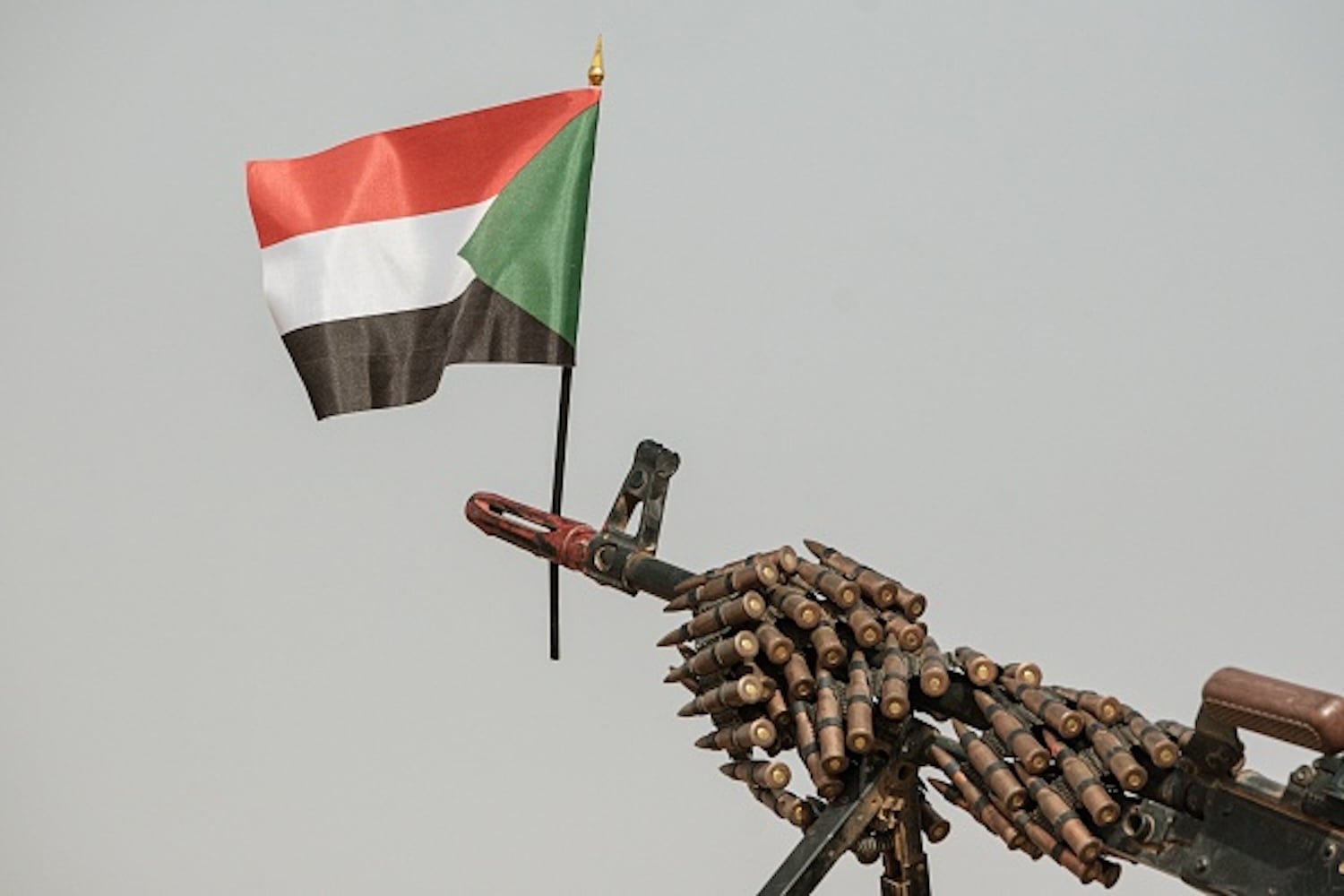
!A Sudanese flag is held by a machine gun covered with an ammunition belt in Abraq, Sudan, on June 22, 2019.
*A Sudanese flag is held by a machine gun covered with an ammunition belt in Abraq, Sudan, on June 22, 2019.*
A Sudanese flag is held by a machine gun covered with an ammunition belt in Abraq, Sudan, on June 22, 2019. Yasuyoshi Chiba/AFP via Getty Images
1. Get audio access with any FP subscription.
Subscribe Now
ALREADY AN FP SUBSCRIBER? LOGIN
September 3, 2026, 7:15 PM
Sudan has been descending into hell for years. The United Nations Security Council now has a chance to do right by the people of Sudan and remember what it was created to do: stop wars, keep the peace, and protect lives. But it can do those things only if its members are willing to step up.
Sudan is experiencing the world’s worst humanitarian crisis. More than 33 million people are in need of basic assistance. An estimated 19.5 million people, disproportionately women and children, face acute hunger. Almost 9 million people have now been driven from their homes, another 4.5 million have fled the country, and at least 150,000 are dead. Yet somehow, this historic catastrophe has generated little more than horrified whispers from the West’s most vaunted institutions.
Sudan has been descending into hell for years. The United Nations Security Council now has a chance to do right by the people of Sudan and remember what it was created to do: stop wars, keep the peace, and protect lives. But it can do those things only if its members are willing to step up.
Sudan is experiencing the world’s worst humanitarian crisis. More than 33 million people are in need of basic assistance. An estimated 19.5 million people, disproportionately women and children, face acute hunger. Almost 9 million people have now been driven from their homes, another 4.5 million have fled the country, and at least 150,000 are dead. Yet somehow, this historic catastrophe has generated little more than horrified whispers from the West’s most vaunted institutions.
The Rapid Support Forces (RSF) and its allied militias have committed genocide, murdering men and boys on an ethnic basis and raping women and girls. The U.N. estimates that more than 12 million Sudanese women and girls—roughly half the country’s female population—are at risk of sexual violence. The Sudanese Armed Forces (SAF) have committed atrocities, too.
More than 130 humanitarian workers have been killed since the war began. Both sides loot and block food, aid, and other supplies. They also brandish access to lifesaving aid as a tool of suppression, with the lives of local recipients hanging in the balance. And now, with the advent of drone warfare, both sides are finding it easier and cheaper to inflict more lethal damage.
Last year, at least 2,670 people, a number that includes combatants and civilians, were killed in drone attacks. That represents a 600 percent increase in drone-related deaths over a single year. In just the first five months of this year, drones killed more than 1,000 people, making up roughly 80 percent of civilian deaths during that period. Markets, hospitals, schools, and aid routes have become fair game for thugs with remote controls. The barrier to entry for mass violence in Sudan has never been lower, yet the U.N. is policing the conflict with an arms embargo written more than two decades ago. Security Council Resolution 1591, which imposed an arms embargo on Darfur in 2005, is older than Apple’s iPhone—let alone the drones hovering above Sudan today.
The international community’s approach to Sudan has simply not kept up with the times.
First, there’s the battlefield. The war has spread into the Kordofan region and Blue Nile state. The Security Council’s embargo stops at Darfur, several hundred miles away from the new arenas of conflict.
Then there’s the international meddling, which has undoubtedly prolonged the fighting and heightened the heavy toll on civilians. More than a dozen countries with diverse motives are providing some form of military support to the warring parties. Mercenaries have been recruited from as far away as Colombia. Foreign networks of all stripes supply drones, weapons, parts, money, and their own renditions of expertise.
Munitions do not become duds and drones do not fall out of the sky if they cross imaginary embargo lines on maps, for example where Kordofan begins and Darfur ends. Neither do smugglers sit on their hands when they can move weapons from other parts of Sudan. They adapt—just as the RSF and SAF have.
But the U.N. has failed to adapt. For more than 20 years, the Security Council has kept the same geographic embargo in place while the battlefield, the weapons, and the players supplying them have shifted unrecognizably.
That’s why the G-7—including the United States—has called on the Security Council to expand the embargo across all of Sudan.
So let’s do it.
Read More
*
*Solidarity activists take part in a Hands Off Sudan marc
By using this website, you agree to our use of cookies. This use includes personalization of content and ads, and traffic analytics. Review our Privacy Policy for more information.
!Foreign Policy
Foreign Policy
Get analysis and alerts more quickly in the mobile app.
Install
Back to Foreign Policy Magazine home page
* Latest
* Regions
+ Asia & the Pacific
+ China
+ Middle East & Africa
+ Americas
+ Europe
* Newsletters
Editors’ Picks
Evening roundup with our editors’ favorite stories of the day
!World Brief Icon
World Brief
Your guide to the most important world stories of the day
!China Brief Icon
China Brief
The latest news, analysis, and data from the country each week
Situation Report
Weekly update on what’s driving U.S. national security policy
FP Weekend
A curation of our best book reviews, deep dives, and other reads
!Africa Brief Icon
Africa Brief
Essential analysis of the stories shaping geopolitics on the continent
!South Asia Brief Icon
South Asia Brief
Weekly update on developments in India and its neighbors
The Reading List
Curated guides on geopolitics and current affairs
FP Bookshelf
A monthly guide to FP’s book reviews, excerpts, and reading recommendations
!Latin America Brief Icon
Latin America Brief
One-stop digest of politics, economics, and culture
!Southeast Asia Brief Icon
Southeast Asia Brief
A weekly dispatch with news from the region’s 11 countries
The New Geopolitics
A five-part masterclass in IR theory with Harvard Professor Stephen M. Walt
View All Newsletters
* FP Live
* Latest
* Trending:
* Nepal floods
* Strait of Hormuz attacks
* Venezuela oil deal
Search this website
* Preferences
* My FP Feed
* Saved Articles
* Newsletters
* Magazine Archive
* Subscription Settings
* FAQs
* Log Out
Sign In
Sign In
Partner with FP at UNGA81 Partner with FP at UNGA81
Subscribe SubscribePartner with FP at UNGA81 Partner with FP at UNGA81
Argument:
Peace in Sudan Can Only Flower After a Weapons Embargo
*
*
* Bluesky
* X
Save
1. Create an FP account to save articles to read later.
Sign Up
ALREADY AN FP SUBSCRIBER? LOGIN
1. **Downloadable PDFs** are a benefit of an FP subscription.
Subscribe Now
ALREADY AN FP SUBSCRIBER? LOGIN
Gift
*
*
1. Gifting articles is a subscriber benefit.
Subscribe Now
ALREADY AN FP SUBSCRIBER? LOGIN
2. This article is an Insider exclusive.
Contact us at [email protected] to learn about upgrade options, unlocking the ability to gift this article.
Argument
An expert’s point of view on a current event.
Peace in Sudan Can Only Flower After a Weapons Embargo
The case for the White House’s Security Council resolution on Sudan, made by two senior administration officials.
By **Michael Waltz**, the U.S. ambassador to the United Nations, and **Massad Boulos**, a senior advisor to U.S. President Donald Trump for Arab and African affairs.
!A Sudanese flag is held by a machine gun covered with an ammunition belt in Abraq, Sudan, on June 22, 2019.
*A Sudanese flag is held by a machine gun covered with an ammunition belt in Abraq, Sudan, on June 22, 2019.*
A Sudanese flag is held by a machine gun covered with an ammunition belt in Abraq, Sudan, on June 22, 2019. Yasuyoshi Chiba/AFP via Getty Images
1. Get audio access with any FP subscription.
Subscribe Now
ALREADY AN FP SUBSCRIBER? LOGIN
September 3, 2026, 7:15 PM
Sudan has been descending into hell for years. The United Nations Security Council now has a chance to do right by the people of Sudan and remember what it was created to do: stop wars, keep the peace, and protect lives. But it can do those things only if its members are willing to step up.
Sudan is experiencing the world’s worst humanitarian crisis. More than 33 million people are in need of basic assistance. An estimated 19.5 million people, disproportionately women and children, face acute hunger. Almost 9 million people have now been driven from their homes, another 4.5 million have fled the country, and at least 150,000 are dead. Yet somehow, this historic catastrophe has generated little more than horrified whispers from the West’s most vaunted institutions.
Sudan has been descending into hell for years. The United Nations Security Council now has a chance to do right by the people of Sudan and remember what it was created to do: stop wars, keep the peace, and protect lives. But it can do those things only if its members are willing to step up.
Sudan is experiencing the world’s worst humanitarian crisis. More than 33 million people are in need of basic assistance. An estimated 19.5 million people, disproportionately women and children, face acute hunger. Almost 9 million people have now been driven from their homes, another 4.5 million have fled the country, and at least 150,000 are dead. Yet somehow, this historic catastrophe has generated little more than horrified whispers from the West’s most vaunted institutions.
The Rapid Support Forces (RSF) and its allied militias have committed genocide, murdering men and boys on an ethnic basis and raping women and girls. The U.N. estimates that more than 12 million Sudanese women and girls—roughly half the country’s female population—are at risk of sexual violence. The Sudanese Armed Forces (SAF) have committed atrocities, too.
More than 130 humanitarian workers have been killed since the war began. Both sides loot and block food, aid, and other supplies. They also brandish access to lifesaving aid as a tool of suppression, with the lives of local recipients hanging in the balance. And now, with the advent of drone warfare, both sides are finding it easier and cheaper to inflict more lethal damage.
Last year, at least 2,670 people, a number that includes combatants and civilians, were killed in drone attacks. That represents a 600 percent increase in drone-related deaths over a single year. In just the first five months of this year, drones killed more than 1,000 people, making up roughly 80 percent of civilian deaths during that period. Markets, hospitals, schools, and aid routes have become fair game for thugs with remote controls. The barrier to entry for mass violence in Sudan has never been lower, yet the U.N. is policing the conflict with an arms embargo written more than two decades ago. Security Council Resolution 1591, which imposed an arms embargo on Darfur in 2005, is older than Apple’s iPhone—let alone the drones hovering above Sudan today.
The international community’s approach to Sudan has simply not kept up with the times.
First, there’s the battlefield. The war has spread into the Kordofan region and Blue Nile state. The Security Council’s embargo stops at Darfur, several hundred miles away from the new arenas of conflict.
Then there’s the international meddling, which has undoubtedly prolonged the fighting and heightened the heavy toll on civilians. More than a dozen countries with diverse motives are providing some form of military support to the warring parties. Mercenaries have been recruited from as far away as Colombia. Foreign networks of all stripes supply drones, weapons, parts, money, and their own renditions of expertise.
Munitions do not become duds and drones do not fall out of the sky if they cross imaginary embargo lines on maps, for example where Kordofan begins and Darfur ends. Neither do smugglers sit on their hands when they can move weapons from other parts of Sudan. They adapt—just as the RSF and SAF have.
But the U.N. has failed to adapt. For more than 20 years, the Security Council has kept the same geographic embargo in place while the battlefield, the weapons, and the players supplying them have shifted unrecognizably.
That’s why the G-7—including the United States—has called on the Security Council to expand the embargo across all of Sudan.
So let’s do it.
Read More
*
*Solidarity activists take part in a Hands Off Sudan marc
🔗 Share Article
Tags:#السودان#الأمم المتحدة#حظر الأسلحة#الأزمة الإنسانية#مجلس الأمن#الصراع
Source: Foreign Policy
For Context
Related reads from the same topic or latest developments