What Arab Israelis Really Think About Israel’s Election
Foreign Policy

Foreign Policy
Original Source
Arab citizens of Israel are poised to play a decisive role in the coming election, yet their priorities diverge from expectations: security, education, and housing matter more than Palestine. The prospect of Arab parties joining government raises fundamental questions about Israeli democracy's future.
What Arab Israelis Really Think About Israel’s Election
!Foreign Policy
Foreign Policy Get analysis and alerts more quickly in the mobile app.
Install
Back to Foreign Policy Magazine home page
* Latest
* Regions
+ Asia & the Pacific
+ China
+ Middle East & Africa
+ Americas
+ Europe
* Newsletters
Editors’ Picks
Evening roundup with our editors’ favorite stories of the day
!World Brief Icon
World Brief
Your guide to the most important world stories of the day
!China Brief Icon
China Brief
The latest news, analysis, and data from the country each week
Situation Report
Weekly update on what’s driving U.S. national security policy
FP Weekend
A curation of our best book reviews, deep dives, and other reads
!Africa Brief Icon
Africa Brief
Essential analysis of the stories shaping geopolitics on the continent
!South Asia Brief Icon
South Asia Brief
Weekly update on developments in India and its neighbors
The Reading List
Curated guides on geopolitics and current affairs
FP Bookshelf
A monthly guide to FP’s book reviews, excerpts, and reading recommendations
!Latin America Brief Icon
Latin America Brief
One-stop digest of politics, economics, and culture
!Southeast Asia Brief Icon
Southeast Asia Brief
A weekly dispatch with news from the region’s 11 countries
The New Geopolitics
A five-part masterclass in IR theory with Harvard Professor Stephen M. Walt
View All Newsletters
* FP Live
* Latest
* Trending:
* Trump-Xi meeting
* United Nations General Assembly
Search this website
* Preferences
* My FP Feed
* Saved Articles
* Newsletters
* Magazine Archive
* Subscription Settings
* FAQs
* Log Out
Sign In
Sign In
Partner with FP at UNGA81 Partner with FP at UNGA81
Subscribe Subscribe Partner with FP at UNGA81 Partner with FP at UNGA81
Analysis: What Arab Israelis Really Think About Israel’s Election
*
*
* Facebook
* Bluesky
* X
* LinkedIn
* WhatsApp
* Reddit
Save
1. Create an FP account to save articles to read later.
Sign Up
ALREADY AN FP SUBSCRIBER? LOGIN
PDF
1. **Downloadable PDFs** are a benefit of an FP subscription.
Subscribe Now
ALREADY AN FP SUBSCRIBER? LOGIN
Gift
*
*
* WhatsApp
1. Gifting articles is a subscriber benefit.
Subscribe Now
ALREADY AN FP SUBSCRIBER? LOGIN
2. This article is an Insider exclusive.
Contact us at [email protected] to learn about upgrade options, unlocking the ability to gift this article.
Analysis
What Arab Israelis Really Think About Israel’s Election
Ethnic Arabs could decide Israel's coming election—and its democratic future.
!Vohra-Anchal-foreign-policy-columnist18
*Vohra-Anchal-foreign-policy-columnist18*
*Anchal Vohra*
By **Anchal Vohra**, a columnist at *Foreign Policy*.
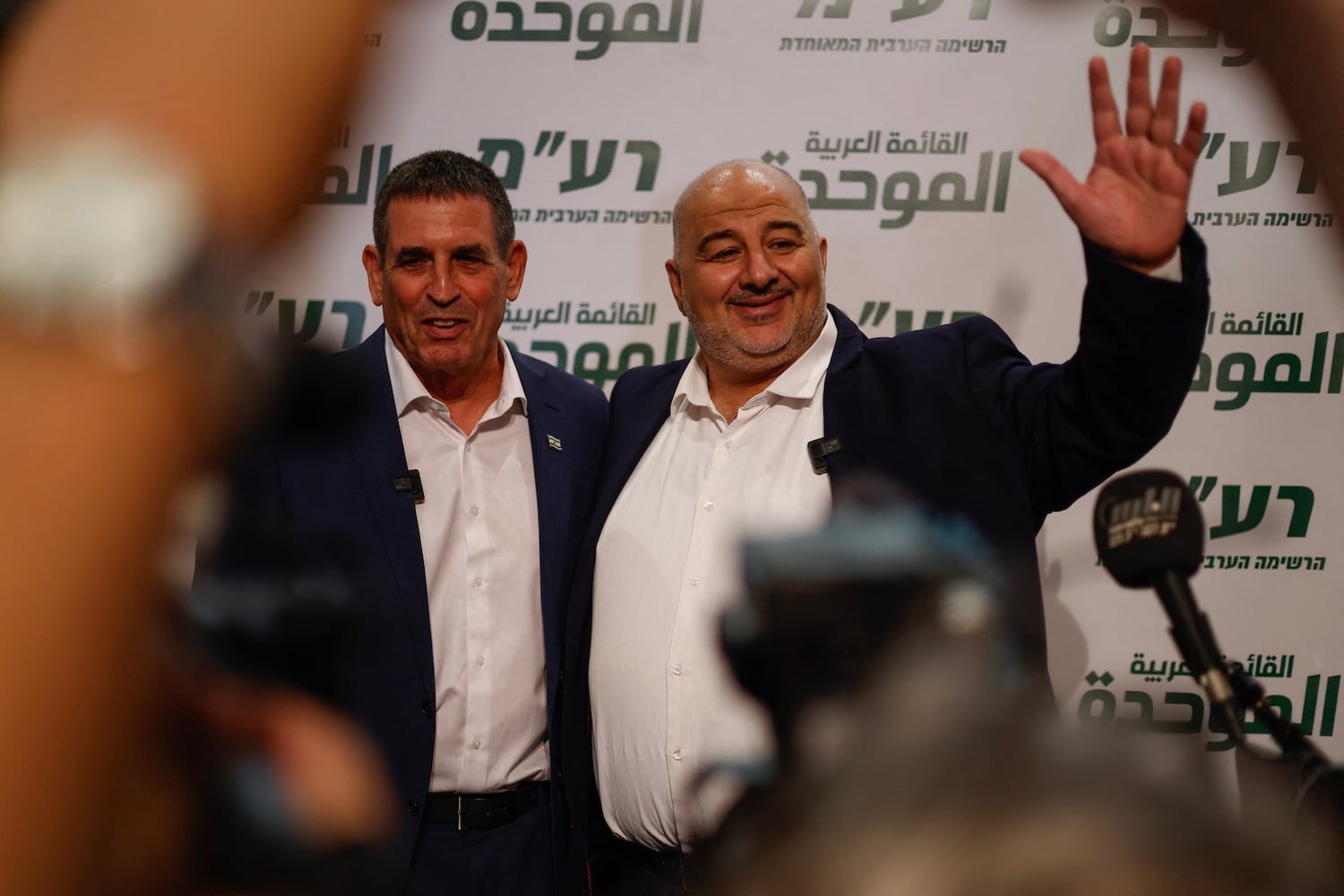
!Ra'am leader Mansour Abbas (R) and Israeli politician Yoav Segalovitz (L) attend a news conference in Nazareth, Israel, on Aug. 31.
*Ra'am leader Mansour Abbas (R) and Israeli politician Yoav Segalovitz (L) attend a news conference in Nazareth, Israel, on Aug. 31.*
Ra'am leader Mansour Abbas (R) and Israeli politician Yoav Segalovitz (L) attend a news conference in Nazareth, Israel, on Aug. 31. Jalaa MAREY / AFP
1. Get audio access with any FP subscription.
Subscribe Now
ALREADY AN FP SUBSCRIBER? LOGIN
September 25, 2026, 8:19 AM
What is the biggest election issue for Arab citizens of Israel? An end to violent crime on their streets, they say—not, in other words, the future of Palestine.
Seventy-four percent of respondents said violence and crime was their biggest concern, while 7.6 percent noted the importance of resolving the Israel-Palestine crisis, according to a recent survey conducted on behalf of the Konrad Adenauer Program for Jewish-Arab Cooperation at the Moshe Dayan Center in Tel Aviv.
What is the biggest election issue for Arab citizens of Israel? An end to violent crime on their streets, they say—not, in other words, the future of Palestine.
Seventy-four percent of respondents said violence and crime was their biggest concern, while 7.6 percent noted the importance of resolving the Israel-Palestine crisis, according to a recent survey conducted on behalf of the Konrad Adenauer Program for Jewish-Arab Cooperation at the Moshe Dayan Center in Tel Aviv.
That does not mean they have abandoned the Palestinian cause, but they are instead making pragmatic decisions and no longer tying their daily well-being to a resolution that appears improbable in the current atmosphere in Israel. A majority of Israeli Jews oppose a two-state solution in the aftermath of Hamas’s attack on Oct. 7, 2023.
The more urgent needs of Israel’s Arab citizens—a fifth of the total population—are better policing, better education, and more housing.
“You cannot solve all problems at once,” said Arik Rudnitzky, the author of the survey and a researcher at the Israel Democracy Institute, in reference to attitudes among Arab citizens of the country. “The question is how long can Arab citizens wait for this external conflict to be resolved before focusing on how best to meet their daily needs.”
Arab citizens of Israel want to play a larger role in Israeli politics, seeking not mere representation in the Knesset but a seat at the table in the new government. An overwhelming 77 percent support the inclusion of an Arab party in the next government’s coalition.
Mansour Abbas, the leader of Ra’am—the most conservative Arab party in Israel—has presented his political group as a potential coalition partner to whomever is prepared to tame criminals and offer more to Israel’s Arab citizens.
But, at a time when mistrust between Arabs and Jews runs especially deep, whether Arab Israelis will be allowed to take part in governing the country may be a decisive test of Israeli democracy.
Israel’s Central Elections Committee voted Wednesday to disqualify both Mansour Abbas’ United Arab List party and the Joint List— an alliance of Israel’s other three Arab parties—from running, including because of their alleged rejection of Israel as a Jewish state, which they deny. The committee’s largely political composition, made up mostly of members of PM Netanyahu’s coalition, was expected to approve disqualification requests against the Arab parties while rejecting requests against right-wing parties. As was the case in previous elections, these decisions will likely be reversed by Israel’s Supreme Court prior to the election.
In the meantime, the Arab parties are continuing to focus on the more prosaic concerns that their voters are concerned about. “The organizations that collect protection money from an Arab grocery-store owner also collect it from a Jewish garage owner,” Abbas said recently. “This is not the Arabs’ problem. This is the country’s problem.”
Abbas is right. Criminals don’t discriminate on the basis of religion or ideology. But Arab citizens of Israel inhabit a more dangerous world with a much higher crime rate. “Over the past 20 years, nearly 2,000 citizens have been murdered as part of the phenomenon of crime and violence within Arab society,” Abbas said in January. According to the Knesset’s National Security Committee, 241 Arabs were murdered last year compared to 47 Jews.
Palestinian Israelis also endure systemic hurdles in securing legal building permits and live in more cramped neighborhoods compared to their Jewish counterparts. Tens of thousands—especially those in Bedouin communities—live in “unrecognized villages.”
An OECD survey last year documented that many Arab schools were underresourced, which impaired “pupils’ employment, productivity, and wage prospects,” and it recommended equalizing “funding for Arab schools with other schools presenting similar socio-economic characteristics.”
Ra’am wants to change that dynamic by securing a place in the government—the country’s most powerful inst
!Foreign Policy
Foreign Policy Get analysis and alerts more quickly in the mobile app.
Install
Back to Foreign Policy Magazine home page
* Latest
* Regions
+ Asia & the Pacific
+ China
+ Middle East & Africa
+ Americas
+ Europe
* Newsletters
Editors’ Picks
Evening roundup with our editors’ favorite stories of the day
!World Brief Icon
World Brief
Your guide to the most important world stories of the day
!China Brief Icon
China Brief
The latest news, analysis, and data from the country each week
Situation Report
Weekly update on what’s driving U.S. national security policy
FP Weekend
A curation of our best book reviews, deep dives, and other reads
!Africa Brief Icon
Africa Brief
Essential analysis of the stories shaping geopolitics on the continent
!South Asia Brief Icon
South Asia Brief
Weekly update on developments in India and its neighbors
The Reading List
Curated guides on geopolitics and current affairs
FP Bookshelf
A monthly guide to FP’s book reviews, excerpts, and reading recommendations
!Latin America Brief Icon
Latin America Brief
One-stop digest of politics, economics, and culture
!Southeast Asia Brief Icon
Southeast Asia Brief
A weekly dispatch with news from the region’s 11 countries
The New Geopolitics
A five-part masterclass in IR theory with Harvard Professor Stephen M. Walt
View All Newsletters
* FP Live
* Latest
* Trending:
* Trump-Xi meeting
* United Nations General Assembly
Search this website
* Preferences
* My FP Feed
* Saved Articles
* Newsletters
* Magazine Archive
* Subscription Settings
* FAQs
* Log Out
Sign In
Sign In
Partner with FP at UNGA81 Partner with FP at UNGA81
Subscribe Subscribe Partner with FP at UNGA81 Partner with FP at UNGA81
Analysis: What Arab Israelis Really Think About Israel’s Election
*
*
* Bluesky
* X
Save
1. Create an FP account to save articles to read later.
Sign Up
ALREADY AN FP SUBSCRIBER? LOGIN
1. **Downloadable PDFs** are a benefit of an FP subscription.
Subscribe Now
ALREADY AN FP SUBSCRIBER? LOGIN
Gift
*
*
1. Gifting articles is a subscriber benefit.
Subscribe Now
ALREADY AN FP SUBSCRIBER? LOGIN
2. This article is an Insider exclusive.
Contact us at [email protected] to learn about upgrade options, unlocking the ability to gift this article.
Analysis
What Arab Israelis Really Think About Israel’s Election
Ethnic Arabs could decide Israel's coming election—and its democratic future.
!Vohra-Anchal-foreign-policy-columnist18
*Vohra-Anchal-foreign-policy-columnist18*
*Anchal Vohra*
By **Anchal Vohra**, a columnist at *Foreign Policy*.
!Ra'am leader Mansour Abbas (R) and Israeli politician Yoav Segalovitz (L) attend a news conference in Nazareth, Israel, on Aug. 31.
*Ra'am leader Mansour Abbas (R) and Israeli politician Yoav Segalovitz (L) attend a news conference in Nazareth, Israel, on Aug. 31.*
Ra'am leader Mansour Abbas (R) and Israeli politician Yoav Segalovitz (L) attend a news conference in Nazareth, Israel, on Aug. 31. Jalaa MAREY / AFP
1. Get audio access with any FP subscription.
Subscribe Now
ALREADY AN FP SUBSCRIBER? LOGIN
September 25, 2026, 8:19 AM
What is the biggest election issue for Arab citizens of Israel? An end to violent crime on their streets, they say—not, in other words, the future of Palestine.
Seventy-four percent of respondents said violence and crime was their biggest concern, while 7.6 percent noted the importance of resolving the Israel-Palestine crisis, according to a recent survey conducted on behalf of the Konrad Adenauer Program for Jewish-Arab Cooperation at the Moshe Dayan Center in Tel Aviv.
What is the biggest election issue for Arab citizens of Israel? An end to violent crime on their streets, they say—not, in other words, the future of Palestine.
Seventy-four percent of respondents said violence and crime was their biggest concern, while 7.6 percent noted the importance of resolving the Israel-Palestine crisis, according to a recent survey conducted on behalf of the Konrad Adenauer Program for Jewish-Arab Cooperation at the Moshe Dayan Center in Tel Aviv.
That does not mean they have abandoned the Palestinian cause, but they are instead making pragmatic decisions and no longer tying their daily well-being to a resolution that appears improbable in the current atmosphere in Israel. A majority of Israeli Jews oppose a two-state solution in the aftermath of Hamas’s attack on Oct. 7, 2023.
The more urgent needs of Israel’s Arab citizens—a fifth of the total population—are better policing, better education, and more housing.
“You cannot solve all problems at once,” said Arik Rudnitzky, the author of the survey and a researcher at the Israel Democracy Institute, in reference to attitudes among Arab citizens of the country. “The question is how long can Arab citizens wait for this external conflict to be resolved before focusing on how best to meet their daily needs.”
Arab citizens of Israel want to play a larger role in Israeli politics, seeking not mere representation in the Knesset but a seat at the table in the new government. An overwhelming 77 percent support the inclusion of an Arab party in the next government’s coalition.
Mansour Abbas, the leader of Ra’am—the most conservative Arab party in Israel—has presented his political group as a potential coalition partner to whomever is prepared to tame criminals and offer more to Israel’s Arab citizens.
But, at a time when mistrust between Arabs and Jews runs especially deep, whether Arab Israelis will be allowed to take part in governing the country may be a decisive test of Israeli democracy.
Israel’s Central Elections Committee voted Wednesday to disqualify both Mansour Abbas’ United Arab List party and the Joint List— an alliance of Israel’s other three Arab parties—from running, including because of their alleged rejection of Israel as a Jewish state, which they deny. The committee’s largely political composition, made up mostly of members of PM Netanyahu’s coalition, was expected to approve disqualification requests against the Arab parties while rejecting requests against right-wing parties. As was the case in previous elections, these decisions will likely be reversed by Israel’s Supreme Court prior to the election.
In the meantime, the Arab parties are continuing to focus on the more prosaic concerns that their voters are concerned about. “The organizations that collect protection money from an Arab grocery-store owner also collect it from a Jewish garage owner,” Abbas said recently. “This is not the Arabs’ problem. This is the country’s problem.”
Abbas is right. Criminals don’t discriminate on the basis of religion or ideology. But Arab citizens of Israel inhabit a more dangerous world with a much higher crime rate. “Over the past 20 years, nearly 2,000 citizens have been murdered as part of the phenomenon of crime and violence within Arab society,” Abbas said in January. According to the Knesset’s National Security Committee, 241 Arabs were murdered last year compared to 47 Jews.
Palestinian Israelis also endure systemic hurdles in securing legal building permits and live in more cramped neighborhoods compared to their Jewish counterparts. Tens of thousands—especially those in Bedouin communities—live in “unrecognized villages.”
An OECD survey last year documented that many Arab schools were underresourced, which impaired “pupils’ employment, productivity, and wage prospects,” and it recommended equalizing “funding for Arab schools with other schools presenting similar socio-economic characteristics.”
Ra’am wants to change that dynamic by securing a place in the government—the country’s most powerful inst
🔗 Share Article
Tags:#الانتخابات الإسرائيلية#المواطنون العرب#سياسة إسرائيل#الديمقراطية الإسرائيلية#منصور عباس#الأمن والجريمة
Source: Foreign Policy
For Context
Related reads from the same topic or latest developments