NAACP's call for Black athletes' boycott of southern schools hits an NIL wall
Axios
A
Axios
Original Source
Civil rights groups have called on Black college athletes in the South to boycott their universities over voting rights rollbacks, but lucrative athlete compensation deals are proving too attractive to resist. The campaign exposes a stark disconnect between traditional protest tactics and the unprecedented financial opportunities of the modern sports economy.
Call for Black athletes' boycott of southern colleges hits an NIL wall
*
* Newsletters
*
* Axios Pro
* Axios Live
* The Axios Show
Axios
Axios
5 hours ago - Politics & Policy
Call for Black athletes' boycott hits an NIL wall
* Russell Contreras ,
* Delano Massey
*
*
*
Add Axios on Google
Add Axios as your preferred source to
see more of our stories on Google.
Add Axios on Google
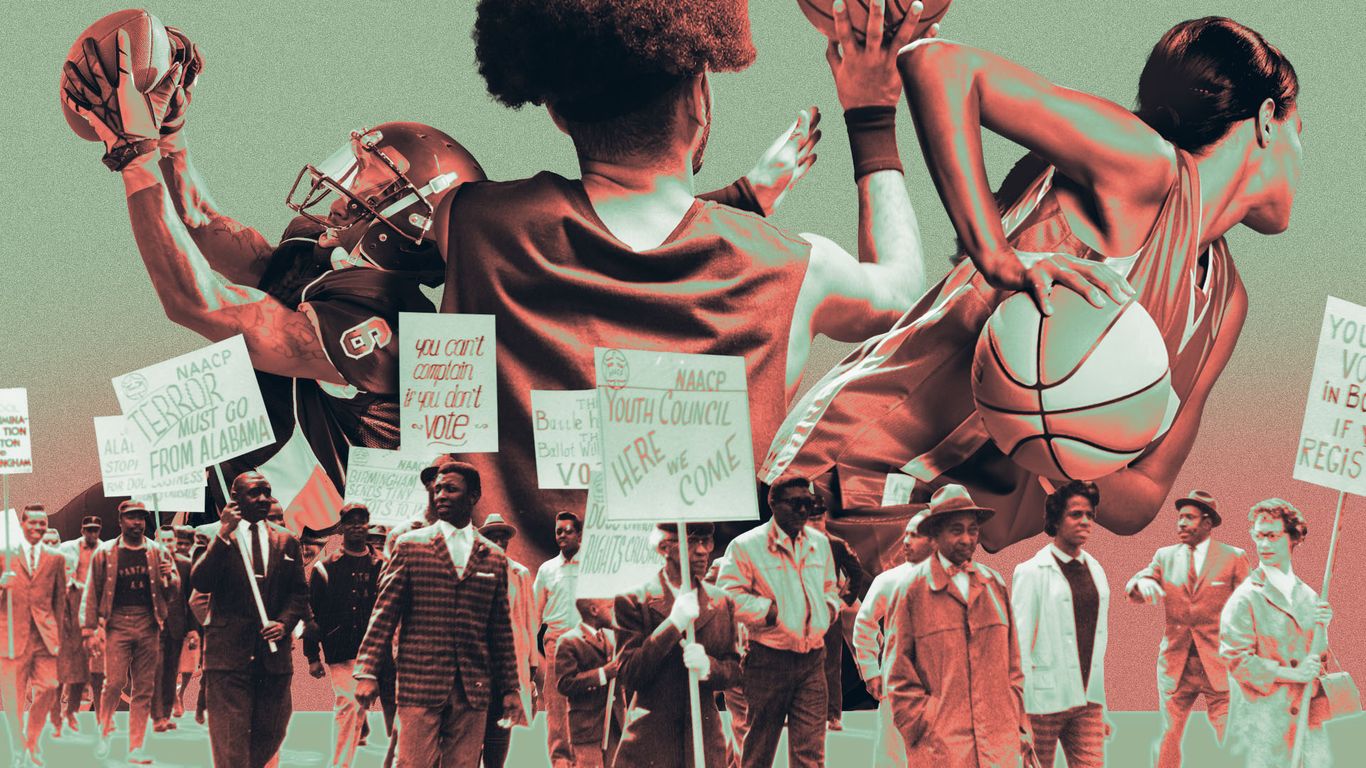
!Photo illustration of three anonymous African American sports players behind people demonstrating for Civil Rights carrying signs urging for voter registration
*Photo illustration: Sarah Grillo/Axios. Photo: LeRoy Ryan/The Boston Globe via Getty Images*
Civil rights groups have called on Black college athletes to boycott schools in states that are rolling back voting rights. But highly paid NIL-era athletes are proving to be unwilling protesters.
**Why it matters:** It's exposing a disconnect between advocates who rely on 1960s-style protest tactics, and prominent athletes in today's $3 billion NIL economy who have different views of activism — and who are unwilling to sacrifice unprecedented financial opportunities.
**The big picture:** NIL (name, image, likeness) was championed as a tool to end the systemic exploitation of Black college athletes in big-revenue sports.
* Irony has taken hold: Those NIL funds can now shield southern institutions from some political pressure, even as state legislatures in those states reduce Black voting power through voting restrictions, political gerrymandering and other actions.
**Catch up quick:** The NAACP in May launched its "Out of Bounds" campaign — a national call for Black athletes, families, fans and alumni to withhold support from public universities in states that the groups say have weakened Black voting rights.
* The move came after the Supreme Court's 6-3 ruling in *Louisiana v. Callais*, which essentially gutted the remaining protections in the Voting Rights Act.
* The NAACP identified eight priority states: Tennessee, Louisiana, Alabama, Florida, Mississippi, South Carolina, Texas and Georgia — home to many of the nation's largest and best-funded college athletic programs.
* The civil rights group said that together, those states' popular collegiate athletic programs generate billions in annual revenue using thousands of Black athletes while their state governments dismantle the political power of Black communities.
**Yes, but:** The first weeks of the NAACP's campaign have produced little visible disruption in recruiting, alumni support or financial repercussions.
* The boycott asks athletes — high school recruits and college players who may transfer — to turn down schools that can offer scholarships, national exposure, lucrative NIL opportunities and top coaching.
* The most prominent athletes — particularly in football and men's basketball — now can be paid into seven figures a year. For some, what they're paid in college could be more than they'd ever make as professional athletes.
* "It does affect a generational wealth opportunity, especially since (NIL) is now paying college students at a rate unlike ever been seen before," Shuwaski Young, a Republican candidate for secretary of state in Mississippi, told Mississippi Public Broadcasting.
**By the numbers:** Black student-athletes made up 16% of all NCAA athletes and 20% of Division I athletes in the 2023-24 academic year, according to NCAA data.
* In the major revenue sports, the share is much higher: Black athletes make up a major portion of Division I football and men's basketball rosters.
**What they're saying:**Derrick Johnson, NAACP national president and CEO, said in a statement that the targeted states are racing to "erase Black political power," and that civil rights advocates need to put pressure on them.
* "The NAACP will not watch the same institutions that depend on Black athletic prowess to fill their stadiums and their bank accounts remain silent while their states strip Black communities of their voice."
**Reality check:** NIL has made the calls to boycott far more complicated than past civil rights pressure campaigns.
* High school recruits still appear drawn to powerhouse programs in the targeted states because those schools offer scholarships, elite coaching, national TV exposure and paths to the NFL and NBA.
* But the biggest NIL opportunities typically flow to athletes who have already built college résumés — established starters, high-profile transfers and players with large social-media followings.
* Some of the most visible football and men's basketball players at public universities in the NAACP's targeted states carry seven-figure NIL valuations, according to On3.
**Since the NAACP campaign launched,** the University of Texas, Texas A&M, Georgia and other Southeastern Conference (SEC) schools' football programs have gotten a flood of commitments from highly rated **—** and expensive **—** transfers and recruits in the high school class of 2027.
**Between the lines:** The failure of the athlete boycott to gain traction is forcing a quiet tactical pivot among some social justice strategists.
* Strategist Rashad Robinson tells Axios there should be demands that Division I coaches make their political campaign contributions more transparent, arguing the public deserves to know where influential college sports figures are directing their money.
* The Congressional Black Caucus opposed the SCORE Act, a federal bill that seeks to regulate NIL agreements — and that would shield universities from liability and other issues by preventing players from being designated as university employees.
* The CBC argues that Congress shouldn't pass legislation benefiting major athletic institutions while those institutions remain silent as Black voting power is dismantled across the South.
* The caucus also has sent letters to the SEC, Atlantic Coast Conference and the NCAA demanding a public response on attacks against Black political representation.
**What we're watching:** Some advocates argue that civil rights groups should shift more pressure toward the adults and institutions around college sports — coaches, conferences, donors and lawmakers — rather than athletes.
*
*
*
Add Axios on Google
What to read next
*
*
*
*
*
*
Smarter, faster on what matters.
Explore Axios Newsletters
* About Axios
* Advertise with us
* Careers
* Contact us
* Newsletters
* Axios Live
* Axios HQ
* Privacy policy
* Terms of use
*
Axios Homepage
Axios Media Inc., 2026
*
* Newsletters
*
* Axios Pro
* Axios Live
* The Axios Show
Axios
Axios
5 hours ago - Politics & Policy
Call for Black athletes' boycott hits an NIL wall
* Russell Contreras ,
* Delano Massey
*
*
*
Add Axios on Google
Add Axios as your preferred source to
see more of our stories on Google.
Add Axios on Google
!Photo illustration of three anonymous African American sports players behind people demonstrating for Civil Rights carrying signs urging for voter registration
*Photo illustration: Sarah Grillo/Axios. Photo: LeRoy Ryan/The Boston Globe via Getty Images*
Civil rights groups have called on Black college athletes to boycott schools in states that are rolling back voting rights. But highly paid NIL-era athletes are proving to be unwilling protesters.
**Why it matters:** It's exposing a disconnect between advocates who rely on 1960s-style protest tactics, and prominent athletes in today's $3 billion NIL economy who have different views of activism — and who are unwilling to sacrifice unprecedented financial opportunities.
**The big picture:** NIL (name, image, likeness) was championed as a tool to end the systemic exploitation of Black college athletes in big-revenue sports.
* Irony has taken hold: Those NIL funds can now shield southern institutions from some political pressure, even as state legislatures in those states reduce Black voting power through voting restrictions, political gerrymandering and other actions.
**Catch up quick:** The NAACP in May launched its "Out of Bounds" campaign — a national call for Black athletes, families, fans and alumni to withhold support from public universities in states that the groups say have weakened Black voting rights.
* The move came after the Supreme Court's 6-3 ruling in *Louisiana v. Callais*, which essentially gutted the remaining protections in the Voting Rights Act.
* The NAACP identified eight priority states: Tennessee, Louisiana, Alabama, Florida, Mississippi, South Carolina, Texas and Georgia — home to many of the nation's largest and best-funded college athletic programs.
* The civil rights group said that together, those states' popular collegiate athletic programs generate billions in annual revenue using thousands of Black athletes while their state governments dismantle the political power of Black communities.
**Yes, but:** The first weeks of the NAACP's campaign have produced little visible disruption in recruiting, alumni support or financial repercussions.
* The boycott asks athletes — high school recruits and college players who may transfer — to turn down schools that can offer scholarships, national exposure, lucrative NIL opportunities and top coaching.
* The most prominent athletes — particularly in football and men's basketball — now can be paid into seven figures a year. For some, what they're paid in college could be more than they'd ever make as professional athletes.
* "It does affect a generational wealth opportunity, especially since (NIL) is now paying college students at a rate unlike ever been seen before," Shuwaski Young, a Republican candidate for secretary of state in Mississippi, told Mississippi Public Broadcasting.
**By the numbers:** Black student-athletes made up 16% of all NCAA athletes and 20% of Division I athletes in the 2023-24 academic year, according to NCAA data.
* In the major revenue sports, the share is much higher: Black athletes make up a major portion of Division I football and men's basketball rosters.
**What they're saying:**Derrick Johnson, NAACP national president and CEO, said in a statement that the targeted states are racing to "erase Black political power," and that civil rights advocates need to put pressure on them.
* "The NAACP will not watch the same institutions that depend on Black athletic prowess to fill their stadiums and their bank accounts remain silent while their states strip Black communities of their voice."
**Reality check:** NIL has made the calls to boycott far more complicated than past civil rights pressure campaigns.
* High school recruits still appear drawn to powerhouse programs in the targeted states because those schools offer scholarships, elite coaching, national TV exposure and paths to the NFL and NBA.
* But the biggest NIL opportunities typically flow to athletes who have already built college résumés — established starters, high-profile transfers and players with large social-media followings.
* Some of the most visible football and men's basketball players at public universities in the NAACP's targeted states carry seven-figure NIL valuations, according to On3.
**Since the NAACP campaign launched,** the University of Texas, Texas A&M, Georgia and other Southeastern Conference (SEC) schools' football programs have gotten a flood of commitments from highly rated **—** and expensive **—** transfers and recruits in the high school class of 2027.
**Between the lines:** The failure of the athlete boycott to gain traction is forcing a quiet tactical pivot among some social justice strategists.
* Strategist Rashad Robinson tells Axios there should be demands that Division I coaches make their political campaign contributions more transparent, arguing the public deserves to know where influential college sports figures are directing their money.
* The Congressional Black Caucus opposed the SCORE Act, a federal bill that seeks to regulate NIL agreements — and that would shield universities from liability and other issues by preventing players from being designated as university employees.
* The CBC argues that Congress shouldn't pass legislation benefiting major athletic institutions while those institutions remain silent as Black voting power is dismantled across the South.
* The caucus also has sent letters to the SEC, Atlantic Coast Conference and the NCAA demanding a public response on attacks against Black political representation.
**What we're watching:** Some advocates argue that civil rights groups should shift more pressure toward the adults and institutions around college sports — coaches, conferences, donors and lawmakers — rather than athletes.
*
*
*
Add Axios on Google
What to read next
*
*
*
*
*
*
Smarter, faster on what matters.
Explore Axios Newsletters
* About Axios
* Advertise with us
* Careers
* Contact us
* Newsletters
* Axios Live
* Axios HQ
* Privacy policy
* Terms of use
*
Axios Homepage
Axios Media Inc., 2026
🔗 Share Article
Tags:#حقوق مدنية#رياضة جامعية#التمييز#حقوق التصويت#الرياضيون الأسود#المقاطعة
Source: Axios
For Context
Related reads from the same topic or latest developments


