Punishment and Silence: China Pulls Out the Disaster Playbook in Tibet
New York Times
N
New York Times
Original Source
While journalists report freely on grief and anger in Nepal, China's state media presented a sanitized account of flood aftermath in Tibet. Beijing authorities deleted videos and eyewitness accounts from social media, imposing administrative penalties on those who questioned official casualty figures.
China Censors and Punishes to Shape Narrative on Floods in Tibet, a Contrast to Nepal - The New York Times
Skip to contentSkip to site index
Asia Pacific
Log in
Tuesday, September 1, 2026
Today’s Paper
* Home
* + U.S.
+ International
+ Canada
+ Español
+ 中文
Asia Pacific
|
Punishment and Silence: China Pulls Out the Disaster Playbook in Tibet
https://www.nytimes.com/2026/09/01/world/asia/china-tibet-floods-nepal-censorship.html
*
*
*
Advertisement
SKIP ADVERTISEMENT
You have a preview view of this article while we are checking your access. When we have confirmed access, the full article content will load.
Supported by
SKIP ADVERTISEMENT
Punishment and Silence: China Pulls Out the Disaster Playbook in Tibet
While journalists can report freely on grief and anger in Nepal, China’s official media have presented a sanitized disaster aftermath in Tibet.
Listen · 6:55 min
*
*
*
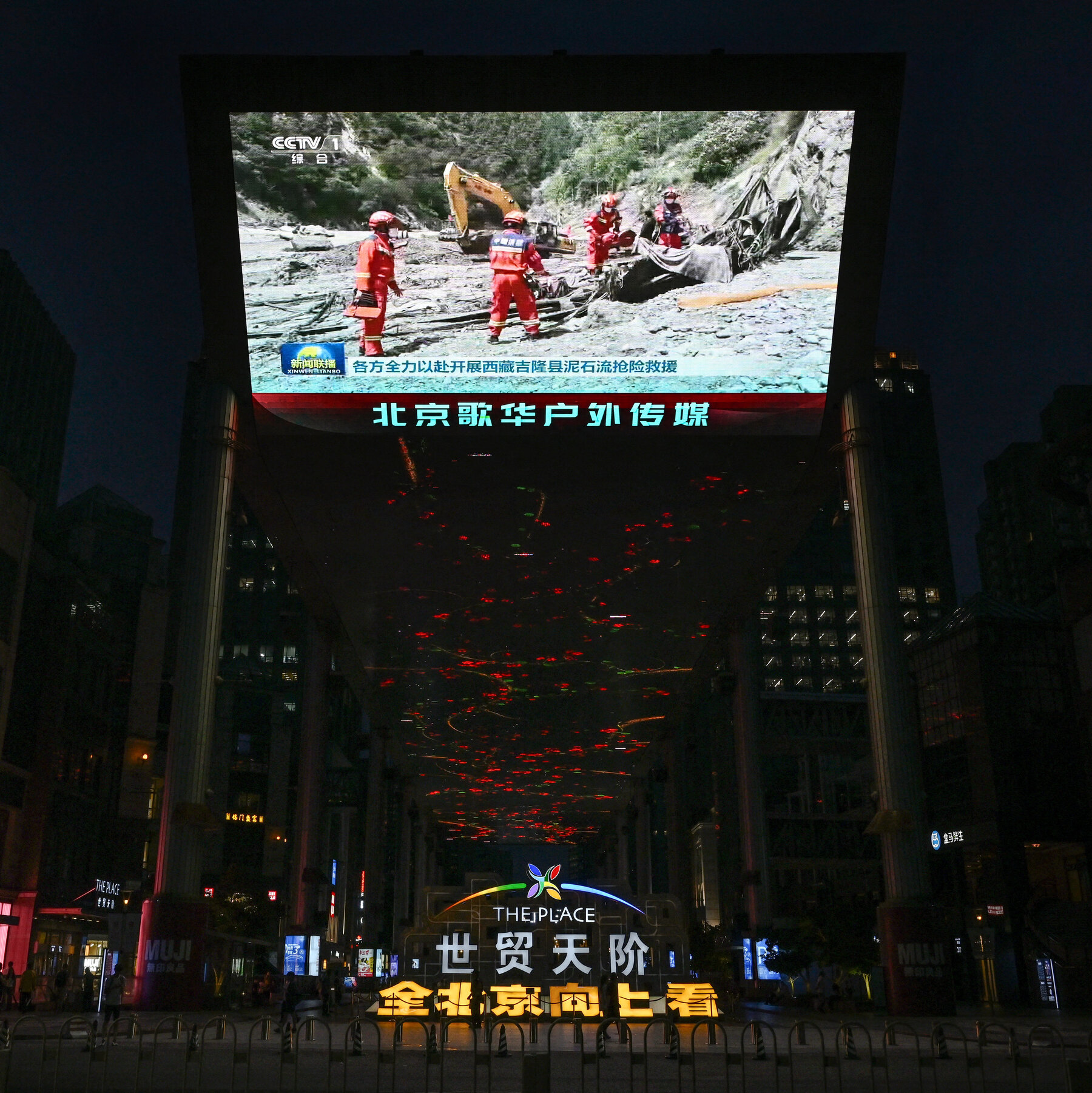
!A screen showing rescue workers and diggers hangs above a plaza at night
*A broadcast in Beijing last week showing state media coverage of the flood aftermath in Tibet.
Credit...
Greg Baker/Agence France-Presse — Getty Images*
By
Alexandra Stevenson
Sept. 1, 2026, 6:44 a.m. ET
See more of our coverage in your search results. Encuentra más de nuestra cobertura en los resultados de búsqueda. Add The New York Times on Google Agrega The New York Times en Google
Rescue workers were only just starting to assess the scope of loss and destruction from deadly Himalayan floods last week when Chinese authorities turned to another challenge: unapproved narratives of the devastation.
Censors quickly deleted videos and eyewitness accounts from social media. Journalists working for state media and social media influencers were warned not to report on casualties or missing people unless their reports aligned with official announcements. People who questioned the official death toll were given “administrative penalties,” punishment that typically involves either a fine of up to $150 or up to ten days in prison.
When some foreign news outlets noted the contrast in coverage between Tibet, where no foreign journalist is allowed to report, and Nepal, where international media have been able to travel freely, the Chinese government called the reporting “malicious speculation.”
The immediate and widespread crackdown on speech reflects two challenges facing China’s ruling Communist Party, which tightly controls information across the country.
The crisis has focused attention on Tibet, a region with a history of unrest and protest centered around demands for more autonomy that are sensitive to Beijing. And it has hit both China and its neighbor, Nepal, where just across the border dozens of journalists have arrived to report witness accounts and talk to families and local residents. That difference has raised questions about what is happening in China.
Image
!Workers in white protective suits carry a body covered by a blue sheet on a stretcher
*A mass burial of victims in Bharatpur, Nepal on Sunday.
Credit...
Atul Loke for The New York Times*
---
Thank you for your patience while we verify access. If you are in Reader mode please exit andlog intoyour Times account, orsubscribefor all of The Times.
---
Thank you for your patience while we verify access.
Already a subscriber?Log in.
Want all of The Times?Subscribe.
Related Content
*
*
*
*
*
*
*
*
*
*
*
*
*
*
*
*
*
*
*
Advertisement
SKIP ADVERTISEMENT
Site Index
Site Information Navigation
* ©2026 The New York Times Company
* NYTCo
* Contact Us
* Accessibility
* Work with us
* Advertise
* T Brand Studio
* Privacy Policy
* Cookie Policy
* Terms of Service
* Terms of Sale
* Site Map
* Canada
* International
* Help
* Subscriptions
*
* California Notices
Skip to contentSkip to site index
Asia Pacific
Log in
Tuesday, September 1, 2026
Today’s Paper
* Home
* + U.S.
+ International
+ Canada
+ Español
+ 中文
Asia Pacific
|
Punishment and Silence: China Pulls Out the Disaster Playbook in Tibet
https://www.nytimes.com/2026/09/01/world/asia/china-tibet-floods-nepal-censorship.html
*
*
*
Advertisement
SKIP ADVERTISEMENT
You have a preview view of this article while we are checking your access. When we have confirmed access, the full article content will load.
Supported by
SKIP ADVERTISEMENT
Punishment and Silence: China Pulls Out the Disaster Playbook in Tibet
While journalists can report freely on grief and anger in Nepal, China’s official media have presented a sanitized disaster aftermath in Tibet.
Listen · 6:55 min
*
*
*
!A screen showing rescue workers and diggers hangs above a plaza at night
*A broadcast in Beijing last week showing state media coverage of the flood aftermath in Tibet.
Credit...
Greg Baker/Agence France-Presse — Getty Images*
By
Alexandra Stevenson
Sept. 1, 2026, 6:44 a.m. ET
See more of our coverage in your search results. Encuentra más de nuestra cobertura en los resultados de búsqueda. Add The New York Times on Google Agrega The New York Times en Google
Rescue workers were only just starting to assess the scope of loss and destruction from deadly Himalayan floods last week when Chinese authorities turned to another challenge: unapproved narratives of the devastation.
Censors quickly deleted videos and eyewitness accounts from social media. Journalists working for state media and social media influencers were warned not to report on casualties or missing people unless their reports aligned with official announcements. People who questioned the official death toll were given “administrative penalties,” punishment that typically involves either a fine of up to $150 or up to ten days in prison.
When some foreign news outlets noted the contrast in coverage between Tibet, where no foreign journalist is allowed to report, and Nepal, where international media have been able to travel freely, the Chinese government called the reporting “malicious speculation.”
The immediate and widespread crackdown on speech reflects two challenges facing China’s ruling Communist Party, which tightly controls information across the country.
The crisis has focused attention on Tibet, a region with a history of unrest and protest centered around demands for more autonomy that are sensitive to Beijing. And it has hit both China and its neighbor, Nepal, where just across the border dozens of journalists have arrived to report witness accounts and talk to families and local residents. That difference has raised questions about what is happening in China.
Image
!Workers in white protective suits carry a body covered by a blue sheet on a stretcher
*A mass burial of victims in Bharatpur, Nepal on Sunday.
Credit...
Atul Loke for The New York Times*
---
Thank you for your patience while we verify access. If you are in Reader mode please exit andlog intoyour Times account, orsubscribefor all of The Times.
---
Thank you for your patience while we verify access.
Already a subscriber?Log in.
Want all of The Times?Subscribe.
Related Content
*
*
*
*
*
*
*
*
*
*
*
*
*
*
*
*
*
*
*
Advertisement
SKIP ADVERTISEMENT
Site Index
Site Information Navigation
* ©2026 The New York Times Company
* NYTCo
* Contact Us
* Accessibility
* Work with us
* Advertise
* T Brand Studio
* Privacy Policy
* Cookie Policy
* Terms of Service
* Terms of Sale
* Site Map
* Canada
* International
* Help
* Subscriptions
*
* California Notices
🔗 Share Article
Tags:#الصين#التبت#الرقابة#الفيضانات#نيبال#حرية الصحافة
Source: New York Times
For Context
Related reads from the same topic or latest developments


