To Win the Peace, Ukraine Must Cope With Vast Numbers of Veterans
Foreign Policy

Foreign Policy
Original Source
With over one million Ukrainian war veterans facing physical and psychological trauma, Kyiv confronts an unprecedented challenge: reintegrating these former soldiers into a war-torn economy. Ukraine's new Veterans Minister reveals ambitious plans to transform military personnel into economic leaders while grappling with limited resources and societal disruption.
Ukraine's New Veterans' Affairs Minister Vitalii Kim Discusses Policy Plans
!Foreign Policy
Foreign Policy
Get analysis and alerts more quickly in the mobile app.
Install
Back to Foreign Policy Magazine home page
* Latest
* Regions
+ Asia & the Pacific
+ China
+ Middle East & Africa
+ Americas
+ Europe
* Newsletters
Editors’ Picks
Evening roundup with our editors’ favorite stories of the day
!World Brief Icon
World Brief
Your guide to the most important world stories of the day
!China Brief Icon
China Brief
The latest news, analysis, and data from the country each week
Situation Report
Weekly update on what’s driving U.S. national security policy
FP Weekend
A curation of our best book reviews, deep dives, and other reads
!Africa Brief Icon
Africa Brief
Essential analysis of the stories shaping geopolitics on the continent
!South Asia Brief Icon
South Asia Brief
Weekly update on developments in India and its neighbors
The Reading List
Curated guides on geopolitics and current affairs
FP Bookshelf
A monthly guide to FP’s book reviews, excerpts, and reading recommendations
!Latin America Brief Icon
Latin America Brief
One-stop digest of politics, economics, and culture
!Southeast Asia Brief Icon
Southeast Asia Brief
A weekly dispatch with news from the region’s 11 countries
The New Geopolitics
A five-part masterclass in IR theory with Harvard Professor Stephen M. Walt
View All Newsletters
* FP Live
* Latest
* Trending:
* AI risk backlash
* Trump-Xi meeting
* Iran war
Search this website
* Preferences
* My FP Feed
* Saved Articles
* Newsletters
* Magazine Archive
* Subscription Settings
* FAQs
* Log Out
Sign In
Sign In
Partner with FP at UNGA81 Partner with FP at UNGA81
Subscribe SubscribePartner with FP at UNGA81 Partner with FP at UNGA81
Report:
To Win the Peace, Ukraine Must Cope With Vast Numbers of Veterans
*
*
* Facebook
* Bluesky
* X
* LinkedIn
* WhatsApp
* Reddit
Save
1. Create an FP account to save articles to read later.
Sign Up
ALREADY AN FP SUBSCRIBER? LOGIN
PDF
1. **Downloadable PDFs** are a benefit of an FP subscription.
Subscribe Now
ALREADY AN FP SUBSCRIBER? LOGIN
Gift
*
*
* WhatsApp
1. Gifting articles is a subscriber benefit.
Subscribe Now
ALREADY AN FP SUBSCRIBER? LOGIN
2. This article is an Insider exclusive.
Contact us at [email protected] to learn about upgrade options, unlocking the ability to gift this article.
Report
To Win the Peace, Ukraine Must Cope With Vast Numbers of Veterans
Ukraine must “build the engine while it’s driving the car,” said Vitalii Kim, the country’s new veterans’ affairs minister.
By **Sam Skove**, a staff writer at *Foreign Policy*.
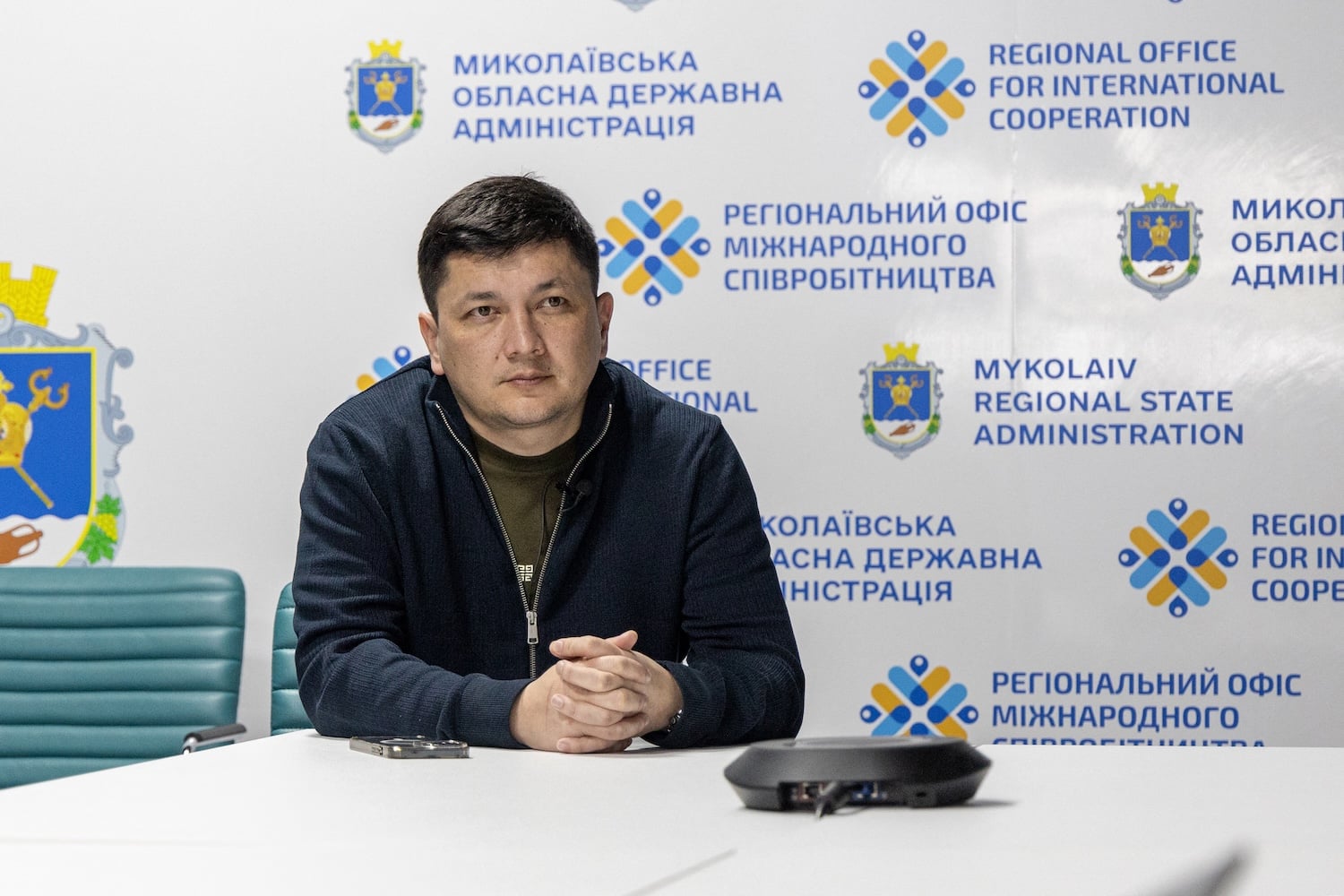
!Vitalii Kim sits at a table in front of a backdrop featuring the logo of the Mykolaiv Regional Military Administration.
*Vitalii Kim sits at a table in front of a backdrop featuring the logo of the Mykolaiv Regional Military Administration.*
Vitalii Kim, then head of the Mykolaiv Regional Military Administration, during an interview in Mykolaiv, Ukraine, on Feb. 14, 2024. Oleksandr Gimanov/AFP via Getty Images
*
*
*
*
September 21, 2026, 6:00 AM
Russia’s War in Ukraine
Understanding the conflict four years on.
More on this topic
Vitalii Kim, Ukraine’s newly appointed minister for veterans’ affairs, has a job few would envy: helping Ukraine’s over 1 million veterans while operating on a shoestring budget, in a war where the shooting is far from over.
Ukraine has to “build the engine while it’s driving the car,” he told *Foreign Policy* last week while visiting the United States to speak with U.S. officials and nongovernmental organizations.
Vitalii Kim, Ukraine’s newly appointed minister for veterans’ affairs, has a job few would envy: helping Ukraine’s over 1 million veterans while operating on a shoestring budget, in a war where the shooting is far from over.
Ukraine has to “build the engine while it’s driving the car,” he told *Foreign Policy* last week while visiting the United States to speak with U.S. officials and nongovernmental organizations.
The problem is vast.
After over four years of war, Ukraine has over 1 million veterans, many of whom suffer from psychological trauma as well as physical injuries, including tens of thousands with missing limbs. The number of veterans following the war’s end could hit 3 million, out of a prewar population of 44 million that has shrunk to under 36 million over the course of the war.
But unlike in the United States, where veterans can return home to a society largely unaffected by war, Ukrainian veterans are living in a war-torn country. Continued Russian attacks are slowing the country’s economic growth while posing a threat to the lives of soldiers who once served on the front line.
The stakes are existential for Ukraine’s economy. “With their families, \[veterans] account for 30 percent of the labor force,” Kim said. “We cannot lose them.” But that challenge could also help solve some of the country’s economic problems, he said, with many of its service members now proven leaders. “We have people with unique skills—we will use these skills in our economy,” Kim said.
Besides traditional problems, such as medical care, there are unique challenges borne from the fact that many soldiers were civilians up until 2022. In some cases, this may help Ukraine—many soldiers had a civilian career they could possibly return to. However, soldiers in combat roles can also earn thousands of dollars in pay per month, versus an average salary of less than $1,000 per month in Ukraine.
“This is a problem; we need to adjust the situation,” Kim said. “We are preparing programs that will stimulate business to pay \[veterans] more.”
Kim’s ministry also needs to address social problems associated with veterans adapting to civilian life—including high rates of divorce and a plummeting birth rate. “Nobody talks about sex at all,” said Kim. “But this is a problem. We need our \[population numbers] to rise.”
Ukraine’s high number of veterans, many of them skilled in fighting, is also fueling a concern in countries bordering Ukraine about the possibility of veterans leaving the war-torn country and contributing to an increase in crime after the end of the war. Kim declined to comment directly on the potential issue but noted that a thriving Ukraine would attract its citizens back.
“Our policy is to create conditions for our veterans so they can work inside the country. And I hope that after the war stops, our citizens will come back and work in the economy of Ukraine,” Kim said.
Kim is not short on ideas for solving the wide array of problems. Among Kim’s wants are special hospitals for veteran care—as exist in the United States—as well as programs for using veterans to speak to other veterans during moments of mental health crises. Kim also floated the idea of giving veterans flexible resources that could be used for a variety of goals, from education to business grants, as well as measures to decrease the chances of divorce.
But Ukraine’s cash-strapped government can spare relatively little for the needs of veterans.
Under a proposed budget for next year, Ukraine would devote two-thirds of its spending to the military, even as the country’s taxable businesses suffer under Russian strikes. In the new budget, spending for veterans would increase by 17 percent, but that amounts to just over $450 million.
Kim said he’s searching for foreign financial support, but he’s also working on projects that can be done with little expenditure and have an impact, like reducing the paperwork load for veterans. “You can do everything with money. My task is to do it without the money and earn money for our budgets,” Kim said.
*
*
*
*
**Sam Skove** is a staff writer at *Foreign Policy*. X:@samuelskove
Read More On
Eastern Europe|
Economics|
Military|
Russia|
Ukraine|
War
Join the Conversation
Commenting is a benefit of a *Foreign Policy* subscription.
Subscribe Subscr
!Foreign Policy
Foreign Policy
Get analysis and alerts more quickly in the mobile app.
Install
Back to Foreign Policy Magazine home page
* Latest
* Regions
+ Asia & the Pacific
+ China
+ Middle East & Africa
+ Americas
+ Europe
* Newsletters
Editors’ Picks
Evening roundup with our editors’ favorite stories of the day
!World Brief Icon
World Brief
Your guide to the most important world stories of the day
!China Brief Icon
China Brief
The latest news, analysis, and data from the country each week
Situation Report
Weekly update on what’s driving U.S. national security policy
FP Weekend
A curation of our best book reviews, deep dives, and other reads
!Africa Brief Icon
Africa Brief
Essential analysis of the stories shaping geopolitics on the continent
!South Asia Brief Icon
South Asia Brief
Weekly update on developments in India and its neighbors
The Reading List
Curated guides on geopolitics and current affairs
FP Bookshelf
A monthly guide to FP’s book reviews, excerpts, and reading recommendations
!Latin America Brief Icon
Latin America Brief
One-stop digest of politics, economics, and culture
!Southeast Asia Brief Icon
Southeast Asia Brief
A weekly dispatch with news from the region’s 11 countries
The New Geopolitics
A five-part masterclass in IR theory with Harvard Professor Stephen M. Walt
View All Newsletters
* FP Live
* Latest
* Trending:
* AI risk backlash
* Trump-Xi meeting
* Iran war
Search this website
* Preferences
* My FP Feed
* Saved Articles
* Newsletters
* Magazine Archive
* Subscription Settings
* FAQs
* Log Out
Sign In
Sign In
Partner with FP at UNGA81 Partner with FP at UNGA81
Subscribe SubscribePartner with FP at UNGA81 Partner with FP at UNGA81
Report:
To Win the Peace, Ukraine Must Cope With Vast Numbers of Veterans
*
*
* Bluesky
* X
Save
1. Create an FP account to save articles to read later.
Sign Up
ALREADY AN FP SUBSCRIBER? LOGIN
1. **Downloadable PDFs** are a benefit of an FP subscription.
Subscribe Now
ALREADY AN FP SUBSCRIBER? LOGIN
Gift
*
*
1. Gifting articles is a subscriber benefit.
Subscribe Now
ALREADY AN FP SUBSCRIBER? LOGIN
2. This article is an Insider exclusive.
Contact us at [email protected] to learn about upgrade options, unlocking the ability to gift this article.
Report
To Win the Peace, Ukraine Must Cope With Vast Numbers of Veterans
Ukraine must “build the engine while it’s driving the car,” said Vitalii Kim, the country’s new veterans’ affairs minister.
By **Sam Skove**, a staff writer at *Foreign Policy*.
!Vitalii Kim sits at a table in front of a backdrop featuring the logo of the Mykolaiv Regional Military Administration.
*Vitalii Kim sits at a table in front of a backdrop featuring the logo of the Mykolaiv Regional Military Administration.*
Vitalii Kim, then head of the Mykolaiv Regional Military Administration, during an interview in Mykolaiv, Ukraine, on Feb. 14, 2024. Oleksandr Gimanov/AFP via Getty Images
*
*
*
*
September 21, 2026, 6:00 AM
Russia’s War in Ukraine
Understanding the conflict four years on.
Vitalii Kim, Ukraine’s newly appointed minister for veterans’ affairs, has a job few would envy: helping Ukraine’s over 1 million veterans while operating on a shoestring budget, in a war where the shooting is far from over.
Ukraine has to “build the engine while it’s driving the car,” he told *Foreign Policy* last week while visiting the United States to speak with U.S. officials and nongovernmental organizations.
Vitalii Kim, Ukraine’s newly appointed minister for veterans’ affairs, has a job few would envy: helping Ukraine’s over 1 million veterans while operating on a shoestring budget, in a war where the shooting is far from over.
Ukraine has to “build the engine while it’s driving the car,” he told *Foreign Policy* last week while visiting the United States to speak with U.S. officials and nongovernmental organizations.
The problem is vast.
After over four years of war, Ukraine has over 1 million veterans, many of whom suffer from psychological trauma as well as physical injuries, including tens of thousands with missing limbs. The number of veterans following the war’s end could hit 3 million, out of a prewar population of 44 million that has shrunk to under 36 million over the course of the war.
But unlike in the United States, where veterans can return home to a society largely unaffected by war, Ukrainian veterans are living in a war-torn country. Continued Russian attacks are slowing the country’s economic growth while posing a threat to the lives of soldiers who once served on the front line.
The stakes are existential for Ukraine’s economy. “With their families, \[veterans] account for 30 percent of the labor force,” Kim said. “We cannot lose them.” But that challenge could also help solve some of the country’s economic problems, he said, with many of its service members now proven leaders. “We have people with unique skills—we will use these skills in our economy,” Kim said.
Besides traditional problems, such as medical care, there are unique challenges borne from the fact that many soldiers were civilians up until 2022. In some cases, this may help Ukraine—many soldiers had a civilian career they could possibly return to. However, soldiers in combat roles can also earn thousands of dollars in pay per month, versus an average salary of less than $1,000 per month in Ukraine.
“This is a problem; we need to adjust the situation,” Kim said. “We are preparing programs that will stimulate business to pay \[veterans] more.”
Kim’s ministry also needs to address social problems associated with veterans adapting to civilian life—including high rates of divorce and a plummeting birth rate. “Nobody talks about sex at all,” said Kim. “But this is a problem. We need our \[population numbers] to rise.”
Ukraine’s high number of veterans, many of them skilled in fighting, is also fueling a concern in countries bordering Ukraine about the possibility of veterans leaving the war-torn country and contributing to an increase in crime after the end of the war. Kim declined to comment directly on the potential issue but noted that a thriving Ukraine would attract its citizens back.
“Our policy is to create conditions for our veterans so they can work inside the country. And I hope that after the war stops, our citizens will come back and work in the economy of Ukraine,” Kim said.
Kim is not short on ideas for solving the wide array of problems. Among Kim’s wants are special hospitals for veteran care—as exist in the United States—as well as programs for using veterans to speak to other veterans during moments of mental health crises. Kim also floated the idea of giving veterans flexible resources that could be used for a variety of goals, from education to business grants, as well as measures to decrease the chances of divorce.
But Ukraine’s cash-strapped government can spare relatively little for the needs of veterans.
Under a proposed budget for next year, Ukraine would devote two-thirds of its spending to the military, even as the country’s taxable businesses suffer under Russian strikes. In the new budget, spending for veterans would increase by 17 percent, but that amounts to just over $450 million.
Kim said he’s searching for foreign financial support, but he’s also working on projects that can be done with little expenditure and have an impact, like reducing the paperwork load for veterans. “You can do everything with money. My task is to do it without the money and earn money for our budgets,” Kim said.
*
*
*
*
**Sam Skove** is a staff writer at *Foreign Policy*. X:@samuelskove
Read More On
Eastern Europe|
Economics|
Military|
Russia|
Ukraine|
War
Join the Conversation
Commenting is a benefit of a *Foreign Policy* subscription.
Subscribe Subscr
🔗 Share Article
Tags:#أوكرانيا#المحاربون القدماء#إعادة الدمج الاجتماعي#الحرب الروسية الأوكرانية#الاقتصاد#الصحة النفسية
Source: Foreign Policy
For Context
Related reads from the same topic or latest developments