Watergate Babies’ Lessons for the New Democratic Congress
By using this website, you agree to our use of cookies. This use includes personalization of content and ads, and traffic analytics. Review our Privacy Policy for more information.
Foreign Policy Get analysis and alerts more quickly in the mobile app.
Install
Back to Foreign Policy Magazine home page
Evening roundup with our editors’ favorite stories of the day
World Brief
Your guide to the most important world stories of the day
China Brief
The latest news, analysis, and data from the country each week
Situation Report
Weekly update on what’s driving U.S. national security policy
FP Weekend
A curation of our best book reviews, deep dives, and other reads
Africa Brief
Essential analysis of the stories shaping geopolitics on the continent
South Asia Brief
Weekly update on developments in India and its neighbors
The Reading List
Curated guides on geopolitics and current affairs
FP Bookshelf
A monthly guide to FP’s book reviews, excerpts, and reading recommendations
Latin America Brief
One-stop digest of politics, economics, and culture
Southeast Asia Brief
A weekly dispatch with news from the region’s 11 countries
The New Geopolitics
A five-part masterclass in IR theory with Harvard Professor Stephen M. Walt
View All Newsletters
Give a gift Give a gift
Subscribe Subscribe Give a gift Give a gift
Analysis: Lessons From the Watergate Babies for the ‘No Kings’ Congress
1. Create an FP account to save articles to read later.
Sign Up
ALREADY AN FP SUBSCRIBER? LOGIN
PDF
1. **Downloadable PDFs** are a benefit of an FP subscription.
ALREADY AN FP SUBSCRIBER? LOGIN
Gift
1. Gifting articles is a subscriber benefit.
ALREADY AN FP SUBSCRIBER? LOGIN
2. This article is an Insider exclusive.
Contact us at [email protected] to learn about upgrade options, unlocking the ability to gift this article.
Analysis
Lessons From the Watergate Babies for the ‘No Kings’ Congress
The one thing they can’t afford to do is nothing.
*A pencil drawing of a man smiling and wearing glasses*
*Julian E. Zelizer*
By **Julian E. Zelizer**, a columnist at *Foreign Policy* and a professor of history and public affairs at Princeton University. Sign up for Julian’s newsletter, The Long View, here.
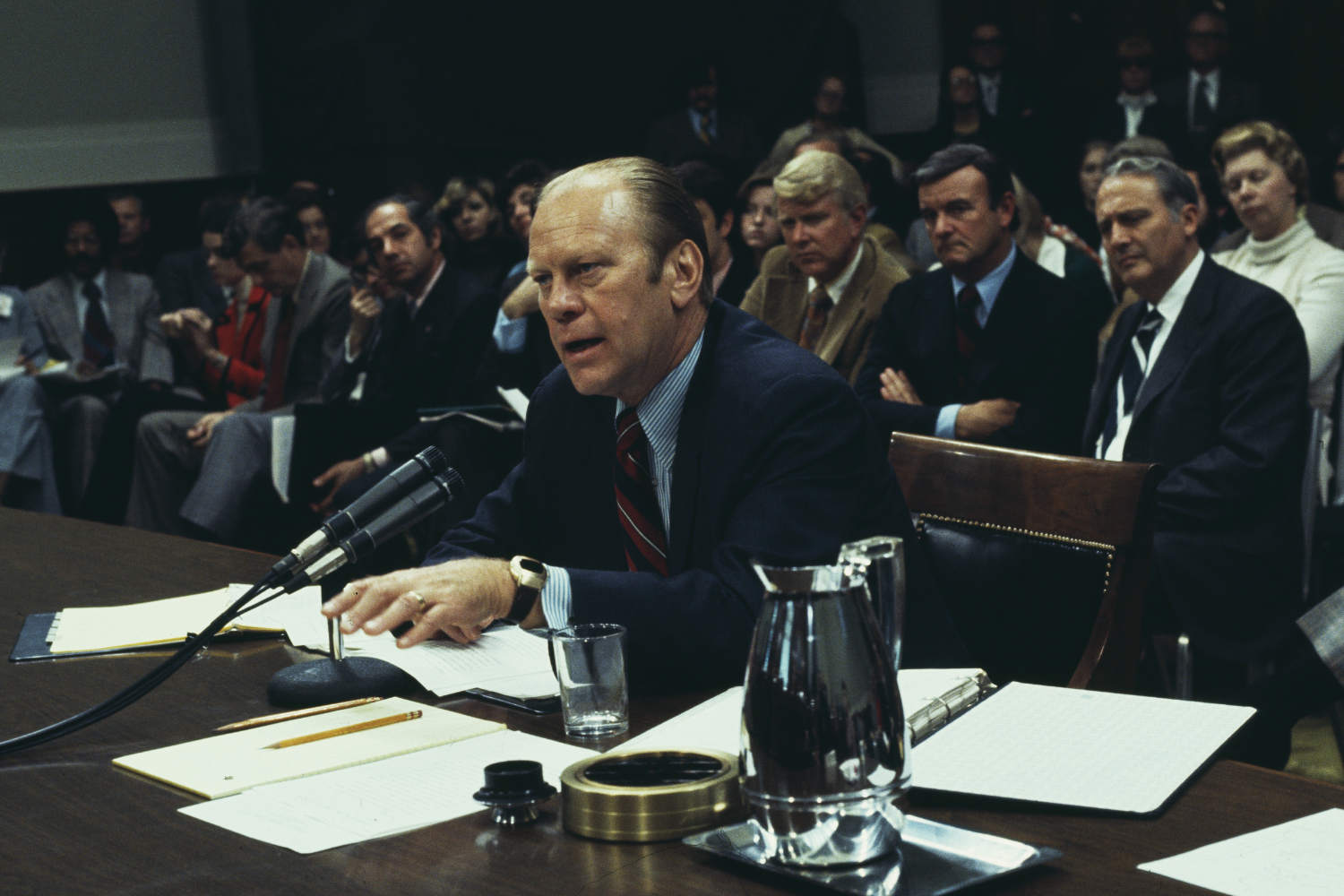
*A photograph of U.S. President Gerald Ford speaking into a microphone before the House Judiciary Subcommittee for his pardon of former President Richard Nixon in Washington D.C. on Oct. 17th, 1974.*
U.S. President Gerald Ford appears before the House Judiciary Subcommittee for his pardon of former President Richard Nixon in Washington D.C. on Oct. 17th, 1974. Bettmann Archive/Getty Images
My FP: Follow topics and authors to get straight to what you like. Exclusively for FP subscribers. Subscribe Now | Log In
November 16, 2026, 12:01 AM
Democrats scored a stunning victory in the 2026 midterms. Although many pollsters predicted a strong showing for the party out of power, few expected the map to look so blue by the end. In some ways, Texas looked as Democratic as New York or California.
Now the question for Democrats is: What comes next?
However large their majorities in the House of Representatives and the Senate, they will face a Republican president who is extraordinarily aggressive in his use of executive power, as well as a Supreme Court that has been generally sympathetic to his vision of the presidency. If Democrats pass legislation, President Donald Trump will likely veto it. If Democrats investigate him, he will stonewall and wield his pardon power for allies who do the same. If they try to stop the war in Iran, he will draw on decades of accumulated presidential war powers to keep doing what he wants.
But the 120th Congress is not the first to face such a difficult situation. In 1975, the new class of House and Senate Democrats elected in the aftermath of President Richard Nixon’s resignation squared off against Republican President Gerald Ford. For all his talk of healing the nation and moving beyond the most contentious issues of the moment, Ford was also willing to use the veto to cut the Democratic Congress down to size. Though he understood that in Nixon’s shadow he had to scale back the presidency, he was not willing to give up the many tools at his disposal.
Yet the 94th Congress—propelled by the Watergate Babies, as they were known—found ways to use its legislative power to pursue internal reform, advance a legislative agenda, and help create the conditions for Jimmy Carter’s election in 1976. Democratic members of the incoming “No Kings Congress,” as we might call it, should take notes.
In November 1974, the nation was reeling from division, scandal, and crisis. A decade of domestic conflict over race relations and the Vietnam War had opened deep rifts throughout U.S. society. Public trust in government had plummeted, largely as a result of the war. The economy was also in shambles in the early part of the decade, as the United States, which had enjoyed unprecedented economic growth after World War II, suffered from unemployment, inflation, and an oil embargo.
Then came Watergate. Richard Nixon revealed what an imperial presidency looked like. Not only did he continue with secret military operations in Southeast Asia despite having promised to end the war in Vietnam, but he used the executive branch to intimidate, spy on, and threaten U.S. citizens; impounded money that Congress had appropriated; and engaged in dirty tricks against his opponents. As the scandal unfolded between 1972 and 1974, a story that began with a break-in at the Democratic National Committee Headquarters in the Watergate Complex grew into something much bigger: a revelation about the abuse of power that culminated in Nixon’s resignation, after being told that many Senate Republicans would vote to remove him from office if the House of Representatives passed articles of impeachment. After Nixon left office, Ford eroded the goodwill the public had for him by pardoning Nixon for any crimes that he might have committed. Ford’s approval ratings plummeted and many Americans came to see him as part of the problem.
The midterm campaigns had centered on the economy and on corruption in the political system. Democratic candidates promised a robust response to Americans’ pocketbook struggles and vowed to fix the problems the scandal had exposed in the political system. The midterms delivered a body blow to Republicans, even though they still controlled the White House. Democrats gained 49 seats in the House, bringing their total to 291,
Lessons From the Watergate Babies for the ‘No Kings’ Congress
Democrats scored a stunning victory in the 2026 midterms, but they will confront a Republican president who wields executive power aggressively and a Supreme Court largely sympathetic to his vision. Julian Zelizer argues that the experience of the Watergate Babies in 1975 offers useful lessons for the incoming Congress.
Cross Lines newsroom
Share this article
#الكونغرس الأمريكي#الديمقراطيون#انتخابات منتصف الولاية#ووترغيت#دونالد ترامب#السلطة التنفيذية
Original source: Foreign Policy