'High risk' of lake breaching and causing second flood, warns China
BBC World

BBC World
Original Source
China has warned of a high risk that a glacier-formed barrier lake near the Nepal-Tibet border could breach and trigger a second flood downstream. The alert follows a deadly flash flood on Wednesday caused by a mountain glacier collapse into a river.
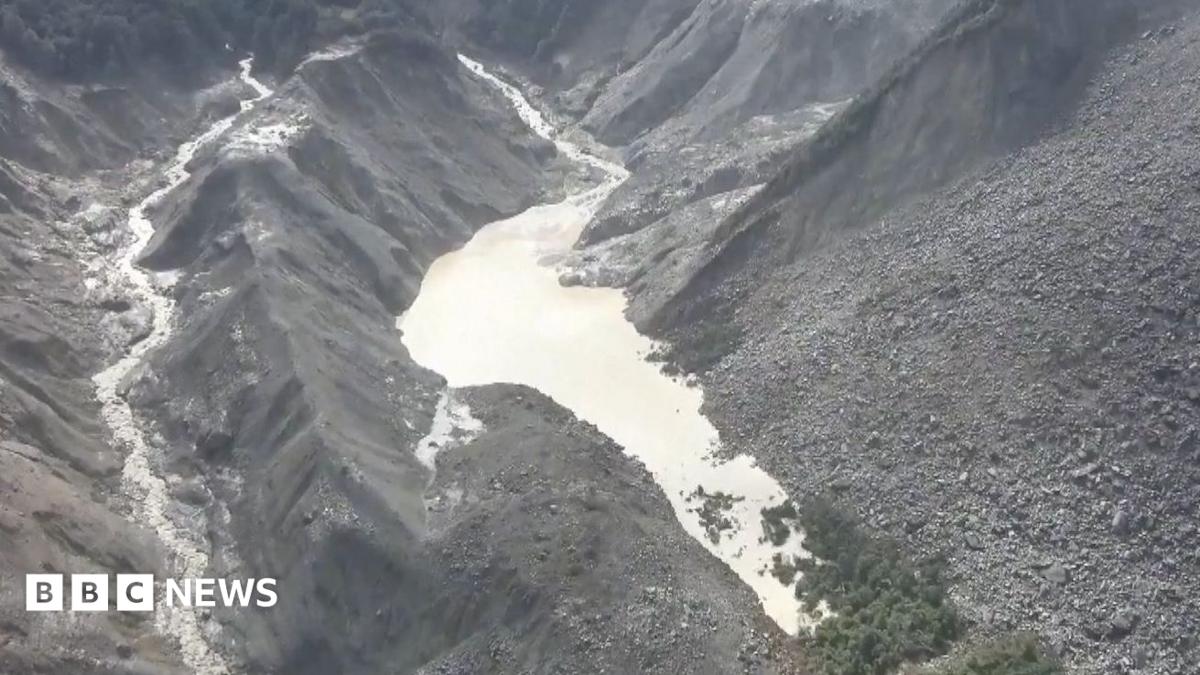
China has warned there is a "high risk" a lake that formed after the recent landslide near the Nepal-Tibet border may breach its banks, causing a second flood downstream.
The warning comes after Wednesday's deadly flash flood in the same area, which scientists say was triggered by the collapse of a mountain glacier into a river.
As of Friday, an estimated 2.5 million cubic metres of water had accumulated, according to broadcaster CCTV. Officials said that three million cubic metres of water was expected to flow into the lake between Thursday and the weekend, posing a "high risk of breach".
But experts have told the BBC that it was possible that the lake could drain out naturally over time.
China's Ministry of Water resources said that the barrier lake - a body of water formed when debris dams up a river - had formed at the confluence of the Chhochen Khola and Purepu Tsangpo rivers.
It is near the Langtang Lirung peak where the collapsed glacier is believed to have originated, and several kilometres upstream from Gyirong Port, the major land crossing linking Nepal and China which was hit by Wednesday's massive flood.
The barrier lake had started to overflow on Thursday. Then on Friday morning, a Chinese military drone captured footage of an avalanche on a snow-capped mountain which deposited an estimated 50,000 cubic metres of ice debris into the barrier lake.
Authorities issued warnings and orders to prepare for emergency evacuations. Rescue work was suspended as most of the Chinese emergency services stopped at a village about 7km (4 miles) from Gyirong Port.
This was because the barrier lake at that time was "overflowing non-stop", which could lead to fresh floods or debris flows, according to a CCTV report.
But by Friday afternoon, state media reported that the "risk from the upstream barrier lake had come under control" and that rescue operations had resumed.
Authorities have since sent engineering teams to monitor the lake's water levels and the atmospheric conditions, and drones have been flown in to drop off equipment and supplies.
Jakob Steiner, a geoscientist with the University of Graz who has researched lake bursts in Nepal, told the BBC there was still a possibility that the lake could breach its banks.
"Not all the material on the mountain could have come down, it is still unstable, so there's a chance that something will drop," he said, adding that if the material dropped into the lake or even further upstream, "then we have a problem".
Chinese state media have also reported there will be heavy rainfall and storms in the region in the coming days, raising concerns that this may cause the lake to swell.
If the lake breaches its banks, there will not likely be a massive deluge of water as seen on Wednesday as the lake formed recently and was not very deep, said Steiner.
However, the water discharged could further undercut the valley's slopes and cause more erosion - which could in turn cause more landslides.
"Authorities need to be very careful for the rescue and prepared for any secondary wave and post-disaster landslides as the valley walls have been scoured and much more vulnerable," said Mohd Farooq Azam, a glacio-hydrologist with scientific institution the International Centre for Integrated Mountain Development.
Steiner said it was unlikely that the Chinese could stop the lake from overflowing.
He pointed out that, while it was technically possible to artificially drain the lake using excavators, there were no proper roads that would allow them to transport heavy machinery to the lake's location.
The warning comes after Wednesday's deadly flash flood in the same area, which scientists say was triggered by the collapse of a mountain glacier into a river.
As of Friday, an estimated 2.5 million cubic metres of water had accumulated, according to broadcaster CCTV. Officials said that three million cubic metres of water was expected to flow into the lake between Thursday and the weekend, posing a "high risk of breach".
But experts have told the BBC that it was possible that the lake could drain out naturally over time.
China's Ministry of Water resources said that the barrier lake - a body of water formed when debris dams up a river - had formed at the confluence of the Chhochen Khola and Purepu Tsangpo rivers.
It is near the Langtang Lirung peak where the collapsed glacier is believed to have originated, and several kilometres upstream from Gyirong Port, the major land crossing linking Nepal and China which was hit by Wednesday's massive flood.
The barrier lake had started to overflow on Thursday. Then on Friday morning, a Chinese military drone captured footage of an avalanche on a snow-capped mountain which deposited an estimated 50,000 cubic metres of ice debris into the barrier lake.
Authorities issued warnings and orders to prepare for emergency evacuations. Rescue work was suspended as most of the Chinese emergency services stopped at a village about 7km (4 miles) from Gyirong Port.
This was because the barrier lake at that time was "overflowing non-stop", which could lead to fresh floods or debris flows, according to a CCTV report.
But by Friday afternoon, state media reported that the "risk from the upstream barrier lake had come under control" and that rescue operations had resumed.
Authorities have since sent engineering teams to monitor the lake's water levels and the atmospheric conditions, and drones have been flown in to drop off equipment and supplies.
Jakob Steiner, a geoscientist with the University of Graz who has researched lake bursts in Nepal, told the BBC there was still a possibility that the lake could breach its banks.
"Not all the material on the mountain could have come down, it is still unstable, so there's a chance that something will drop," he said, adding that if the material dropped into the lake or even further upstream, "then we have a problem".
Chinese state media have also reported there will be heavy rainfall and storms in the region in the coming days, raising concerns that this may cause the lake to swell.
If the lake breaches its banks, there will not likely be a massive deluge of water as seen on Wednesday as the lake formed recently and was not very deep, said Steiner.
However, the water discharged could further undercut the valley's slopes and cause more erosion - which could in turn cause more landslides.
"Authorities need to be very careful for the rescue and prepared for any secondary wave and post-disaster landslides as the valley walls have been scoured and much more vulnerable," said Mohd Farooq Azam, a glacio-hydrologist with scientific institution the International Centre for Integrated Mountain Development.
Steiner said it was unlikely that the Chinese could stop the lake from overflowing.
He pointed out that, while it was technically possible to artificially drain the lake using excavators, there were no proper roads that would allow them to transport heavy machinery to the lake's location.
🔗 Share Article
Tags:#الصين#فيضانات#كوارث طبيعية#النيبال#التبت#الانهيارات الأرضية
Source: BBC World
For Context
Related reads from the same topic or latest developments


