Trump Picks the Wrong Beef Before Midterms
Foreign Policy

Foreign Policy
Original Source
President Trump faces fierce backlash from the U.S. agricultural sector over his plan to boost ground beef imports at reduced tariff rates to combat record prices. With midterm elections just weeks away, the move risks alienating a crucial constituency and Republican allies at a critical political moment.
Trump's Beef Import Plan Angers Agricultural Sector Before Midterm Elections
By using this website, you agree to our use of cookies. This use includes personalization of content and ads, and traffic analytics. Review our Privacy Policy for more information.
!Foreign Policy
Foreign Policy
Get analysis and alerts more quickly in the mobile app.
Install
Back to Foreign Policy Magazine home page
* Latest
* Regions
+ Asia & the Pacific
+ China
+ Middle East & Africa
+ Americas
+ Europe
* Newsletters
Editors’ Picks
Evening roundup with our editors’ favorite stories of the day
!World Brief Icon
World Brief
Your guide to the most important world stories of the day
!China Brief Icon
China Brief
The latest news, analysis, and data from the country each week
Situation Report
Weekly update on what’s driving U.S. national security policy
FP Weekend
A curation of our best book reviews, deep dives, and other reads
!Africa Brief Icon
Africa Brief
Essential analysis of the stories shaping geopolitics on the continent
!South Asia Brief Icon
South Asia Brief
Weekly update on developments in India and its neighbors
The Reading List
Curated guides on geopolitics and current affairs
FP Bookshelf
A monthly guide to FP’s book reviews, excerpts, and reading recommendations
!Latin America Brief Icon
Latin America Brief
One-stop digest of politics, economics, and culture
!Southeast Asia Brief Icon
Southeast Asia Brief
A weekly dispatch with news from the region’s 11 countries
The New Geopolitics
A five-part masterclass in IR theory with Harvard Professor Stephen M. Walt
View All Newsletters
* FP Live
* Latest
* Trending:
* 25 years after 9/11
* Germany elections
Search this website
* Preferences
* My FP Feed
* Saved Articles
* Newsletters
* Magazine Archive
* Subscription Settings
* FAQs
* Log Out
Sign In
Sign In
Partner with FP at UNGA81 Partner with FP at UNGA81
Subscribe SubscribePartner with FP at UNGA81 Partner with FP at UNGA81
Analysis:
Trump Picks the Wrong Beef Before Midterms
*
*
* Facebook
* Bluesky
* X
* LinkedIn
* WhatsApp
* Reddit
Save
1. Create an FP account to save articles to read later.
Sign Up
ALREADY AN FP SUBSCRIBER? LOGIN
PDF
1. **Downloadable PDFs** are a benefit of an FP subscription.
Subscribe Now
ALREADY AN FP SUBSCRIBER? LOGIN
Gift
*
*
* WhatsApp
1. Gifting articles is a subscriber benefit.
Subscribe Now
ALREADY AN FP SUBSCRIBER? LOGIN
2. This article is an Insider exclusive.
Contact us at [email protected] to learn about upgrade options, unlocking the ability to gift this article.
Analysis
Trump Picks the Wrong Beef Before Midterms
The president’s plan to tame soaring beef prices has alienated a key constituency.
By **Christina Lu**, a staff writer at *Foreign Policy*.
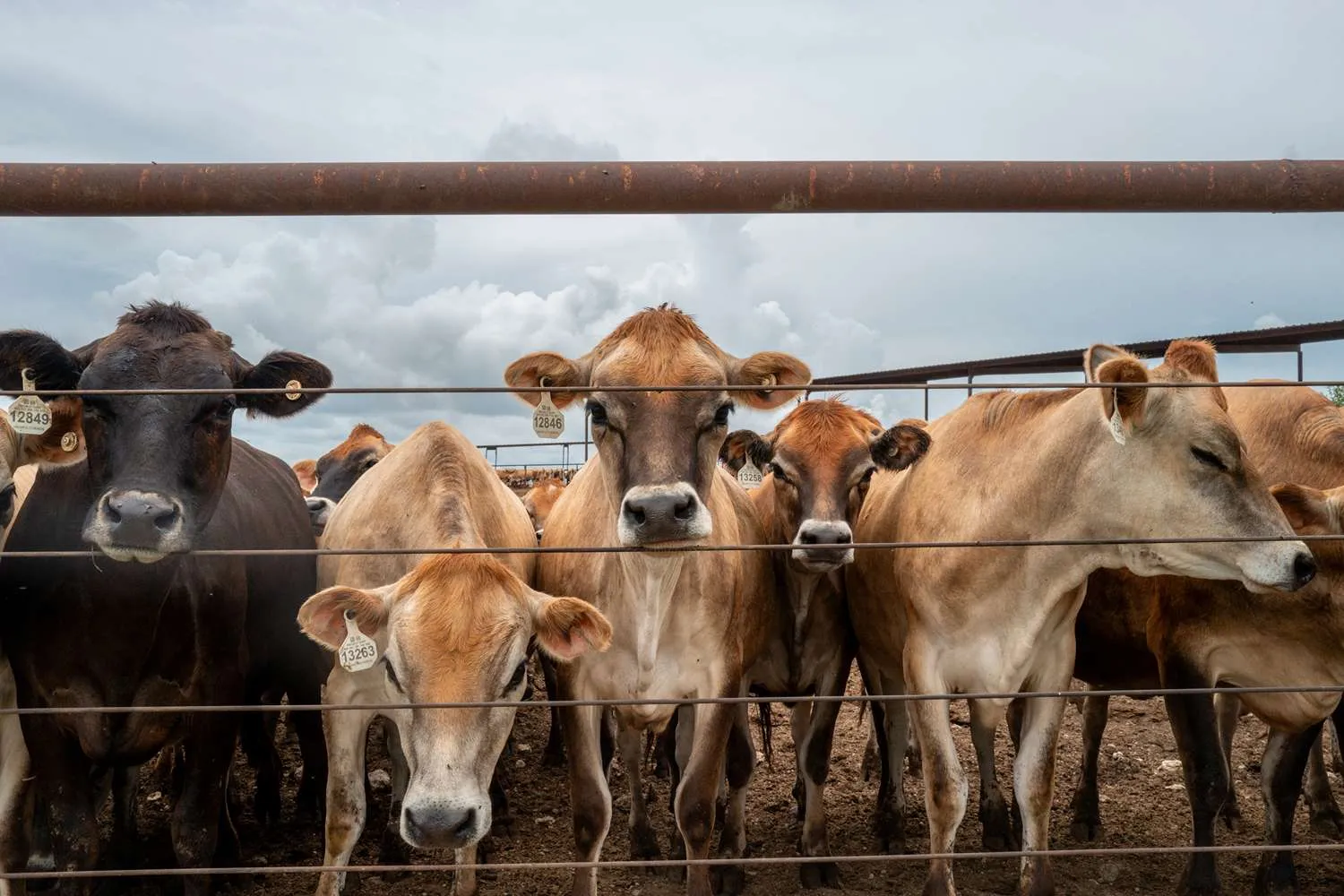
!Cattle are herded in a stable in Hamilton, Texas.
*Cattle are herded in a stable in Hamilton, Texas.*
Cattle are herded in a stable in Hamilton, Texas, on June 5. Brandon Bell/Getty Images
1. Get audio access with any FP subscription.
Subscribe Now
ALREADY AN FP SUBSCRIBER? LOGIN
September 15, 2026, 2:49 PM
With less than two months to go before high-stakes midterm elections, U.S. President Donald Trump is facing fierce—and rare—blowback from a key constituency and Republican lawmakers alike.
The U.S. agricultural sector has been in an uproar over Trump’s recently announced plan to boost imports of ground beef at a reduced tariff rate, part of a broader effort to drag down record beef prices. Ground beef prices surged yet again in August, powered by tight supplies and continuously strong demand for the staple meat. The plan, which was announced last month, would see 300,000 metric tons of lean beef trimmings enter the country for 90 days. It comes as the sector reels from surging energy and fertilizer prices, ongoing trade whiplash, and sweepingcuts to the U.S. Department of Agriculture.
With less than two months to go before high-stakes midterm elections, U.S. President Donald Trump is facing fierce—and rare—blowback from a key constituency and Republican lawmakers alike.
The U.S. agricultural sector has been in an uproar over Trump’s recently announced plan to boost imports of ground beef at a reduced tariff rate, part of a broader effort to drag down record beef prices. Ground beef prices surged yet again in August, powered by tight supplies and continuously strong demand for the staple meat. The plan, which was announced last month, would see 300,000 metric tons of lean beef trimmings enter the country for 90 days. It comes as the sector reels from surging energy and fertilizer prices, ongoing trade whiplash, and sweepingcuts to the U.S. Department of Agriculture.
The president of the American Farm Bureau Federation, the country’s largest agricultural lobby, blasted the move as a “gut punch to ranchers’ bottom line.”
Retiring Sen. Thom Tillis also heaped on the criticism. “If you think that providing subsidized beef for some period of time is going to make farmers happy and prices go down on a systemic basis, you’re wrong. Doesn’t happen,” he told reporters last month.
As midterms loom, that backlash could prove consequential.
“We’ve got 71 days” until the election, Tillis added at the time, “and right now we don’t have a positive message to tell farm country.”
“The farming community has proved it’s willing to tolerate a fair amount of indignity and injury, but there’s only so much they can take before they revolt,” Christopher Barrett, an agricultural economist at Cornell University, told *Foreign Policy*.
---
Beef prices
have reached
record heights in large part because there are so few cattle in the United States.
The size of the U.S. cattle herd has shrunk to a 75-year low as the sector has confronted compounding financial challenges. For ranchers, the combination of surging input costs, market headwinds, and climate challenges has meant that it has been more profitable to sell their animals rather than raising them for breeding.
“The fundamental reason why beef prices are high in the United States right now is that the cost of beef production has gotten very high and therefore ranchers have reduced the aggregate herd size,” Barrett said. And 300,000 metric tons of beef “of unknown origin and quality does absolutely nothing to address the underlying structural supply-side issue.”
Higher cattle prices typically incentivize producers to rebuild their herds. But that takes time. Animal production typically works in cycles, and the one for cattle lasts about 10 years, said Elliott Dennis, an agricultural economist at the University of Missouri. Cows birth one calf at a time, which means that when a producer does decide to retain animals and rebuild their herds, it takes years to do so.
Further complicating the matter has been the spread of the New World screwworm, the flesh-eating parasite that has infected cattle in both the United States and Mexico, whose imports typically account for around 3 percent of the U.S. cattle supply. The Trump administration closed the U.S.-Mexico border to cattle imports last year in an effort to contain the screwworm, although it reopened an Arizona border crossing in August to help ease beef prices.
In some regions, punishing drought and wildfires have also parched grazing land, with devastating implications for producers. Nearly three-quarters of the U.S. cattle herd was impacted by drought conditions this spring, the U.S. Drought Monitor reported in May.
Read More
*
*A woman cycles past tractors and trucks blocking O’Connell Street in the center of the city, as protests continue for a third day against the rising cost of fuel due to the Middle East crisis, in Dublin, Ireland.*
The Iran War’s Agriculture Shock Isn’t Over Yet
Even with a cease-fire deal in place, vital energy and fertilizer flows remain trapped. !This article has an audio recording
Report
|
Christina Lu
*
*A man crosses a reservoir on his way home in Las Canoas, Nicaragua.*
Farm
By using this website, you agree to our use of cookies. This use includes personalization of content and ads, and traffic analytics. Review our Privacy Policy for more information.
!Foreign Policy
Foreign Policy
Get analysis and alerts more quickly in the mobile app.
Install
Back to Foreign Policy Magazine home page
* Latest
* Regions
+ Asia & the Pacific
+ China
+ Middle East & Africa
+ Americas
+ Europe
* Newsletters
Editors’ Picks
Evening roundup with our editors’ favorite stories of the day
!World Brief Icon
World Brief
Your guide to the most important world stories of the day
!China Brief Icon
China Brief
The latest news, analysis, and data from the country each week
Situation Report
Weekly update on what’s driving U.S. national security policy
FP Weekend
A curation of our best book reviews, deep dives, and other reads
!Africa Brief Icon
Africa Brief
Essential analysis of the stories shaping geopolitics on the continent
!South Asia Brief Icon
South Asia Brief
Weekly update on developments in India and its neighbors
The Reading List
Curated guides on geopolitics and current affairs
FP Bookshelf
A monthly guide to FP’s book reviews, excerpts, and reading recommendations
!Latin America Brief Icon
Latin America Brief
One-stop digest of politics, economics, and culture
!Southeast Asia Brief Icon
Southeast Asia Brief
A weekly dispatch with news from the region’s 11 countries
The New Geopolitics
A five-part masterclass in IR theory with Harvard Professor Stephen M. Walt
View All Newsletters
* FP Live
* Latest
* Trending:
* 25 years after 9/11
* Germany elections
Search this website
* Preferences
* My FP Feed
* Saved Articles
* Newsletters
* Magazine Archive
* Subscription Settings
* FAQs
* Log Out
Sign In
Sign In
Partner with FP at UNGA81 Partner with FP at UNGA81
Subscribe SubscribePartner with FP at UNGA81 Partner with FP at UNGA81
Analysis:
Trump Picks the Wrong Beef Before Midterms
*
*
* Bluesky
* X
Save
1. Create an FP account to save articles to read later.
Sign Up
ALREADY AN FP SUBSCRIBER? LOGIN
1. **Downloadable PDFs** are a benefit of an FP subscription.
Subscribe Now
ALREADY AN FP SUBSCRIBER? LOGIN
Gift
*
*
1. Gifting articles is a subscriber benefit.
Subscribe Now
ALREADY AN FP SUBSCRIBER? LOGIN
2. This article is an Insider exclusive.
Contact us at [email protected] to learn about upgrade options, unlocking the ability to gift this article.
Analysis
Trump Picks the Wrong Beef Before Midterms
The president’s plan to tame soaring beef prices has alienated a key constituency.
By **Christina Lu**, a staff writer at *Foreign Policy*.
!Cattle are herded in a stable in Hamilton, Texas.
*Cattle are herded in a stable in Hamilton, Texas.*
Cattle are herded in a stable in Hamilton, Texas, on June 5. Brandon Bell/Getty Images
1. Get audio access with any FP subscription.
Subscribe Now
ALREADY AN FP SUBSCRIBER? LOGIN
September 15, 2026, 2:49 PM
With less than two months to go before high-stakes midterm elections, U.S. President Donald Trump is facing fierce—and rare—blowback from a key constituency and Republican lawmakers alike.
The U.S. agricultural sector has been in an uproar over Trump’s recently announced plan to boost imports of ground beef at a reduced tariff rate, part of a broader effort to drag down record beef prices. Ground beef prices surged yet again in August, powered by tight supplies and continuously strong demand for the staple meat. The plan, which was announced last month, would see 300,000 metric tons of lean beef trimmings enter the country for 90 days. It comes as the sector reels from surging energy and fertilizer prices, ongoing trade whiplash, and sweepingcuts to the U.S. Department of Agriculture.
With less than two months to go before high-stakes midterm elections, U.S. President Donald Trump is facing fierce—and rare—blowback from a key constituency and Republican lawmakers alike.
The U.S. agricultural sector has been in an uproar over Trump’s recently announced plan to boost imports of ground beef at a reduced tariff rate, part of a broader effort to drag down record beef prices. Ground beef prices surged yet again in August, powered by tight supplies and continuously strong demand for the staple meat. The plan, which was announced last month, would see 300,000 metric tons of lean beef trimmings enter the country for 90 days. It comes as the sector reels from surging energy and fertilizer prices, ongoing trade whiplash, and sweepingcuts to the U.S. Department of Agriculture.
The president of the American Farm Bureau Federation, the country’s largest agricultural lobby, blasted the move as a “gut punch to ranchers’ bottom line.”
Retiring Sen. Thom Tillis also heaped on the criticism. “If you think that providing subsidized beef for some period of time is going to make farmers happy and prices go down on a systemic basis, you’re wrong. Doesn’t happen,” he told reporters last month.
As midterms loom, that backlash could prove consequential.
“We’ve got 71 days” until the election, Tillis added at the time, “and right now we don’t have a positive message to tell farm country.”
“The farming community has proved it’s willing to tolerate a fair amount of indignity and injury, but there’s only so much they can take before they revolt,” Christopher Barrett, an agricultural economist at Cornell University, told *Foreign Policy*.
---
Beef prices
have reached
record heights in large part because there are so few cattle in the United States.
The size of the U.S. cattle herd has shrunk to a 75-year low as the sector has confronted compounding financial challenges. For ranchers, the combination of surging input costs, market headwinds, and climate challenges has meant that it has been more profitable to sell their animals rather than raising them for breeding.
“The fundamental reason why beef prices are high in the United States right now is that the cost of beef production has gotten very high and therefore ranchers have reduced the aggregate herd size,” Barrett said. And 300,000 metric tons of beef “of unknown origin and quality does absolutely nothing to address the underlying structural supply-side issue.”
Higher cattle prices typically incentivize producers to rebuild their herds. But that takes time. Animal production typically works in cycles, and the one for cattle lasts about 10 years, said Elliott Dennis, an agricultural economist at the University of Missouri. Cows birth one calf at a time, which means that when a producer does decide to retain animals and rebuild their herds, it takes years to do so.
Further complicating the matter has been the spread of the New World screwworm, the flesh-eating parasite that has infected cattle in both the United States and Mexico, whose imports typically account for around 3 percent of the U.S. cattle supply. The Trump administration closed the U.S.-Mexico border to cattle imports last year in an effort to contain the screwworm, although it reopened an Arizona border crossing in August to help ease beef prices.
In some regions, punishing drought and wildfires have also parched grazing land, with devastating implications for producers. Nearly three-quarters of the U.S. cattle herd was impacted by drought conditions this spring, the U.S. Drought Monitor reported in May.
Read More
*
*A woman cycles past tractors and trucks blocking O’Connell Street in the center of the city, as protests continue for a third day against the rising cost of fuel due to the Middle East crisis, in Dublin, Ireland.*
The Iran War’s Agriculture Shock Isn’t Over Yet
Even with a cease-fire deal in place, vital energy and fertilizer flows remain trapped. !This article has an audio recording
Report
|
Christina Lu
*
*A man crosses a reservoir on his way home in Las Canoas, Nicaragua.*
Farm
🔗 Share Article
Tags:#سياسة أمريكية#الانتخابات النصفية#قطاع الزراعة#أسعار لحم البقر#واردات غذائية#ترامب
Source: Foreign Policy
For Context
Related reads from the same topic or latest developments